In recent years, Artificial Intelligence (AI) has emerged as one of the most transformative technologies across industries. From predictive analytics and voice recognition to automation and personalization, AI is revolutionizing how digital products are created and experienced. One of the most profound areas where AI has made its mark is mobile app development. Businesses across sectors are increasingly realizing that simply adding AI as an afterthought is not enough to meet the rising expectations of tech-savvy users. Instead, a new approach known as AI-first mobile app development is redefining how applications are designed, built, and optimized.
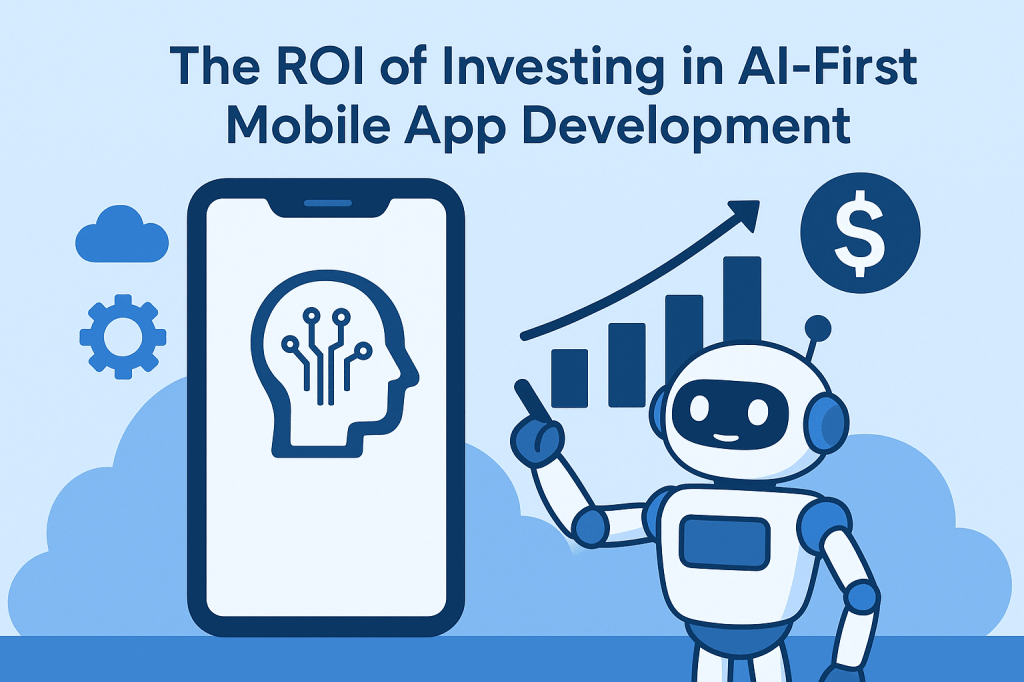
In traditional app development, AI is often introduced as a supplementary feature, perhaps a chatbot, recommendation engine, or predictive search tool. However, in AI-first app development, artificial intelligence is embedded into the very foundation of the product. This means every function, workflow, and user interaction is guided by AI models that learn, predict, and adapt in real-time. The result is an intelligent application that continuously evolves based on user behavior and data insights, ultimately delivering greater efficiency and stronger ROI for businesses.
With the surge in digital competition, businesses can no longer rely on static or one-size-fits-all mobile apps. Users today expect apps to understand their preferences, anticipate their needs, and provide seamless, intuitive experiences. Whether it’s personalized recommendations in an e-commerce app, instant voice-based assistance in a travel app, or smart automation in a finance app, AI enables developers to deliver the next level of innovation and customer satisfaction.
Organizations that want to stay competitive are increasingly collaborating with professional development agencies that specialize in building intelligent applications. To get started, you can explore some of the top mobile app development companies and popular AI companies that have proven expertise in developing AI-driven digital products. For a deeper understanding of how this new development model works, you can also read more about AI-first app development.
In this blog, we will explore what makes AI-first mobile app development so impactful, how it improves ROI, and why forward-thinking businesses are shifting toward this model. We will also discuss real-world examples, measurable benefits, and practical considerations to help you decide if it’s the right investment for your organization.
Understanding ROI in AI-First Mobile Apps
Before exploring how AI-first development delivers measurable value, it is important to understand what ROI (Return on Investment) means in the context of mobile app development. ROI represents the ratio between the net profit gained from an investment and the total cost of that investment. In simple terms, it tells you how much benefit or value your business receives for every dollar spent. When applied to mobile apps, ROI helps determine whether the time, money, and resources invested in building and maintaining an app are truly paying off in terms of user growth, revenue, and long-term business sustainability.
For AI-first mobile apps, ROI measurement goes beyond basic metrics such as downloads or user ratings. Since AI-first apps are designed to learn and improve continuously, their ROI must also account for long-term efficiencies, automation-driven savings, and user lifetime value that grows over time. This holistic view of ROI allows organizations to assess not only how their apps perform today but also how they will evolve and generate value in the future.
Key Metrics That Define ROI in AI-Driven Apps
Several measurable indicators can help evaluate the ROI of AI-first applications. These go beyond traditional analytics and focus on both financial and operational improvements.
- User Retention Rate: AI-first apps excel at understanding user preferences, predicting intent, and delivering relevant experiences. This personalization leads to higher engagement and retention, reducing churn and increasing the average lifetime value of each user.
- Customer Lifetime Value (LTV): Through continuous learning and personalization, AI helps businesses maximize the value derived from each customer. Recommendation engines, predictive notifications, and adaptive interfaces all contribute to customers staying active and spending more within the app ecosystem.
- Conversion Rate Improvement: Intelligent systems can analyze user behavior and suggest the optimal time or method to present offers or actions, improving conversion rates. Whether it’s an upsell, subscription prompt, or call-to-action, AI timing and context-awareness make every interaction more effective.
- Operational Cost Reduction: One of the clearest ROI benefits of AI-first mobile apps is automation. Tasks such as data analysis, customer support, and resource allocation can be handled by AI with higher accuracy and speed, reducing the need for extensive human intervention and minimizing costs.
- Faster Decision-Making: AI-first apps generate actionable insights from vast data streams in real time. This allows companies to react faster to market shifts, identify emerging trends, and make smarter strategic decisions without delay.
How AI-First Thinking Impacts ROI
The ROI of an AI-first approach is not limited to revenue growth. It encompasses an entire transformation in how a business operates and scales. Traditional apps often reach a plateau in performance once their user base stabilizes, but AI-first apps continue to evolve. Their algorithms refine themselves with every user interaction, meaning they become smarter, more efficient, and more profitable over time.
For example, a retail app that integrates machine learning for personalized product recommendations will not only boost sales initially but also improve those recommendations as more users interact with the platform. Similarly, a healthcare app using predictive analytics can minimize diagnostic errors and improve patient outcomes, saving both time and resources while enhancing brand reputation.
Moreover, the long-term ROI of AI-first apps includes qualitative benefits such as improved customer satisfaction, stronger brand loyalty, and a reputation for innovation. These intangible advantages often translate into measurable business growth and competitive positioning that traditional apps cannot achieve.
ROI as a Continuous Process
Unlike conventional ROI assessments that are performed at fixed intervals, the ROI of AI-first mobile apps is dynamic. Because AI models continuously evolve through data feedback loops, the returns keep increasing as the system matures. The more data an AI-first app processes, the better it becomes at predicting user needs and streamlining operations. This leads to a compounding effect, where the investment value grows exponentially rather than linearly.
To summarize, understanding ROI in AI-first mobile app development means looking beyond short-term profits and considering the sustained benefits of adaptability, automation, and user engagement. Businesses that track these factors effectively are better positioned to recognize the full value of their AI investments and make data-driven decisions for future development cycles.
Why Businesses Are Shifting to AI-First Development
The rapid evolution of digital technologies has fundamentally changed how companies approach mobile app development. In the past, most apps were designed using a “feature-first” approach, where functionality and design were prioritized, and AI, if included, was added later as an enhancement. Today, this approach no longer satisfies modern users who expect personalized, adaptive, and seamless experiences. As a result, forward-thinking businesses are transitioning to an AI-first development model, where intelligence is built into the core of the application from day one.
AI-first development reimagines the role of mobile apps, transforming them from static tools into dynamic, self-learning ecosystems. These applications continuously adapt to user behavior, market conditions, and operational goals. This capability not only enhances user satisfaction but also increases the overall ROI by improving efficiency and driving engagement at every touchpoint.
What Makes AI-First Development Different
Unlike conventional app development, where features are pre-programmed with fixed logic, AI-first development integrates machine learning models, natural language processing, and predictive analytics from the start. This allows the app to learn patterns, process data in real time, and make intelligent decisions without constant human input. The outcome is a smarter, more responsive application that continuously evolves based on actual user interactions rather than relying solely on manual updates or assumptions.
- Continuous Learning and Adaptation: AI-first apps analyze user data to refine their performance over time. For instance, a news app might use AI to understand reading habits and automatically adjust article recommendations for each individual.
- Predictive Functionality: Instead of waiting for user input, AI-first apps anticipate what users might need next. A travel app, for example, could suggest ideal flight times or hotels based on previous bookings or location data.
- Smarter Automation: By automating routine tasks such as data sorting, report generation, or user query handling, businesses reduce operational overhead while maintaining consistent quality.
- Real-Time Decision Making: AI-first apps enable instant responses to user actions, providing relevant content, recommendations, or solutions at the exact moment they are needed.
Key Drivers Behind the AI-First Shift
There are several compelling reasons why companies are increasingly prioritizing AI-first development. This shift is not just about keeping up with trends, but about achieving tangible business outcomes that traditional approaches can no longer deliver.
- Evolving User Expectations: Modern consumers are more tech-savvy than ever before. They expect personalized experiences, instant results, and smart recommendations. AI-first apps meet these expectations by tailoring every interaction to individual preferences, creating a sense of relevance and satisfaction that keeps users engaged.
- Competitive Advantage: Businesses that adopt AI-first strategies early often gain a strong edge in their industries. Intelligent apps can process customer feedback, predict trends, and make quick adjustments, helping companies stay ahead of competitors who rely on static systems.
- Operational Efficiency and Scalability: AI automates numerous backend operations, allowing businesses to scale effortlessly without significantly increasing their costs. Whether it’s managing customer service requests, analyzing big data, or optimizing logistics, AI-first apps handle tasks that previously required large teams of human specialists.
- Data-Driven Insights: AI-first apps transform raw data into actionable intelligence. Businesses can use these insights to make better strategic decisions, identify emerging opportunities, and optimize performance across departments. Over time, this leads to smarter investments, improved user acquisition strategies, and increased profitability.
- Enhanced Personalization and Engagement: Personalization is no longer a luxury; it’s a necessity. AI-first apps can deliver hyper-personalized recommendations, customized notifications, and dynamic user journeys that increase retention and lifetime value. By treating each user as unique, these apps build stronger emotional connections and brand loyalty.
How AI-First Development Transforms Business Models
AI-first app development is not just a technological change; it represents a shift in mindset. Instead of building apps as static products, companies now treat them as living systems that evolve with users and data. This transformation leads to a new business model centered on continuous optimization, innovation, and customer-centric growth.
For instance, an e-commerce brand can use AI-first development to automatically adjust pricing, predict inventory needs, and personalize marketing campaigns. A healthcare provider can implement predictive analytics to identify patient risks early and offer preventative care. A financial institution can deploy AI-driven fraud detection systems that adapt in real time to new threats. In each case, the AI-first approach not only enhances performance but also reduces long-term costs and operational friction.
Building a Foundation for Future Innovation
One of the biggest advantages of adopting AI-first development is future readiness. As AI technology continues to evolve, apps designed with an AI-first architecture can easily integrate emerging innovations such as generative AI, computer vision, and advanced predictive modeling. This ensures that businesses remain flexible and scalable without needing to rebuild their systems from scratch every time new AI capabilities emerge.
By investing in AI-first mobile app development today, businesses are essentially future-proofing their operations. They are creating digital assets that not only serve current needs but also have the potential to adapt and thrive in tomorrow’s rapidly changing digital landscape.
As the competition for user attention intensifies, the organizations that will lead the next wave of digital innovation are those that embrace intelligence as a fundamental part of their strategy, not as an afterthought. The AI-first mindset empowers companies to operate smarter, deliver superior experiences, and sustain growth through continuous learning and optimization.
Core Areas Where AI Delivers ROI
Artificial Intelligence impacts almost every stage of mobile app development, from design to deployment and continuous optimization. However, the true return on investment (ROI) becomes evident when AI begins to deliver measurable business outcomes. These outcomes may include higher user engagement, reduced operational costs, improved marketing efficiency, or faster decision-making. Let’s explore the major areas where AI-first mobile app development consistently drives ROI and how these benefits translate into real-world success.
Personalization and User Engagement
One of the most powerful advantages of AI-first mobile app development is its ability to personalize user experiences at scale. Unlike traditional systems that rely on predefined logic, AI-first apps continuously analyze user behavior, demographics, and interaction history to deliver customized recommendations, content, and product suggestions. This level of personalization fosters stronger user relationships and keeps them coming back.
For instance, a streaming app such as Netflix or Spotify uses AI to study what users watch or listen to, then suggests new shows or playlists that align perfectly with their preferences. Similarly, an e-commerce app can recommend products based on browsing patterns, previous purchases, or even the time of day the user tends to shop. This leads to a significant increase in engagement and conversion rates.
AI-driven personalization doesn’t just enhance user satisfaction, it also directly improves revenue. Users who feel that an app understands their preferences are more likely to spend, subscribe, and advocate for the brand. To learn more about how AI is shaping mobile user experiences, explore AI in mobile apps.
Operational Efficiency
Operational efficiency is one of the most measurable ROI contributors of AI-first development. By automating complex or repetitive tasks, AI allows businesses to reduce manual labor, minimize human error, and speed up processes. This efficiency extends across departments, from customer service and logistics to analytics and performance tracking.
For example, an AI-first mobile app in logistics can optimize delivery routes in real time, reducing fuel costs and delivery delays. In healthcare, AI can automate appointment scheduling and patient triage, freeing staff to focus on critical care. In retail, AI can analyze thousands of inventory data points to predict restocking needs, ensuring that popular products are always available.
These operational efficiencies significantly reduce costs and improve productivity. Moreover, AI systems continue to learn and optimize over time, delivering compounding benefits that traditional apps simply cannot match. If you already have an existing app and wish to make it more efficient, you can learn about AI integration in mobile app development and discover how AI can enhance existing solutions.
Customer Support Automation
AI-powered customer support has become a game-changer for businesses that prioritize speed, quality, and 24/7 availability. Through natural language processing (NLP) and conversational AI, mobile apps can now offer intelligent chatbots and virtual assistants capable of handling customer inquiries in real time. These bots can answer frequently asked questions, guide users through processes, and even escalate issues to human agents when needed.
For businesses, this translates into massive cost savings. AI-first customer service reduces the need for large support teams, shortens response times, and ensures consistent communication quality. Over time, AI systems learn from every interaction, becoming more accurate and intuitive in understanding user intent and providing solutions.
Beyond efficiency, AI-first support improves customer satisfaction. When users receive instant help and relevant responses, they are more likely to trust the brand and remain loyal to the app. This improvement in customer experience has a direct positive impact on ROI by boosting retention and minimizing churn.
Marketing Optimization
Marketing is another area where AI-first app development produces impressive ROI. Modern marketing depends heavily on understanding user intent and behavior, and AI excels at uncovering these insights from vast datasets. Machine learning models can predict which customers are likely to make a purchase, when they might do it, and what kind of message will resonate best with them.
AI-first apps empower marketers with tools like predictive analytics, automated ad targeting, and personalized campaign management. For example, AI can automatically adjust ad placements and bids based on real-time engagement metrics, ensuring the best return on ad spend. It can also segment audiences dynamically, ensuring that each group receives relevant messaging.
By automating data analysis and decision-making, AI enables businesses to optimize their marketing strategies continuously. This reduces costs associated with trial-and-error campaigns and leads to higher conversion rates, better user retention, and long-term brand growth.
Data-Driven Decision Making
Data is the new fuel of the digital economy, and AI-first apps are built to extract maximum value from it. Traditional analytics tools often struggle to keep up with the volume, velocity, and variety of data generated by mobile users. AI systems, on the other hand, thrive in this environment. They process massive datasets in real time and uncover patterns that humans might overlook.
For instance, an AI-first financial app can detect fraudulent transactions instantly by identifying subtle deviations in user behavior. A fitness app can monitor user progress and automatically suggest personalized routines to improve results. In both cases, decisions are made based on evidence rather than intuition, which reduces risk and increases effectiveness.
AI-first mobile apps also empower businesses to make proactive decisions. Instead of reacting to problems after they occur, companies can anticipate challenges and act before they impact operations. This predictive capability has a profound effect on ROI, as it minimizes losses, improves resource allocation, and strengthens strategic planning.
Cross-Platform Intelligence and Synergy
Another emerging advantage of AI-first mobile app development is the ability to integrate intelligence across multiple platforms. For example, insights generated from a mobile app can inform strategies for web or desktop applications, creating a unified and consistent experience for users. This cross-platform synergy amplifies ROI by ensuring that all digital touchpoints share the same intelligence and work together to improve overall performance.
To understand how AI-first principles extend beyond mobile to other digital experiences, you can read about AI-first in web development. By applying a unified AI approach across platforms, businesses can achieve scalability, consistency, and smarter user engagement throughout their digital ecosystem.
The Long-Term ROI Perspective
What makes AI-first mobile app development especially valuable is its long-term return potential. Traditional apps often reach a point where further growth becomes difficult without major redesigns or new features. AI-first apps, in contrast, continue to evolve organically through ongoing learning and optimization. As they gather more data, their predictions become more accurate, their automation becomes more efficient, and their personalization becomes more effective.
Over time, this results in an exponential ROI curve rather than a flat one. Each year, the app delivers more value with relatively lower maintenance costs. Businesses that understand this compounding effect are positioning themselves for sustained success in a future dominated by intelligent, adaptive technology.
Real-World Examples or Case Studies
While the benefits of AI-first mobile app development sound impressive in theory, the true power of this approach becomes evident when we look at real-world applications. Businesses across various industries have already begun to harness AI to improve performance, enhance user experience, and achieve measurable ROI. From entertainment to retail and healthcare, AI-first strategies have redefined how apps operate and generate value.
AI in Entertainment: Personalized Streaming Experiences
One of the most recognizable examples of AI-first app development comes from the entertainment industry. Platforms like Netflix and Spotify have built their entire business models around AI-powered personalization. These apps analyze vast amounts of user data, including watch history, likes, search patterns, and even the time of day content is consumed, to predict what users might enjoy next.
Netflix, for instance, uses AI algorithms to personalize the homepage layout for every user. It recommends shows and movies that align with viewing habits and continually refines its predictions based on new user interactions. This AI-first approach not only increases watch time but also reduces churn by keeping subscribers consistently engaged. The company reported that over 80% of the content watched on its platform comes from AI-generated recommendations, an undeniable demonstration of ROI driven by personalization.
AI in Retail: Smarter Shopping and Predictive Analytics
Retail is another sector where AI-first mobile app development has transformed customer experiences and profitability. Global e-commerce leaders such as Amazon and Alibaba use AI to power everything from search optimization and product recommendations to dynamic pricing and inventory management.
Amazon’s mobile app leverages AI to predict what customers are likely to buy next, even before they search for it. Its recommendation engine drives a significant portion of total revenue, helping increase average order value and customer lifetime value. Similarly, Alibaba uses AI to monitor shopping trends in real time, optimizing product visibility and pricing to match consumer demand. These AI-first systems allow retailers to anticipate customer needs and adapt instantly, leading to higher sales, reduced inventory costs, and stronger customer loyalty.
AI in Healthcare: Improving Accuracy and Accessibility
In healthcare, AI-first mobile applications have made vital contributions to diagnosis accuracy, patient care, and accessibility. For example, Babylon Health and Ada Health use AI-driven symptom checkers that allow users to input their symptoms and receive instant, data-backed recommendations. These apps analyze medical data and use machine learning to identify patterns that match specific conditions, helping patients make informed decisions about their next steps.
AI-first apps also assist healthcare providers by predicting patient risks, automating administrative workflows, and supporting telemedicine consultations. Hospitals can use AI apps to analyze patient histories, identify potential health issues before they escalate, and improve overall care quality. The ROI here is not just financial but also social, AI helps reduce wait times, lower diagnostic costs, and improve patient outcomes, creating long-term trust and efficiency within healthcare systems.
AI in Finance: Predictive Insights and Fraud Prevention
The finance industry has embraced AI-first development to handle massive volumes of data securely and efficiently. Mobile banking and fintech apps like PayPal, Revolut, and Capital One rely on AI algorithms to enhance security, detect fraud, and personalize financial recommendations.
For instance, PayPal uses AI-powered anomaly detection to instantly identify suspicious transactions. The system continuously learns from user behavior, allowing it to improve accuracy and reduce false positives over time. Similarly, AI in credit scoring and loan approval processes enables faster decision-making and a better understanding of customer risk profiles. This saves both time and operational costs while minimizing losses due to fraud.
AI in Travel and Hospitality: Predictive Experience Design
AI-first mobile apps are also transforming how people travel and book accommodations. Apps like Airbnb and Hopper rely on machine learning to offer predictive pricing, tailored recommendations, and dynamic travel suggestions. Hopper’s AI predicts flight and hotel price fluctuations, advising users on the best time to book. Airbnb uses AI to analyze guest preferences and provide hosts with insights on pricing and listing optimization.
These intelligent features not only improve customer satisfaction but also maximize revenue for both platforms and users. By reducing guesswork and delivering data-driven insights, AI-first apps in the travel sector are redefining what “smart booking” means and helping businesses increase profitability through precision and personalization.
AI in Education: Adaptive Learning Platforms
Education technology has seen tremendous improvements through AI-first app design. Learning platforms such as Duolingo and Coursera integrate AI to customize learning paths for each user. The AI tracks progress, identifies weak areas, and adjusts lessons accordingly, ensuring learners remain challenged but not overwhelmed. This personalization improves engagement and retention rates significantly.
For instance, Duolingo’s AI adapts lesson difficulty based on how quickly a user answers questions or how often they make mistakes. It also uses predictive modeling to remind users when to review previous lessons, ensuring optimal knowledge retention. These intelligent adjustments help users achieve better results, which in turn increases app usage and subscription renewals, a direct ROI benefit for the platform.
Common Patterns Across Successful AI-First Apps
- Continuous Learning: Every AI-first app that achieves high ROI continually refines its algorithms based on new data. This creates a feedback loop that ensures the app gets smarter over time.
- Personalized Experiences: Whether in shopping, entertainment, or education, AI-first apps succeed because they make users feel understood and valued.
- Efficiency at Scale: Automation of repetitive tasks reduces operational costs and allows companies to focus resources on innovation and customer satisfaction.
- Predictive Power: The ability to forecast user needs or market shifts ensures businesses can make timely and strategic decisions, preventing losses and capturing opportunities faster.
Across industries, AI-first app development is proving that the future belongs to those who invest in intelligence. The measurable ROI from these examples shows that AI is not just a technological upgrade, it’s a complete business transformation. Companies that embrace this model early gain lasting competitive advantages and are better positioned to innovate continuously in a data-driven world.
Calculating ROI: Framework or Formula
Understanding the value of AI-first mobile app development requires more than just recognizing its benefits. To make strategic decisions, businesses need to measure how these benefits translate into real financial outcomes. Calculating ROI for AI-first development involves both quantitative and qualitative analysis. It helps organizations assess whether their investment in AI delivers sustainable growth, cost savings, and improved user satisfaction.
While every business and app type may use slightly different metrics, the fundamental goal remains the same, to determine whether the returns from the AI-first app justify the cost of developing and maintaining it. Below is a clear framework and formula to help businesses calculate ROI effectively.
Basic ROI Formula
The simplest way to calculate ROI is through this standard formula:
ROI (%) = [(Net Profit from AI-First App – Total Investment) / Total Investment] × 100
This formula measures how much profit an app generates compared to the total investment required. However, when it comes to AI-first development, the calculation extends beyond immediate profit. Businesses must consider long-term gains such as improved customer retention, operational efficiency, and data-driven insights that contribute to sustained revenue growth.
Key Metrics to Measure ROI in AI-First Development
AI-first app development impacts several areas of a business. To evaluate ROI accurately, it’s important to measure performance across multiple dimensions rather than focusing solely on financial returns. The following key metrics help capture both tangible and intangible benefits.
- User Retention Rate: One of the strongest indicators of AI success is how effectively an app retains users. Personalized experiences powered by AI often lead to higher engagement and longer app usage, increasing customer lifetime value (LTV).
- Conversion Rate: AI-powered recommendation systems, chatbots, and predictive analytics can significantly boost conversion rates by delivering the right message or product at the right time.
- Customer Lifetime Value (LTV): AI-first apps increase LTV by improving personalization and loyalty. When users feel understood and supported, they spend more and stay longer.
- Operational Cost Savings: Automation through AI reduces manual labor, speeds up processes, and minimizes errors. These savings must be included in ROI calculations to reflect the full financial impact.
- Time-to-Market Efficiency: AI tools in development streamline testing, deployment, and updates, leading to faster releases and quicker revenue generation.
- Customer Satisfaction and NPS (Net Promoter Score): AI-first apps tend to improve user satisfaction by delivering smoother and smarter experiences. A higher NPS directly correlates with better word-of-mouth marketing and long-term retention.
- Data Utilization Rate: Businesses that effectively use AI to interpret data often uncover new opportunities. Measuring how much of your collected data contributes to actionable insights can indicate ROI maturity.
Framework for Calculating AI-First ROI
To ensure a complete understanding, it’s helpful to use a step-by-step ROI framework that includes both short-term and long-term benefits.
Step 1: Identify Direct and Indirect Costs
- Direct Costs: These include app design, AI model development, data infrastructure setup, and cloud storage costs.
- Indirect Costs: These involve training staff, integrating third-party APIs, ongoing maintenance, and model retraining expenses.
Step 2: Define Performance Indicators
- Quantitative Indicators: Revenue growth, cost reduction, and time saved through automation.
- Qualitative Indicators: User satisfaction, brand trust, and product innovation improvements.
Step 3: Measure AI-Driven Impact
After launching the AI-first app, measure how key metrics have changed compared to the pre-AI version. This includes improvements in engagement, conversion, and operational speed. Businesses can use analytics tools to track the app’s learning curve and long-term performance trends.
Step 4: Project Long-Term ROI
AI-first applications continue to evolve through machine learning. Their value increases over time as algorithms refine themselves. Therefore, it’s crucial to project ROI over a multi-year period, considering how continued data collection and learning improve performance and reduce costs.
Balancing Tangible and Intangible Returns
One challenge with AI-first ROI calculation is accounting for intangible benefits. While financial metrics like revenue and savings are easy to measure, intangible outcomes such as customer trust, innovation potential, and market positioning also hold significant value. These soft metrics often lead to future financial returns, even if not immediately measurable.
For example, a company that uses AI to improve user personalization may not see an instant profit, but the improved brand loyalty can result in higher customer retention, referrals, and lifetime spending. This long-term compounding effect should always be part of ROI evaluation.
Example ROI Calculation
Let’s consider a simplified example. Suppose a business invests $150,000 in AI-first mobile app development. After deployment, the app generates additional revenue of $300,000 through new user subscriptions and reduces operational costs by $50,000 within a year. The ROI would be calculated as follows:
ROI = [($300,000 + $50,000 – $150,000) / $150,000] × 100 = 133%
This 133% ROI represents both direct and indirect returns from AI-first integration. Over the next few years, as the AI model continues to learn and optimize, the ROI could increase even further, creating a compounding benefit without additional major investments.
Using AI to Measure ROI Automatically
Interestingly, AI itself can assist in calculating ROI. By integrating analytics and data visualization tools within the app, businesses can track performance metrics in real time. AI models can identify which features deliver the highest value, allowing decision-makers to allocate resources more effectively. This level of automation ensures that ROI measurement is not just an afterthought but an ongoing process integrated into the business workflow.
Ultimately, calculating ROI for AI-first mobile app development is not a one-time task, it’s a continuous process of evaluating, learning, and improving. As AI systems evolve, their ability to deliver insights and financial value grows, turning early investments into long-term competitive advantages.
Challenges and Considerations in AI-First App Development
While AI-first mobile app development promises impressive returns and innovation opportunities, it also presents a unique set of challenges. Building an intelligent, self-learning system requires more than just traditional coding skills. It demands strategic planning, quality data, ethical considerations, and ongoing maintenance. Businesses must understand these challenges early to ensure smooth implementation and sustained ROI.
Let’s explore some of the major challenges that organizations face when adopting an AI-first approach and the best practices to overcome them.
High Initial Investment
One of the most common concerns businesses face when adopting AI-first development is the high initial cost. Developing an AI-first mobile app involves not only standard development expenses but also the cost of building and training machine learning models, setting up data pipelines, and integrating AI infrastructure. These tasks require advanced expertise and specialized tools, which can increase development costs compared to conventional apps.
However, it’s important to view this investment as a long-term strategy rather than a one-time expense. AI-first apps deliver increasing value over time as their models learn and optimize. The ROI grows exponentially as automation, personalization, and predictive capabilities start producing measurable results. Companies that focus on long-term gains rather than short-term costs are more likely to achieve sustainable growth.
Data Dependency and Quality
AI-first systems rely heavily on data. The accuracy and effectiveness of an AI model depend entirely on the quality and diversity of the data it learns from. Inadequate, biased, or outdated data can lead to inaccurate predictions, poor personalization, and even negative user experiences.
To address this, businesses must establish robust data collection and management frameworks. This includes ensuring proper data labeling, regular updates, and compliance with privacy standards. Additionally, using diverse datasets helps eliminate algorithmic bias and ensures that AI delivers fair, inclusive, and accurate results.
Lack of Skilled Talent
AI-first mobile app development requires multidisciplinary expertise. Beyond software developers, teams need data scientists, AI engineers, UX designers, and domain experts who can collaborate effectively. Unfortunately, there is still a global shortage of skilled AI professionals, which can make recruitment and training a challenge for many organizations.
Businesses can overcome this by partnering with experienced AI development firms or outsourcing certain tasks. Collaborating with popular AI companies can provide access to specialized talent and proven frameworks. Over time, investing in in-house training and skill development also ensures that your organization becomes self-sufficient in managing AI-powered systems.
Integration with Existing Systems
Many businesses already have operational apps or legacy systems that handle critical functions. Integrating AI into these systems can be complex, especially if they were not initially designed with intelligence in mind. Challenges include compatibility issues, data migration, and the need to restructure backend architecture.
However, these challenges are surmountable with the right approach. Gradual integration, starting with smaller, modular AI features, can help organizations adopt AI-first development without disrupting their current operations. To understand how this process works in practice, you can explore AI integration in mobile apps, which discusses the best strategies for upgrading existing applications with AI features.
Data Privacy and Ethical Concerns
As AI apps collect and process large volumes of user data, privacy and ethics become central concerns. Mishandling sensitive information can lead to legal complications, loss of user trust, and damage to a brand’s reputation. Regulations such as GDPR and CCPA have made it mandatory for businesses to handle user data responsibly and transparently.
To mitigate these risks, companies must implement strict data protection measures, including anonymization, encryption, and user consent mechanisms. Ethical AI development also requires ensuring that algorithms are transparent, unbiased, and accountable. Regular audits and model explainability can further strengthen trust among users and stakeholders.
Continuous Learning and Maintenance
AI-first mobile apps are dynamic systems that evolve over time. Unlike traditional applications that remain static until updated, AI apps must be monitored continuously to ensure that their predictions remain accurate and relevant. Machine learning models can degrade over time due to changes in user behavior or external data patterns, a phenomenon known as “model drift.”
To maintain performance, businesses should establish continuous learning pipelines where models are retrained using new, high-quality data. Regular updates, testing, and evaluation are essential for sustaining optimal performance. Although this ongoing maintenance adds operational overhead, it is crucial for long-term success and continued ROI growth.
Scalability Challenges
As user bases grow and data volume increases, scalability becomes another important consideration. AI systems that perform well with limited data may face performance bottlenecks when scaled. This includes slower response times, higher computational costs, or inefficient resource allocation.
To achieve scalability, AI-first apps should be built on flexible, cloud-based architectures that support distributed computing and real-time data processing. Platforms such as AWS, Google Cloud, and Microsoft Azure provide scalable infrastructure solutions specifically optimized for AI workloads. Planning for scalability from the start helps businesses avoid costly reengineering later.
Balancing Automation with Human Oversight
AI excels at automating routine processes, but complete automation is not always advisable. In many scenarios, human oversight is necessary to ensure that AI decisions align with business goals and ethical standards. Striking the right balance between automation and human input ensures that AI supports, rather than replaces, human judgment.
For example, in finance and healthcare applications, AI models can assist with analysis and predictions, but human experts should make final decisions. This hybrid approach not only reduces risk but also enhances trust in AI-driven systems, ensuring accountability and reliability.
Strategic Considerations for Successful Adoption
- Start Small, Scale Gradually: Begin with smaller AI-driven features such as chatbots or recommendation systems before moving to full-scale intelligence integration.
- Define Clear Objectives: Set measurable goals for AI implementation, such as reducing costs, improving user engagement, or boosting conversions.
- Build Data Infrastructure Early: Invest in proper data collection, storage, and processing frameworks before training AI models.
- Ensure Ethical Transparency: Communicate clearly how AI uses user data and implement explainable AI models to maintain trust.
- Collaborate with Experts: Partner with top mobile app development companies that have proven expertise in building scalable, AI-first solutions.
In short, while AI-first mobile app development offers immense potential, its success depends on careful planning and execution. By anticipating these challenges and addressing them proactively, businesses can turn potential obstacles into opportunities for growth and innovation. Overcoming these considerations not only enhances ROI but also builds a solid foundation for future technological advancements.
Conclusion
Artificial Intelligence has evolved from being a supporting feature to becoming the foundation of modern mobile app development. Businesses that embrace the AI-first approach are not just improving their products, they are redefining how users interact with technology. By placing intelligence at the core, AI-first mobile apps enhance personalization, automate complex operations, and enable data-driven decision-making, all of which translate into measurable ROI.
The value of investing in AI-first development extends far beyond initial profits. These apps continue to learn, adapt, and evolve with time, ensuring that their performance improves as user data grows. This continuous cycle of optimization creates compounding returns, making AI-first apps a strategic long-term investment rather than a one-time innovation.
Summarizing the ROI Benefits
- Enhanced User Experience: Through predictive personalization, AI-first apps increase user satisfaction and retention, building stronger relationships with customers.
- Operational Efficiency: Automation and smart analytics significantly reduce manual workload, saving time and resources while improving productivity.
- Marketing Precision: Predictive targeting and personalized recommendations drive higher conversions and campaign performance.
- Data-Driven Insights: AI systems transform raw data into actionable intelligence, allowing businesses to make informed strategic decisions.
- Long-Term Scalability: As AI models improve over time, businesses experience sustainable growth without major reinvestments.
The ROI of AI-first development is not only financial, it’s also strategic. Companies that adopt this approach gain a competitive edge by anticipating market shifts, delivering seamless customer experiences, and staying agile in a rapidly changing digital environment. In today’s business landscape, where data and automation drive success, being AI-first is no longer optional, it’s essential.
Looking Ahead: Building the Future with AI
As the demand for intelligent apps continues to grow, businesses must explore efficient ways to integrate AI into their mobile ecosystems. Thankfully, modern tools and platforms have made this process more accessible. If you are considering building an intelligent app, you can explore resources such as best AI app builders, which provide a range of tools and platforms designed to simplify AI integration for businesses of all sizes.
Moreover, for entrepreneurs and startups seeking innovative directions, there are numerous opportunities to explore unique concepts. Our guide on AI app ideas offers practical inspiration for developing apps powered by AI technologies like OpenAI, enabling you to create products that align with future market demands.
The Future Belongs to AI-First Innovators
AI-first mobile app development represents more than a technological shift, it’s a transformation in how businesses think and operate. Companies that act early position themselves as industry leaders capable of adapting to market changes faster than competitors. With user expectations evolving and data becoming the most valuable digital asset, AI-first development ensures businesses remain relevant, resilient, and ready for the future.
In conclusion, investing in AI-first mobile app development is not merely about building smarter apps, it’s about building a smarter business. The measurable ROI, combined with long-term scalability, innovation potential, and user engagement, makes this approach one of the most profitable strategies in today’s digital economy. Those who start now will not only stay ahead of the curve but also shape the next era of intelligent app experiences.





 Business Club