Author: ankitsharmatd01

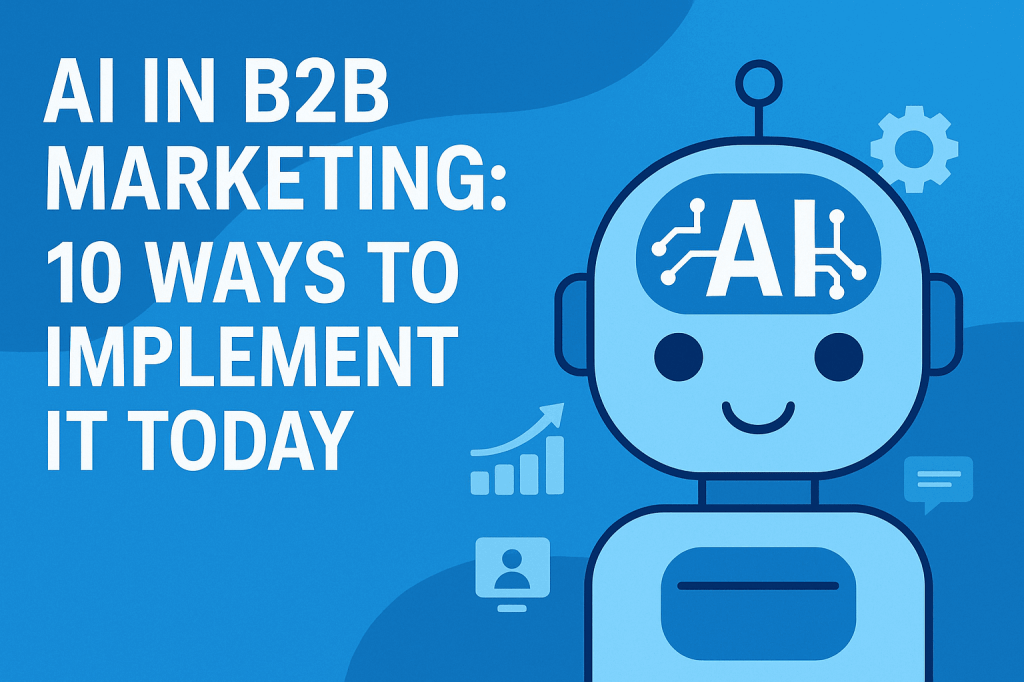
  • AI in B2B Marketing: 10 Ways to Implement It Today

    AI in B2B Marketing: 10 Ways to Implement It Today

    Artificial Intelligence has moved far beyond being a futuristic concept. It is now one of the most influential technologies shaping how companies attract and engage other businesses. Business to business marketing traditionally relied on human analysis, intuition, and manual processes to reach potential partners or clients. Today, that model is being replaced by intelligent systems that can learn from large volumes of information, spot valuable patterns, and deliver precise insights in real time.

    Modern business environments are highly competitive. Decision makers expect personalized experiences, fast responses, and marketing that aligns with their needs. AI helps marketers meet these expectations by automating repetitive tasks and by turning raw information into useful strategies. It allows teams to better understand buyer behavior, create relevant content, and allocate resources where they will create the most value.

    This article will explore ten proven methods to integrate AI into your business to business marketing activities. Each section provides a practical approach that can be started with a modest budget and scaled as your organization grows. By the end, you will have a clear roadmap for using AI not only as a support tool but as a core driver of marketing success.

    What Is AI in B2B Marketing

    Artificial Intelligence in business to business marketing refers to the use of intelligent technologies to perform tasks that traditionally required human effort. These technologies are designed to analyze large sets of data, identify trends, and make decisions or recommendations that improve marketing performance. In a B2B context, the focus is on building stronger relationships between companies, identifying high quality leads, and delivering messages that match the specific needs of potential partners or clients.

    AI systems in marketing are capable of processing information much faster than any human team. They can review past purchase histories, interaction records, and demographic details to create accurate customer profiles. These profiles help marketers understand who their buyers are and what they are most likely to respond to. The technology can also forecast future behaviors, allowing companies to plan their campaigns based on expected customer actions rather than on assumptions or guesswork.

    Examples of AI in B2B marketing include intelligent chatbots that handle early customer inquiries, automated content creation tools that generate drafts for blogs or proposals, and advanced analytics platforms that evaluate campaign performance in real time. These tools reduce manual workload, improve precision, and make it possible to deliver highly relevant messages to each business contact. As AI continues to evolve, its role in marketing is shifting from a simple assistant to an essential driver of strategy.

    Challenges to Consider

    Before adopting artificial intelligence in business to business marketing, it is important to understand the potential challenges that can affect its performance. While AI offers many advantages, its success depends on the quality of the systems and processes already in place. Below are the main challenges marketers face and what they mean for your business.

    Bad Data

    Artificial intelligence is only as effective as the data it analyzes. Many organizations store information in multiple systems without a unified structure. This leads to incomplete records, duplicate entries, and outdated contact details. When an AI tool processes flawed information, the predictions and insights it generates will not be reliable. For example, an AI system may recommend contacting a lead that no longer represents a viable account simply because the data was never updated. To overcome this challenge, companies should establish strong data management practices. This includes cleaning existing records, merging databases into a single source of truth, and setting up regular reviews to maintain accuracy.

    Data Privacy Concerns

    Privacy regulations around the world require businesses to protect personal and corporate data. Artificial intelligence often processes sensitive information, such as communication history and transaction records. If this information is not handled properly, it can result in legal penalties and a loss of customer trust. Companies need clear privacy policies that outline how data is collected, stored, and used. Access should be limited to authorized staff, and systems should be designed with encryption and secure storage in mind. Regular audits and compliance checks help ensure that your use of AI respects the rights of your customers and partners.

    Lack of Training and Onboarding

    Even the most advanced AI tools can fail if the marketing team does not know how to use them effectively. Introducing a new technology requires proper onboarding and continuous learning. Many teams hesitate to adopt AI because they fear it will be too complex or disruptive to their current processes. To address this, organizations should provide clear training sessions that explain not only how the tool works but also how it fits into daily tasks. Short, practical lessons combined with real examples can help employees feel confident and comfortable with the technology. A support system that answers questions and resolves issues quickly can also increase adoption.

    Accountability and Oversight

    Artificial intelligence can automate tasks and even make recommendations, but it cannot replace human judgment. A common mistake is to allow AI to operate without proper oversight. When this happens, errors can go unnoticed until they cause serious problems, such as sending incorrect pricing to a major account or misclassifying an important lead. Marketing teams must remain responsible for the outcomes produced by AI. This means reviewing key actions, monitoring campaign results, and having clear ownership for each stage of the marketing process. Human oversight ensures that AI works as a supportive tool rather than as an uncontrolled decision maker.

    Ten Practical Ways to Implement AI Today

    Implementing artificial intelligence in business to business marketing does not have to be overwhelming. There are practical methods that can deliver measurable results without disrupting your existing processes. Below are ten effective ways to start using AI in your marketing activities.

    Prepare Your Data for AI

    The success of any AI initiative begins with well organized data. Combine information from customer relationship management systems, email platforms, and support databases into a single, accurate source. Remove duplicate entries, correct outdated records, and standardize fields such as company names and contact information. This clean foundation allows AI models to identify trends with greater accuracy. Without proper preparation, even advanced tools will struggle to deliver meaningful insights. Think of this step as building the foundation for a more intelligent marketing strategy where each decision is based on reliable facts rather than fragmented information.

    Automate Proposals and Reports

    Creating proposals and marketing reports often consumes valuable time. AI tools can analyze existing content, pull data from your systems, and produce first drafts of these materials. Marketers can then review, adjust, and add their personal touch. This approach reduces repetitive manual work and helps deliver proposals faster to potential clients. Automated reporting also ensures that performance updates are consistent and timely. By freeing up hours spent on document creation, your team can focus on strategic thinking, client relationship building, and campaign improvement rather than spending entire days formatting and writing similar documents.

    Improve Customer Segmentation

    Segmenting customers manually can be difficult and often lacks precision. Artificial intelligence can process behavioral data, transaction history, and industry trends to create more accurate segments. This allows marketers to tailor campaigns for each group with specific offers, messages, and timing. For instance, AI might detect patterns showing that certain industries respond better to particular product features. Using this insight, marketing teams can allocate resources more effectively and achieve higher engagement. Accurate segmentation ensures that each message feels relevant to its recipient, increasing the likelihood of a positive response and improved return on marketing investment.

    Enhance Market Research

    Researching competitors, industries, and market trends manually can be a slow process. AI driven tools can scan large datasets, industry publications, and digital platforms to uncover actionable insights. They can highlight which markets are growing, which competitors are gaining ground, and what kind of content resonates with target buyers. Instead of spending weeks gathering information, marketers receive a clear summary within hours. These insights make planning more agile and allow companies to adjust campaigns as market conditions change. The result is a research process that is both faster and more reliable than traditional manual methods.

    Use Conversational AI for Engagement

    Conversational AI, including chatbots and virtual assistants, provides immediate support and engagement for potential clients. These tools answer frequently asked questions, collect essential lead details, and even schedule meetings outside of regular working hours. For business to business marketing, this means prospects can receive information whenever they visit your website or interact with your platform. The collected information feeds directly into your systems, helping sales teams follow up more effectively. Well designed conversational AI enhances customer satisfaction and creates a smooth first impression that often leads to deeper engagement and stronger business relationships.

    Generate High Quality Content

    Artificial intelligence can help marketing teams produce consistent and high quality content at scale. By analyzing audience preferences and trending topics, AI suggests outlines, headlines, and even full draft articles. Marketers should always review, refine, and inject their unique brand voice to maintain authenticity. This collaboration between humans and technology speeds up production for blogs, newsletters, and promotional materials while preserving quality. It also makes it easier to test multiple versions of a message, improving the chances of reaching the right audience with the right tone at the most appropriate time.

    Personalize Customer Journeys

    Every business client interacts with your brand in a unique way. Artificial intelligence helps track each touchpoint and recommends the next best action for every contact. This may include sending a follow up email, sharing a case study, or inviting them to a webinar that matches their interests. Personalized journeys create a feeling of relevance and care, which is essential in business to business relationships. Over time, personalization nurtures trust and accelerates decision making because clients receive the information they need without feeling overwhelmed by generic messages that do not reflect their goals.

    Identify High Value Leads

    AI uses predictive scoring models to determine which leads are most likely to convert. It examines past sales data, engagement history, and interaction patterns to assign scores to prospects. High scoring leads receive priority attention from the sales team, while lower scoring ones can be nurtured over time with targeted content. This ensures that resources are focused where they can create the greatest impact. Accurate lead scoring also reduces wasted efforts on unqualified contacts and improves the efficiency of the marketing and sales pipeline from the first interaction to final contract signing.

    Optimize Lead Generation Campaigns

    Artificial intelligence can improve your advertising and outreach strategies by analyzing which channels, messages, and formats generate the best responses. It can adjust budgets automatically, pause low performing campaigns, and highlight new opportunities based on real time performance data. This type of optimization allows marketers to spend less time manually reviewing campaigns and more time refining their strategies. As the AI learns from ongoing activity, it becomes more precise, helping you reach a higher number of qualified leads at a lower overall cost while keeping your campaigns aligned with business goals.

    Enhance Event Marketing with AI

    Events such as webinars, conferences, and trade shows remain important in B2B marketing. AI can assist before, during, and after these events. Before an event, it can help identify the most relevant attendees and craft personalized invitations. During the event, it can recommend sessions or networking opportunities based on participant profiles. Afterward, AI analyzes engagement data to guide follow up campaigns and measure return on investment. This integrated use of AI ensures that every stage of event marketing is efficient and aligned with your broader marketing objectives, making events more impactful and measurable.

    Action Checklist

    Adopting artificial intelligence in business to business marketing is a step by step process. Marketers who plan carefully are more likely to see meaningful results. Below is a simple checklist to help you start your journey with confidence.

    • Clean and Organize Data Begin by reviewing your existing information. Combine all customer details into one system, remove duplicate entries, and keep records updated for better analysis.
    • Start with a Pilot Project Select one area of marketing where AI can create an immediate impact, such as automated reporting or lead scoring. A focused project helps teams gain early wins.
    • Train and Support Teams Provide your marketing and sales teams with training sessions and practical examples so they understand how to use the tools and how AI fits into daily work.
    • Assign Ownership Make sure someone is responsible for monitoring AI performance. Clear accountability ensures that results are measured and improvements are tracked.
    • Measure and Improve Collect feedback and track the results of your AI initiatives. Adjust the models, rules, or campaigns as you gather more information and experience.

    Conclusion

    Artificial intelligence is transforming how companies connect with other businesses. It makes marketing more efficient by reducing manual work and allows teams to focus on strategy, creativity, and relationship building. When used correctly, AI helps identify the right prospects, tailor communication, and improve overall marketing performance.

    The key to success is to start with a solid foundation, prepare your data, and introduce AI step by step rather than attempting to automate everything at once. Over time, the tools will become more effective as they learn from your unique business environment and customer behavior.

    If you are planning to integrate artificial intelligence into your marketing but do not have in house expertise, consider working with an experienced AI Development Company. Such a partner can help design the right strategy, select suitable technologies, and ensure smooth implementation so your organization can benefit from AI without unnecessary delays or errors.

  • How AI Is Shaping Local Marketing Strategies in 2025

    How AI Is Shaping Local Marketing Strategies in 2025

    Artificial Intelligence (AI) has moved beyond being just a futuristic concept. In 2025, it is now an essential part of how local businesses connect with their customers and stay competitive in their markets. Local marketing focuses on attracting and retaining customers within a specific region or community. With the rise of AI-powered tools, businesses of all sizes can now understand their audience better, deliver relevant content, and optimize their marketing efforts with greater accuracy.

    AI helps in collecting and analyzing customer data, studying local buying patterns, and predicting future needs. This was once a task that required heavy manual effort and resources, but today, even a small local shop can access these capabilities. By using AI, companies can create stronger connections with their audience, provide timely offers, and personalize their services to match the unique preferences of their customers.

    • Improved Targeting: Businesses can reach the right people at the right time with messages that resonate with their needs.
    • Better Engagement: AI-driven content and recommendations create a more personalized customer experience.
    • Enhanced Efficiency: Automation saves time and reduces the manual workload for business owners and marketing teams.

    This article will explore how AI is transforming local marketing strategies in 2025 by focusing on hyper personalization, voice search optimization, predictive analytics, chatbots, and local SEO automation. Each of these areas plays a crucial role in helping local businesses stay ahead of their competition.

    AI Driven Hyper Personalization

    One of the most significant ways AI is transforming local marketing in 2025 is through hyper personalization. Customers today expect content, products, and offers that match their interests and needs. Generic marketing messages are no longer enough to capture attention. Hyper personalization allows businesses to deliver highly relevant messages to individual customers or specific groups based on accurate data analysis.

    Understanding Customer Data

    AI collects and studies a variety of data sources including online browsing behavior, purchase history, location details, and social media interactions. By analyzing these patterns, AI helps businesses create marketing strategies that connect with people on a personal level. Instead of guessing what a customer might like, businesses can now predict preferences with precision.

    • Enhanced Segmentation: AI divides audiences into smaller groups with similar behaviors or interests, ensuring each group receives relevant content.
    • Tailored Offers: Personalized promotions, product suggestions, or discounts are delivered to customers based on their preferences.
    • Optimized Communication Timing: AI identifies the best time to send emails or notifications when customers are most likely to engage.

    Benefits of Hyper Personalization

    Hyper personalization does not just increase sales; it also builds loyalty. When customers feel that a brand understands their needs, they are more likely to return and recommend it to others. This type of marketing also reduces wasted effort by focusing on the most promising leads rather than targeting everyone with the same message.

    • Improved Conversion Rates: Personalized content leads to higher click through rates and purchases.
    • Better Customer Experience: Customers appreciate brands that save them time by offering relevant products and services.
    • Stronger Relationships: Consistent and relevant communication helps businesses maintain long term relationships with their audience.

    Localization of Messaging

    Local marketing becomes more effective when it reflects the culture, language, and specific interests of the target audience. In 2025, AI makes it easier for businesses to adapt their marketing messages to fit different local communities. Customers respond better to content that feels familiar and relevant to their surroundings.

    Creating Localized Campaigns

    AI tools analyze regional data, cultural events, and local customer preferences. This helps businesses create campaigns that match the unique characteristics of each area. For example, a restaurant may promote festive dishes during local holidays in one neighborhood while offering special lunch deals in another.

    • Cultural Relevance: Campaigns can highlight local festivals, holidays, or traditions that appeal to specific communities.
    • Neighborhood Targeting: AI allows different areas to receive different promotions based on their buying behavior and interests.
    • Language Adaptation: Businesses can adjust their messaging to match the preferred language or style of the local audience.

    Benefits of Localization

    Localized messaging improves the connection between a brand and its customers. It shows that a business values the community and understands its unique needs. This approach increases trust and builds a stronger brand reputation.

    • Increased Engagement: Customers are more likely to interact with content that feels personal to their area.
    • Higher Conversion Rates: Offers designed for specific regions tend to generate better responses.
    • Stronger Community Presence: Businesses that invest in local adaptation build lasting relationships with their customers.

    Voice Search Optimization

    Voice search is becoming a vital part of how people find local businesses in 2025. With the growing use of smartphones, smart speakers, and virtual assistants, more customers rely on voice commands to search for nearby services or stores. Businesses that optimize for voice search gain better visibility and attract more local customers.

    Preparing Content for Voice Search

    AI tools help analyze voice search patterns and guide businesses in creating content that matches how people speak rather than how they type. Voice searches are often more conversational and include full questions instead of short keywords.

    • Conversational Keywords: Use natural phrases such as “What is the best pizza place near me” instead of short keywords.
    • Mobile Optimization: Ensure the website is mobile-friendly and loads quickly to match user expectations.
    • Structured Data Markup: Adding proper schema markup helps search engines deliver accurate business information in voice search results.

    Why Voice Search Matters

    Voice search helps local businesses appear in more immediate and actionable search results. Customers using voice queries are often looking for quick answers, directions, or immediate services. By preparing for voice search, businesses increase their chances of being chosen over competitors.

    • Faster Discovery: Voice queries often lead to quick actions like calls or visits.
    • Better Customer Experience: Providing accurate and instant answers builds trust and convenience.
    • Higher Local Traffic: Businesses that appear in voice results gain more foot traffic and inquiries.

    Predictive Analytics for Local Trends

    Predictive analytics is a powerful way AI is helping businesses prepare for customer needs in advance. By analyzing historical data and real-time signals, AI can forecast future trends in specific locations. This is especially valuable for local businesses that want to plan their inventory, promotions, and services ahead of time.

    Forecasting Customer Behavior

    AI gathers information from various sources such as purchase history, website visits, social media interactions, and local events. It uses this data to anticipate what products or services will be in demand. Businesses no longer have to rely only on guesswork; they can now make data-driven decisions that reduce risks and increase opportunities.

    • Inventory Planning: Businesses can stock popular products before demand rises, ensuring availability for their customers.
    • Targeted Promotions: Offers can be scheduled to align with expected demand during holidays or seasonal peaks.
    • Reduced Waste: Accurate predictions help prevent overstocking and minimize losses from unsold inventory.

    Benefits of Predictive Analytics

    Predictive analytics helps businesses become proactive rather than reactive. It allows them to serve customers at the right time with the right product or service. This leads to improved sales, customer satisfaction, and operational efficiency.

    • Higher Profitability: Products and services are offered when customers are most likely to buy.
    • Better Resource Management: Businesses save money by managing their stock and staffing more effectively.
    • Improved Customer Trust: Customers appreciate businesses that anticipate their needs and deliver on time.

    Chatbots and Conversational AI

    Chatbots and conversational AI have become essential tools for local businesses in 2025. They provide instant support, handle customer inquiries, and even guide users toward making purchases. Unlike traditional customer service, these AI systems work around the clock and ensure customers get the help they need whenever they need it.

    Improving Customer Interaction

    AI-powered chatbots can manage a wide range of tasks. They answer frequently asked questions, schedule appointments, and even recommend products or services based on customer preferences. This allows human employees to focus on more complex issues while customers receive quick and reliable assistance.

    • Round the Clock Availability: Chatbots provide uninterrupted support without depending on business hours.
    • Efficient Task Handling: They reduce employee workload by automating routine interactions.
    • Personalized Responses: Advanced systems use data to suggest relevant solutions or products.

    Benefits of Chatbots and Conversational AI

    Implementing chatbots not only improves efficiency but also enhances customer relationships. They create a seamless experience that customers value, especially when they need quick answers or immediate assistance.

    • Faster Response Times: Customers no longer need to wait in queues for simple queries.
    • Higher Customer Satisfaction: Quick and accurate responses lead to a positive impression.
    • Consistent Communication: Chatbots deliver reliable information and maintain a uniform brand tone.

    AI in Local SEO Automation

    Local search engine optimization (SEO) is a key factor in helping businesses become more visible to customers in their area. In 2025, AI has made this process faster and more efficient. Many time-consuming SEO tasks that used to require manual effort can now be automated, allowing business owners to focus on growth and customer relationships.

    Boosting Local Search Visibility

    AI tools update online listings, track reviews, and manage keywords more effectively than traditional methods. These tools ensure that business information remains accurate across search engines, maps, and local directories. This helps potential customers find correct details such as operating hours, locations, and services offered.

    • Automated Listings Management: AI updates business details across multiple platforms to maintain consistency.
    • Local Keyword Research: AI identifies high-impact search terms specific to a region or community.
    • Review Tracking and Response: AI monitors customer feedback and drafts polite responses for timely engagement.

    Benefits of Local SEO Automation

    By automating SEO tasks, businesses save time and avoid mistakes caused by inconsistent updates. A strong local SEO presence leads to better search rankings and increased customer trust.

    • Higher Local Rankings: Consistent and optimized listings improve visibility in search results.
    • Improved Online Reputation: Timely and professional responses to reviews enhance customer trust.
    • Increased Customer Inquiries: Better visibility attracts more local calls, visits, and online interactions.

    Conclusion

    Artificial Intelligence has become an essential part of local marketing strategies in 2025. It is no longer a tool reserved for large corporations; small and medium businesses are also using AI to compete effectively. From hyper personalization to predictive analytics and local SEO automation, AI allows businesses to connect with their communities in smarter ways.

    Companies that embrace these tools can deliver better customer experiences, predict demand more accurately, and engage their audience with personalized content. AI also reduces manual effort, allowing business owners to focus on growth and customer relationships rather than repetitive tasks.

    For organizations looking to implement these strategies effectively, working with professional Digital Marketing Agencies can be a valuable step. These agencies provide expertise, tools, and insights needed to execute powerful AI-driven marketing campaigns that deliver real results.

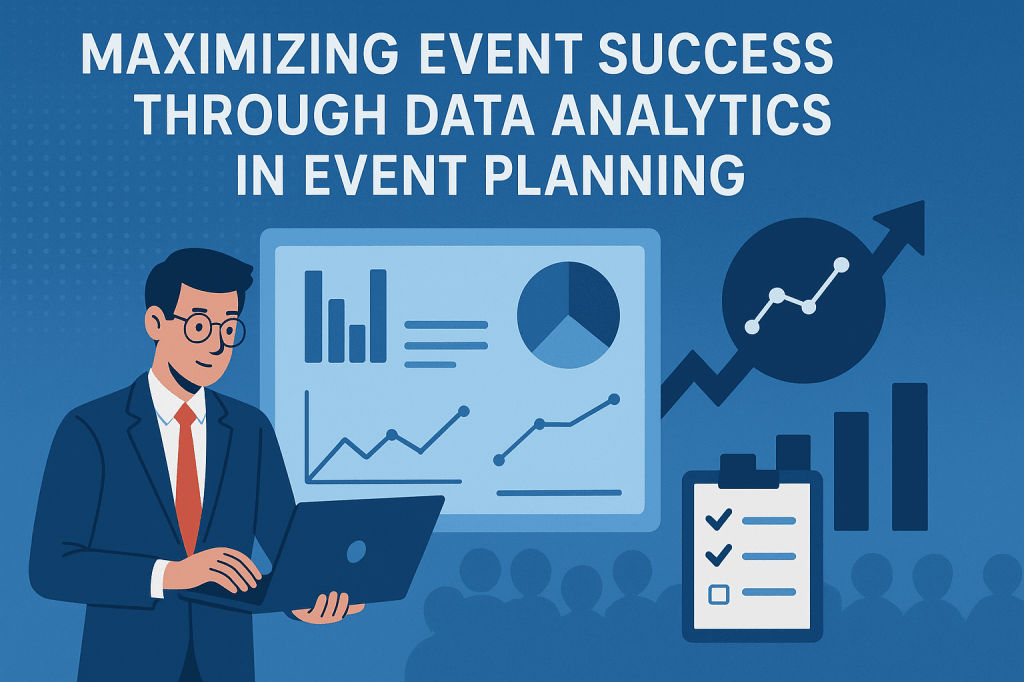
  • Maximizing Event Success Through Data Analytics in Event Planning 

    Maximizing Event Success Through Data Analytics in Event Planning 

    Event planning has always been about bringing people together to share experiences, exchange ideas, and build meaningful connections. In the past, many decisions were based on instinct, tradition, or industry norms. While experience still matters, relying only on gut feelings in today’s competitive environment is risky. Audiences expect more, budgets are scrutinized more closely, and stakeholders demand clear evidence of success.

    This is where data analytics changes the entire process. Data allows event planners to move beyond assumptions. It gives them the ability to see patterns, measure results, and take decisions supported by facts. Whether it is understanding how people register, what content they engage with most, or how they feel after the event, analytics provides clarity. That clarity saves resources, improves experiences, and proves return on investment.

    By the end of this article, you will understand how data can be used at every stage of an event. We will explore what event data actually means, why it is valuable, the key metrics every planner should monitor, and the tools that help make sense of it all. More importantly, you will see how analytics leads to smarter strategies, stronger engagement, and measurable impact.

    What Is Event Data Analytics

    Event data analytics is the process of collecting, reviewing, and interpreting information that is generated during the planning, execution, and follow up of an event. Instead of only looking at the surface results such as ticket sales or attendance, analytics digs deeper into every interaction that happens around the event. It turns raw numbers into insights that planners can use to make informed choices.

    For example, when someone visits an event website, clicks a link on social media, or signs up for a newsletter, that action becomes part of event data. When attendees participate in a session, interact in a live poll, or complete a post-event survey, more data is created. These actions may seem small on their own, but together they reveal important patterns about audience behavior and preferences.

    Analytics is not just about collecting as much data as possible. The true value lies in interpreting it correctly. By studying data, planners can see which marketing channels bring the most attendees, what type of content keeps people engaged, and how satisfied guests feel after the event. These insights allow planners to adjust strategies, improve event design, and create experiences that feel more personal and meaningful.

    In short, event data analytics transforms guesswork into strategy. It gives planners the ability to predict outcomes, avoid risks, and deliver measurable success. The result is not just a smoother event but also a stronger relationship between organizers, sponsors, and attendees.

    What Counts As Event Data

    Event data is every piece of information that comes from the actions of attendees, sponsors, partners, or even staff before, during, and after an event. Many planners often focus only on the big numbers such as registrations or ticket sales. While those are important, they are only one part of a much bigger picture. Every click, every response, and every interaction provides clues that can improve planning and execution.

    Understanding the different types of event data helps organizers know what to track and how to use it. The following categories cover the most common and useful sources of data for any event.

    Registration and Ticketing Data

    Registration forms and ticket sales are usually the first touchpoint between the attendee and the event. These records show where people come from, which ticket types are most popular, and how early or late participants tend to register. This helps planners forecast attendance and adjust marketing efforts to target groups that may need more encouragement to sign up.

    Website and Digital Traffic

    Website analytics show which pages visitors explore most, how long they stay, and whether they leave without completing registration. This data highlights the strengths and weaknesses of the event website. If many people visit but few register, it signals the need for clearer messaging or a simpler registration process.

    Engagement During the Event

    Engagement data reflects how attendees interact once they are part of the event. It includes session attendance, participation in polls, questions asked during panels, downloads of event materials, and social media activity during the event. High engagement usually means the content is relevant and the format is working well.

    Feedback and Surveys

    Post-event surveys and feedback forms provide direct insights into attendee satisfaction. Ratings on sessions, comments on logistics, and suggestions for improvement give planners a clear sense of what worked and what needs change. Feedback is one of the most valuable types of data because it comes straight from the audience.

    Financial and Sponsorship Data

    Revenue from ticket sales, costs for logistics, and sponsorship contributions also form part of event data. These numbers are critical for measuring return on investment. They show whether the event met its financial goals and whether sponsors received the visibility and value they expected.

    • Before the event Website traffic, marketing reach, registration details, and ticket sales.
    • During the event Attendance, participation in sessions, polls, Q and A, networking activity, and social mentions.
    • After the event Surveys, testimonials, financial reports, sponsor feedback, and post-event engagement.

    By looking at all these different forms of data, planners gain a full view of the attendee journey. It becomes possible to see not only how many people came but also why they came, what they enjoyed most, and what would make them return again. This knowledge is the foundation for stronger planning in future events.

    Why Event Data Matters

    Event data matters because it gives organizers the power to make informed decisions rather than relying only on assumptions or past habits. Every event is unique, and what worked before may not always work again. Data creates a reliable foundation by showing what attendees truly want, how they behave, and what value the event delivers to sponsors and stakeholders.

    Without data, planning can become a guessing game. Organizers might spend money on marketing channels that do not attract the right audience, choose speakers who do not resonate with attendees, or plan schedules that cause frustration. With data, these risks are greatly reduced because decisions are guided by real evidence.

    Improving Attendee Experience

    One of the most important reasons to use data is to improve the attendee experience. Analytics highlights which sessions attract the most people, how attendees move through the venue, and what features they engage with most. This information allows planners to design schedules, spaces, and activities that keep participants comfortable, engaged, and satisfied. When attendees enjoy the event, they are more likely to return and recommend it to others.

    Proving Return on Investment

    Stakeholders, sponsors, and leadership teams want clear evidence that an event was worth the investment. Data provides the proof. By tracking revenue, leads, engagement levels, and post-event conversions, organizers can show exactly how the event delivered value. This transparency builds trust and makes it easier to secure funding and sponsorship for future events.

    Guiding Future Planning

    Another major benefit of event data is that it informs future strategies. The results of one event become the starting point for the next. If data shows that attendees preferred interactive workshops over long lectures, planners can focus on adding more hands-on sessions in the future. If a specific marketing campaign brought in the highest number of quality attendees, similar campaigns can be repeated. Each cycle of data collection and review makes future events stronger and more effective.

    Reducing Risks and Surprises

    Events are full of moving parts, and unexpected problems can easily occur. Data helps reduce these risks by identifying weak spots early. For example, if registrations are lower than expected a few weeks before the event, planners can adjust marketing strategies quickly. If survey data shows that attendees found the registration process confusing, organizers can simplify it for next time. By catching issues through data, planners avoid last-minute surprises and ensure smoother execution.

    In summary, event data matters because it gives clarity, reduces risk, and increases impact. It is not just a tool for measuring results after the event but also a guide for creating better experiences and achieving long-term success.

    Turning Insights Into Results

    Collecting data is only the beginning. The true value of analytics comes when those insights are transformed into meaningful actions that improve the event. Numbers on a spreadsheet are not helpful unless they influence decisions about marketing, logistics, content, and engagement. Event organizers must treat insights as a guidebook for action.

    Turning insights into results means building a habit of checking data regularly, interpreting what it reveals, and applying small but powerful changes that improve the experience for attendees and stakeholders.

    From Analysis to Action

    Analysis is about more than reviewing reports. It is about asking the right questions. Why did more people register on one platform than another? Which sessions had the highest attendance, and what made them different? Why did some attendees leave before the closing keynote? Each answer points to an action. A successful session format can be expanded next time. A weak marketing channel can be dropped or improved. A confusing schedule can be redesigned. When insights are translated into practical steps, every event becomes smarter than the last.

    Predictive Insights and Forecasting

    Data also helps organizers look forward instead of only looking back. Predictive analytics uses past patterns to estimate future outcomes. For example, by studying registration curves from previous events, planners can predict how many people are likely to sign up at each stage. This helps in setting realistic targets and preparing the right capacity. Predictive models can also suggest which sessions will be most popular, how many meals will be needed, or how much staff to schedule. Forecasting reduces uncertainty and allows planners to manage resources more effectively.

    Real-Time Decision Making

    Some of the most powerful insights come during the event itself. Real-time dashboards and monitoring tools allow planners to respond immediately to what is happening on the ground. If a session is overcrowded, staff can direct people to a different room. If feedback shows confusion about the schedule, notifications can be sent through the event app. If engagement on social media spikes, the marketing team can amplify the moment. Real-time adjustments keep the event running smoothly and show attendees that their experience truly matters.

    Insights are not valuable if they stay locked in reports. By turning them into actions, forecasts, and live improvements, event organizers can move from simply hosting events to creating dynamic, responsive experiences that leave a lasting impact.

    Key Metrics To Track

    Not every piece of data is equally useful. To truly maximize success, event planners must focus on the metrics that reflect impact, engagement, and overall performance. Tracking the right numbers makes it possible to measure success in real time and make improvements in future events. These metrics give planners clarity on how well the event performed and where changes are needed.

    By consistently monitoring these indicators, planners can compare results across different events and build a stronger long-term strategy. The following are the key areas that deserve close attention.

    Registration and Attendance

    Registration numbers reveal how many people are interested in attending. They also show which marketing channels are driving the most sign ups. Attendance goes one step further by showing how many registrants actually show up. A large gap between registrations and attendance often signals issues such as inconvenient timing, unclear reminders, or lack of value perception. By analyzing registration patterns, planners can identify which audiences are most committed and which groups need more attention.

    Engagement and Interaction

    Engagement metrics show the level of participation during the event. This includes session check ins, Q and A activity, polling responses, app usage, and networking activity. High engagement signals that attendees are not just present but actively involved. Engagement also helps identify the most effective formats, such as whether interactive workshops perform better than lectures. By measuring how people interact, organizers can design future events that keep energy levels high and participation strong.

    Satisfaction and Feedback

    Feedback from surveys and reviews provides insight into how attendees felt about the event. It highlights both strengths and weaknesses. Ratings for sessions, venue, and logistics can reveal clear patterns, while written comments give deeper context. Satisfaction scores are valuable not only for improving the next event but also for demonstrating value to sponsors and stakeholders. A high satisfaction rate builds loyalty and increases the likelihood of attendees returning in the future.

    Marketing and Reach

    Tracking marketing performance is essential for understanding which channels bring the best results. Metrics such as email open rates, click through rates, website visits, and social media engagement show how well promotional campaigns perform. By comparing the cost and effectiveness of each channel, planners can allocate future budgets more wisely. Strong marketing metrics also prove the event’s ability to attract attention and build awareness.

    Financial and ROI Metrics

    Financial performance is a key part of event success. This includes revenue from ticket sales, sponsorship income, and exhibitor fees compared to overall expenses. ROI calculations demonstrate whether the event generated profit or met financial goals. Sponsors and partners also look for return on their investment, which can be measured through leads, visibility, and audience engagement. Strong financial data proves the business value of the event and secures support for future editions.

    • Before the event: Registrations, marketing performance, and website traffic.
    • During the event: Attendance, session participation, live polls, and app activity.
    • After the event: Feedback surveys, satisfaction scores, leads generated, and ROI analysis.

    By focusing on these metrics, event planners can create a clear performance picture. Each metric tells part of the story, and together they provide a complete view of success. This ensures that every event is measured not just by attendance numbers but by its true impact on attendees, sponsors, and business goals.

    Tools And Technology

    Data analytics becomes far more effective when paired with the right tools and technology. Modern event planning platforms make it easier to collect, organize, and analyze large amounts of information. Instead of manually piecing together spreadsheets, these tools provide real time dashboards and automated reports that simplify decision making. Choosing the right technology allows organizers to save time, reduce errors, and make smarter choices throughout the event cycle.

    Technology is not just about convenience. It also helps planners see patterns that would be invisible without advanced tracking. From registration software to AI powered platforms, the right tools turn raw data into clear strategies.

    Event Management Platforms

    Event management software combines registration, scheduling, communication, and analytics into one system. These platforms track attendee data from the moment someone signs up until the event is complete. Features such as personalized agendas, ticket scanning, and session tracking provide valuable insights into how attendees move through the event. This centralized approach makes it easier to see the full picture of attendee behavior and preferences.

    Customer Relationship Management Tools

    CRM systems store and organize attendee, sponsor, and partner data. They make it easier to manage ongoing relationships beyond a single event. By connecting event data with CRM tools, organizers can understand attendee history, interests, and engagement levels. This creates opportunities for targeted marketing, personalized invitations, and stronger long term connections. A well integrated CRM ensures that the event contributes to broader business growth.

    Survey And Feedback Tools

    Dedicated survey platforms help collect structured feedback before, during, and after events. These tools allow organizers to design custom questionnaires, analyze responses quickly, and identify trends in satisfaction and engagement. When combined with real time polls during sessions, survey tools give immediate insights into what attendees are thinking. This helps organizers adjust content, logistics, or communication instantly rather than waiting until the event is over.

    Data Visualization And Analytics Software

    Raw data can be overwhelming, especially when collected in large volumes. Visualization tools simplify information by presenting it in charts, graphs, and dashboards that are easy to interpret. Analytics platforms can highlight patterns such as peak registration times, most visited website pages, or the highest performing sessions. Clear visuals help planners communicate results to stakeholders in a way that is persuasive and easy to understand.

    Artificial Intelligence And Automation

    AI powered tools are becoming increasingly popular in event planning. They can predict attendance, recommend personalized session schedules for attendees, and even automate communication based on user behavior. Automation saves time on repetitive tasks such as sending reminders, tracking check ins, or updating reports. With AI and automation, planners can focus more on creating meaningful experiences while technology handles the background work.

    By using the right tools and technology, event planners unlock the full potential of data. These systems transform scattered information into clear insights, enabling smarter strategies and more successful events.

    Best Practices For Event Data Analytics

    Collecting data is important, but the way it is managed and applied determines how useful it will be. Without clear practices, information can become overwhelming or even misleading. Event planners need a structured approach to ensure data supports the right goals and delivers reliable insights. Following best practices helps transform scattered numbers into meaningful strategies that improve every event.

    These practices act as a framework for turning raw information into valuable results. By applying them consistently, organizers build a culture of data driven planning that grows stronger with every event.

    Set Clear Objectives

    Every event should begin with clear goals. Do you want to increase attendance, generate leads, improve attendee satisfaction, or strengthen sponsor relationships? Knowing the purpose of the event allows planners to decide which metrics matter most. Without clear objectives, data collection can become random and unfocused. Setting goals ensures that insights are relevant and directly connected to event success.

    Collect Data At Every Stage

    Effective analytics requires information from before, during, and after the event. Pre event data includes registration numbers, marketing results, and website activity. During the event, engagement and participation data show how attendees interact with content. Post event surveys and ROI analysis provide feedback on long term impact. By gathering data across all stages, planners can understand the full journey rather than only one part of it.

    Focus On Data Quality

    More data is not always better. Poor quality information leads to weak decisions. Planners should make sure data is accurate, consistent, and complete. This may involve cleaning up duplicate records, checking that survey questions are clear, or verifying that tracking systems are working correctly. Reliable data provides stronger insights, while inaccurate data can easily create confusion and wasted effort.

    Respect Privacy And Transparency

    Attendees trust organizers with their personal information, so protecting privacy must always be a priority. Data collection should follow legal standards and ethical practices. Attendees should also know how their data will be used. Transparency builds confidence and encourages people to share honest feedback. When participants feel safe, the quality of data improves and the relationship with the audience becomes stronger.

    Turn Insights Into Continuous Improvement

    Data should not be collected only for reporting purposes. The real value comes from applying insights to improve future planning. Each event creates lessons that can be used to refine the next one. Over time, this cycle of analysis and improvement leads to stronger strategies, higher satisfaction, and better business results. Continuous improvement makes event data analytics a long term investment rather than a one time activity.

    By following these best practices, event planners ensure that data is not just collected but also applied effectively. With clear goals, high quality information, respect for privacy, and a focus on action, analytics becomes a powerful tool for maximizing event success.

    Conclusion

    Data analytics has become a vital part of modern event planning. It shifts the focus from guesswork to evidence based decisions, allowing organizers to design events that are engaging, efficient, and impactful. From understanding attendee behavior to proving return on investment, data provides the insights needed to plan with confidence and achieve measurable success.

    When used correctly, analytics transforms every stage of the event journey. It helps identify the right audience, improves engagement during the event, and ensures that post event evaluation is grounded in facts rather than assumptions. This cycle of learning and improvement makes each event stronger than the last.

    For organizations looking to maximize results, partnering with professional Data Engineering Consulting Companies can bring even greater value. These experts have the tools, technology, and experience to apply data in ways that deliver consistent success. By combining their expertise with powerful analytics, events can reach higher levels of efficiency, attendee satisfaction, and long term impact.

  • Sentiment-Driven Marketing: How To Use Consumer Emotions to Inform Your Brand Strategy

    Sentiment-Driven Marketing: How To Use Consumer Emotions to Inform Your Brand Strategy

    Modern marketing has shifted from being only about products and services to focusing on relationships. Customers today have endless options, and they decide which brands to support based on how those brands make them feel. Emotions drive loyalty, shape reputation, and influence every stage of the buyer journey. A campaign that connects emotionally can inspire action far more effectively than one that simply lists features or benefits.

    Sentiment-driven marketing is the response to this new reality. It acknowledges that behind every purchase is a human being with emotions, expectations, and personal values. By paying attention to how customers feel and by making strategies around those emotions, businesses can create stronger connections and lasting trust. This approach is not about manipulating feelings but about listening and aligning brand values with consumer expectations.

    What Is Sentiment-Driven Marketing

    Sentiment-driven marketing is the practice of shaping brand strategies using consumer emotions as the foundation. Instead of viewing customers as numbers or demographic categories, it treats them as people with unique emotional drivers. The goal is to understand whether audiences feel positive, negative, or neutral about a brand, and then use those insights to guide communication, product development, and customer experiences.

    At the core of this approach is sentiment analysis. This process uses advanced tools to study how people express their feelings in online conversations, reviews, or feedback. By interpreting this data, brands can measure emotional tone and identify key triggers that influence decision-making. For example, if customers frequently express happiness about fast delivery, that emotion becomes a strength the company can highlight in its campaigns. On the other hand, if frustration arises about customer service, the brand knows where improvements are needed.

    Why Emotions Matter in Marketing

    Emotions are powerful because they shape decisions more than logic does. When faced with two similar products, a customer will often choose the one that makes them feel more confident, inspired, or valued. Positive emotions build trust and attachment, while negative ones create distance. A brand that consistently evokes positive emotions becomes more than a provider of goods. It becomes part of the customer’s lifestyle and identity.

    Consider simple examples from daily life. People buy certain coffee brands because the experience feels warm and comforting. They choose specific fitness brands because the message makes them feel strong and motivated. In both cases, the decision is less about the product itself and more about the emotions it represents.

    Sentiment Analysis as a Tool

    Sentiment analysis is the technical side of this marketing approach. It involves collecting large amounts of customer feedback from platforms such as social media, online reviews, and chat conversations. Artificial intelligence and natural language processing examine the language customers use to identify whether it carries a positive, negative, or neutral emotion.

    This process does more than categorize comments. It looks for repeated themes and emotional patterns. For example, if many customers use words like “love” or “amazing” when describing product quality, the brand gains confidence that quality is a strong advantage. If others frequently mention “slow” or “confusing” about checkout processes, the company has clear evidence of a pain point. These insights are invaluable because they go beyond numbers and reveal what customers truly feel.

    Another strength of sentiment analysis is its speed. Emotions shift quickly, and real time monitoring allows brands to detect changes instantly. If negative sentiment spikes after a product update, the business can respond immediately to address concerns before they damage reputation. Likewise, positive waves of emotion provide opportunities to strengthen engagement through timely campaigns.

    How To Incorporate Consumer Emotions Into Your Brand Strategy

    Understanding customer emotions is only the first step. The real value comes from using those insights to guide brand strategy. A structured approach ensures that emotional data does not remain theoretical but becomes part of practical decision-making. By listening, analyzing, segmenting, and acting, businesses can turn emotions into opportunities for growth and stronger connections.

    Step 1: Listen to Your Customers

    Listening is the foundation of sentiment-driven marketing. Brands must actively collect feedback from as many touchpoints as possible. Social media conversations, online reviews, emails, and customer service calls provide unfiltered insights into how people feel. When a customer complains about slow delivery or praises a helpful support agent, they are revealing valuable emotions that the brand can learn from.

    Listening also requires consistency. Gathering data once is not enough. Emotions evolve as market conditions, competitor actions, and consumer expectations change. Continuous monitoring ensures that brands stay updated about the real-time pulse of their audience.

    Step 2: Analyze Emotional Data

    Once feedback is gathered, it needs careful study. Artificial intelligence and natural language processing tools can categorize thousands of comments in seconds. They identify whether customers express happiness, disappointment, curiosity, or frustration. This categorization highlights which areas of the business create positive emotions and which trigger negative ones.

    For example, analysis may reveal that customers frequently associate positive words with fast delivery times but negative emotions with product packaging. These findings go deeper than numbers. They explain why customers behave in certain ways and what can be improved to make the brand experience more enjoyable.

    Step 3: Segment Audiences by Emotion

    Not every customer shares the same emotional state. Some may feel enthusiastic, while others may be cautious or even dissatisfied. By segmenting audiences based on emotions, brands can create personalized strategies that speak directly to each group.

    Consider three possible emotional segments. The first group is highly satisfied customers who express excitement. They may respond well to loyalty programs or exclusive offers. The second group feels neutral, and they may need more education or encouragement to build trust. The third group expresses dissatisfaction, and they require reassurance, quick solutions, and transparent communication. Personalization based on emotion makes marketing more relevant and impactful.

    Step 4: Craft Emotion Led Content

    Content is one of the most powerful tools for reflecting consumer emotions. A well-designed campaign should not only describe features but also evoke feelings that align with the brand’s promise. Storytelling, imagery, and tone of voice all contribute to this emotional connection.

    For example, a travel company may highlight not just destinations but the joy of discovery, family bonding, or relaxation. A health brand may focus on hope, empowerment, and confidence instead of only listing product benefits. When content speaks to emotions, it resonates more deeply and becomes memorable.

    Step 5: Act on Real Time Feedback

    Emotions are dynamic. A positive impression can quickly fade if a problem goes unresolved. This is why brands must act on feedback in real time. Monitoring tools help detect sudden changes in customer mood, allowing companies to respond quickly and effectively.

    If customers express frustration on social media about a service outage, immediate acknowledgment and transparent updates can prevent long-term damage. On the other hand, when positive emotions trend upward after a successful campaign, brands can build on that momentum with timely promotions or gratitude messages. Acting on feedback demonstrates care and strengthens trust.

    Measuring Consumer Sentiment

    Collecting emotional data is important, but it must be measured to bring real value. Without proper measurement, feedback remains a collection of opinions with no clear direction. Measuring sentiment allows businesses to track progress, evaluate campaigns, and make informed decisions. It also helps identify whether strategies are building positive emotions or creating frustration. There are three main ways to measure sentiment effectively.

    Sentiment Scoring

    Sentiment scoring is one of the most common methods used by companies. This process assigns a numerical value to consumer emotions. For example, feedback may be grouped into positive, neutral, and negative categories, with each category represented by a percentage. A higher percentage of positive sentiment suggests that customers are satisfied, while a rise in negative sentiment shows that problems need attention.

    Tracking scores over time provides a clear view of brand health. For instance, if positive sentiment increases after the launch of a new feature, it indicates that customers appreciate the improvement. If negative sentiment rises after a price increase, it signals that the change may not have been well received. Scores make it easier for managers to understand overall mood without reading every individual comment.

    Trend Analysis Over Time

    One-time measurements offer only a snapshot of consumer mood. To truly understand emotions, brands must study sentiment over time. This approach helps identify patterns and long-term changes in how people feel about the brand.

    For example, a company may track sentiment before, during, and after a major campaign. If excitement builds before launch, peaks during, and then drops afterward, it shows that the campaign created short-term buzz but failed to sustain long-term engagement. On the other hand, if positive sentiment remains high weeks after a campaign, it proves that the message had lasting impact. Trend analysis provides context that single scores cannot reveal.

    Emotional Engagement Metrics

    Beyond scores and trends, engagement metrics reveal how much content truly resonates with audiences. Likes, shares, comments, and mentions provide evidence of emotional impact. A post that receives thousands of likes may show approval, but a post that sparks meaningful comments and discussions demonstrates deeper emotional involvement.

    For example, a heartfelt campaign about community values may not only generate shares but also personal stories from customers in the comments. This type of engagement indicates that the message touched people on an emotional level. Monitoring these metrics helps brands understand which types of content inspire the strongest connections and which fall flat.

    Benefits of Sentiment-Driven Marketing

    When emotions become the foundation of marketing, the relationship between a brand and its customers changes. It is no longer about transactions but about connection. By focusing on how people feel, businesses unlock advantages that improve loyalty, engagement, and responsiveness. These benefits make sentiment-driven marketing one of the most powerful approaches available today.

    Builds Loyalty and Trust

    Loyalty is not built on discounts or promotions alone. It grows when customers feel understood and valued. Sentiment-driven marketing helps identify what makes people happy and ensures those emotions are repeated in future experiences. When customers consistently associate a brand with positive feelings, they are more likely to remain loyal even when competitors try to win them over.

    Trust is also a natural result of emotional connection. If customers feel that a brand listens to their concerns, responds with care, and delivers on promises, they begin to trust that brand. This trust makes them less likely to switch to alternatives, creating stability and long-term relationships.

    Enhances Personalization

    Personalization is a central benefit of sentiment-driven strategies. By segmenting audiences based on emotions, brands can deliver content that feels tailored rather than generic. For instance, a customer who feels frustrated may appreciate clear guidance and support, while a satisfied customer may respond better to reward programs or exclusive offers.

    Personalization goes beyond simply inserting a name into an email. It involves crafting experiences that reflect the customer’s state of mind. When customers see that a brand acknowledges their feelings, they are more likely to engage positively and maintain the relationship.

    Improves Responsiveness

    Real-time monitoring of emotions allows companies to respond quickly to changes in customer sentiment. This agility can make the difference between a lost customer and a loyal one. If negative sentiment rises due to a service issue, acknowledging the problem immediately and providing updates demonstrates responsibility and care. Customers often forgive mistakes when they see transparency and genuine effort to resolve issues.

    On the other hand, when positive emotions trend upward, brands can use the momentum to strengthen connections. Celebrating milestones with customers, sharing success stories, or simply expressing gratitude can build stronger emotional bonds. Responsiveness shows that a brand does not ignore feelings but embraces them as part of the customer experience.

    Challenges of Sentiment-Driven Marketing

    While sentiment-driven marketing offers many advantages, it also comes with challenges. Emotions are complex, and interpreting them correctly requires care. Brands must understand the difficulties involved so they can create effective strategies without missteps. Recognizing these challenges helps avoid mistakes and ensures that emotional data is used in a responsible way.

    Complexity of Emotions

    Human emotions are not simple. A customer can feel both satisfaction and frustration during the same interaction. For example, someone may love a product but dislike the delivery process. If a brand only focuses on one emotion, it risks missing the complete picture. Understanding this complexity requires analyzing multiple layers of feedback and acknowledging that feelings often overlap.

    Another complication is that people express emotions differently. Some may openly share excitement, while others may use sarcasm or subtle language. This makes it difficult for automated tools to capture the full meaning of their words. Brands must combine technology with human judgment to correctly interpret the full range of emotions.

    Data Privacy Concerns

    Sentiment analysis depends on collecting and studying large amounts of customer data. This raises concerns about privacy. Customers want to feel understood, but they also want assurance that their information is safe. If a brand collects data without clear communication or consent, it risks losing trust.

    Respecting privacy means being transparent about how feedback is used and protecting personal information. Companies must follow regulations and assure customers that their data will not be misused. Building trust through responsible data practices is just as important as measuring sentiment itself.

    Risk of Misinterpretation

    Even with advanced tools, there is always a risk of misinterpreting emotions. Language is full of context, cultural nuances, and local expressions. A word that appears positive in one region may carry a negative meaning in another. Without proper context, analysis may produce inaccurate results.

    For example, a customer may say a product is “sick,” which could mean excellent in modern slang but poor in a traditional sense. Misinterpreting this could lead to wrong conclusions about customer satisfaction. Brands need skilled analysts and cultural awareness to avoid such mistakes and ensure that insights are accurate.

    Case Studies and Examples of Sentiment-Driven Marketing

    One of the best ways to understand sentiment-driven marketing is by looking at how brands have applied it successfully. Real-world examples show how emotional insights can shape campaigns, improve customer experiences, and strengthen loyalty. These stories highlight the power of using emotions as a guide for strategy.

    Starbucks: Creating Personalized Customer Experiences

    Starbucks is known for its ability to connect with customers on a personal level. By listening to customer feedback across social media and mobile app reviews, the company identifies common emotions and expectations. These insights are then used to personalize promotions, menu suggestions, and even store experiences.

    For example, many customers associate Starbucks with comfort and routine. By focusing on this emotion, the company promotes seasonal drinks and cozy in-store environments that emphasize warmth and familiarity. This approach transforms everyday coffee purchases into moments of personal connection, which keeps customers coming back.

    Coca-Cola: Celebrating Happiness

    Coca-Cola has long positioned itself as a brand that represents joy and togetherness. Through campaigns such as “Share a Coke,” the company tapped into the emotion of happiness by personalizing bottles with customer names. This campaign created excitement and encouraged people to share products with friends and family.

    By tying the product to emotional experiences like friendship and celebration, Coca-Cola reinforced its image as more than a drink. It became a symbol of positive emotions and memorable moments, demonstrating the power of aligning brand identity with consumer feelings.

    Amazon: Responding to Customer Sentiment

    Amazon constantly measures customer sentiment to improve service. Reviews, ratings, and feedback are analyzed to detect emotions such as satisfaction, frustration, or anticipation. This real-time sentiment tracking allows Amazon to adapt quickly to customer needs.

    For instance, when negative feedback highlights issues with delivery speed, the company invests in logistics improvements. When positive emotions surround new product features, Amazon promotes them more aggressively. This continuous cycle of listening and responding ensures that customer emotions directly shape service quality.

    Future of Sentiment-Driven Marketing

    Consumer behavior is always evolving, and so is the technology that tracks emotions. The future of sentiment-driven marketing looks promising as new tools, artificial intelligence, and cultural changes redefine how brands understand and connect with people. Companies that prepare for these changes will be able to create even stronger emotional connections with their audiences.

    Integration with Artificial Intelligence

    Artificial intelligence is becoming the backbone of sentiment analysis. Advanced algorithms can now detect not only positive or negative emotions but also subtle tones such as sarcasm, excitement, or disappointment. This level of detail gives brands a much clearer view of how customers feel.

    In the future, AI will not just analyze emotions but predict them. For example, if a customer shows early signs of frustration in their browsing behavior, AI could trigger proactive support before they even complain. This predictive capability will help businesses stay ahead and create smoother experiences.

    Cross-Platform Emotional Insights

    Consumers no longer interact with brands on a single platform. They move between websites, apps, social media, and even voice assistants. The future of sentiment-driven marketing involves connecting all these touchpoints to create a unified emotional profile for each customer.

    When a brand can recognize that the same customer expressed excitement on Instagram, curiosity on a website, and hesitation in a support chat, it gains a complete understanding of the journey. These cross-platform insights will allow for more personalized campaigns and consistent emotional experiences.

    Greater Role of Ethical Marketing

    As technology makes it easier to track emotions, ethical concerns will grow. Customers want personalization, but they also value privacy and fairness. The future will demand transparent communication about how emotional data is used and stronger protections to prevent misuse.

    Brands that act responsibly will stand out. Showing respect for privacy and setting clear boundaries around data collection will build trust. Ethical marketing will not only meet legal requirements but also strengthen emotional bonds by proving that a brand cares about customer values.

    Conclusion

    Sentiment-driven marketing is no longer an optional strategy. It is becoming a vital part of how brands understand and connect with their audiences. By measuring emotions, applying insights to campaigns, and adapting quickly to feedback, companies can build loyalty, trust, and long-term success. The examples of Starbucks, Coca-Cola, and Amazon show that emotions are a driving force behind customer decisions and brand growth.

    The future of this approach will rely heavily on artificial intelligence, ethical data practices, and cross-platform emotional insights. Businesses that embrace these trends will not only gain a competitive edge but also create meaningful relationships that last. In a marketplace where attention is short and choices are endless, emotions provide the strongest link between a customer and a brand.

    For organizations seeking expert guidance in applying these strategies, working with experienced Digital Marketing Companies can be the right step. These professionals bring the knowledge, tools, and creativity needed to translate consumer emotions into powerful brand strategies that deliver results.

  • How to Choose the Best AI Agency for Your Business Needs

    How to Choose the Best AI Agency for Your Business Needs

    Artificial Intelligence is no longer a futuristic concept. Today, businesses of all sizes are adopting AI to improve operations, enhance customer experiences, and make smarter decisions. But to unlock its true potential, you need more than just the right technology. You need the right team to build it. That is where AI agencies come in. These specialized firms help turn business challenges into intelligent solutions using AI technologies. However, choosing the right agency is not simple. It requires careful planning, clear understanding, and strategic decision-making. This guide will walk you through every essential step to help you make the right choice for your business.

    Understand Your AI Goals

    Before engaging with any AI agency, you need to understand exactly what you want to achieve. Without a clear vision, it is easy to end up with solutions that look good on paper but deliver little value to your business. Knowing your goals helps you find an agency that can deliver relevant outcomes, not just impressive technology.

    Define the Problem You Want to Solve

    Begin by identifying the specific problem or challenge that AI should address. This could be a bottleneck in your customer service, inefficiencies in your internal workflows, or a need to analyze large volumes of data more effectively. When you can clearly state the issue, agencies can better determine if they have the right expertise to help. Avoid vague problems and focus on measurable pain points that are causing delays, losses, or missed opportunities.

    Set Clear Business Outcomes

    Once the problem is outlined, define what success looks like. Do you want to reduce manual work by 50 percent? Are you hoping to improve lead conversion rates through predictive analytics? Your desired outcomes will guide the development process and provide benchmarks for measuring progress. Share these outcomes with the agency early so they can align their strategy with your expectations. This step also helps you hold the agency accountable once the project is underway.

    Identify the Type of AI You May Need

    AI is a broad term that includes multiple technologies. Depending on your goal, you might need machine learning models for predictions, natural language processing for text understanding, or computer vision for image recognition. If you are unsure, that is okay. The key is to describe your challenge clearly. A capable agency can recommend the most suitable type of AI for your use case once they understand your objectives.

    Align AI Goals with Business Strategy

    Do not treat AI as an isolated project. It should tie directly into your larger business goals. If your company’s focus is operational efficiency, then your AI solution should automate repetitive tasks. If you aim to expand your digital presence, then AI-driven personalization could help. When AI goals support broader strategy, the impact will be long-term and sustainable. Agencies value this clarity because it shows you have a roadmap, not just a wish list.

    Research and Shortlist Agencies

    Once you are clear about your goals, the next step is to find potential AI agencies that can help you achieve them. This part of the process is not just about checking websites. It is about understanding who has the skills, experience, and mindset to become a valuable partner. The right agency will not only deliver a solution but also guide you with strategic insight. This stage is about gathering data, comparing options, and narrowing down to a trusted list of candidates.

    Check Experience and Case Studies

    Look for agencies that have a proven track record in your industry or with similar types of AI projects. Experience is not just about years in business. It is about the kind of problems they have solved and the impact of their work. Case studies provide valuable insights into their process, the challenges they faced, and the outcomes they delivered. These examples also help you see if the agency can adapt its skills to unique business environments like yours.

    Read Reviews and Testimonials

    Client reviews offer unfiltered perspectives on how the agency performs. They reveal things you might not find on a website, such as how responsive the team is, whether they meet deadlines, and how they handle unexpected challenges. Look for consistent patterns. A single review might not tell the full story, but repeated praise or criticism usually points to the agency’s true strengths or weaknesses. Client quotes, star ratings, and third-party reviews are all helpful in forming a balanced view.

    Evaluate Industry Knowledge

    Beyond general AI skills, the agency should understand the dynamics of your specific market. A firm that knows your industry will already be familiar with common regulations, business models, and customer expectations. This shortens the learning curve and leads to faster, more relevant solutions. You can test this by asking industry-specific questions during your initial conversations. Their answers will show how much domain knowledge they bring to the table.

    Shortlist Based on Fit

    After gathering enough information, reduce your list to three to five agencies that match your needs. Make sure they align not only in terms of expertise but also in approach and communication style. Your shortlist should include only those firms you would genuinely consider partnering with. This focused list will save you time and help you dive deeper when it is time to evaluate their proposals.

    Evaluate Their Technical Skills

    An AI agency might appear polished on the surface, but the real value lies in its technical expertise. Artificial Intelligence is a complex and fast-changing field. To succeed, the agency you choose must demonstrate not only competence but also flexibility in applying a wide range of tools and techniques. This section will help you assess their skill set and development methods so you can confidently determine whether they can bring your project to life.

    Assess Their Tech Stack

    Ask the agency what tools, platforms, and programming languages they use. Do they work with established frameworks like TensorFlow or PyTorch? Are they comfortable deploying AI on cloud platforms such as AWS, Azure, or Google Cloud? Do they build models in-house or rely on third-party APIs? The right tech stack ensures performance, scalability, and compatibility with your existing infrastructure. It also gives you a sense of how up-to-date and future-ready their solutions are.

    Review Their Development Approach

    A good AI solution is built through a structured and iterative process. Find out how the agency approaches development from start to finish. Do they begin with discovery workshops or business analysis? Do they create prototypes or proof of concept before full-scale deployment? Ask about their testing and validation methods. A strong process should include continuous learning, data validation, performance monitoring, and optimization. These elements ensure your solution is not only functional but also reliable and efficient.

    Check for Cross-Functional Expertise

    Building AI systems involves more than just data scientists. You need machine learning engineers, backend developers, UX designers, data analysts, and project managers. Ask about the composition of their team. Do they offer cross-functional collaboration, or will you need to fill in the gaps yourself? A complete team allows for smoother development, better integration, and more robust support once your AI system goes live.

    Explore Their Innovation Capabilities

    The best AI agencies stay ahead of trends and introduce innovative approaches. Ask how they keep up with new models, tools, and ethical practices in AI. Do they contribute to open-source projects? Are they experimenting with generative AI, real-time analytics, or edge AI? Agencies that invest in continuous learning are more likely to future-proof your solution and help you stay competitive in a changing market.

    Match Cultural and Communication Fit

    Technical expertise is important, but successful AI projects also require strong collaboration. A mismatch in communication or work culture can slow progress and create confusion. When choosing an AI agency, you should feel comfortable with how they work, how they communicate, and how they involve you in the process. This section focuses on the human side of agency selection and why it is essential for long-term success.

    Gauge Their Responsiveness

    The way an agency communicates early in your conversations often reflects how they will act during the project. Do they respond to emails quickly? Do they clearly answer your questions without using unnecessary technical jargon? An agency that values your time and provides clear updates builds trust. This responsiveness is especially critical when you encounter challenges or need to make quick decisions during development. Frequent and thoughtful communication keeps your project moving forward.

    Look for Shared Values

    Shared values create alignment between your team and the agency’s team. If your company values transparency, ethics, or innovation, then the agency you choose should reflect those same principles. This makes it easier to collaborate and work through challenges together. You can explore this during discovery meetings or introductory calls. Ask them how they handle client feedback, setbacks, or scope changes. The answers will reveal how well your working relationship is likely to unfold.

    Evaluate Collaboration Tools and Processes

    Find out how the agency manages daily communication, task tracking, and collaboration. Do they use platforms like Slack, Jira, Trello, or Notion? Are you expected to join regular stand-up calls or project review meetings? Consistent use of the right tools can keep everyone informed, reduce delays, and make decision-making easier. Clear workflows and shared visibility into project progress help avoid confusion and misalignment during development.

    Meet the Project Team

    Ask to meet the actual team that will be working on your project, not just the sales or leadership representatives. Learning about the designers, engineers, and project managers helps you evaluate how well their personalities and styles will blend with yours. A strong team dynamic leads to better collaboration, fewer misunderstandings, and higher overall satisfaction with the project outcome.

    Confirm Scalability and Support

    AI projects should not be treated as short-term experiments. They are long-term investments that should grow with your business. As your data volume increases, your customer base expands, or your objectives shift, the AI solution must scale to meet those demands. In addition, the agency you choose should offer reliable post-launch support to keep your system running smoothly. This section explains why scalability and ongoing help are essential factors when choosing the right AI agency.

    Ask About Scaling Strategies

    Scalability refers to the AI system’s ability to handle growing amounts of data, users, and tasks. A good agency should be able to explain how they build solutions that scale over time. This includes the use of modular architecture, cloud infrastructure, and efficient machine learning models. Ask how they plan for future upgrades and whether the system can support additional features later. This ensures that your AI investment remains valuable even as your business grows and evolves.

    Discuss Post-Launch Support

    Launching the solution is only the beginning. You will likely need updates, troubleshooting, optimization, or retraining of AI models as conditions change. Make sure the agency provides clear support options after deployment. Will they offer bug fixes? Do they include regular maintenance plans? Can they monitor performance in real time and suggest improvements? A reliable support plan helps reduce downtime and ensures that your AI system continues to perform as expected over the long term.

    Evaluate Training and Handover Processes

    Your internal team needs to know how to work with the AI solution once it goes live. Ask the agency if they provide documentation, user guides, or hands-on training. Proper training ensures your staff can operate the system efficiently and reduces dependency on external help. A smooth handover process also indicates that the agency is organized and committed to delivering lasting value beyond the final deployment.

    Check for Long-Term Partnership Potential

    The best AI agencies do not just deliver code and walk away. They position themselves as long-term partners. Ask how they stay in touch with past clients, how often they update older systems, and whether they offer strategic input as your business evolves. A collaborative partner will bring fresh ideas and innovations, ensuring your AI systems remain competitive and aligned with your future goals.

    Ensure Data Security and Compliance

    AI systems often rely on sensitive business and customer data. That makes data privacy, security, and legal compliance non-negotiable. Any agency you work with should have clear protocols to protect your data and meet local or international regulations. Failing to address this can lead to data breaches, legal risks, and damage to your brand. This section outlines the key data-related considerations you should address with any potential AI partner.

    Understand Their Data Handling Policies

    Ask the agency how they store, access, and manage your data during development. Do they use secure cloud environments? Are files encrypted both in transit and at rest? Do they limit access to only essential team members? A strong agency should have documented policies for data protection. They should also be willing to sign non-disclosure agreements to ensure your proprietary information is kept confidential at all stages of the project.

    Ensure Regulatory Compliance

    Depending on your industry and location, AI solutions may need to comply with regulations such as GDPR, HIPAA, or CCPA. Confirm that the agency understands these rules and can help you stay compliant. For example, if your AI system handles user data from the EU, GDPR compliance is critical. A competent agency will include data protection in its design process and ensure auditability and transparency where needed. Compliance is not just about risk—it builds trust with your users.

    Ask About Ethical AI Practices

    Responsible AI development goes beyond laws. Ethical considerations such as bias reduction, transparency, and fairness should also be part of the agency’s approach. Ask how they handle model bias, how they ensure interpretability, and what steps they take to avoid misuse. An agency that follows ethical AI principles is more likely to build solutions that are sustainable, trustworthy, and inclusive for all stakeholders.

    Request Security Certifications or Audits

    If your project involves high-risk data, ask whether the agency has any third-party security certifications, such as ISO 27001 or SOC 2. These certifications demonstrate that the agency has undergone formal audits and meets global security standards. Even if certifications are not required, knowing that the agency follows a security-first mindset offers peace of mind and helps reduce your long-term exposure to cyber threats.

    Compare Pricing and Value

    Choosing an AI agency is not just about selecting the lowest quote. Instead, it is about finding the best value for your investment. Price alone can be misleading if it does not reflect the level of expertise, service quality, and long-term benefits the agency provides. This section will help you evaluate costs wisely while keeping your business goals in mind.

    Request Detailed Proposals

    Ask each shortlisted agency to provide a comprehensive proposal. This should include pricing breakdowns for discovery, development, testing, deployment, and support. A detailed proposal gives you transparency into what you are paying for and helps avoid hidden costs later. It also reflects how clearly the agency understands your requirements and whether they can structure their services around your needs. A vague or overly simplified proposal can be a red flag.

    Compare Service Inclusions

    Not all pricing models are equal. Some agencies may offer full-service packages that include strategy sessions, model training, integration, and maintenance. Others might charge separately for each phase. Make sure you know exactly what is included in the quoted price. Consider long-term needs such as support, upgrades, or AI model retraining. Comparing services side-by-side ensures you are looking at total value, not just upfront savings.

    Understand Pricing Models

    Agencies may charge by the hour, per milestone, or offer fixed project rates. Ask which model they use and why it works best for your type of project. Hourly models can offer flexibility, but they may also lead to budget overruns. Fixed rates provide more predictability, especially if your project scope is well-defined. Hybrid models are also common. Choose a pricing structure that gives you control without sacrificing agility.

    Balance Cost with Expertise

    It can be tempting to go with the lowest bidder, but lower prices sometimes mean limited support, rushed development, or less experienced teams. On the other hand, higher pricing may reflect deeper expertise, advanced capabilities, or strategic guidance. Weigh these factors carefully. Investing a bit more upfront can lead to greater returns in terms of performance, reliability, and business value.

    Conclusion

    Choosing the right AI agency is a strategic move that can shape the future of your business. By evaluating their technical expertise, communication style, security standards, and scalability approach, you lay the groundwork for a successful long-term partnership. It is not just about finding a vendor—it is about choosing a team that aligns with your goals and grows with you.

    If you’re ready to explore leading AI development companies that offer trusted solutions, expert teams, and real business impact, this curated list is a great place to start your search.

  • How To Boost Audience Engagement With Content Marketing

    How To Boost Audience Engagement With Content Marketing

    In the crowded digital world, it’s not enough to simply publish content — you need to connect with your audience on a deeper level. With users constantly bombarded by blog posts, videos, ads, and social media updates, holding their attention is one of today’s biggest marketing challenges.

    That’s where audience engagement comes in. Engaged audiences don’t just read your content — they respond to it, share it, comment on it, and ultimately, trust your brand more deeply. Whether you’re trying to build a loyal community, drive traffic, or increase conversions, engagement is the key that unlocks sustainable results.

    In this guide, we’ll walk you through practical, actionable strategies to boost audience engagement using smart content marketing techniques. From crafting better headlines to embracing interactivity and optimizing for performance, every section is designed to help you create content that truly resonates.

    Let’s explore how to make your content more than just visible — let’s make it unforgettable.

    Know Who You’re Talking To

    Content that connects starts with knowing who you’re talking to. No matter how creative or well-written your piece is, it won’t drive engagement unless it aligns with your audience’s needs, values, and behaviors. That’s why understanding your target audience is the most critical first step in content marketing. When you know who they are, what problems they face, and what motivates them, you can create content that resonates on a personal level.

    To do this, start by developing buyer personas — fictional representations of your ideal customer segments. These personas should include information like age, gender, income, profession, goals, preferred platforms, buying habits, and pain points. You can gather this data using a mix of methods: customer surveys, interviews, Google Analytics behavior flow, CRM reports, and even direct feedback from social media or customer support.

    For example, if you discover that a significant portion of your audience is made up of mid-level marketing professionals who prefer visual content and are active on LinkedIn, that insight should shape the tone, style, and format of your posts. In contrast, if you’re targeting small business owners who consume information via podcasts or long-form blog posts, you’ll need to adjust accordingly. When your audience feels like your content was made just for them, they’re more likely to engage, share, and return.

    Finally, remember that your audience is not static. Consumer behaviors and preferences change over time. It’s important to refresh your audience data regularly and adjust your strategy to reflect new insights. This ongoing process will help you maintain relevance and deepen your connection with your readers.

    Tips for Getting to Know Your Audience

    • Define Buyer Personas: Build 2–3 personas that reflect the most common customer profiles you serve.
    • Use Analytics Tools: Platforms like Google Analytics, HubSpot, and Meta Insights offer valuable demographic and behavior data.
    • Conduct Surveys & Interviews: Ask your audience directly about their preferences, pain points, and content habits.
    • Monitor Trends: Stay updated on social and industry trends that influence what your audience expects from content.
    • Review Customer Journeys: Look at where engagement drops and adjust your content flow to retain interest.

    Choose the Right Content Channels

    Meet Your Audience Where They Already Are

    Choosing the right content channels isn’t about being everywhere — it’s about being in the right places. If you try to publish content across every platform, you’ll quickly burn out your resources while possibly missing your core audience entirely. Instead, focus on the platforms where your target audience is already active and consuming content.

    Different platforms cater to different audiences and content styles. For instance, professionals in the B2B space are likely to engage with thoughtful, long-form posts on LinkedIn. On the other hand, Gen Z audiences might prefer bite-sized, visual, and trend-driven content on TikTok or Instagram Reels. If you’re in the eCommerce space, Pinterest and YouTube might serve you better due to their strong visual and search-driven ecosystems. The key is to understand how your audience consumes information and tailor your content strategy around their preferences.

    Also consider the type of content that performs well on each channel. Instagram favors strong imagery and short captions, while Twitter (now X) is built around real-time, text-based updates. YouTube thrives on storytelling, education, and visual tutorials, whereas your blog is ideal for deep dives and SEO-rich content that brings long-term traffic.

    Most importantly, don’t stretch yourself too thin. It’s better to master 2–3 channels where your audience is most engaged rather than dilute your efforts across 7 or 8 with little return. Track performance metrics on each platform regularly and double down on the ones that consistently deliver engagement, leads, or conversions.

    Tips to Choose the Right Content Channels

    • Audit Existing Channels: Look at current metrics to identify where your content performs best (e.g., highest CTR or longest view times).
    • Match Format to Channel: Use videos on YouTube and Reels, infographics for Pinterest, and professional insights for LinkedIn.
    • Consider Your Industry: B2B brands may find more value on LinkedIn and Twitter, while B2C brands often excel on Instagram, Facebook, and TikTok.
    • Evaluate Content Goals: Are you aiming for awareness, education, conversion, or support? Each goal may suit a different channel.
    • Start Small, Then Scale: Begin with one or two primary platforms, then grow once you see sustainable engagement and ROI.

    Implement Interactive Elements

    Make Your Audience Part of the Experience

    In today’s content landscape, attention is a scarce resource. People are no longer satisfied with passively reading blog posts or watching videos. They want to participate, respond, and shape the conversation. This is where interactive content becomes a powerful tool for boosting engagement. It turns users from spectators into participants, creating a two-way experience that builds deeper trust and attention.

    Interactive content includes everything from simple polls and quizzes to live video sessions, interactive infographics, clickable product demos, calculators, or even games. The key benefit? People are far more likely to remember and engage with content when they actively interact with it. For instance, a user who completes a short quiz about their marketing knowledge is far more engaged than someone who simply scrolls through an article on the same topic.

    Not only does interactive content keep users on your page longer, but it also provides valuable insights about your audience’s preferences and behaviors. This data can be used to personalize future content, improve products, or guide marketing decisions. It’s a win-win: your audience gets a more engaging experience, and you get more qualified data.

    Live streaming is another effective way to build real-time engagement. Hosting Q&A sessions, webinars, or product demos gives your audience a chance to ask questions, react in the moment, and feel like they’re part of something exclusive. It adds a layer of immediacy and community that traditional content simply can’t replicate.

    Ideas for Interactive Content That Engages

    • Polls and Quizzes: Quick to create, fun to answer, and easy to share — ideal for social media and blog posts.
    • Live Videos: Host weekly Q&As, behind-the-scenes tours, or launch events on Instagram Live, Facebook, or YouTube.
    • Interactive Infographics: Let users click on different sections for personalized information or data points.
    • Surveys: Gather insights while showing your audience that their opinions matter.
    • Calculators and Tools: Create value-driven utilities like ROI calculators, budget planners, or assessment tools.
    • Gamified Content: Introduce rewards, achievements, or challenges that motivate users to keep engaging.

    Embrace Storytelling & Authenticity

    Connect Emotionally Through Real Stories

    Humans are hardwired for stories. Long before we had websites or social media, we shared information through storytelling — and that hasn’t changed. In content marketing, storytelling is what gives your brand life, personality, and emotional resonance. It transforms you from just another business into something your audience can relate to, trust, and root for.

    The most successful brands don’t just push products. They tell stories that reflect their mission, values, and community. Whether it’s the story of how your company started, a behind-the-scenes look at your team, or a customer’s transformation using your product — storytelling gives your content a heartbeat. People don’t remember data points, they remember how you made them feel.

    Authenticity plays a huge role in this. In a world of filters, bots, and staged perfection, your audience craves realness. That means being honest about challenges, showing vulnerability, and letting your brand voice come through naturally. Authentic brands attract loyal fans because they feel human — not corporate or robotic.

    User-generated content is another authentic storytelling tool. Sharing real customer experiences — through testimonials, social media features, or video spotlights — shows that real people trust your brand. It also encourages more customers to share their stories, strengthening your sense of community.

    Storytelling isn’t just for long-form blogs or videos, either. A simple Instagram caption, a tweet thread, or a carousel post can tell a story when done thoughtfully. The key is to anchor your content in emotion, purpose, and people — not just products.

    Ways to Use Storytelling and Authenticity in Content

    • Founder’s Journey: Share how your brand came to life — including struggles, pivots, and personal insights.
    • Customer Success Stories: Showcase real-world transformations, pain points solved, and emotional impact.
    • Behind-the-Scenes Content: Give your audience a peek into your team, your process, or even your mistakes.
    • Unfiltered Content: Share raw, unpolished moments — these often perform better than scripted, overly polished pieces.
    • Values-Driven Messaging: Use content to express what your brand stands for — and why it matters.
    • Real Language: Write like you speak — with empathy, honesty, and clarity — not corporate jargon.

    Use Rich Visual & Format Variety

    Make Your Content Visually Appealing and Easy to Digest

    People process visuals faster than text — about 60,000 times faster. In a digital space crowded with words, a well-placed image, infographic, or video can stop the scroll and immediately draw attention. If your content is hard to read or visually boring, your audience won’t stick around long enough to absorb your message.

    Using rich media isn’t about decorating your content — it’s about enhancing clarity and emotional impact. Visuals can reinforce key ideas, simplify complex data, tell stories, and keep readers engaged for longer periods. They also break up large text blocks, making articles more skimmable and readable on all devices — especially mobile.

    For example, instead of writing three paragraphs to explain a process, consider using a step-by-step infographic or short animated video. Instead of listing statistics in bullet points, present them in a pie chart or bar graph. Even small enhancements like icons, illustrations, or GIFs can improve readability and retention.

    Also consider format diversity. Not everyone learns the same way. Some people prefer watching, others like reading, and some respond best to interactive or audio content. Offering your message in multiple formats — such as video summaries for blog posts, podcast versions of your articles, or social media snippets — increases your content’s reach and usefulness.

    Ultimately, the combination of rich visuals and varied formats makes your content not only more beautiful but more effective. It transforms passive consumption into a dynamic experience — which is exactly what drives engagement today.

    Visual & Format Elements That Boost Engagement

    • Infographics: Simplify data and processes into easy-to-scan visuals that get shared widely.
    • Short Videos: Use tutorials, product demos, or storytelling to boost retention and social engagement.
    • GIFs & Animations: Add movement to make content playful and dynamic, especially on social media.
    • Image Breaks: Insert custom or stock images to separate text and refresh visual flow.
    • Slide Decks or Carousels: Perfect for summarizing blog posts into digestible formats on LinkedIn or Instagram.
    • Audio & Podcast Clips: Add voice content for audiences who prefer to listen over reading.

    Encourage User-Generated Content (UGC)

    Turn Your Audience Into Content Creators

    User-generated content (UGC) refers to any content — reviews, photos, videos, testimonials, social posts — created by your customers or fans rather than your brand. It’s one of the most effective ways to build trust, authenticity, and long-term engagement. Why? Because people trust other people more than they trust companies.

    When a potential customer sees others like them using and enjoying your product or service, it validates their interest and reduces the perceived risk. UGC acts as social proof. It shows that your brand delivers real results to real people — and that’s far more persuasive than any marketing copy you could write.

    Encouraging UGC also deepens audience loyalty. When people feel like they’re part of your brand’s story, they’re more likely to share their experiences, recommend you to others, and stick around for the long haul. It creates a sense of belonging — and that’s where true engagement begins.

    To encourage UGC, make it easy and rewarding for people to participate. Run hashtag campaigns, contests, or challenges. Invite customers to share photos or videos with your product in use. Feature their content in your newsletter, blog, or social media feed. The key is to create a loop where your audience sees others participating and wants to join in.

    It’s also important to engage with the UGC once it’s shared. Thank users, respond to their posts, and celebrate their contributions. This builds a positive feedback loop where content creation and engagement reinforce each other.

    Ways to Inspire and Leverage UGC

    • Branded Hashtags: Create a unique, catchy hashtag for customers to tag when sharing their experiences.
    • Customer Spotlights: Regularly feature user photos, stories, or testimonials across your content platforms.
    • Contests & Giveaways: Offer incentives for the best content — this drives submissions and awareness.
    • Product Reviews & Ratings: Encourage happy customers to leave honest reviews on your site and third-party platforms.
    • Video Testimonials: Ask loyal clients to share short videos about their experience with your brand.
    • Engage with Contributors: Like, comment, and reshare UGC to show appreciation and strengthen relationships.

    Strong Calls to Action (CTAs)

    Guide Your Audience Toward the Next Step

    Every piece of content should serve a purpose — and that purpose should end with a clear, compelling call to action (CTA). CTAs guide your audience to the next step, whether it’s subscribing to a newsletter, downloading a guide, commenting on a post, or making a purchase. Without a CTA, even your best content might leave users wondering, “What now?”

    A good CTA does more than tell someone what to do. It connects action with value. For example, instead of saying “Click here,” you could say, “Download your free guide to increasing traffic.” This not only gives direction but also communicates the benefit. The most effective CTAs are simple, specific, and outcome-driven.

    Placement matters too. CTAs don’t always need to be at the end of your content. In fact, inserting CTAs mid-way through (long-form blogs or videos), in sidebars, or within scroll-triggered popups can increase conversions without being pushy. Experiment with different placements and formats to see what performs best with your audience.

    Also, tailor your CTA language to your content channel. What works in a blog post won’t necessarily work on Instagram or YouTube. Visual CTAs (like buttons or icons) tend to work better on social and email, while contextual CTAs (like links within a sentence) are more natural for blogs or longer articles.

    Lastly, don’t overwhelm your audience with too many CTAs at once. Focus on one clear goal per piece of content. If you ask them to subscribe, comment, and share all at once, they’re likely to do none of it. Keep your messaging focused, and make the next step feel like a logical continuation of the content they just consumed.

    Best Practices for Effective CTAs

    • Be Specific: Instead of vague instructions like “Learn More,” try “Get Your Free Social Media Checklist.”
    • Use Action Words: Start with strong verbs like “Download,” “Start,” “Join,” or “Discover.”
    • Show the Benefit: Make the reward of the action clear — tell them what’s in it for them.
    • Optimize CTA Placement: Test top, middle, and end-of-content CTAs to see what drives the most engagement.
    • Design for Clicks: Make buttons stand out visually with contrasting colors and clear text.
    • Limit to One Action: Don’t confuse users — focus each content piece around one strong call to action.

    Monitor Metrics & Optimize

    Let Data Guide Your Engagement Strategy

    Content marketing doesn’t end when you hit “publish.” To truly boost audience engagement, you must track how your content performs and use that insight to refine your strategy. Without metrics, you’re essentially guessing. But with the right data, you can create content that consistently resonates, engages, and converts.

    Start by identifying the metrics that truly reflect engagement — not just vanity numbers like views or impressions. Important metrics include time on page, bounce rate, click-through rate (CTR), scroll depth, comments, shares, and conversions. These KPIs show whether people are actually interacting with your content in a meaningful way.

    Tools like Google Analytics, Hotjar, HubSpot, or social media insights can help you understand how different types of content perform. Are people watching your videos all the way through? Which blog topics keep readers on-page the longest? What kind of content generates the most shares or feedback? These answers help you optimize both new and existing assets.

    Don’t be afraid to run experiments. A/B test your headlines, CTAs, images, and content formats. Sometimes a simple change — like adjusting your blog title or using a shorter intro — can significantly improve results. The goal isn’t to get it perfect the first time but to learn and adapt as you go.

    Also, track content performance by channel. What works well on LinkedIn may flop on Instagram. By tailoring your content to each platform’s strengths and your audience’s behavior, you’ll drive deeper engagement.

    Key Metrics to Track & Optimize

    • Time on Page: Indicates how engaging and readable your content is.
    • Bounce Rate: A high bounce rate may suggest your content doesn’t match user expectations or needs improvement.
    • Scroll Depth: Reveals how far users read into your content, helping you optimize length and structure.
    • Click-Through Rate (CTR): Measures how effective your links and CTAs are.
    • Engagement (Likes, Comments, Shares): Shows emotional and community-driven responses to your content.
    • Conversion Rate: Tracks whether users took the desired action, such as signing up or downloading a resource.

    Conclusion: Boosting Engagement is a Long-Term Game

    Boosting audience engagement through content marketing isn’t about hacks or shortcuts — it’s about consistency, authenticity, and deep understanding of your audience. From crafting valuable content and using compelling visuals to encouraging user participation and tracking real results, every step should align with your brand’s mission and your audience’s needs.

    Remember, engagement is built through trust and value over time. Don’t be discouraged by slow starts. Instead, continue refining your approach based on real insights, genuine feedback, and meaningful interaction.

    If you’re looking to accelerate your strategy and achieve measurable results, partnering with the right experts can make a huge difference. Explore the top Digital Marketing Companies to find experienced professionals who can help you elevate your content and drive sustainable engagement.

    Start small, stay consistent, and never stop optimizing — your audience is waiting to connect with content that truly speaks to them.

  • How Generative AI Is Changing the Search Landscape for Businesses

    How Generative AI Is Changing the Search Landscape for Businesses

    The way people search online is undergoing a major transformation, and generative AI is leading the change. Instead of relying solely on traditional keyword-based search results, users now get conversational, summarized answers from advanced AI systems. These responses are powered by language models that analyze vast amounts of data to deliver highly relevant results instantly.

    For businesses, this shift presents both opportunities and challenges. While AI makes information more accessible to users, it also disrupts how companies attract attention, generate traffic, and convert visitors. Ranking on Google is no longer enough. Companies must now learn how to show up inside AI-generated responses that users trust.

    This article explores how generative AI is redefining search behavior, what it means for online visibility, and how businesses can optimize their content for this new landscape.

    What Is Generative AI Search?

    Generative AI search refers to a new kind of search engine experience where artificial intelligence doesn’t just list links—it generates direct, conversational answers based on a user’s query. These answers are created using large language models (LLMs), such as those behind Google’s Search Generative Experience (SGE) or Microsoft’s Bing AI.

    Instead of typing a keyword like “best running shoes” and getting a list of links, a user might now ask, “Which running shoes are best for trail runners with flat feet?” The AI understands the nuance and generates a detailed response that includes personalized recommendations, facts, and even pros and cons—all within seconds.

    This type of search is built to save users time by providing deeper, contextualized responses. It pulls from multiple sources, identifies trustworthy content, and generates a human-like explanation without requiring users to visit several websites to piece together the information themselves.

    For users, it means faster answers. For businesses, it means a shift in strategy: the goal is no longer just to appear in a list of links, but to be the source that AI selects when forming its answer.

    Traditional vs. Generative Search

    Traditional search engines like Google and Bing have long worked by indexing web pages and ranking them based on factors like keywords, backlinks, and domain authority. When a user searched for something, the engine returned a list of links that matched those keywords. Users had to click, scan, and sift through multiple pages to find the answers they needed.

    Generative AI flips that model. Instead of providing a list of links, it synthesizes the most relevant and accurate information into a summarized answer. This answer appears directly in the search results and often satisfies the user’s need without any clicks.

    This shift reduces organic traffic to websites because users don’t need to browse multiple sources. For businesses, it means the value of “ranking first” is declining. Now, being the source that AI draws from is more important than ever. It requires businesses to not only create quality content but also to format and structure it in ways that AI can easily understand and use in its summaries.

    The Rise of AI-Powered Answer Engines

    Search engines are rapidly evolving into “answer engines.” Rather than directing users to other websites, these systems aim to provide complete, accurate answers directly on the search page. Tools like Google’s Search Generative Experience (SGE), Microsoft’s Bing AI, and platforms like ChatGPT or Perplexity AI are now leading this transformation.

    These engines use advanced language models to pull content from a variety of online sources, interpret the user’s intent, and then generate responses in a conversational tone. In many cases, users don’t even scroll past the AI-generated result—they trust the summary as the final answer.

    For businesses, this means content must be optimized not just for human readers or search crawlers, but also for language models. These models decide which sources to include in their answers based on clarity, trustworthiness, and structure. If your content isn’t aligned with these expectations, it may never appear in the AI’s output—even if your page ranks high in traditional search results.

    How User Search Behavior Is Changing

    As generative AI becomes more common in search, people are adjusting how they interact with it. Instead of typing short, keyword-based queries like “best laptops 2025,” users are now asking complete questions such as “What are the best laptops for graphic design students in 2025 and why?”

    This shift reflects a change in expectations. Users now assume the search engine will understand context, compare options, and give specific recommendations. They’re not just searching for links—they’re looking for personalized, conversational answers.

    For businesses, this change is critical. To meet user expectations, your content must reflect natural language patterns. It should answer questions directly, cover variations of a topic, and use simple, conversational language that feels human and helpful.

    What Is Generative Engine Optimization (GEO)?

    Generative Engine Optimization, or GEO, is a modern approach to content strategy that focuses on making your content more accessible and favorable to generative AI systems. Unlike traditional SEO, which aims to boost rankings on a search engine results page, GEO is about making your content visible within AI-generated answers.

    To succeed with GEO, your content must be highly structured, fact-based, and written in clear, natural language. Language models prefer content that’s easy to parse and confidently sourced. GEO also considers metadata, schema markup, and the overall authority of your site.

    In short, GEO helps your business become the source that AI engines choose to feature in their summarized responses, driving indirect visibility and brand trust even if users never click through to your website.

    SEO Isn’t Dead—It’s Evolving

    With the rise of generative AI, many marketers wonder if traditional SEO still matters. The answer is yes—but it’s evolving. Traditional SEO practices like keyword optimization, backlinks, and mobile-friendly design are still essential. However, they now need to work alongside strategies tailored for AI-driven search experiences.

    This evolution introduces new layers: Answer Engine Optimization (AEO) and Generative Engine Optimization (GEO). These approaches focus on making content readable and relevant for AI systems that generate direct answers. It’s no longer about ranking alone—it’s about being selected as a trusted source by AI.

    Successful businesses will combine technical SEO foundations with AI-optimized content structures. This hybrid strategy will be key to visibility in both traditional and generative search environments.

    Why Content Strategy Matters More Than Ever

    In the age of generative AI, your content is either helping you get discovered or making you invisible. With AI pulling the most relevant, clear, and authoritative content to form direct answers, the way you write and structure content has become just as important as what you write about.

    Long, unfocused articles no longer perform well. Instead, content should be concise, easy to scan, and built around specific questions or topics. AI prefers content that gets to the point, explains concepts clearly, and offers actionable insights. Every paragraph should serve a clear purpose.

    Businesses that treat content like a strategic asset—focusing on clarity, trust, and user intent—will have a much higher chance of being cited by AI and noticed by users.

    Impact on Business Visibility and Traffic

    Generative AI is changing how people engage with content, and that directly impacts how businesses attract traffic. When AI gives users a full answer at the top of the page, there’s less need to click through to a website. This means even well-ranking pages may see a drop in organic traffic.

    However, this doesn’t mean your brand has to lose visibility. If your content is used by AI to generate those top answers, your brand can still appear in front of your audience—just in a different way. Being referenced or cited within an AI summary can build authority and trust.

    To stay visible, businesses need to monitor not just page rankings but also how and where their content appears in AI-driven responses. Visibility now depends more on content clarity, trust signals, and relevance than ever before.

    Visual and Multimodal Content in AI Search

    Generative AI isn’t limited to text. Modern search experiences are becoming multimodal, meaning they combine text, images, video, audio, and even interactive elements to deliver richer answers. Google’s AI Overviews, for example, might show a brief paragraph alongside a video or carousel of images.

    For businesses, this means visual content is just as important as written content. Product images, explainer videos, infographics, and charts must be optimized with proper metadata, alt text, and descriptions. This helps AI understand and include them in its answers.

    To stay competitive, brands must embrace a content strategy that supports multiple formats—not just blog posts or web pages.

    Tracking Performance in an AI-Driven World

    One of the biggest challenges with generative AI search is measurement. Traditional SEO tools like Google Analytics or Search Console aren’t designed to track how often your content is cited or summarized by AI. As a result, businesses need to rethink how they evaluate performance.

    Instead of just monitoring clicks and rankings, focus on broader visibility metrics. These might include brand mentions in AI-generated answers, traffic from AI-powered platforms, or increased conversions from indirect exposure. Some tools and agencies now offer services to measure this emerging area, often referred to as “share of model.”

    Staying visible means paying attention to where and how your content appears, even when users never land directly on your website.

    How Businesses Can Adapt Now

    Generative AI is reshaping search behavior fast, but businesses that act early can stay ahead. To adapt effectively, you need to rethink how your content is created, structured, and distributed. It’s not just about ranking anymore—it’s about being useful and easy for AI to understand.

    • Refresh Existing Content: Update your most visited pages with clear formatting, simplified explanations, and current data. Focus on answering specific questions that users—and AI—might be looking for.
    • Use Clear, Structured Formats: Break your content into smaller sections with headings, bullet points, and summaries. These formats are easier for AI to extract and display.
    • Create FAQ and How-To Content: Direct, practical content is more likely to be featured in AI-generated responses. Add FAQs, definitions, and quick guides throughout your site.
    • Implement Schema Markup: Use structured data to help AI understand the purpose of your content. Include things like product schema, article schema, and FAQ schema where relevant.
    • Leverage Authoritative Sources: Include quotes, data, or insights from experts. Content that appears trustworthy is more likely to be selected by AI as a source.

    Adapting your content to work with AI systems may take time, but it’s an essential move for long-term digital visibility and brand credibility.

    Ethical and Accuracy Concerns

    As powerful as generative AI is, it comes with serious ethical and accuracy concerns. One of the biggest issues is that AI models can sometimes produce incorrect or misleading information—commonly known as “hallucinations.” If AI misrepresents your brand, product, or data, it can harm your reputation without you realizing it.

    Businesses must monitor how AI platforms reference their content and quickly correct misinformation. Additionally, transparency about data sources and authorship helps build trust—not just with users, but with AI systems themselves. Authoritative content tends to be favored by models trained to detect credibility.

    There’s also a growing conversation around the environmental impact of AI, particularly the high energy consumption of large-scale model training. Companies should be mindful of their AI use and consider how their digital strategies align with sustainability goals.

    The Role of Generative Engine Optimization Agencies

    As the search landscape shifts toward generative AI, many businesses find it challenging to keep pace with evolving visibility requirements. That’s where Generative Engine Optimization (GEO) agencies come into play. These specialized firms help companies optimize their content so that AI systems—such as Google’s SGE, Bing AI, or ChatGPT—can easily identify and surface it within generated responses.

    GEO agencies combine deep knowledge of AI behavior with SEO best practices. They audit your content for structure, clarity, trustworthiness, and technical markup. Their aim is to boost your “share of model”—how often your brand or content is featured in AI-generated answers—even if users never click through to your site.

    Partnering with a GEO agency can be a strategic move for businesses that want to stay visible and credible in a future where AI systems increasingly control what users see.

    Conclusion

    Generative AI is redefining how users search, how content is delivered, and how businesses stay visible online. Instead of chasing rankings alone, companies must now think about how their content fits into AI-generated answers. This requires a shift in strategy—one that focuses on clarity, credibility, and structured information.

    Brands that act now will be better prepared for the future. Whether through restructured content, technical optimization, or expert support, businesses must evolve to stay relevant in this AI-powered search ecosystem.

    For companies seeking expert guidance, partnering with one of the top Generative Engine Optimization Agencies can provide the strategic support needed to thrive in this new era of search

  • 10 Core Services Offered by Top Digital Marketing Agencies

    10 Core Services Offered by Top Digital Marketing Agencies

    Top digital marketing agencies provide a wide range of services to help businesses grow online. In today’s digital world, just having a website isn’t enough. You need strategic efforts that attract, engage, and convert your ideal customers. From increasing search visibility to automating lead generation, these agencies use modern tools and expert techniques to deliver measurable results. Below are the ten core services that top-performing digital marketing companies commonly offer—and how each can power your business forward.

    1. Search Engine Optimization (SEO)

    Search Engine Optimization (SEO) is one of the most critical digital marketing services. It involves optimizing your website so that it appears at the top of search engine results pages (SERPs), especially on platforms like Google and Bing. The goal is to drive organic (non-paid) traffic to your website from users who are actively searching for your products or services.

    • Keyword Research: SEO starts with identifying the terms and phrases people use when searching for services like yours. Agencies use tools like SEMrush or Ahrefs to discover high-volume and low-competition keywords that offer the best ranking opportunities.
    • On-Page Optimization: This includes optimizing title tags, meta descriptions, header tags, image alt texts, and URLs. Agencies also ensure content is structured logically and contains relevant keywords naturally.
    • Technical SEO: Google values a technically sound website. Agencies improve site speed, mobile responsiveness, XML sitemaps, and fix crawl errors to make sure your site is easy for search engines to index.
    • Content Strategy: A great SEO strategy includes publishing high-quality, informative, and original content that satisfies user intent. Agencies often develop blogs, guides, and landing pages focused on keyword clusters.
    • Backlink Building: Backlinks are links from other authoritative websites. Agencies reach out to publishers, use guest blogging, and engage in digital PR campaigns to earn links that boost your domain authority.
    • Local SEO: For businesses targeting a specific location, local SEO is crucial. Agencies optimize your Google Business Profile, manage citations, and help you get reviews to improve visibility in local search results.

    With a well-rounded SEO strategy, your business gains higher visibility, increased website traffic, and a better chance of converting visitors into customers—all without paying for ads.

    2. Pay-Per-Click Advertising (PPC)

    Pay-Per-Click advertising, often referred to as PPC, is a digital marketing model where advertisers pay a fee each time their ad is clicked. It’s one of the fastest ways to drive targeted traffic to your website and generate leads or sales. Top digital marketing agencies manage PPC campaigns across platforms like Google Ads, Bing Ads, and social media channels such as Facebook, Instagram, and LinkedIn.

    • Keyword Targeting: Agencies carefully select relevant keywords that match the user’s search intent. For example, a shoe retailer might bid on phrases like “buy running shoes online” or “best sports shoes near me.” The more relevant the keyword, the higher the chances of conversion.
    • Ad Creation: Writing compelling ad copy is key. Agencies create multiple ad variations with strong headlines, clear calls-to-action (CTAs), and value propositions that resonate with the target audience. The goal is to grab attention and encourage clicks.
    • Landing Page Optimization: Getting a click is just the beginning. Agencies also design and optimize landing pages to ensure users find exactly what they’re looking for. A well-designed landing page improves the chances of turning visitors into customers.
    • Bid Management: PPC platforms use bidding systems to determine which ads appear. Agencies use manual and automated bidding strategies to ensure you get the best return on ad spend (ROAS). They adjust bids based on performance, location, time of day, and more.
    • Audience Targeting: With advanced targeting options, agencies can reach specific demographics, behaviors, and interests. For example, you can target people who visited your website in the past or those who abandoned a shopping cart.
    • Performance Tracking: Using tools like Google Ads Manager and Google Analytics, agencies continuously monitor performance. They track key metrics like cost-per-click (CPC), click-through rate (CTR), and conversion rate to optimize your campaigns over time.

    PPC is ideal for businesses that want immediate visibility and measurable results. When managed correctly, it can deliver a high return on investment, especially when combined with strong landing pages and follow-up strategies.

    3. Content Marketing

    Content marketing is all about creating and sharing valuable, relevant content to attract and retain a clearly defined audience. Instead of directly pitching products or services, content marketing focuses on providing useful information that solves real problems for your customers. Top digital marketing agencies use this strategy to build trust, educate consumers, and drive profitable actions.

    • Content Strategy Development: Agencies begin with understanding your target audience and marketing goals. They create a strategic content plan that outlines what types of content to publish, when to publish it, and on which platforms.
    • Blog Writing: Agencies produce engaging blog posts that answer questions your audience is searching for. This not only supports SEO but also positions your brand as a trusted authority in your industry.
    • Visual Content: Visual formats like infographics, charts, and custom images help simplify complex topics and improve user engagement. Agencies design these assets to complement written content and increase shareability on social media.
    • Video Marketing: Videos are powerful tools for storytelling and product demonstrations. Agencies create explainer videos, customer testimonials, behind-the-scenes content, and more to boost engagement and retention.
    • Long-Form Content: For in-depth topics, agencies produce ebooks, whitepapers, and guides. These assets are perfect for lead generation when offered as downloadable resources in exchange for email addresses.
    • Content Distribution: Creating content isn’t enough. Agencies promote it via social media, email marketing, and SEO to ensure it reaches the right audience at the right time.

    Effective content marketing nurtures relationships with potential customers and encourages them to move through the sales funnel. Over time, it builds brand loyalty and drives consistent traffic and conversions.

    4. Social Media Marketing (SMM)

    Social Media Marketing (SMM) is a vital component of any digital marketing strategy. It involves creating and sharing content on social platforms to boost brand awareness, connect with audiences, and drive traffic and sales. Top digital marketing agencies help businesses manage social media accounts strategically to grow engagement and brand loyalty.

    • Platform Strategy: Agencies determine which social media platforms are best for your brand—whether it’s Facebook, Instagram, LinkedIn, X (formerly Twitter), TikTok, or Pinterest. Each platform requires a different approach and content style.
    • Content Planning and Scheduling: Agencies develop a content calendar that ensures consistent and timely posting. Posts include a mix of promotional content, value-driven tips, visuals, videos, and user-generated content to keep the audience engaged.
    • Paid Advertising Campaigns: Social platforms offer powerful ad tools that allow agencies to target users by demographics, interests, behavior, and location. These campaigns increase reach, website visits, and conversions.
    • Community Management: Social media is about two-way communication. Agencies monitor and respond to comments, messages, and mentions to keep your brand responsive and engaged with followers.
    • Influencer Collaboration: Partnering with influencers can extend your brand’s reach. Agencies identify suitable influencers and manage campaigns to ensure authenticity and measurable results.
    • Analytics and Reporting: Agencies track metrics such as reach, engagement rate, follower growth, and click-through rates. These insights help refine content strategy and boost performance over time.

    Social media marketing builds emotional connections with your audience. When done right, it turns casual followers into loyal customers and brand advocates who amplify your message organically.

    5. Email Marketing & Automation

    Email marketing remains one of the most cost-effective and powerful digital marketing tools. It allows businesses to communicate directly with their audience, nurture leads, promote products, and retain customers. When paired with automation, it becomes even more effective by sending personalized messages at the right time, without manual effort.

    • Email List Building: Agencies help grow your email list using lead magnets, opt-in forms, landing pages, and gated content. The goal is to collect qualified leads who are genuinely interested in your offerings.
    • Segmentation: Not every subscriber is the same. Agencies segment your list based on behavior, interests, demographics, or purchase history. This allows for targeted messaging that’s more likely to result in engagement or sales.
    • Drip Campaigns: Automated drip campaigns send a sequence of emails over time. For example, a welcome series introduces new subscribers to your brand, while a cart abandonment series encourages users to complete a purchase.
    • Newsletter Creation: Agencies design and write engaging newsletters that update subscribers on new products, blog posts, offers, or company news. These help keep your brand top of mind.
    • Transactional Emails: These include order confirmations, shipping updates, and password resets. While functional, they can also be branded to reinforce trust and professionalism.
    • Analytics and Optimization: Agencies track open rates, click-through rates, unsubscribe rates, and conversions. These insights help fine-tune subject lines, copy, design, and send times for better results.

    Email marketing, especially when automated, ensures you’re consistently reaching your audience with the right message. It strengthens customer relationships, encourages repeat business, and supports your broader digital marketing goals.

    6. Conversion Rate Optimization (CRO)

    Conversion Rate Optimization (CRO) focuses on increasing the percentage of website visitors who take a desired action—whether that’s making a purchase, filling out a form, or signing up for a newsletter. Rather than driving more traffic, CRO helps you get more value from your existing visitors. Top digital marketing agencies use data-driven methods to improve user experience and boost conversions.

    • Website Analytics Review: Agencies begin by analyzing user behavior through tools like Google Analytics or Hotjar. They identify where visitors drop off or fail to convert, such as on product pages, checkout steps, or lead forms.
    • A/B Testing: A/B or split testing involves comparing two versions of a webpage or element to see which performs better. Agencies test headlines, images, call-to-action buttons, layouts, and more to determine what drives more conversions.
    • Landing Page Optimization: A well-designed landing page is critical for CRO. Agencies ensure these pages are clear, focused, and aligned with user intent. They often streamline content, reduce distractions, and make calls-to-action more visible.
    • Form Improvements: Long or confusing forms can deter users. Agencies simplify form fields, use smart autofill features, and implement trust signals to encourage users to complete them.
    • Mobile Responsiveness: With more users on smartphones, agencies make sure your site is easy to navigate and convert on mobile. This includes fast loading times, finger-friendly buttons, and minimal scrolling.
    • Behavioral Triggers: Agencies use tools like popups, slide-ins, and exit-intent modals to catch users at the right moment—such as offering a discount just before someone leaves your site.

    By optimizing your site for conversions, you improve the effectiveness of all your marketing efforts. CRO not only increases revenue but also enhances user experience and lowers customer acquisition costs.

    7. Web Design & Development

    Your website is often the first impression potential customers have of your business. A professionally designed, fast, and user-friendly site can significantly impact trust and conversions. That’s why top digital marketing agencies offer web design and development services tailored to your brand’s goals and user needs.

    • Custom Website Design: Agencies create visually appealing websites that reflect your brand’s identity. This includes designing layouts, choosing color schemes, selecting fonts, and incorporating branded visuals to make the site engaging and memorable.
    • Responsive Design: A responsive website adjusts seamlessly across all devices—desktops, tablets, and smartphones. Agencies ensure that your site delivers a smooth experience for users regardless of screen size or device.
    • User Experience (UX) Optimization: Good UX ensures visitors can find what they need quickly and easily. Agencies organize menus, content, and navigation in a way that guides users through a smooth, intuitive journey.
    • Website Speed Optimization: Slow-loading websites lose visitors. Agencies use techniques like image compression, code minimization, and fast hosting solutions to reduce load times and improve performance scores.
    • CMS Integration: Agencies often build websites on content management systems like WordPress, Webflow, or Shopify. These platforms allow you to easily update content, products, or blog posts without needing technical skills.
    • SEO-Friendly Development: Web design is closely tied to SEO. Agencies follow best practices such as clean code, proper heading structure, schema markup, and fast-loading pages to ensure your site is crawlable and optimized for search engines.

    A well-designed website does more than look good—it helps convert visitors into leads or customers. Digital marketing agencies combine design, function, and performance to deliver a site that supports your broader growth strategy.

    8. Online Reputation Management (ORM)

    Your online reputation can directly impact your business’s credibility and success. Online Reputation Management (ORM) is the practice of monitoring, improving, and maintaining how your brand is perceived on the internet. Top digital marketing agencies offer ORM services to help protect your brand and foster trust with potential customers.

    • Review Monitoring: Agencies keep track of customer reviews across platforms like Google, Yelp, Facebook, and industry-specific directories. They identify trends, flag negative feedback, and respond in a timely and professional manner.
    • Response Management: How you respond to reviews—especially negative ones—matters. Agencies craft thoughtful responses that show your brand cares and is committed to solving issues, helping to turn bad experiences into positive impressions.
    • Reputation Building: Agencies proactively collect positive reviews by encouraging happy customers to share their experiences. This not only improves your star ratings but also builds social proof for new visitors.
    • Suppressing Negative Results: If outdated or negative content appears in search results, agencies use SEO tactics to push positive or neutral content higher, making the unfavorable content less visible.
    • Brand Mentions Tracking: Agencies monitor mentions of your brand across news sites, blogs, and social media. This helps you stay aware of how the public perceives you and address any reputation issues quickly.
    • Crisis Management: In case of a PR crisis or viral backlash, agencies act swiftly to manage messaging, reduce damage, and rebuild trust. They guide your business through communication strategies that minimize long-term harm.

    In the digital age, your reputation is often formed online before a customer ever contacts you. With expert ORM, digital marketing agencies help ensure your brand’s image remains positive, credible, and consistent.

    9. Analytics and Reporting

    Without proper analytics, it’s impossible to measure how well your digital marketing efforts are performing. That’s why top agencies prioritize detailed tracking and transparent reporting. Analytics helps businesses understand user behavior, campaign performance, and ROI, enabling smarter decisions moving forward.

    • Performance Tracking: Agencies use tools like Google Analytics, Google Tag Manager, and CRM dashboards to track metrics such as traffic, bounce rate, conversion rate, and time on site. These insights reveal how users interact with your website and where improvements are needed.
    • Goal and Funnel Setup: Agencies define clear goals (like form submissions or purchases) and set up funnels to see how users move through your site. This helps identify drop-off points and optimize for better conversions.
    • Campaign Reporting: Whether it’s SEO, PPC, email, or social media, each campaign’s performance is tracked individually. Agencies provide detailed reports that show impressions, clicks, conversions, cost-per-lead, and ROI.
    • Custom Dashboards: Agencies build real-time dashboards tailored to your KPIs. These dashboards allow you to monitor performance at a glance and understand where your marketing budget is going.
    • Behavior Analysis: Tools like heatmaps and session recordings show how users navigate your site. Agencies use this behavioral data to optimize layouts, calls-to-action, and content placement.
    • Data-Driven Improvements: Reporting isn’t just for show. Agencies analyze the data regularly and make strategic adjustments to improve outcomes—whether it’s increasing ad spend on high-performing channels or tweaking content that’s underperforming.

    With proper analytics and regular reporting, digital marketing becomes more accountable, strategic, and effective. You’re not guessing—you’re acting on solid, measurable insights to grow your business smarter and faster.

    10. Affiliate and Influencer Marketing

    Affiliate and influencer marketing are powerful strategies for expanding your reach and generating sales through trusted third parties. Top digital marketing agencies manage these programs to ensure your brand connects with the right partners, gains exposure, and achieves measurable results through performance-based efforts.

    • Affiliate Program Management: Agencies create and manage affiliate programs where partners earn a commission for referring customers. They handle onboarding, tracking, commission structures, and ensure alignment with your brand’s messaging.
    • Influencer Identification: Agencies research and vet influencers whose audiences match your target demographic. Whether it’s micro-influencers with high engagement or macro-influencers with broad reach, they find the right fit.
    • Partnership Outreach: Building relationships is key. Agencies reach out to potential influencers and affiliates, negotiate terms, and set clear expectations to ensure successful collaboration and ROI.
    • Campaign Strategy: Agencies plan influencer content campaigns, whether that involves product reviews, giveaways, tutorials, or sponsored posts. Every campaign is tailored to match platform trends and audience preferences.
    • Compliance and Transparency: Legal compliance is essential. Agencies ensure all partners disclose paid partnerships and follow platform guidelines to protect your brand’s reputation.
    • Performance Tracking: Using UTM parameters, unique promo codes, and affiliate tracking tools, agencies measure clicks, conversions, engagement, and revenue generated by each partner.

    By leveraging trusted voices and performance-driven relationships, affiliate and influencer marketing can deliver high-impact results. Agencies ensure these partnerships are strategic, authentic, and aligned with your brand’s long-term goals.

    Conclusion

    In today’s competitive digital landscape, businesses need more than just a website or a few social media posts—they need a comprehensive, results-driven marketing strategy. Top digital marketing agencies offer a wide range of services that cover everything from SEO to influencer outreach, ensuring your brand grows consistently and sustainably.

    Whether you’re just starting or looking to scale, partnering with a trusted digital marketing company in USA can provide the expertise and tools you need to succeed. With professional support across multiple channels, you’ll be better equipped to reach the right audience, drive meaningful engagement, and achieve your business goals.

    Investing in a full-service digital marketing agency isn’t just about keeping up—it’s about staying ahead of the curve and building a strong, scalable online presence.

  • The Role of AI and ML in Modern Fintech Apps

    The Role of AI and ML in Modern Fintech Apps

    The financial technology (fintech) sector is undergoing rapid transformation. At the center of this evolution are two game-changing technologies—Artificial Intelligence (AI) and Machine Learning (ML). These tools are no longer experimental; they are foundational. From fraud detection to investment planning, AI and ML have become essential to delivering smarter, faster, and more secure financial services.

    Modern fintech apps deal with massive volumes of data. Users expect instant responses, personalized insights, and iron-clad security. Meeting these expectations manually is nearly impossible. That’s where AI and ML step in. They allow systems to learn from patterns, make predictions, and improve over time without direct human input. This enables companies to automate tasks, reduce errors, and better understand user behavior.

    Whether you’re a startup building a finance app or an established company upgrading legacy systems, understanding how AI and ML fit into fintech is key to staying ahead of the curve. In this guide, we’ll explore the main roles of these technologies in today’s fintech landscape, their benefits, challenges, and the future they are shaping.

    What Makes AI and ML Crucial in Fintech Today?

    AI and ML have become core components of fintech because they allow companies to process vast amounts of financial data and extract meaningful, real-time insights. Unlike traditional software that relies on static rules, AI systems evolve by learning from past data and user behavior. This makes them uniquely equipped to handle dynamic, fast-paced environments like online finance, digital banking, and cryptocurrency trading.

    Fintech apps deal with diverse challenges—fraud, high user expectations, regulatory requirements, and intense competition. AI and ML offer solutions that address all these areas simultaneously. They allow financial applications to do the following:

    • Automate decision-making: AI helps apps make instant credit decisions, detect fraud, or suggest investments without waiting for human input.
    • Deliver hyper-personalization: ML algorithms learn each user’s habits and tailor the app experience accordingly—improving satisfaction and retention.
    • Improve scalability: These technologies handle millions of transactions or users simultaneously with consistent accuracy and performance.
    • Enhance security: By analyzing historical data and detecting outliers, AI systems identify risks faster than manual monitoring ever could.

    AI and ML are not just helpful—they’re strategic. They give fintech startups and enterprises a competitive edge by enabling faster innovation and reducing operational costs. As more companies digitize their services, the ability to deploy intelligent automation and predictive analytics becomes a must-have, not a nice-to-have.

    Fraud Detection & Security

    One of the most critical areas where AI and ML are making a profound impact is fraud detection. Financial fraud has become increasingly sophisticated, and traditional rule-based systems often fail to keep up with evolving threats. Machine Learning, however, offers a dynamic solution by learning from historical data and detecting subtle patterns that may indicate fraudulent behavior.

    These intelligent systems monitor transaction data in real time, identify anomalies, and flag suspicious activities almost instantly. For example, if a user logs in from a new location or initiates an unusually large transfer, the system can trigger a warning or even block the transaction until verified.

    • Real-time fraud alerts: AI systems analyze millions of transactions per second, enabling financial apps to detect and respond to potential threats within moments.
    • Behavioral pattern analysis: ML models study user behavior over time—like spending habits, device usage, and login timing—to recognize abnormal actions that could signal fraud.
    • Reduced false positives: Unlike static systems that might flag legitimate transactions, AI becomes more accurate over time, minimizing user disruptions.
    • Adaptive learning: As fraud techniques evolve, ML algorithms adapt by updating their models based on new fraud trends, making the system increasingly robust.

    By integrating AI-powered fraud detection into fintech applications, companies can protect both themselves and their users. It builds trust, ensures compliance with financial regulations, and minimizes financial losses from unauthorized activities.

    Credit Scoring & Risk Assessment

    Traditional credit scoring relies heavily on historical financial records and credit bureau data. However, this method can overlook individuals who have limited credit histories or unconventional income sources. AI and ML change the game by introducing more inclusive and flexible credit assessment techniques that draw from a wider set of data points.

    Modern fintech apps powered by ML can analyze alternative data such as payment history for rent, utilities, mobile phone usage, or even social behavior patterns to determine a person’s creditworthiness. This broadens access to financial services and makes lending decisions more accurate.

    • Alternative data analysis: AI models consider non-traditional sources like online purchases, bill payments, and employment records to form a more complete risk profile.
    • Faster loan approvals: Automated systems analyze applications in real time, reducing waiting periods for users.
    • Dynamic credit models: ML models continuously update risk assessments based on new data, helping lenders stay ahead of emerging risks.
    • Reduced human bias: AI uses data-driven logic, lowering the risk of discrimination in lending decisions.

    By integrating AI-driven credit scoring, fintech companies can extend credit more responsibly and inclusively. This not only improves business outcomes but also opens up access to financial resources for underserved populations.

    Personalized Services

    In today’s digital economy, users expect financial services tailored to their individual needs. AI and ML make this level of personalization possible by analyzing user behavior, spending habits, goals, and preferences. Fintech apps that integrate these technologies can offer smarter, more intuitive services that feel custom-built for each user.

    Personalized experiences go far beyond product recommendations. They help users make better financial decisions through automated insights, timely nudges, and contextual suggestions. Whether it’s a custom savings plan or tailored investment advice, personalization adds real value to the user journey.

    • Behavior-driven insights: ML tracks how users interact with the app and recommends actions based on their financial patterns.
    • Smart financial planning: AI can suggest personalized budgets, investment opportunities, and savings goals aligned with a user’s income and spending.
    • Dynamic content: Interfaces update in real time to reflect relevant content, offers, or alerts tailored to the individual user.
    • Improved engagement: Personalized features make users feel understood, leading to increased app usage and loyalty.

    By delivering a more personal experience, fintech apps can stand out in a crowded market and build long-term relationships with their users. AI and ML enable this through continuous learning and adaptation, ensuring the app evolves with the user’s needs.

    Customer Support Automation

    Customer support is a vital part of any fintech platform, but offering 24/7 assistance with a human-only team can be expensive and slow. That’s where AI-powered customer service tools, like chatbots and virtual assistants, come in. These tools can handle a wide range of user queries instantly and with consistent accuracy.

    Thanks to Natural Language Processing (NLP), AI systems understand user intent even when questions are asked in everyday language. They can resolve issues related to payments, account access, KYC verification, and more—without human intervention.

    • 24/7 instant support: AI chatbots can answer customer questions at any time of day, reducing wait times significantly.
    • Efficient issue routing: If the query is complex, the system automatically escalates it to a human agent with all relevant context.
    • Learning from past interactions: ML-based systems improve over time by analyzing user feedback and support history.
    • Lower operational costs: Automating frequent support tasks reduces the need for large customer service teams.

    Fintech companies using AI for support see higher customer satisfaction and reduced churn. It ensures that users get the help they need—faster, smarter, and more conveniently—making support a strength rather than a bottleneck.

    Automation & Efficiency

    One of the most powerful advantages of using AI and ML in fintech is the ability to automate repetitive and time-consuming tasks. From back-office operations to customer onboarding, these technologies streamline workflows, reduce errors, and help companies scale with fewer resources.

    Manual data entry, compliance checks, transaction processing, and document verification can all be handled by intelligent systems. This allows employees to focus on more strategic, creative, or customer-focused activities—improving productivity across the organization.

    • Process automation: AI bots can handle routine financial tasks like data entry, transaction validation, and reporting with speed and accuracy.
    • Workflow optimization: ML identifies inefficiencies in current processes and suggests improvements based on performance data.
    • Error reduction: By automating rule-based operations, the chance of human error is drastically minimized.
    • Faster onboarding: AI accelerates KYC (Know Your Customer) and identity verification, making it quicker for users to start using the app.

    Efficiency isn’t just about doing things faster—it’s about doing them smarter. Fintech apps that leverage automation save time, reduce costs, and ensure greater consistency across operations. This ultimately leads to better service delivery and stronger user trust.

    AI in Investment Advisory and Robo-Advisors

    AI and ML are transforming how people manage their investments. Traditional financial advisors are being complemented—or even replaced—by robo-advisors: automated platforms that provide data-driven investment guidance. These systems use algorithms to assess a user’s financial goals, risk appetite, and market trends to create tailored investment strategies.

    Unlike human advisors, robo-advisors can analyze vast datasets in seconds, rebalance portfolios automatically, and remain emotion-free during market volatility. This makes them an ideal solution for both beginner and experienced investors looking for efficient, low-cost financial planning.

    • Personalized portfolio management: AI algorithms customize investment plans based on each user’s risk tolerance, goals, and financial behavior.
    • Automated rebalancing: Robo-advisors monitor market movements and adjust asset allocations without user intervention to keep the strategy aligned.
    • Lower fees: Because these platforms require minimal human involvement, they offer services at a fraction of the cost of traditional advisors.
    • Accessibility: Even users with small investment amounts can benefit from AI-powered advisory, making wealth management more inclusive.

    These smart advisory tools are redefining the future of investing. By combining financial algorithms with real-time market data, they offer consistent, unbiased, and highly scalable investment support through fintech apps.

    Challenges of Implementing AI in Fintech

    While the benefits of AI and ML in fintech are impressive, the path to successful implementation is not without obstacles. These technologies come with complexities that fintech companies must navigate carefully, especially in highly regulated financial environments.

    From data quality concerns to regulatory risks, several challenges can slow or complicate the deployment of intelligent systems. Understanding these roadblocks is essential for planning a responsible, scalable AI strategy in fintech apps.

    • Data privacy and compliance: Fintech apps deal with sensitive financial information. Meeting regulations like GDPR, CCPA, and PCI-DSS while using AI requires strict data handling protocols.
    • Model transparency: ML models often operate as “black boxes,” making it difficult to explain how decisions are made—especially important when dealing with credit approvals or fraud cases.
    • Bias in algorithms: If the data used to train AI is biased or incomplete, the outcomes may be unfair or discriminatory—posing ethical and legal risks.
    • Talent and cost barriers: Building and maintaining AI infrastructure requires skilled professionals and significant investment, which can be challenging for smaller fintech startups.

    Overcoming these challenges requires a thoughtful mix of ethical AI practices, ongoing monitoring, and collaboration with legal and technical teams. With the right safeguards in place, fintech companies can confidently embrace AI while minimizing risks.

    Future of AI and ML in Fintech

    The future of AI and ML in fintech is incredibly promising. As these technologies become more advanced, their role in financial services will continue to grow—reshaping how people bank, invest, save, and interact with money. Fintech companies will increasingly rely on intelligent automation, predictive analytics, and personalized experiences to stay ahead of user expectations and competitors.

    In the years ahead, we can expect to see fintech apps moving from reactive systems to fully proactive financial advisors. AI will not just assist but anticipate user needs, offering real-time financial coaching and risk alerts before issues arise.

    • Hyper-personalized banking: Fintech apps will deliver real-time, personalized financial insights based on individual life events, income changes, and goals.
    • AI-led financial planning: Intelligent assistants may replace human advisors entirely, using real-time data to build and adjust comprehensive financial plans.
    • Voice and conversational AI: More apps will integrate voice commands and natural language conversations to make managing finances easier and more intuitive.
    • Improved compliance and auditing: AI will be used to monitor regulatory compliance in real-time, reducing risk and manual oversight.

    Ultimately, the future of fintech is smart, fast, and personalized. Companies that invest in responsible AI development today will be better positioned to deliver the financial tools of tomorrow—secure, adaptive, and user-centric.

    Conclusion

    Artificial Intelligence and Machine Learning are not just enhancements to fintech apps—they’re foundational to their innovation, scalability, and competitiveness. From fraud detection and personalized services to automated investment advice and efficient operations, AI-driven technologies are unlocking new possibilities across every layer of financial services.

    However, implementing AI comes with challenges such as data privacy, algorithm bias, and high development costs. With a balanced, ethical, and strategic approach, fintech companies can overcome these hurdles and harness the full potential of intelligent systems.

    If you’re looking to build future-ready financial solutions powered by AI, partnering with experienced Fintech App Development Companies can help bring your vision to life with precision and scalability.

  • Why Investing in Artificial Intelligence is the Smart Move Right Now

    Why Investing in Artificial Intelligence is the Smart Move Right Now

    We are living in a time of rapid technological change, and one of the most influential forces driving this change is Artificial Intelligence (AI). Unlike previous tech waves, AI is not confined to a single sector—it’s a universal enabler. From the apps on our phones to the factories powering our economy, AI is quietly and profoundly transforming how the world operates.

    What makes this moment particularly exciting is that AI is crossing from experimental phases into full commercial maturity. Companies are no longer asking “if” they should adopt AI—but “how fast” they can implement it. As more organizations digitize their operations and prioritize innovation, AI has become central to strategy and growth. For investors, this isn’t just a passing trend—it’s an evolution, and investing now means getting ahead of the next global economic wave.

    In this article, we’ll explore why AI is such a powerful investment opportunity right now. We’ll examine its rapid growth, diverse applications, real-world use cases, and the key indicators of a promising AI venture. Whether you’re an experienced investor or exploring new markets, understanding the AI landscape is crucial to making informed, future-ready decisions.

    The Rise of AI: A Digital Revolution

    Artificial Intelligence is no longer a futuristic dream—it’s a present-day reality that’s transforming the way we live and work. Over the past decade, AI has evolved from a niche academic field to a cornerstone of modern technology. Whether it’s voice assistants like Siri and Alexa, recommendation engines on Netflix, or fraud detection systems in banking, AI is quietly powering countless systems that affect our daily lives.

    This rapid transformation has been fueled by several converging trends: the explosion of data, breakthroughs in machine learning algorithms, and the rise of affordable cloud computing. These developments have removed many of the barriers that once made AI inaccessible. As a result, startups, enterprises, and even governments are now adopting AI at an unprecedented pace. This mass adoption isn’t just about technology—it’s about staying competitive in a digital-first world.

    What makes AI especially revolutionary is its ability to learn, adapt, and improve over time. Unlike traditional software that follows static rules, AI systems get smarter the more data they process. This makes them ideal for tasks that require judgment, prediction, or personalization—capabilities that are invaluable across every major industry. We are not just witnessing the rise of a new technology. We are witnessing a digital revolution with long-term economic implications.

    Growth Backed by Numbers

    The numbers behind AI’s expansion tell a compelling story for investors. According to market research firms, the global Artificial Intelligence market was valued at over $150 billion in 2023—and it’s projected to grow beyond $1.3 trillion by 2030. [Source] That’s an annual compound growth rate exceeding 35%. These aren’t speculative estimates. This growth is driven by actual demand across every sector—from healthcare and finance to manufacturing and logistics.

    More than 90% of top-performing companies are already investing in AI technologies, and adoption rates continue to climb. In the enterprise world, AI is no longer a luxury; it’s becoming essential to remain competitive. Governments are also committing billions in public investment and regulatory infrastructure to build national AI strategies, adding further momentum to the ecosystem.

    These trends suggest that we’re still in the early innings of AI’s adoption curve. Early investors who recognize this momentum and align with forward-thinking companies stand to benefit significantly as the market expands and matures over the next decade.

    Fueling Factors Behind AI Growth

    AI’s rapid rise isn’t a coincidence. Several powerful forces are converging to accelerate its adoption across industries. These driving factors are creating the perfect environment for innovation and scalability, making AI one of the most attractive investment sectors of our time.

    • Explosion of Data: Every second, people and machines generate vast amounts of data. From online transactions and social media posts to IoT sensors and mobile apps, this data feeds AI models and makes them smarter over time.
    • Advances in Algorithms: Machine learning and deep learning models have improved dramatically. These algorithms can now process unstructured data like text, images, and video, enabling more accurate and dynamic outputs.
    • Cloud Computing: Access to scalable cloud infrastructure from providers like AWS, Azure, and Google Cloud has made deploying AI faster and more cost-effective, even for smaller companies.
    • Increased Processing Power: Powerful GPUs and specialized chips (like TPUs) have shortened the training time for AI models, allowing faster innovation and product development.
    • Business and Consumer Demand: Companies are under pressure to innovate and improve efficiency, while consumers expect smarter, more personalized digital experiences. AI meets both needs simultaneously.

    These factors form the backbone of AI’s evolution, and they continue to expand. Together, they create a self-reinforcing cycle: more adoption leads to more data, which leads to better AI—and even wider adoption.

    A Broad Range of Real-World Applications

    Artificial Intelligence is not limited to one field or function. Its versatility is one of the biggest reasons behind its growing demand. Today, AI is being used across industries to solve complex problems, streamline operations, and create personalized experiences. From hospitals to retail stores and manufacturing floors to classrooms, AI is embedded in the core processes of many modern businesses.

    For example, in healthcare, AI algorithms assist doctors in diagnosing diseases earlier and more accurately. In logistics, AI helps companies optimize delivery routes and reduce shipping costs. Meanwhile, retailers use AI to analyze customer behavior and make product recommendations in real time. Even creative industries like film, music, and gaming are now using AI for content generation and editing.

    What’s most exciting is that we’re only scratching the surface. As technology advances, AI applications will continue to multiply—opening new possibilities for innovation, efficiency, and business transformation. For investors, this means endless avenues for growth across a wide array of verticals.

    Why Now is the Right Time to Invest

    Timing is everything in the world of investment. And right now, the conditions for investing in Artificial Intelligence couldn’t be more favorable. AI is moving out of the research labs and pilot programs and into mainstream business operations. What was once an experimental technology is now essential infrastructure for modern enterprises.

    More companies are building AI-first strategies. From startups disrupting traditional markets to global enterprises upgrading their systems, AI adoption is gaining speed. Investors who enter the market today are doing so before it reaches full maturity—meaning there’s still significant upside potential ahead.

    Moreover, consumer expectations are shifting rapidly. People want faster, more accurate, and highly personalized digital experiences. Companies that use AI to meet these expectations are seeing stronger customer retention, lower operational costs, and higher margins. This combination of operational value and market demand makes AI not just an innovative investment—but a strategic one.

    Mature Technology, Ready for Scale

    One of the biggest misconceptions about Artificial Intelligence is that it’s still a work-in-progress. In reality, AI has already matured to the point where it’s reliable, efficient, and scalable. Many companies are not just experimenting with AI—they’re embedding it into their core operations to automate tasks, improve decision-making, and deliver personalized services at scale.

    Thanks to advancements in infrastructure, cloud computing, and AI development frameworks, businesses can now deploy AI solutions faster and at lower costs than ever before. Tools like machine learning APIs, open-source libraries, and pre-trained models have made the technology more accessible to organizations of all sizes.

    This maturity also reduces risk for investors. Instead of betting on unproven tech, you’re investing in platforms and services that have already demonstrated real-world success. From autonomous systems to predictive analytics, mature AI technologies are reshaping industries—and they’re ready to grow globally with the right backing.

    How to Identify High-Potential AI Startups

    Not every AI startup is created equal. As the market grows, so does competition—making it essential for investors to distinguish between hype and real innovation. High-potential AI startups share several key characteristics that indicate strong future performance and sustainable value.

    • Real-World Use Cases: The startup should solve a clear problem that exists in a sizable market. Solutions must go beyond theory and offer measurable value to users or enterprises.
    • Proprietary Technology: Unique algorithms, specialized data sets, or intellectual property offer a competitive edge and defensibility in a crowded space.
    • Scalable Business Model: A strong AI startup should demonstrate the ability to grow quickly without proportional increases in cost. This includes cloud-based infrastructure and automation capabilities.
    • Experienced Team: A founding team with both technical and industry expertise is more likely to build a product that succeeds in real-world environments.
    • Early Traction: Signs of growth—such as paying customers, strategic partnerships, or strong pilot results—indicate that the product meets market needs.

    Looking for these markers can help investors make smarter decisions and back startups that are not only innovative but also positioned for long-term success.

    Conclusion & Future Outlook

    Artificial Intelligence is no longer a speculative frontier—it’s a proven engine of innovation, disruption, and economic value. From transforming how industries operate to creating entirely new business models, AI is reshaping our world in ways we’re only beginning to understand. And the pace of this change is accelerating.

    For investors, this presents a rare opportunity. Investing in AI today means entering at a point where the technology is mature, demand is high, and the ecosystem is expanding rapidly. Whether you’re looking to support startups or partner with advanced solution providers, now is the time to position yourself at the heart of the AI revolution.

    To take the next step, consider exploring some of the top AI Development Companies that are already building future-ready solutions. These companies are not only driving innovation—they’re creating tangible impact across multiple industries. Partnering with or investing in the right teams could be your gateway to long-term technological and financial returns.

Design a site like this with WordPress.com
Get started