Author: ankitsharmatd01

  • How Businesses Are Using Generative AI for Competitive Advantage

    How Businesses Are Using Generative AI for Competitive Advantage

    Generative AI is transforming how companies innovate, automate, and serve customers. This technology leverages machine learning models to produce original content—such as text, images, audio, or code—based on massive datasets. What once took hours of manual work can now be accomplished in seconds with AI, allowing businesses to reallocate resources and focus more on strategy and creativity.

    Early adopters are using generative AI to gain a significant edge in the market. From generating personalized marketing content to automating internal documentation and support workflows, AI helps increase efficiency, speed up product delivery, and improve user experience. Unlike traditional AI systems that respond only within fixed rules, generative models can generate new ideas and solutions—making them ideal for innovation and rapid problem-solving.

    As AI becomes easier to integrate with existing systems, businesses that implement it wisely are reaping faster returns on investment. These organizations are not only cutting costs but also redefining how they compete and grow. The key to success lies in having a clear AI strategy, good data practices, and a strong focus on responsible implementation. In the sections below, we explore exactly how different functions and industries are embracin

    Understanding the Rise of Generative AI

    The rapid rise of generative AI is one of the most disruptive technology shifts of the past decade. It has moved beyond the labs of researchers into the boardrooms of major companies, thanks to its ability to generate human-like content quickly and at scale. Unlike traditional AI, which primarily analyzes and predicts, generative AI creates. It learns from patterns in data and uses that learning to produce original output—from marketing copy to complex software code.

    What makes this technology even more appealing is its accessibility. Platforms like ChatGPT, GitHub Copilot, and DALL·E have demonstrated how intuitive and useful AI-generated content can be for non-technical users. Businesses now see generative AI not just as a tool for automation, but as a creative partner that can brainstorm ideas, simulate customer conversations, and write technical documentation.

    This shift has fueled a sense of urgency across industries. Companies that were previously cautious about AI are now investing heavily in generative models to improve speed, reduce workload, and drive innovation. It’s no longer a question of if companies will adopt generative AI—but how quickly they can scale it across their operations.

    The Strategic Importance of Early Adoption

    Early adoption of generative AI offers companies a unique strategic advantage. While many organizations are still exploring the basics, early movers are already unlocking value by embedding AI into key workflows. These companies aren’t just automating tasks—they’re transforming the way they operate, innovate, and deliver customer value.

    By experimenting early, businesses gain time to refine use cases, build internal AI expertise, and identify high-impact opportunities. This head start enables them to reduce costs faster, launch products more efficiently, and personalize services at scale. Additionally, early adopters are better positioned to train their teams, address ethical considerations, and set up strong governance frameworks before AI is rolled out enterprise-wide.

    Early investment also fosters a culture of innovation. Teams become more open to experimentation and are empowered to challenge traditional business models. As competition intensifies, the speed at which companies can adopt and scale generative AI may determine their ability to remain relevant in the market. For businesses with long-term vision, getting in early is no longer a risk—it’s a competitive necessity.

    Key Business Areas Using Generative AI

    Generative AI is no longer confined to a single department. It is being applied across multiple business functions to streamline processes, enhance decision-making, and fuel innovation. Here are some of the most impactful areas where companies are deploying generative AI technologies:

    • Customer Service and Experience: Businesses are using AI-driven chatbots and virtual assistants to provide instant, 24/7 support. These tools handle routine queries, reducing response times and operational costs. Generative AI also analyzes customer sentiment in real time, enabling companies to respond more effectively and personalize support at scale.
    • Marketing and Content Creation: Marketing teams leverage generative AI to draft ad copy, social posts, blog articles, and email campaigns. AI tools optimize content based on audience behavior and channel trends, increasing engagement. This reduces time spent on manual writing and allows teams to focus on creative strategy.
    • Finance and Risk Analysis: Generative AI automates financial report generation, enhances forecasting accuracy, and identifies anomalies in transactions. By processing vast datasets quickly, it supports real-time risk management and more informed financial planning.
    • HR and Talent Management: In HR, AI is used to screen resumes, write job descriptions, and create onboarding materials. It also helps tailor employee training programs by generating personalized content based on performance data and learning styles.
    • Procurement and Supply Chain Optimization: AI assists procurement teams in analyzing supplier data, automating contract drafting, and forecasting inventory needs. This leads to improved efficiency, reduced waste, and more resilient supply chains.

    Overcoming the Challenges of Generative AI

    While generative AI offers exciting opportunities, its adoption comes with several challenges that businesses must address to ensure success. These range from technical concerns to ethical, legal, and organizational issues. Understanding these roadblocks early allows companies to implement better frameworks for safe and scalable AI deployment.

    • Unclear ROI and Use Case Alignment: One of the first hurdles is identifying where generative AI can deliver real value. Without clear KPIs or business objectives, teams may struggle to measure success or justify investment.
    • Lack of Skilled Talent: Many companies face a shortage of AI experts and developers who can build, train, and manage generative models. Upskilling internal teams or partnering with AI specialists becomes essential.
    • Data Privacy and Security: Generative AI depends on large datasets, which often include sensitive information. Ensuring data is clean, anonymized, and compliant with regulations like GDPR is critical to protect both the company and its users.
    • Bias and Ethical Concerns: If not carefully monitored, AI models can reinforce biases found in training data. Businesses must implement governance policies that promote fairness, transparency, and accountability.

    Successfully navigating these issues requires a thoughtful combination of strategy, policy, and training. Companies that take a proactive approach can transform these challenges into long-term advantages.

    Building a Scalable AI Strategy

    To fully benefit from generative AI, businesses must go beyond experimentation and build a sustainable, scalable strategy. This involves aligning AI initiatives with organizational goals, ensuring cross-functional collaboration, and investing in the right infrastructure and talent. A solid foundation allows companies to move from isolated pilots to enterprise-wide transformation.

    Clear Business Objectives

    Before implementing generative AI, companies must define the problem they want to solve. Whether it’s reducing support tickets, creating faster content, or automating reporting, setting measurable KPIs helps focus development and ensures ROI is tracked accurately.

    Talent and Training Investment

    Generative AI is still evolving, and many organizations lack the internal skill sets to build and maintain these tools. Hiring AI specialists and upskilling existing staff ensures smoother adoption. Business teams also need training to understand how AI outputs work and how to use them responsibly.

    Strong Data Infrastructure

    AI runs on data. Businesses must ensure they have clean, structured, and secure datasets. This requires modern data warehouses, real-time data pipelines, and strict access controls. Without quality data, even the best AI models will underperform.

    Governance and Risk Management

    As AI decisions increasingly influence customer interactions and business strategy, oversight becomes essential. Governance frameworks help monitor model performance, avoid bias, and ensure ethical and legal compliance. Internal review boards can play a key role here.

    Center of Excellence Approach

    Many leading companies are setting up AI Centers of Excellence (CoEs). These teams centralize AI expertise, tools, and best practices, and support business units with tailored solutions. A CoE ensures AI maturity grows consistently across the organization.

    Future Outlook: What’s Next for Generative AI in Business?

    The future of generative AI is not just promising—it’s accelerating. As models become more powerful, cost-efficient, and customizable, businesses will increasingly integrate AI into their core functions, not just isolated tasks. What we’re seeing now is only the beginning of a broader shift toward AI-driven enterprises.

    In the coming years, generative AI will move deeper into areas like product design, R&D, customer onboarding, and hyper-personalized content creation. Companies will use AI to simulate business scenarios, analyze competitors, and co-create new offerings with their customers. These capabilities will help organizations adapt faster in volatile markets and uncover new revenue streams.

    Another key trend is the rise of domain-specific AI. Instead of one-size-fits-all models, businesses will use fine-tuned AI trained on proprietary data, making outcomes more relevant and accurate. Additionally, the adoption of real-time generative AI—where systems can respond, adapt, and evolve instantly—will further blur the line between human and machine creativity.

    Ultimately, companies that integrate generative AI as a strategic asset—not just a tool—will redefine productivity, innovation, and value creation. The ones who lag behind risk being disrupted by faster, more agile competitors who have embraced the AI-first future.

    Conclusion: Partnering with the Right Generative AI Experts

    Generative AI has clearly evolved from a trend to a transformational force in modern business. Companies across industries are already gaining a competitive edge by integrating AI into daily operations, customer engagement, and product innovation. But while the opportunities are vast, success depends heavily on execution.

    To truly unlock the value of generative AI, businesses need the right expertise and technology partners. From custom model development to AI integration and compliance, a professional AI development firm can make the difference between a short-lived pilot and a scalable, long-term solution.

    If you’re ready to explore this potential further, consider collaborating with one of the top generative AI development companies. These companies specialize in building tailored AI solutions that align with your industry needs and strategic goals. Partnering with seasoned experts ensures that your generative AI journey is not only innovative—but also secure, ethical, and sustainable.

  • What Is a Mobile Services App? The Complete Guide

    What Is a Mobile Services App? The Complete Guide

    In today’s fast-paced digital world, convenience is no longer just a desire — it’s an expectation. Whether it’s booking a cab, ordering groceries, scheduling a home repair, or accessing healthcare consultations, people now turn to their smartphones to get things done. This rising demand for instant access has given birth to a wide range of mobile services apps that are reshaping how we live and work.

    Mobile services apps are designed to bridge the gap between consumers and service providers in real time. They make everyday tasks easier by offering instant booking, live tracking, secure payments, and seamless communication — all within a few taps. From ride-hailing giants like Uber to food delivery leaders like DoorDash, these apps are setting new standards for convenience and customer experience.

    As businesses embrace digital transformation, mobile services apps are becoming essential tools to stay competitive and relevant. They not only improve customer satisfaction but also offer scalable solutions for service delivery across industries. In this complete guide, we’ll explore what a mobile services app is, the industries it impacts, the features that define it, and why it’s a game-changer for users and companies alike.

    What Is a Mobile Services App?

    Mobile services apps are transforming how people access and use various services. These apps make it easier for users to connect with providers for everything from transportation to healthcare. With just a few taps, services are at your fingertips.

    Key Features of Mobile Services Apps

    These apps thrive on user experience and functionality. The most successful ones share common features that ensure smooth and reliable service delivery. From seamless navigation to secure payments, each element plays a vital role in user satisfaction. Let’s explore the key features that define a successful mobile services app.

    User Registration & Profile

    Users start their journey by signing up and creating personalized profiles. These profiles store essential information such as names, contact details, preferences, and service history. By offering customized experiences, the app builds user trust and boosts retention. Integration with social login or biometrics also simplifies the registration process and enhances security.

    Service Listings & Booking

    Service listings are presented in a clean, categorized layout that helps users browse and choose easily. Booking features are often accompanied by calendars and availability slots. The ability to customize bookings, reschedule, or even repeat services with one click adds major value to the user experience.

    Real-Time GPS/Location Tracking

    Live GPS tracking helps users stay informed about service status. Whether it’s watching a food delivery on the map or locating a service provider en route, real-time location builds trust and enhances convenience. For service providers, it improves efficiency and response times.

    In-App Payments

    Users can pay seamlessly through secure gateways integrated within the app. Support for multiple payment methods — including credit cards, UPI, digital wallets, or even subscriptions — improves flexibility. Encryption protocols and tokenization ensure user data is protected during each transaction.

    Ratings and Reviews

    After availing of a service, users can rate and review their experience. Feedback helps maintain service quality and assists new users in making informed choices. Some apps also feature response systems where providers can address concerns, boosting transparency and credibility.

    Notifications and Support

    Push notifications help users stay updated about service status, discounts, and reminders. In-app customer support — via live chat, help centers, or bots — provides instant assistance. This two-way communication boosts satisfaction and helps resolve issues faster.

    Popular Types of Mobile Services Apps

    Mobile services apps now cater to a variety of industries. They simplify processes, bring services closer to the customer, and allow providers to reach broader audiences. Here are the main categories where these apps have made a significant impact:

    Transportation

    Transportation apps like Uber, Lyft, or Bolt provide real-time ride bookings. These platforms match drivers with users, offer fare estimates, route tracking, and digital payments. Many also include carpooling and scheduling features to increase accessibility and affordability.

    Home Services

    Apps like Handy, Urban Company, and Thumbtack help users find trusted professionals for home cleaning, repairs, electrical work, and more. Users can compare prices, read reviews, schedule services, and make payments — all without picking up the phone.

    Healthcare

    Healthcare apps such as Teladoc, Zocdoc, and Practo connect patients to doctors virtually. Features include appointment scheduling, online consultations, medical records storage, and even prescription orders. This improves healthcare access, especially in remote areas.

    Delivery

    Delivery apps for food, groceries, and essentials have seen explosive growth. Platforms like DoorDash, Instacart, and Grubhub let users place orders, track them in real time, and pay digitally. Loyalty programs and scheduled deliveries further enhance convenience.

    Freelance/On-Demand Labor

    Freelancer platforms such as Fiverr, Upwork, and TaskRabbit enable users to hire experts for creative, technical, or manual tasks. From designing a logo to assembling furniture, these apps streamline task outsourcing with real-time chat, contracts, and escrow systems.

    Benefits for Businesses

    Mobile service apps don’t just offer convenience to customers. For businesses, they unlock new levels of scalability, automation, and customer engagement. Here’s how organizations benefit from adopting mobile service platforms:

    • Better Customer Engagement: Direct communication through the app helps gather feedback, provide support, and promote loyalty programs that boost repeat usage.
    • Scalability and Automation: Digital platforms automate appointment scheduling, billing, and customer management — allowing businesses to grow without extra overhead.
    • 24/7 Availability: Unlike traditional service hours, mobile apps allow users to engage anytime, increasing business reach and revenue potential.
    • Data Collection and Personalization: Usage insights help businesses understand customer behavior and offer personalized promotions, improving conversion rates.

    Why Customers Prefer Them

    The popularity of mobile service apps stems from their ability to provide fast, reliable, and frictionless solutions. Here’s why users are embracing them across demographics and regions:

    • Convenience: With centralized dashboards, users can manage bookings, payments, and communication in one place — often with just a few taps.
    • Time-Saving: No need for phone calls or store visits. Users save time with instant booking, digital support, and real-time tracking.
    • Easy Access: Services are available at the user’s fingertips, accessible anywhere with an internet connection — ideal for remote or urgent needs.

    Development Considerations

    Creating a successful mobile services app goes beyond good design. It requires careful planning, user research, and strong backend systems. Here are key factors to consider during development:

    UX/UI Design

    Great design isn’t just about looks. It’s about guiding users to their goal with ease. A clean layout, intuitive navigation, fast loading, and mobile optimization are essential to keep users engaged and minimize drop-off rates.

    Platform Choice

    Choosing between iOS, Android, or cross-platform frameworks like Flutter or React Native impacts cost, reach, and performance. Target audience research and budget considerations play a big role here.

    Backend Infrastructure

    Scalable and reliable backend services are the engine of your app. They handle databases, user authentication, real-time updates, and more. Cloud infrastructure ensures flexibility and reduced downtime.

    Security & Compliance

    Security is a top priority, especially when handling sensitive data or payments. Apps must follow data protection laws (like GDPR or HIPAA), offer encrypted storage, and support two-factor authentication to protect user data.

    Future Trends

    As mobile services apps continue to evolve, several key trends are shaping the next generation of innovation. Staying ahead of these trends will help businesses stay competitive and offer enhanced value to users:

    • AI and Personalization: AI-driven recommendations and predictive services will create more personalized user experiences, from content to timing.
    • Voice-Based Services: Voice search and command features will allow hands-free interactions, improving accessibility for diverse users.
    • Wearables & IoT Integration: Apps will increasingly sync with wearables and smart home devices, enabling faster data access and context-aware services.

    Conclusion

    Mobile services apps are changing the way we live and work. They bring unmatched ease, speed, and efficiency. From customers booking rides to businesses managing services, these apps have become essential tools in a digital-first world.

    For companies planning to develop a mobile services app, it’s crucial to choose the right development partner. A reliable team can help turn your app idea into a scalable product. To explore top-rated agencies for your needs, check out leading mobile app development companies in the USA on TopDevelopers.co.

  • Regulatory Compliance in Fintech App Development

    Regulatory Compliance in Fintech App Development

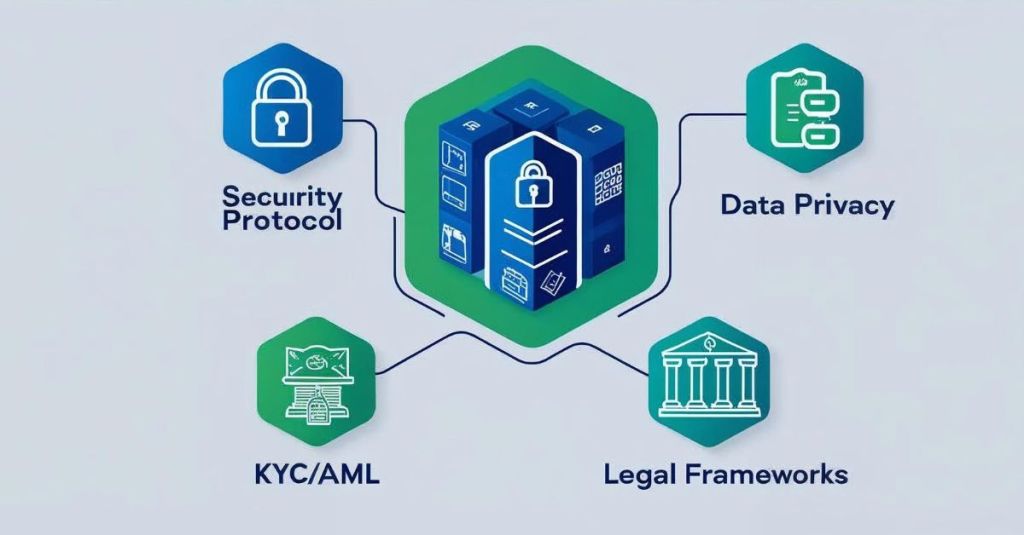
    Fintech is transforming the financial sector. As new technologies emerge, so do new risks. Regulatory compliance has become one of the top priorities for fintech app developers. It ensures that apps not only meet legal requirements but also safeguard user data, protect financial transactions, and reduce the risk of fraud.

    From financial stability to cybersecurity, the need for compliance is growing. For fintech companies, navigating the world of regulatory requirements is a must to avoid fines, reputational damage, or loss of business.

    What is Regulatory Compliance in Fintech?

    Regulatory compliance refers to the adherence to laws, regulations, and standards that govern the financial industry. For fintech apps, this means abiding by rules that control data protection, financial transactions, and user identification.

    In simpler terms, compliance ensures that a fintech app operates legally and securely, protecting both users and businesses. This includes following regulations related to data privacy, anti-money laundering, fraud prevention, and much more. Without meeting these standards, a fintech app could face legal actions, data breaches, or even shut down.

    Why is Regulatory Compliance Crucial in Fintech App Development?

    In the fintech industry, the stakes are high. Regulatory compliance is not just about avoiding penalties; it also plays a crucial role in:

    • Avoiding Legal Penalties: Non-compliance can lead to expensive fines and legal issues.
    • Gaining User Trust and Market Credibility: Financial apps handle sensitive personal and financial data. When users know the app is compliant, they feel more secure and are more likely to trust it.
    • Handling Sensitive Financial Data Securely: Compliance standards like PCI-DSS ensure that payment data is encrypted and transactions are secure, preventing data breaches and fraud.

    In essence, regulatory compliance helps fintech apps establish themselves as trustworthy and reliable in an increasingly competitive market.

    Key Regulations That Impact Fintech Apps

    There are several key regulations that fintech apps must comply with, including:

    • GDPR (General Data Protection Regulation): This regulation protects personal data of EU citizens. It requires fintech apps to securely store and process customer data and gives users the right to request their data be deleted.
    • PCI-DSS (Payment Card Industry Data Security Standard): Apps that handle payment card information must comply with PCI-DSS to ensure payment data is encrypted and secure.
    • PSD2 (Payment Services Directive 2): This EU regulation requires strong customer authentication for financial transactions and encourages open banking, enabling third-party providers to access payment account data with user consent.
    • AML (Anti-Money Laundering): AML regulations prevent money laundering and require fintech apps to monitor and report suspicious financial activities.
    • KYC (Know Your Customer): KYC regulations ensure that financial institutions verify the identity of their clients to prevent fraud and terrorism financing.

    Each of these regulations plays a critical role in ensuring fintech apps operate ethically, transparently, and securely.

    Compliance Challenges Fintech Startups Face

    For fintech startups, regulatory compliance can be especially challenging. Some of the major hurdles include:

    • Constantly Changing Laws: Regulations often change, and staying up-to-date can be overwhelming for small teams without dedicated legal resources.
    • Cross-Border Regulation Hurdles: Fintech apps that operate internationally face the added challenge of complying with multiple regulatory frameworks, each with its own rules.
    • Data Privacy Complexities: Different regions, like the EU and the U.S., have varying standards for data protection, making it tricky for apps that serve a global market to stay compliant.

    These challenges can delay product development, increase costs, and expose the business to legal and financial risks. However, addressing them early on is crucial for long-term success.

    How to Ensure Compliance While Building a Fintech App

    Ensuring compliance starts with integrating it into your app development process from the very beginning. Here’s how to ensure your fintech app stays compliant:

    • Integrate Compliance from Day One: Compliance isn’t a last-minute check. It should be part of your app’s design and development process.
    • Work with Legal and Compliance Teams: Involve experts who understand the laws in the regions you’re targeting. This will help you avoid costly mistakes.
    • Automate Compliance Checks: Use tools like RegTech (regulatory technology) to automate tasks such as KYC verification, transaction monitoring, and audit trails. This reduces the risk of human error and ensures compliance in real-time.

    By embedding compliance into your development workflow, you avoid future headaches and ensure your app meets all legal standards.

    Role of Technology in Regulatory Compliance

    Technology is a key enabler of regulatory compliance in fintech app development. The right tools can simplify the process and make it more efficient:

    • AI and Machine Learning: These technologies help detect fraud patterns and flag risky transactions in real-time, reducing the manual workload and improving security.
    • Blockchain: Blockchain technology offers transparent, immutable records, which can help with compliance in areas like data privacy and fraud prevention.
    • RegTech Integration: RegTech solutions provide software that automates compliance tasks like KYC checks, real-time monitoring, and reporting, ensuring that fintech apps remain compliant with minimal effort.

    These technological advancements make it easier for fintech companies to meet complex regulatory requirements and reduce the risks associated with non-compliance.

    The Growing Fintech Market and Compliance Demand

    The global fintech market is experiencing rapid growth. According to Fortune Business Insights, the market was valued at USD 340.10 billion in 2024 and is projected to reach USD 1,126.64 billion by 2032, exhibiting a CAGR of 16.2% during the forecast period (Fortune Business Insights).

    This significant expansion brings about several challenges, particularly in the realm of regulatory compliance. As fintech companies scale and enter new markets, they encounter a complex web of regulations that vary across regions. Ensuring compliance with these diverse legal frameworks becomes increasingly difficult but is essential to maintain operational legitimacy and user trust.

    The rising demand for compliance can be attributed to several factors:

    • Increased Regulatory Scrutiny: As the fintech sector grows, regulatory bodies are implementing stricter measures to ensure financial stability and protect consumers.
    • Cross-Border Operations: Expanding into international markets exposes fintech companies to a multitude of regulatory environments, necessitating robust compliance strategies.
    • Data Protection Concerns: With the handling of sensitive financial data, adhering to data protection regulations like GDPR becomes paramount to prevent breaches and maintain user confidence.

    In summary, the rapid growth of the fintech market amplifies the need for stringent regulatory compliance. Companies must proactively address these challenges to ensure sustainable growth and maintain the trust of their users.

    Benefits of a Compliance-First Fintech App

    A compliance-first approach offers multiple advantages:

    • Enhanced Trust and Reputation: Users are more likely to trust an app that is transparent about its compliance efforts, especially when handling their financial data.
    • Faster Approvals and Partnerships: Compliance ensures that your app can secure partnerships with financial institutions, investors, and regulatory bodies, speeding up approval processes.
    • Long-Term Scalability: When you build with compliance in mind, your app is better equipped to scale into new markets without facing legal setbacks.

    Being proactive about compliance doesn’t just protect your business; it positions you as a reliable, trustworthy brand in the competitive fintech space.

    Conclusion

    In the fast-paced world of fintech, regulatory compliance is essential. It ensures that your app operates legally, protects user data, and builds trust with customers. As the fintech market continues to grow, compliance will play a critical role in the success of your app.

    If you’re looking to partner with experts who can guide you through the complexities of fintech app development and regulatory compliance, check out a list of top fintech app development companies. and hire the best company as per your requirements

  • Explainable AI in Big Data Analytics

    In today’s rapidly evolving digital landscape, AI in Big Data has emerged as a transformative force. As vast amounts of data are generated daily, businesses are increasingly turning to artificial intelligence to derive meaningful insights and predictions. However, while AI offers immense potential, one critical challenge remains: the lack of transparency in AI decision-making. This is where Explainable AI (XAI) comes into play.

    Explainable AI refers to AI models and systems that are designed to provide clear, understandable explanations for their decisions. As organizations rely more on Big Data Analytics, the need for transparency becomes essential. Explainable AI helps ensure that these powerful tools are not just “black boxes” but are instead systems that users can trust and interpret. This blog explores the intersection of Explainable AI and Big Data Analytics, emphasizing its importance, challenges, and applications across various industries.

    Understanding Explainable AI (XAI)

    Explainable AI (XAI) is a concept that aims to make artificial intelligence models more transparent and understandable to humans. Traditional AI models, especially those used in Big Data Analytics, often operate as “black boxes,” meaning their decision-making processes are not easily interpretable. This lack of transparency can create challenges, particularly when the AI is making critical decisions that impact people’s lives, such as in healthcare or finance.

    At its core, Explainable AI is about providing users with clear insights into how AI systems arrive at their conclusions. This is crucial because businesses need to trust the decisions made by AI models. For instance, in AI in Big Data, AI systems can process large volumes of data and make predictions or decisions at a scale and speed far beyond human capabilities. However, without explainability, these systems may lack the confidence of users who are uncertain about how these predictions are made.

    The need for transparency becomes even more critical as AI systems become more integrated into real-world applications. The goal of Explainable AI is to bridge the gap between complex AI models and the human users who rely on them for important decisions.

    The Role of Big Data in AI

    Big Data plays a vital role in the development and effectiveness of AI in Big Data. The vast amounts of data generated from various sources, such as social media, sensors, and online transactions, provide the raw material that powers AI models. In turn, AI helps analyze this data to uncover patterns, trends, and insights that can drive business decisions.

    For AI to be effective in Big Data Analytics, it must be able to handle and process large volumes of data at incredible speeds. This is where AI models come into play. They can process structured and unstructured data, making it easier to extract meaningful information. However, as the volume and complexity of data grow, AI models become more intricate, and this complexity can result in decisions that are difficult to explain.

    In the context of Big Data Analytics, having transparent and interpretable AI models becomes even more critical. Without the ability to explain how an AI model arrives at its conclusions, organizations may struggle to trust its outputs. This is why Explainable AI is gaining importance, as it ensures that the insights generated by AI in Big Data are not only accurate but also understandable.

    Challenges in Big Data Analytics with AI

    Despite the numerous advantages that AI in Big Data offers, there are several challenges associated with its application. One of the primary concerns is the complexity of interpreting machine learning models, particularly when dealing with massive datasets. As the volume of data increases, the models used to analyze this data become more sophisticated. This complexity often leads to AI systems that operate as “black boxes,” making it difficult for users to understand how decisions are made.

    The lack of transparency in AI models can pose significant risks, especially when AI is used in critical industries like healthcare or finance. For example, in a healthcare setting, AI may assist in diagnosing diseases or predicting patient outcomes based on large datasets. If the model’s decision-making process is not explainable, it becomes challenging for medical professionals to trust the AI’s recommendations. This lack of trust can lead to hesitation in adopting AI-driven tools, ultimately hindering their potential benefits.

    Furthermore, there are ethical concerns tied to the use of AI in Big Data. AI models are only as good as the data they are trained on, and if the data is biased or incomplete, the AI can produce inaccurate or biased results. Without proper explainability, it becomes difficult to identify and correct these issues. This is why Explainable AI is crucial in addressing these challenges, as it helps ensure that AI models are transparent, fair, and accountable.

    Why Explainability is Crucial in Big Data AI

    The need for Explainable AI becomes even more apparent when considering the growing reliance on AI in Big Data. As organizations leverage vast amounts of data to make critical decisions, the ability to understand and trust AI models is essential. Transparency in AI decision-making helps build confidence among users and stakeholders, ensuring that the outcomes of AI systems are not only accurate but also justifiable.

    One of the main reasons Explainable AI is crucial is that it fosters trust. When decision-makers can see the reasoning behind an AI model’s predictions, they are more likely to adopt the technology and use it in high-stakes environments. This is particularly important for industries like healthcare, finance, and legal sectors, where AI decisions can have serious implications for individuals and businesses alike.

    Additionally, Explainable AI helps ensure fairness and reduces bias in AI models. By making AI decisions more transparent, organizations can identify potential biases in the data or model and take steps to address them. This transparency is key to ensuring that AI models are equitable and do not inadvertently perpetuate harmful stereotypes or unequal treatment.

    For Big Data Analytics Companies, the ability to provide explanations for AI decisions is also vital in maintaining regulatory compliance. As governments and organizations worldwide continue to develop regulations around AI usage, Explainable AI will play a key role in helping businesses adhere to these rules, avoiding legal and reputational risks.

    Approaches to Explainable AI in Big Data Analytics

    There are several approaches to implementing Explainable AI in the context of Big Data Analytics. These approaches aim to make AI models more interpretable, enabling businesses to trust and understand their decisions. Below are some of the most commonly used methods:

    • Model-Based Approaches: These are AI models that are inherently interpretable. For example, decision trees and linear models are relatively simple and provide clear decision-making pathways. These models allow users to trace the logic behind each decision, making it easier to understand how a prediction or recommendation was made.
    • Post-Hoc Methods: In cases where the model is more complex, such as deep learning models, post-hoc explainability methods can be applied. Techniques like LIME (Local Interpretable Model-agnostic Explanations) and SHAP (Shapley Additive Explanations) provide insights into complex models by approximating them with simpler, interpretable models. These methods help explain the behavior of the AI model after it has been trained, offering a layer of transparency.
    • Visualization Techniques: Visualization is another powerful tool for making AI models more understandable. By visualizing the relationships between features in the dataset and the predictions made by the model, businesses can gain a better understanding of how data is influencing the model’s decisions. These visualizations can be particularly useful for analysts working with Big Data Analytics, as they provide a clear, intuitive way to interpret complex models.
    • Hybrid Approaches: A combination of model-based and post-hoc methods can also be used to enhance explainability. For instance, a more complex model can be combined with simpler decision rules or visualizations to give users a deeper understanding of how decisions are being made. This hybrid approach offers a balance between accuracy and interpretability, which is especially important in AI in Big Data environments where large datasets may require complex models.

    These approaches are critical in ensuring that AI models are not only powerful but also understandable and transparent. By implementing these strategies, businesses can improve their decision-making processes and ensure that their AI systems are reliable and trustworthy.

    Explainable AI Use Cases Across Various Industries

    The importance of Explainable AI is evident across various industries that rely heavily on AI in Big Data to drive their decision-making processes. By making AI systems more interpretable, organizations can not only improve trust and transparency but also unlock the full potential of their data. Below are some notable Explainable AI use cases across various industries:

    • Healthcare: In the healthcare industry, AI models are often used to predict patient outcomes, diagnose diseases, and recommend treatment plans based on vast amounts of medical data. Explainable AI is particularly important here because medical professionals need to understand how AI models arrive at their conclusions. For example, an AI model might suggest a particular course of treatment, but doctors need to know the factors that led to that recommendation. Explainable AI helps ensure that healthcare providers can trust AI predictions and integrate them into their clinical decision-making process.
    • Finance: In the financial sector, AI is widely used for tasks such as credit scoring, fraud detection, and algorithmic trading. These AI systems often process massive amounts of transactional data to identify patterns and make predictions. However, the lack of transparency in these models can create challenges, particularly when customers or regulators question the fairness of decisions. By implementing Explainable AI, financial institutions can provide clear explanations for decisions like loan approvals or fraud alerts, ensuring that their AI systems are both fair and transparent.
    • Marketing: AI in Big Data plays a crucial role in the marketing industry, where AI models are used to segment customers, personalize recommendations, and optimize campaigns. Explainable AI allows marketers to understand which features of customer data are influencing AI-generated recommendations. This transparency helps businesses improve their marketing strategies and ensure that their recommendations are not only effective but also ethical and unbiased.
    • Autonomous Systems: One of the most exciting areas where Explainable AI is being applied is in autonomous vehicles and drones. These systems rely on complex AI algorithms to make real-time decisions, such as navigating traffic or avoiding obstacles. Explainable AI is essential in these contexts to ensure that the decision-making process is understandable to engineers, regulators, and even passengers. By providing explanations for actions like turning, braking, or accelerating, Explainable AI can enhance the safety and accountability of autonomous systems.

    These examples demonstrate the versatility of Explainable AI across industries and its potential to foster trust, fairness, and transparency. As AI continues to play a larger role in Big Data Analytics, the demand for explainable models will only grow.

    The Future of Explainable AI in Big Data

    As the reliance on AI in Big Data continues to grow, the future of Explainable AI looks promising. The demand for transparency and trust in AI models is pushing the development of new techniques and technologies that make AI more interpretable. Here are some trends and advancements to look out for in the future of Explainable AI:

    • Advancements in Explainability Techniques: As AI models become more complex, new methods for explainability are being developed. Researchers are focusing on improving the interpretability of deep learning models and other advanced AI techniques. The use of model-agnostic approaches, such as LIME and SHAP, is expected to evolve, making them more effective and accessible for a wide range of AI applications in Big Data Analytics.
    • AI Governance and Regulation: As AI becomes more integrated into decision-making processes, governments and regulatory bodies are increasingly focusing on AI governance and transparency. Regulations may require companies to provide explanations for AI decisions, especially in sectors like healthcare, finance, and law. Explainable AI will play a crucial role in helping businesses comply with these regulations, ensuring that AI systems are not only effective but also accountable.
    • Integration with Human Expertise: In the future, Explainable AI is likely to be more integrated with human expertise. AI systems will not only provide explanations but also work in collaboration with human decision-makers. For example, in healthcare, AI might provide diagnostic suggestions alongside a clear explanation, allowing doctors to make informed decisions based on both human knowledge and AI insights.
    • Improved AI Trust and Adoption: The increasing focus on explainability will lead to greater trust in AI systems. As businesses and consumers become more confident in AI’s decision-making process, the adoption of AI-driven solutions will expand across industries. This will drive further innovation in AI in Big Data and open up new possibilities for AI applications in areas such as personalized medicine, predictive maintenance, and smart cities.

    The future of Explainable AI in Big Data Analytics is bright. As technology evolves, so too will the methods and applications for making AI more transparent. With greater explainability, businesses can unlock the full potential of their AI systems while ensuring that these technologies remain trustworthy, fair, and accountable.

    Conclusion

    In conclusion, Explainable AI plays an essential role in the growing field of Big Data Analytics. As AI systems become increasingly integrated into decision-making processes, it is critical that these systems are transparent, interpretable, and understandable. The benefits of Explainable AI are clear—it fosters trust, ensures fairness, and helps businesses comply with regulatory requirements.

    Across industries like healthcare, finance, marketing, and autonomous systems, the demand for explainable AI use cases across various industries is on the rise. Big Data Analytics Companies are beginning to recognize the importance of explainability and are adopting solutions that provide insights into AI decision-making processes.

    Looking ahead, the future of Explainable AI is bright. Advancements in AI techniques, regulatory developments, and the integration of human expertise will continue to drive the evolution of Explainable AI in Big Data Analytics. By focusing on transparency and accountability, Explainable AI Companies will play a pivotal role in shaping the future of AI technologies, ensuring that businesses can confidently rely on these systems for informed decision-making.

    For businesses looking to integrate AI into their operations, embracing Explainable AI is not just a necessity but an opportunity to build trust, improve outcomes, and drive innovation. As the field continues to evolve, the integration of Explainable AI in Big Data Analytics will unlock new possibilities for AI-powered decision-making across various industries.

  • How AI Companies help Small Businesses?

    How AI Companies help Small Businesses?

    Small businesses often operate with limited resources, smaller teams, and tight budgets. Competing in fast-moving markets while managing customer expectations, operations, and growth can be challenging. That is where AI development companies step in with solutions that were once out of reach for smaller ventures.

    Today, AI companies are no longer focused only on large enterprises. Many offer accessible and affordable tools built specifically for small businesses. These solutions are not only easy to use but also designed to improve everyday functions such as customer service, marketing, inventory, and analytics.

    The growing presence of AI in business processes has opened new possibilities for small enterprises. Intelligent systems now automate tasks, uncover valuable insights, and support faster decision-making. This shift is helping small businesses stay efficient, responsive, and sustainable in increasingly competitive markets.

    How AI Companies Support Small Business Growth?

    AI development companies are playing a key role in helping small businesses stay efficient, customer-focused, and competitive. Their solutions are no longer limited to high-tech enterprises. From local shops to growing startups, small businesses across industries are using AI-powered systems to simplify operations and improve outcomes.

    These AI companies offer practical tools and services that address real challenges. Whether it is automating daily tasks or offering personalized customer experiences, their contributions are both measurable and impactful.

    Providing Simple AI Solutions for Everyday Business Needs

    AI development companies build tools that are specifically designed to fit the needs and limitations of small businesses. These tools focus on solving common challenges like managing customer data, handling schedules, tracking inventory, and streamlining communications.

    Instead of requiring advanced technical skills or large teams, these solutions are created to be user-friendly. Many platforms offer intuitive interfaces, making it easy for business owners and employees to adopt them quickly. This level of simplicity reduces the learning curve and ensures that businesses can start seeing results sooner.

    With flexible pricing models, these services become accessible even to businesses with limited budgets. This practical approach helps small businesses unlock the power of AI without stretching their resources.

    Offering Customized AI Guidance and Setup

    Top Artificial intelligence companies do more than just deliver software. Many offer personalized consultation to understand the unique structure, goals, and pain points of a small business. This makes it easier to implement AI solutions that actually fit the workflow instead of forcing changes.

    Once a solution is selected, AI companies help with integration, ensuring that it works well with existing systems. From training staff to setting up automation rules, their hands-on approach creates a smooth transition.

    By working with an AI development company, small businesses gain a partner that understands their environment and works toward long-term success, not just short-term fixes.

    Automating Repetitive Work to Free Up Time

    Time is one of the most valuable resources for any small business. AI companies help maximize it by automating routine and repetitive tasks that often consume hours every week. Activities like data entry, invoice generation, appointment scheduling, and order processing can be managed more efficiently using AI-powered systems.

    Artificial Intelligence development service providers offer tools that are designed to handle these tasks with minimal supervision. This reduces the risk of manual errors and allows teams to shift their focus to areas that need creative thinking and personal attention. For small businesses that work with tight schedules and limited staff, automation becomes a reliable way to increase productivity.

    As these automated systems continue to learn from data, they become smarter over time, which leads to even better performance and faster results.

    Helping Small Businesses Build Better Customer Relationships

    AI companies play a major role in improving how small businesses connect with their customers. They provide advanced tools such as AI-powered chatbots and virtual assistants that can engage with customers around the clock. These systems respond instantly to inquiries, book appointments, recommend products, and resolve common issues—all without human involvement.

    For small businesses, this means being available at all times without having to expand the team. These tools not only improve response times but also create a more personalized experience for each customer.

    AI developers also help set up systems that collect and analyze customer data. This allows businesses to understand buying patterns, preferences, and feedback more clearly. With that knowledge, it becomes easier to offer services and products that actually meet customer needs, which leads to higher satisfaction and stronger loyalty.

    Improving Marketing and Sales Strategies with AI Insights

    AI development companies provide tools that help small businesses understand their customers better and reach them more effectively. By analyzing data from websites, social media, emails, and past purchases, these Artificial Intelligence tools can highlight current trends, preferences, and buying behaviors of targeted customers.

    This helps businesses create more personalized marketing campaigns, send better-targeted messages, and promote the right products to the right people. AI tools also support automated campaign management, from scheduling posts to following up with leads.

    For sales teams, AI-powered systems can score leads, suggest next steps, and forecast demand more accurately. With support from AI development firms, small businesses can use this information to make smarter decisions, attract more customers, and close deals faster.

    Supporting Smarter Decisions Through Predictive Analytics

    Decision-making is important for small businesses, especially when resources are limited and changes in the market happen quickly. AI companies offer predictive analytics tools that turn data into clear, useful insights that help revolutionize decision-making for them.

    These tools help track business performance, customer trends, seasonal changes, and financial patterns. AI development service-providing companies assist in setting up these systems so that business owners can monitor everything in one place and get alerts when something needs attention.

    By using AI to forecast demand, plan inventory, or identify rising customer needs, small businesses gain a competitive edge. These insights reduce guesswork and allow teams to take action based on data rather than assumptions.

    Offering Scalable AI Solutions That Grow with the Business

    Artificial Intelligence development companies understand that small businesses are always evolving. What works today may need to expand tomorrow, especially as customer demand increases or new markets are explored. That is why leading AI development service providers offer scalable solutions that adapt as the business grows.

    Whether it involves adding new users, features, or locations, these AI systems are built to handle change without requiring a complete overhaul. To scale with AI, businesses can start with a basic setup and gradually introduce more advanced features as their needs expand.

    This flexibility allows small businesses to invest with confidence, knowing that their AI solutions can support both present operations and future goals. With the right AI partner, growth does not come with growing pains.

    Helping Small Businesses Stay Compliant and Secure

    AI companies also play an important role in protecting small businesses from data-related risks. As businesses collect more customer information and rely on digital systems, the need for strong data security and compliance becomes critical.

    AI development services providers offer solutions with built-in protections that follow established standards and legal requirements. This includes tools that manage data access, encryption, backup, and user permissions, all while maintaining transparency.

    By working with experienced AI developers, small businesses gain access to trusted systems that reduce the risk of security breaches or legal issues. This helps build customer trust and ensures that the business runs responsibly.

    Conclusion

    The support provided by AI development companies is changing how small businesses approach growth, efficiency, and customer experience. These solutions are no longer distant innovations meant only for large enterprises. They are practical, accessible, and deeply relevant to the everyday operations of smaller ventures.

    From simplifying processes to improving decision-making, AI companies are enabling businesses to act with more confidence and agility. Their ability to turn raw data into meaningful actions gives small teams the same strategic edge that larger players once dominated.

    As AI tools continue to evolve, small businesses that embrace these advancements early are more likely to set new benchmarks in performance and customer value. The presence of Top AI companies in this space reinforces that intelligent solutions can be delivered with precision, scale, and impact—no matter the size of the business.

  • How to scale a business with AI?

    How to scale a business with AI?

    Scaling a business means more than just increasing sales or opening new branches. It is about building a foundation that supports consistent growth, smoother operations, and stronger customer connections. As businesses look for smarter ways to grow, AI is becoming one of the most trusted tools in the process.

    AI is no longer reserved for large tech companies. Businesses of all sizes are using AI to streamline work, reduce manual tasks, and improve decision-making. With the help of AI development, companies can gain valuable insights, automate key operations, and offer better experiences to customers without always adding more staff or overhead.

    The shift is already visible across industries. From customer service to inventory planning, AI is helping businesses move faster, stay organized, and remain competitive in changing markets. Instead of relying only on traditional strategies, businesses now have access to intelligent systems that learn, adapt, and support scalable growth.

    This blog explores how AI can be used effectively to scale a business, step by step, without overwhelming resources or disrupting existing operations.

    How to Scale a Business with AI?

    Scaling a business with AI begins by understanding where it fits and how it adds value. AI is not a one-size-fits-all solution, but when applied thoughtfully, it becomes a powerful asset for growth. Whether the goal is to serve more customers, expand into new markets, or increase internal efficiency, AI supports these ambitions by doing what traditional systems cannot. The key lies in choosing the right areas to apply AI and following a step-by-step approach that aligns with the business model.

    Below are foundational steps that help start the journey toward AI-driven scaling.

    Understand What Scaling Means for Your Business

    Before using AI, it is important to define what scaling looks like for the business. For some, it could be faster service delivery. For others, it might be reaching more customers across different regions. Every business has its own version of growth, and AI development should align with those specific goals.

    This step also involves identifying challenges that stand in the way of scaling. Whether it’s a shortage of staff, inconsistent customer service, or manual processes slowing down operations, these are areas where AI can help. Once the goals and hurdles are clear, the path to using AI becomes more focused and meaningful.

    Pinpoint the Business Functions Where AI Fits Best

    Not every part of a business may need AI right away, and that is perfectly fine. A good starting point is to find areas that already generate data, involve repetitive work, or require fast responses. These are often the best places to apply AI and see quick results.

    Customer service is one common area. AI chatbots can handle frequent queries and free up human teams to focus on complex issues. In marketing, AI can help segment audiences, recommend content, and predict trends. For operations, AI improves inventory control, supply chain planning, and demand forecasting. Even hiring processes in human resources can benefit through AI tools that screen candidates efficiently.

    By identifying and focusing on the right business functions, AI becomes a practical tool for scaling instead of a complex add-on.

    Choose the Right AI Tools

    Once the business areas for AI are identified, the next step is selecting the right tools. There are many AI solutions available today, ranging from plug-and-play platforms to custom-built systems. Choosing the right one depends on the business size, goals, and technical capabilities.

    For businesses with limited technical teams, ready-to-use AI tools for customer service, analytics, or marketing automation offer a quick start. These tools can often be integrated with existing systems, allowing businesses to benefit from AI without major changes. On the other hand, businesses looking for unique solutions may prefer custom AI development that matches specific workflows or industry needs.

    It is also important to consider long-term goals. As the business grows, the AI solution should be flexible enough to handle more data, more users, or more features. Choosing scalable tools ensures that the AI system grows along with the business instead of holding it back.

    Selecting the Right AI Tech Stack

    Selecting the right AI tech stack is one of the most important decisions when planning to scale a business with AI. A well-suited tech stack ensures that the AI systems work smoothly with existing infrastructure while remaining flexible enough to support future growth. It also directly impacts how quickly solutions can be implemented, how effectively they perform, and how easily they can be improved over time.

    The AI tech stack typically includes tools for data collection, data storage, machine learning frameworks, model training platforms, and deployment environments. For businesses aiming to scale, it is important to choose technologies that support scalability, security, and integration with core business systems. Using cloud-based platforms is often a smart choice, as they offer reliable performance, easy updates, and access to computing resources without the need for heavy investments in hardware.

    Equally important is the compatibility between tools. The AI development process becomes more efficient when components in the stack work together without friction. Whether using pre-built solutions or building custom models, a well-integrated stack reduces delays and simplifies ongoing management.

    In short, choosing the right AI tech stack sets the foundation for how easily AI solutions can be adopted, maintained, and scaled across the business. Making thoughtful choices at this stage helps avoid future roadblocks and supports a smoother path to growth.

    Start with a Focused AI Pilot Project

    Rather than applying AI across all areas at once, it is more effective to begin with a small, focused project. A pilot helps test the technology in a controlled environment, measure outcomes, and understand what works best.

    For example, a retail business might use AI to recommend products to online shoppers. A service-based business might introduce an AI chatbot to handle common inquiries. These small projects create measurable value quickly and help build confidence in AI as a tool for growth.

    Pilots also provide real-time learning. Businesses can gather feedback, fine-tune the system, and ensure that AI is being used in a way that truly supports scaling. Once the pilot shows positive results, the approach can be expanded to other parts of the business smoothly and with less risk.

    Use AI Insights to Make Smarter Business Decisions

    One of the biggest advantages of using AI in business is its ability to analyze data and deliver meaningful insights. These insights help decision-makers act with greater clarity and speed. Instead of relying only on past experiences or guesswork, businesses can now understand trends, customer behavior, and market shifts in real time.

    For example, AI can track buying patterns to forecast demand, helping businesses manage inventory more effectively. It can also monitor customer feedback to improve products or services. In sales and marketing, AI insights can identify which campaigns are working best and where improvements are needed.

    Using these insights allows businesses to stay proactive rather than reactive. It supports better planning, sharper execution, and fewer costly errors. Over time, this contributes directly to steady and scalable business growth.

    Build an AI-Ready Team and Culture

    Scaling with AI is not just about tools and technology. It also requires a team that is ready to work with AI and a culture that welcomes change. Employees play a key role in how well AI is adopted and used across the business.

    The first step is to invest in basic training so that employees understand what AI can do and how it supports their roles. This helps reduce fear or resistance and encourages a more open mindset. It is also useful to assign specific teams or leaders to guide AI adoption, solve problems, and share success stories internally.

    Creating a culture where AI is seen as a support rather than a replacement builds trust and enthusiasm. When teams are engaged and informed, they become more willing to experiment, learn, and grow with the technology.

    Keep Evolving Your AI Strategy as You Grow

    AI is not a one-time setup. As the business scales, its needs and challenges also evolve. To keep getting value from AI, it is important to review the strategy regularly and make adjustments based on changing goals and market conditions.

    This involves tracking key performance indicators, checking system performance, and updating AI tools as needed. As new AI features or technologies become available, businesses should explore how they can enhance current systems or unlock new opportunities.

    Regular evaluation helps identify gaps, improve accuracy, and ensure that AI continues to align with business objectives. Staying flexible and open to change allows businesses to grow without being limited by outdated processes or tools.

    Conclusion: AI Is the Smartest Way to Scale Sustainably

    Scaling a business is no longer limited to hiring more staff or increasing budgets. It now involves making smarter use of technology to handle more work with fewer resources. AI supports this shift by enabling intelligent automation, better decision-making, and data-driven strategies. When used effectively, AI does not just support scaling; it becomes the core engine behind it.

    As AI tools continue to advance, businesses can explore solutions built by top AI companies that offer both innovation and reliability. These technologies are shaping how businesses operate at every level, from internal workflows to customer experiences. The key is to focus on long-term value, not just short-term fixes.

    By keeping AI development aligned with business goals and continuously refining its use, businesses can scale with stability, clarity, and confidence in a fast-changing world.

  • Top Use Cases of Big Data Analytics in Different Industries

    The world is generating data at an unprecedented rate. Every click, purchase, search, and interaction adds to a growing pool of information. Big data analytics helps industries make sense of this vast amount of data. It allows businesses to uncover patterns, predict trends, and make smarter decisions.

    Different industries are using big data analytics to transform how they operate. From healthcare to finance, retail to manufacturing, big data is creating new possibilities. In this blog, we will explore how various sectors are using big data analytics to improve performance, efficiency, and customer satisfaction.

    Big Data Analytics in Healthcare

    Healthcare is becoming smarter with the help of big data analytics. Hospitals use patient history and real-time data to predict health risks and improve treatments. Wearable devices provide continuous health monitoring, allowing doctors to respond quickly to urgent situations.

    The role of AI in big data is especially important in personalized medicine. By analyzing genetic and medical data, healthcare providers can create custom treatment plans. This leads to better outcomes and more efficient care.

    Big Data Analytics in Finance

    The finance industry depends on data for accuracy and security. Big data analytics helps detect fraudulent transactions by identifying unusual patterns in real time. Financial institutions also use data to manage risks and ensure compliance with regulations.

    Algorithmic trading is another key use case. It uses data-driven models to make faster and smarter investment decisions. Banks and financial companies also improve customer service by offering personalized advice and product recommendations.

    Big Data Analytics in Retail

    Retail businesses use big data to understand customer behavior. Analyzing purchase history and browsing patterns helps stores offer personalized shopping experiences. This leads to better customer satisfaction and increased sales.

    Retailers also use data to optimize inventory and manage supply chains. They predict demand trends and avoid stock shortages or excess. Pricing strategies are also improved through data analysis, ensuring competitive and profitable pricing.

    Big Data Analytics in Manufacturing

    Manufacturing companies use big data to improve efficiency and reduce downtime. Predictive maintenance is one example, where machines are monitored, and repairs are done before failures occur. This reduces costs and keeps operations running smoothly.

    Quality control is another area where data helps. By analyzing production data, manufacturers detect defects early and maintain product standards. Demand forecasting also benefits from big data, allowing better planning and resource allocation.

    Big Data Analytics in Transportation and Logistics

    The transportation industry relies on big data for smooth operations. Route optimization helps companies deliver goods faster and reduce fuel consumption. Fleet management uses data to track vehicles and monitor driver performance.

    Predictive maintenance ensures that vehicles stay in top condition, preventing delays and accidents. Real-time tracking and data analysis improve delivery times and customer satisfaction. These data-driven solutions make logistics more efficient and reliable.

    Big Data Analytics in Media and Entertainment

    Media platforms use big data to recommend content that matches viewer preferences. Streaming services analyze viewing habits to suggest shows and movies, increasing engagement.

    Advertisers also benefit by targeting the right audience with relevant ads. Content creators use data insights to plan and develop popular content. This data-driven approach keeps audiences entertained and coming back for more.

    Emerging Big Data Analytics Trends Across Industries

    Big data analytics is evolving with new advancements that benefit many industries. One of the key big data analytics trends is the shift toward real-time data processing. Companies are making quicker decisions by analyzing data as it comes in rather than waiting for reports.

    Edge computing is also becoming more popular. It allows data processing closer to the source, reducing delays and improving efficiency. Another growing trend is the focus on data privacy. Businesses are working to handle customer data responsibly while still gaining valuable insights.

    These trends show that big data is not standing still. It continues to open new opportunities for industries to work smarter and faster.

    How Big Data Analytics Companies Are Driving Innovation

    Industries are turning to specialized big data analytics companies to manage and make sense of their data. These companies provide advanced tools and platforms that help businesses collect, process, and analyze large datasets. With their expertise, organizations can uncover hidden patterns and make better decisions.

    They also help businesses customize solutions to fit specific goals. Whether it is automating processes or improving customer insights, these companies play an essential role. Their services help businesses stay competitive in a fast-changing market. As the demand for smarter data solutions grows, these companies continue to drive innovation across different industries.

    Conclusion

    Big data analytics is changing the way industries operate. It helps businesses make smarter decisions, improve efficiency, and deliver better services. From healthcare to retail, transportation to finance, every industry is finding new ways to benefit from data-driven strategies.

    Companies that stay updated with the latest trends and technologies will gain a competitive advantage. The use of real-time data, edge computing, and artificial intelligence will continue to shape the future. By working with the right experts and adopting smart solutions, businesses can unlock the full potential of big data.

    The industries that embrace these opportunities today will lead the way tomorrow. Big data is not just a tool. It is a powerful driver of growth and innovation.

  • Exploring the Essential Key Technologies Used in AI Model Development

    In the rapidly evolving field of artificial intelligence, the development of AI models relies heavily on a range of advanced technologies. These technologies provide the foundation for creating intelligent systems that can learn from data, recognize patterns, and make decisions. The right combination of tools and technologies is essential for businesses to build AI models that meet specific goals, from automating processes to improving decision-making.

    AI model development encompasses a variety of disciplines, from machine learning to data processing and deep learning. The choice of AI technology stack used plays a significant role in determining the performance and scalability of the final product. In this blog, we will explore the core technologies commonly used in AI model development, shedding light on their importance and how they contribute to the success of AI initiatives.

    Top Technologies Used in AI Model Development

    AI model development involves a wide range of technologies that support every stage, from data collection to model training and deployment. These technologies work together to enable businesses to build sophisticated AI models that can process data, recognize patterns, and make intelligent decisions.

    The core technologies essential to AI model development include programming languages, machine learning frameworks, deep learning architectures, and other supporting tools. Each of these technologies plays a vital role, and their combination can significantly impact the effectiveness and efficiency of AI systems. Top-most AI companies specialize in leveraging these technologies to create powerful AI models tailored to specific business needs. By utilizing the right technologies, AI development companies can help businesses enhance their AI capabilities and stay competitive in their industries.

    Programming Languages

    Programming languages are fundamental to the creation and development of AI models. They provide the structure and syntax for writing algorithms that allow machines to learn, adapt, and make decisions. The choice of programming language directly affects the speed, scalability, and functionality of AI systems. Here are the primary programming languages used in AI model development:

    Python

    • Widely regarded as the most popular language for AI development due to its simplicity and versatility.
    • It boasts an extensive ecosystem of libraries that support AI applications, such as TensorFlow, PyTorch, scikit-learn, and Keras.
    • Python’s rich data handling capabilities make it ideal for working with large datasets, which is essential in AI model training.
    • The ease of integration with other technologies and tools, such as web frameworks and cloud platforms, makes Python an ideal choice for end-to-end AI development.

    R

    • R is a programming language primarily used for statistical analysis and data visualization.
    • It is favored for AI models requiring heavy statistical computations or for analyzing large datasets that need advanced processing.
    • Key libraries such as caret, randomForest, and e1071 support machine learning and statistical modeling in R.
    • Data scientists often choose R for its extensive data manipulation capabilities and statistical modeling tools, making it valuable in fields like finance and healthcare where statistical accuracy is critical.

    Java

    • Java is known for its scalability, portability, and performance, which make it an excellent choice for large-scale AI applications.
    • Java’s object-oriented nature and strong multi-threading capabilities allow it to manage complex and resource-intensive tasks effectively.
    • Libraries such as Deeplearning4j, Weka, and MOA are designed for building AI models in Java, particularly in business and enterprise-level applications.
    • Its use in big data processing, through integration with platforms like Apache Hadoop and Apache Spark, makes Java a top choice for AI projects that deal with large amounts of data and require high-level parallel processing.

    These programming languages are the foundation of AI model development. Each offers distinct advantages depending on the specific needs of the business and the project at hand.

    Machine Learning Frameworks

    Machine learning frameworks provide the tools and structures required to design, train, and deploy machine learning models. These frameworks simplify the process of creating AI models by offering pre-built functions, algorithms, and support for various machine learning techniques. They help businesses streamline development, reduce complexity, and accelerate time-to-market for AI applications. Below are some of the most widely used machine learning frameworks in AI model development:

    TensorFlow

    • Developed by Google, TensorFlow is an open-source machine learning framework that supports a wide range of AI applications.
    • It is particularly well-known for its deep learning capabilities and is widely used in building neural networks.
    • TensorFlow offers flexibility for both research and production-level applications, with tools for deploying models across devices (mobile, web, cloud) and integrating with other technologies.
    • TensorFlow provides a high-level API (TensorFlow Keras) that makes it easy for developers to build deep learning models without needing extensive knowledge of the underlying workings.

    PyTorch

    • PyTorch is an open-source machine learning library that is particularly favored in research and academic circles due to its dynamic computation graph.
    • It is known for its simplicity and flexibility, allowing developers to easily adjust models and experiment with new techniques.
    • PyTorch has become increasingly popular in the industry as well, especially for deep learning tasks, thanks to its ease of use and scalability.
    • Libraries like TorchVision and TorchText extend PyTorch’s capabilities for computer vision and natural language processing tasks.

    scikit-learn

    • scikit-learn is one of the most widely used libraries for classical machine learning techniques, including regression, classification, clustering, and dimensionality reduction.
    • Built on top of NumPy, SciPy, and matplotlib, scikit-learn provides simple and efficient tools for data mining and analysis.
    • It is often the first choice for developers and data scientists working on projects that involve structured data, as it provides easy-to-use APIs and seamless integration with other libraries.
    • While not as focused on deep learning as TensorFlow or PyTorch, scikit-learn is excellent for handling traditional machine learning tasks and for prototyping machine learning models quickly.

    These machine learning frameworks provide the essential infrastructure for developing a wide range of AI applications, from basic machine learning tasks to complex deep learning projects. Their robust tools and libraries help developers accelerate the development process while ensuring the efficiency and scalability of AI systems.

    Deep Learning Architectures

    Deep learning architectures are specialized neural network models designed to handle large datasets, recognize intricate patterns, and perform tasks like image and speech recognition, natural language processing, and more. These architectures form the backbone of many advanced AI systems today, enabling machines to mimic human-like intelligence. Below are some of the most widely used deep learning architectures in AI model development:

    Neural Networks

    • The foundation of deep learning, neural networks consist of layers of interconnected nodes, or “neurons,” that simulate the way the human brain processes information.
    • Each node processes input data and passes the result to the next layer, allowing the network to learn patterns from data through backpropagation and gradient descent.
    • Neural networks are widely used in tasks such as image recognition, speech processing, and time series forecasting, providing powerful solutions for many real-world applications.

    Convolutional Neural Networks (CNNs)

    • CNNs are a specialized type of neural network designed to process grid-like data such as images.
    • They use convolutional layers that apply filters to the input data, allowing the network to detect features like edges, textures, and shapes.
    • CNNs excel at image classification, object detection, and video analysis, making them essential for applications in areas like computer vision and autonomous vehicles.

    Recurrent Neural Networks (RNNs)

    • RNNs are designed to handle sequential data, where the order of information matters, such as in time series analysis, speech recognition, and natural language processing.
    • They use feedback loops within the network to retain information from previous time steps, making them effective at processing sequences like text or audio.
    • Long Short-Term Memory (LSTM) networks and Gated Recurrent Units (GRUs) are advanced RNN variants that help overcome the limitations of traditional RNNs, such as the vanishing gradient problem.

    Generative Adversarial Networks (GANs)

    • GANs consist of two neural networks—the generator and the discriminator—that compete against each other in a process called adversarial training.
    • The generator creates data (like images or text) that mimics real-world examples, while the discriminator evaluates the generated data to determine whether it’s real or fake.
    • GANs are highly effective for generating synthetic data, such as realistic images, videos, and even music, and are used in applications like image enhancement and data augmentation.

    These deep learning architectures are crucial for developing cutting-edge AI models. Their ability to learn from large, complex datasets allows them to solve problems that traditional machine learning techniques might struggle with, pushing the boundaries of what AI can achieve.

    Natural Language Processing (NLP) Tools

    Natural Language Processing (NLP) involves enabling machines to understand, interpret, and generate human language. It plays a key role in AI applications that require interaction with human language, such as chatbots, sentiment analysis, and machine translation. NLP tools help break down human language into a structured form that machines can process, making them essential for AI systems focused on language-related tasks. Below are some of the primary NLP tools used in AI model development:

    NLTK (Natural Language Toolkit)

    • NLTK is one of the most comprehensive libraries for working with human language data in Python.
    • It provides a wide range of resources, such as tokenizers, part-of-speech taggers, and corpora, allowing developers to perform various NLP tasks with ease.
    • NLTK is widely used in text processing, information retrieval, and linguistic analysis, making it suitable for both academic and commercial NLP applications.
    • It supports multiple languages, making it a versatile tool for global applications.

    spaCy

    • spaCy is a high-performance NLP library for Python designed specifically for production use, focusing on speed and efficiency.
    • Unlike NLTK, which is more research-oriented, spaCy is optimized for real-time, large-scale NLP applications, offering tools for tokenization, dependency parsing, and named entity recognition (NER).
    • It includes pre-trained models for multiple languages and integrates seamlessly with deep learning frameworks like TensorFlow and PyTorch, making it suitable for building advanced NLP models in areas like chatbots and question-answering systems.

    GPT Models (Generative Pre-trained Transformers)

    • GPT models, such as OpenAI’s GPT-3, are transformer-based models that use large-scale unsupervised learning to understand and generate human-like text.
    • These models are capable of contextual language generation, allowing them to produce coherent and contextually relevant text for a wide range of applications, from content creation to customer support.
    • GPT models are known for their ability to generate human-like conversations, making them widely used in creating chatbots and automating content creation in fields like marketing and journalism.

    BERT (Bidirectional Encoder Representations from Transformers)

    • BERT is another transformer-based model developed by Google that excels at understanding the context of words in relation to other words in a sentence.
    • BERT’s bidirectional training allows it to capture context from both directions (left-to-right and right-to-left), making it highly effective for tasks like question answering, sentiment analysis, and text classification.
    • BERT has significantly advanced the state of NLP, especially in semantic understanding and contextual text representation, leading to its widespread adoption in a variety of NLP tasks.

    These NLP tools enable businesses to develop systems capable of processing and understanding natural language with high accuracy. Whether for building conversational agents or analyzing large volumes of text data, these tools form the backbone of many language-based AI applications.

    Data Processing and Analysis Tools

    Effective data processing and analysis are critical components of AI model development. AI models rely on large datasets to learn and make predictions, and these datasets often need significant processing to ensure they are clean, structured, and ready for training. Data processing tools help in transforming raw data into a usable format, while analysis tools assist in extracting insights, visualizing patterns, and refining the model’s accuracy. Here are some of the most widely used data processing and analysis tools in AI development:

    Pandas

    • Pandas is a powerful Python library for data manipulation and analysis, making it one of the most widely used tools for working with structured data, such as tables or spreadsheets.
    • It provides easy-to-use data structures like DataFrames that simplify tasks like data cleaning, transformation, and aggregation.
    • Pandas integrates seamlessly with other libraries, such as NumPy and scikit-learn, and is used for data wrangling—removing or replacing missing values, filtering outliers, and merging multiple datasets.

    NumPy

    • NumPy is a foundational library for numerical computing in Python, providing support for multi-dimensional arrays and matrices.
    • It offers a wide range of mathematical functions for performing complex calculations, such as linear algebra, Fourier analysis, and random number generation.
    • NumPy’s high-performance array operations make it essential for large-scale data processing tasks, allowing businesses to efficiently handle and manipulate large datasets before feeding them into machine learning models.

    Matplotlib

    • Matplotlib is a data visualization library in Python that enables the creation of static, animated, and interactive plots and graphs.
    • It is widely used to visualize complex datasets, enabling data scientists to detect patterns, trends, and outliers in the data.
    • Whether creating bar charts, line graphs, or scatter plots, Matplotlib is essential for making sense of data, aiding in model evaluation, and presenting results in a visually appealing format.

    Seaborn

    • Built on top of Matplotlib, Seaborn is a statistical data visualization library that provides more advanced plotting features and themes for improving data visualization.
    • Seaborn is particularly useful for visualizing relationships between variables, such as correlation matrices, distribution plots, and heatmaps, which are crucial when analyzing features in machine learning models.
    • It allows for quick visual insights into the data and helps identify relationships that may be critical for improving model performance.

    SciPy

    • SciPy is an open-source Python library used for scientific and technical computing, providing additional functionality to NumPy with functions for optimization, integration, interpolation, eigenvalue problems, and other advanced mathematical tasks.
    • It plays an important role in AI model development, particularly in data transformation and optimization processes. SciPy’s diverse set of functions supports the fine-tuning of models during the training phase.

    These data processing and analysis tools help businesses prepare high-quality data, which is crucial for developing efficient and accurate AI models. By cleaning, transforming, and analyzing data before training models, businesses can ensure their AI systems are built on a strong foundation.

    Hardware Accelerators

    In AI model development, hardware accelerators play a critical role in speeding up the training and execution of machine learning and deep learning models. AI models, especially those involving large datasets and complex computations, require substantial processing power. Hardware accelerators, such as GPUs and TPUs, are designed to handle these intensive computational tasks efficiently, reducing the time needed for training models and improving overall performance. Below are the primary hardware accelerators used in AI model development:

    Graphics Processing Units (GPUs)

    • GPUs are specialized processors originally designed for rendering images and videos, but they have become essential for accelerating AI tasks, particularly deep learning.
    • Unlike traditional CPUs, which handle tasks sequentially, GPUs are optimized for parallel processing, allowing them to perform multiple computations simultaneously. This makes GPUs highly effective at training neural networks, which require large-scale matrix operations.
    • GPUs are especially beneficial for tasks such as image recognition, natural language processing, and reinforcement learning, where vast amounts of data need to be processed in parallel.
    • Popular models like the NVIDIA Tesla and AMD Radeon are commonly used in AI model development due to their high processing capabilities and support for deep learning libraries like TensorFlow and PyTorch.

    Tensor Processing Units (TPUs)

    • TPUs are specialized hardware accelerators developed by Google to efficiently perform tensor computations, which are the backbone of machine learning and deep learning models.
    • Unlike GPUs, TPUs are specifically designed for accelerating matrix multiplication, a core operation in training deep neural networks. They are optimized to handle large-scale machine learning workloads more efficiently than GPUs.
    • TPUs can deliver up to 100 times more performance than traditional CPUs for certain deep learning tasks, making them ideal for training large-scale models and running AI applications in production.
    • Google Cloud provides access to TPUs, enabling businesses to scale their AI models quickly and reduce training times significantly, especially when working with large datasets and complex algorithms.

    Field-Programmable Gate Arrays (FPGAs)

    • FPGAs are integrated circuits that can be programmed or reconfigured to perform specific tasks, making them highly customizable for various AI applications.
    • These devices are known for their low latency and high throughput, making them suitable for applications that require real-time AI processing, such as in autonomous vehicles or robotics.
    • FPGAs offer flexibility by allowing developers to design custom hardware architectures for specific tasks, such as neural network inference, thereby improving performance and energy efficiency.
    • While not as widely used as GPUs or TPUs, FPGAs are gaining traction in specialized applications where speed and energy efficiency are critical.

    Application-Specific Integrated Circuits (ASICs)

    • ASICs are custom-designed chips created for a specific application, such as training or running AI models. Unlike general-purpose hardware, ASICs are optimized for a single task, offering the highest levels of efficiency and performance.
    • In AI development, AI-specific ASICs can outperform general-purpose hardware by orders of magnitude, providing unmatched speed and energy efficiency for deep learning tasks.
    • Companies like Google have developed specialized AI ASICs, such as the Tensor Processing Unit (TPU), which are used to accelerate machine learning workloads in their cloud services.

    These hardware accelerators are essential for handling the vast computational requirements of AI model development. By using GPUs, TPUs, FPGAs, and ASICs, businesses can significantly reduce the time required for model training and ensure the efficient execution of AI systems at scale.

    Conclusion

    The development of AI models is a complex process that requires a combination of advanced technologies to achieve high performance, scalability, and accuracy. From programming languages and machine learning frameworks to deep learning architectures and hardware accelerators, each component plays a crucial role in building AI solutions that address business needs effectively. By leveraging these technologies, businesses can create powerful AI models capable of transforming data into actionable insights and driving innovation.

    As businesses continue to embrace AI, understanding the technologies that power AI model development becomes essential. Whether it’s selecting the right programming language or utilizing the most effective hardware, businesses must invest in the appropriate tools and expertise. Hiring with top AI model development companies can further ensure that businesses have the necessary resources and guidance to create AI systems that deliver long-term value and competitive advantage.

  • Top Benefits of AI Outsourcing for Business Success

    Artificial Intelligence (AI) is no longer a futuristic concept; it’s a powerful driver of business efficiency, innovation, and competitive growth. However, developing AI solutions in-house can be a complex and resource-intensive process. From hiring skilled professionals to managing infrastructure and ensuring compliance, businesses often face multiple challenges that slow down AI adoption.

    Outsourcing AI development presents a strategic alternative, offering businesses access to advanced technology, expert talent, and scalable solutions without the burden of heavy investments. It enables businesses to focus on their core operations while leveraging AI-driven solutions tailored to their needs. Whether it’s automating processes, enhancing customer experiences, or making data-driven decisions, AI outsourcing helps businesses unlock new opportunities with speed and efficiency.

    Here, we will explore the key benefits of AI outsourcing and how it can contribute to business success.

    Benefits of AI Outsourcing for Business Success

    AI outsourcing offers businesses a practical way to integrate advanced technologies without the complexities of in-house development. It provides flexibility, access to specialized expertise, and cost-effective solutions, allowing businesses to scale AI initiatives efficiently. By leveraging external AI talent, businesses can accelerate innovation, streamline operations, and stay ahead in competitive markets.

    Cost Efficiency and Budget Optimization

    Developing AI solutions requires skilled professionals, high-end infrastructure, and ongoing maintenance, all of which add to operational costs. Outsourcing AI development eliminates the need for extensive in-house teams, reducing expenses related to recruitment, salaries, and technology upgrades. Businesses can allocate resources more effectively, investing in AI without exceeding budgets. Many AI development outsourcing partners also offer flexible pricing models, allowing business organizations to scale AI projects based on their financial capacity.

    Access to Expert AI Talent and Advanced Technologies

    Finding and retaining AI specialists is challenging, especially with the growing demand for machine learning engineers, data scientists, and AI architects. Outsourcing connects businesses with top-tier professionals who bring specialized expertise and hands-on experience. These experts work with the latest AI frameworks, cloud technologies, and automation tools, ensuring businesses receive cutting-edge solutions. Instead of spending months building an internal team, businesses can immediately leverage AI capabilities to drive business growth.

    Faster AI Implementation and Deployment

    Building an AI solution in-house involves extensive planning, hiring, training, and development, which can delay project timelines. Outsourcing of AI development accelerates the process by providing access to pre-built AI models, automation tools, and experienced teams who understand how to implement AI efficiently. With established workflows and proven methodologies, AI outsourcing service providers ensure faster deployment, allowing businesses to integrate AI-driven solutions without long development cycles. This speed enables businesses to adapt quickly to market demands and stay ahead of industry trends.

    Scalability and Business Flexibility

    AI requirements vary based on business size, industry, and operational needs. Outsourcing provides the flexibility to scale AI initiatives up or down without the constraints of hiring new employees or expanding infrastructure. Whether a business needs AI-powered chatbots, predictive analytics, or automation tools, AI companies providing outsourcing services offer customizable solutions that align with specific goals. AI companies can experiment with AI applications, test new strategies, and expand their capabilities without long-term commitments, ensuring they remain agile in a dynamic market.

    Focus on Core Business Objectives

    Managing an in-house AI development team demands significant time and resources, diverting attention from primary business functions. Outsourcing allows businesses to offload AI-related complexities to specialized providers, freeing internal teams to concentrate on strategic growth, customer engagement, and operational efficiency. Instead of navigating AI development challenges, businesses can leverage ready-to-deploy solutions that enhance productivity and drive innovation. By integrating AI in business processes through outsourcing, businesses can streamline operations, automate repetitive tasks, and improve overall efficiency without disrupting core objectives.

    Risk Reduction and Compliance Management

    AI development involves handling vast amounts of data, requiring businesses to adhere to strict security, privacy, and regulatory standards. AI outsourcing companies bring expertise in compliance management, ensuring that AI solutions align with industry regulations and best practices. These providers implement robust security measures, risk mitigation strategies, and ethical AI frameworks to safeguard sensitive information. By outsourcing AI development, businesses reduce the risks associated with data breaches, algorithmic biases, and evolving compliance requirements, ensuring smooth and secure AI adoption.

    Competitive Advantage and Innovation

    AI-driven businesses gain a strong edge by leveraging advanced technologies for automation, predictive analytics, and personalized experiences. Outsourcing AI development provides access to industry-leading expertise, enabling businesses to implement innovative solutions without lengthy research and development phases. With AI-powered insights, businesses can enhance decision-making, optimize processes, and create unique value propositions. This agility helps businesses stay ahead of competitors, adapt to market shifts, and continuously improve products and services through AI-driven enhancements.

    Conclusion

    AI outsourcing enables businesses to adopt advanced technologies without the complexities of in-house development. It streamlines operations, optimizes costs, and provides access to specialized expertise, ensuring AI solutions align with business goals. By partnering with leading AI development companies, businesses can integrate cutting-edge AI applications that enhance efficiency, improve decision-making, and foster innovation. With scalable and secure AI solutions, businesses can adapt to industry demands, strengthen their competitive position, and drive sustainable growth in an evolving digital landscape.

  • How AI Development is Transforming Industries

    Artificial Intelligence (AI) is transforming industries at an unprecedented pace. From automating tasks to making complex decisions, AI is redefining how businesses operate. Companies of all sizes are integrating AI into their processes to boost efficiency, improve customer experiences, and drive innovation.

    AI is no longer limited to tech giants. Small businesses, startups, and enterprises across different sectors are leveraging AI-powered solutions. Whether it’s predictive analytics in finance, AI-driven diagnostics in healthcare, or smart automation in manufacturing, AI is becoming a core driver of business success.

    This blog explores how AI is reshaping industries, the key technologies behind its adoption, and the challenges businesses face. It also provides insights into the future of AI and its role in shaping the global economy.

    The Evolution of AI in Business

    AI has evolved from simple automation tools to complex systems that learn, adapt, and make decisions. Businesses have moved beyond rule-based programs to intelligent AI models that analyze data, predict trends, and enhance efficiency.

    From Automation to Intelligence

    In the early days, businesses used AI for basic automation. Systems followed pre-programmed rules to handle repetitive tasks. While this improved efficiency, it lacked flexibility.

    The rise of machine learning and deep learning changed everything. Instead of following rigid instructions, AI models started analyzing patterns and improving over time. Today, AI assists businesses in customer insights, predictive analytics, and process automation.

    Key Milestones in AI Development

    • 1950s-1970s: AI research focused on logic-based problem-solving.
    • 1980s-1990s: Machine learning introduced data-driven decision-making.
    • 2000s-2010s: Deep learning and big data accelerated AI advancements.
    • 2020s and beyond: AI-driven automation, generative AI, and advanced neural networks reshape industries.

    How AI is Changing Business Today

    Modern AI goes beyond automation. Companies use AI for:

    • Predictive analytics to identify trends and business opportunities.
    • Natural language processing to power chatbots and customer support.
    • Computer vision for security, healthcare, and manufacturing applications.
    • AI-powered personalization to enhance marketing and user experiences.

    Businesses that integrate AI gain a competitive edge by improving decision-making, optimizing workflows, and delivering better customer experiences. As AI continues to evolve, its role in business will only expand.

    AI’s Transformational Impact Across Industries

    AI is reshaping industries by automating processes, improving efficiency, and enhancing customer experiences. From predictive analytics in finance to AI-driven diagnostics in healthcare, businesses are using AI to drive growth and innovation. Below is a closer look at how AI is transforming different sectors.

    AI in Healthcare

    AI is playing a crucial role in diagnostics, treatment planning, and patient care. Machine learning models analyze vast amounts of medical data, enabling faster and more accurate disease detection. Hospitals and pharmaceutical companies are also using AI for drug discovery, robotic surgeries, and personalized treatment plans.

    • AI-powered diagnostics analyze medical images (X-rays, MRIs, CT scans) to detect diseases like cancer and neurological disorders at an early stage.
    • Predictive analytics helps healthcare providers forecast patient admissions, optimize hospital resource allocation, and reduce wait times.
    • Robotic-assisted surgeries improve precision in complex procedures, reducing recovery time and increasing success rates.
    • AI-driven drug discovery speeds up pharmaceutical research by identifying potential drug candidates faster than traditional methods.
    • Virtual health assistants and AI chatbots provide instant medical advice, appointment scheduling, and remote patient monitoring.

    AI is making healthcare more efficient, cost-effective, and accessible, improving patient outcomes worldwide.

    AI in Retail and E-Commerce

    Retailers are using AI to analyze customer behavior, optimize inventory, and improve marketing strategies. With AI-driven insights, businesses can personalize shopping experiences, automate customer service, and streamline supply chains.

    • Personalized recommendations analyze purchase history and browsing behavior to suggest relevant products, increasing sales and customer satisfaction.
    • AI-powered chatbots and virtual assistants handle customer queries instantly, reducing human support workload and response time.
    • Smart inventory management predicts demand fluctuations and ensures stock levels align with market needs.
    • Dynamic pricing algorithms adjust product prices in real time based on demand, competitor pricing, and buying trends.
    • AI in visual search and voice commerce enables customers to search for products using images or voice commands, improving shopping experiences.

    With AI, retailers can anticipate customer needs, reduce operational costs, and enhance user engagement.

    AI in Finance and Banking

    The financial sector is leveraging AI for fraud detection, risk assessment, and automated trading. AI-driven algorithms process vast amounts of financial data, identifying potential risks and optimizing decision-making processes.

    • Fraud detection systems monitor transactions in real time, using AI to flag unusual activities and prevent cyber threats.
    • Algorithmic trading uses AI to analyze market trends, execute trades at optimal times, and maximize investment returns.
    • AI-driven risk assessment helps banks and lenders evaluate creditworthiness more accurately, reducing loan defaults.
    • Automated financial advisors (robo-advisors) provide investment advice and portfolio management without human intervention.
    • AI-powered chatbots in banking assist customers with account inquiries, fund transfers, and financial planning.

    By integrating AI, financial institutions can enhance security, improve efficiency, and deliver better customer service.

    AI in Manufacturing and Supply Chain

    Manufacturing and supply chain operations are benefiting from AI-driven predictive maintenance, robotics, and logistics optimization. AI is improving productivity, reducing waste, and enhancing operational efficiency.

    • Predictive maintenance uses AI to analyze equipment data and detect potential failures before they occur, reducing downtime and repair costs.
    • AI-powered robotics automate assembly lines, ensuring precision and efficiency in production.
    • Supply chain optimization helps businesses forecast demand, manage inventory, and streamline distribution networks.
    • AI in quality control identifies defects in manufacturing processes, improving product consistency and reducing waste.
    • Autonomous vehicles and drones enhance warehouse operations and last-mile delivery.

    AI is driving a new era of smart manufacturing, reducing human errors and increasing overall efficiency.

    AI in Marketing and Customer Experience

    Marketing teams use AI to analyze consumer behavior, personalize content, and optimize ad campaigns. AI-driven tools allow businesses to engage customers in real-time and improve brand interactions.

    • AI-powered customer insights analyze purchase history, social media activity, and online behavior to predict preferences and deliver personalized content.
    • Automated content creation generates blogs, social media posts, and product descriptions based on audience preferences.
    • AI-driven sentiment analysis monitors customer feedback and online reviews to gauge brand perception.
    • Chatbots and virtual assistants provide 24/7 customer support and improve engagement.
    • Programmatic advertising uses AI to place targeted ads based on real-time user interactions.

    With AI, businesses can enhance customer relationships, increase conversions, and improve marketing efficiency.

    AI in Real Estate and Construction

    The real estate and construction industries are leveraging AI for property valuation, predictive analytics, and smart building automation. AI-powered solutions help investors, buyers, and developers make informed decisions.

    • AI-driven property valuation provides accurate price predictions based on market trends, location, and property condition.
    • Predictive analytics in real estate forecasts housing market trends, helping investors make better purchasing decisions.
    • AI-powered building automation optimizes energy consumption, reducing costs and improving sustainability.
    • Smart city planning uses AI to design efficient urban infrastructure and manage resources effectively.

    AI is revolutionizing real estate by making transactions more transparent, efficient, and data-driven.

    AI in Agriculture

    AI is helping farmers improve productivity, monitor crops, and optimize resource use. By analyzing environmental conditions and plant health, AI-powered solutions make farming more efficient.

    • AI-powered crop monitoring uses sensors and drones to detect soil conditions, moisture levels, and potential diseases.
    • Automated irrigation systems adjust water distribution based on real-time weather data, reducing waste.
    • AI-driven pest and disease detection helps farmers take preventive actions before major outbreaks occur.
    • Precision farming techniques use AI to optimize fertilizer and pesticide usage, improving yield and sustainability.

    AI is making agriculture smarter, reducing costs, and increasing food production efficiency.

    AI in Education

    AI is transforming education by personalizing learning experiences, automating grading, and improving student engagement.

    • Personalized learning paths adapt lessons to individual students’ strengths and weaknesses.
    • AI-powered tutoring systems provide instant feedback and assistance to students struggling with concepts.
    • Automated grading tools save teachers time by evaluating assignments and tests.
    • AI in school administration optimizes resource allocation and student performance tracking.

    AI is enhancing education accessibility and making learning more interactive and engaging.

    AI in Entertainment

    The entertainment industry is using AI for content creation, audience engagement, and media production. AI is reshaping music, gaming, and film experiences.

    • AI-generated music and scripts create unique compositions and assist in film scriptwriting.
    • AI in gaming enhances player experiences with intelligent NPC behavior and real-time adaptability.
    • AI-powered recommendation engines personalize content suggestions on streaming platforms.
    • Deepfake and CGI innovations create realistic visual effects in movies and advertising.

    AI is reshaping entertainment by creating immersive, interactive, and customized experiences.

    AI’s Impact Across Industries

    AI is not just improving efficiency; it is redefining how industries operate. From healthcare to entertainment, businesses are adopting AI to automate tasks, enhance decision-making, and unlock new opportunities. As AI continues to advance, its influence across industries will only grow.

    Key AI Technologies Driving Business Transformation

    AI is powered by a combination of advanced technologies that enable automation, data processing, and decision-making. These technologies are the backbone of AI-driven transformation across industries.

    Machine Learning and Deep Learning

    Machine learning algorithms allow AI systems to analyze data, recognize patterns, and make predictions. Deep learning, a subset of machine learning, uses neural networks to process large datasets and improve accuracy over time. Businesses use these technologies for:

    • Fraud detection in banking.
    • Personalized recommendations in e-commerce.
    • Demand forecasting in supply chains.

    Natural Language Processing (NLP) and AI Chatbots

    NLP enables AI to understand, interpret, and generate human language. This technology powers:

    • Chatbots and virtual assistants for customer service.
    • Automated content generation for marketing.
    • Voice recognition systems like Alexa and Siri.

    Computer Vision and Image Recognition

    Computer vision allows AI to analyze images and videos, making it valuable in industries like healthcare, security, and retail. Key applications include:

    • Medical imaging for detecting diseases.
    • Facial recognition for security authentication.
    • Self-driving vehicles for real-time object detection.

    Predictive Analytics and Business Intelligence

    AI-driven predictive analytics helps businesses make data-driven decisions by analyzing past trends. This technology is used for:

    • Risk assessment in finance.
    • Customer behavior analysis in marketing.
    • Operational efficiency in manufacturing.

    By leveraging these AI technologies, businesses can streamline operations, improve accuracy, and gain a competitive edge in their industries.

    Challenges in AI Adoption

    Despite AI’s potential, businesses face several challenges in its adoption. These obstacles range from high costs to ethical concerns, requiring strategic solutions for successful implementation.

    High Implementation Costs

    AI integration demands significant financial investment in infrastructure, software, and skilled professionals. Businesses must allocate budgets for advanced AI tools, ongoing system maintenance, and continuous upgrades to keep AI applications effective. Additionally, hiring AI experts and data scientists adds to operational expenses, making it difficult for small and mid-sized businesses to adopt AI at scale.

    Data Privacy and Security Concerns

    AI systems rely on large datasets, raising concerns about data privacy, security, and compliance with global regulations like GDPR and CCPA. Businesses must ensure that customer data remains protected against breaches and cyber threats. The risk of data misuse or unauthorized access makes it essential to implement strong security protocols and ethical AI practices.

    Workforce Reskilling and Resistance

    AI-driven automation is changing job roles, requiring employees to adapt to new skills and workflows. However, many workers fear job displacement, especially in industries heavily affected by automation. Businesses must invest in AI literacy programs and reskilling initiatives to help employees transition into new roles. Without proper training, companies may face resistance to AI adoption and struggle with productivity gaps.

    Ethical and Bias Issues

    AI models can inherit biases from their training data, leading to unfair or discriminatory decisions in hiring, finance, and law enforcement. A lack of transparency in AI-generated outcomes makes it difficult to detect and correct biases. To ensure fairness, businesses must focus on ethical AI development, diverse training datasets, and accountability frameworks that promote responsible AI usage.

    Overcoming these challenges requires careful planning, regulatory compliance, and responsible AI governance. Businesses that address these issues effectively will be better positioned to unlock AI’s full potential and gain a competitive edge.

    The Future of AI in Business

    AI is evolving rapidly, shaping the future of business by enhancing automation, decision-making, and innovation. As technology advances, businesses must stay ahead by understanding upcoming AI trends and their potential impact.

    AI’s Expanding Role in Automation and Decision-Making

    AI is no longer just a support tool; it is becoming a core decision-maker in business operations. Companies are using AI to analyze real-time data, optimize processes, and predict market trends. Automation is also advancing beyond repetitive tasks, with AI systems handling complex decision-making in finance, healthcare, and logistics.

    Ethical AI and Regulatory Compliance

    As AI adoption grows, so do concerns about ethics, privacy, and accountability. Governments and organizations are introducing AI regulations to ensure responsible usage. Businesses must focus on developing transparent AI models, minimizing biases, and maintaining compliance with data protection laws to build trust and credibility.

    Emerging AI Trends Shaping the Future

    Several AI trends will redefine business operations in the coming years:

    • Generative AI: AI models will create content, designs, and solutions, transforming marketing, media, and software development.
    • Edge AI: Processing data on local devices instead of cloud servers will enhance speed, security, and efficiency for industries like healthcare and IoT.
    • AI-Human Collaboration: Businesses will integrate AI as a decision-support tool, allowing human workers to focus on strategic and creative tasks.

    AI will continue to disrupt industries, improve efficiency, and unlock new opportunities. Businesses that embrace AI early and adapt to technological advancements will gain a competitive edge in the future economy.

    Conclusion

    AI is transforming industries by driving automation, improving efficiency, and enabling smarter decision-making. From healthcare and finance to retail and manufacturing, businesses are using AI to optimize operations and enhance customer experiences. As AI continues to evolve, its role in business will only expand, shaping the future of global industries.

    Despite its challenges, AI offers unmatched opportunities for companies willing to invest in innovation. Businesses that embrace AI early will gain a competitive edge, while those that resist may struggle to keep up with industry advancements. Partnering with AI development companies can help businesses integrate AI effectively and stay ahead in an increasingly tech-driven market.

    AI is no longer a futuristic concept, it is a present-day force shaping the way businesses operate. Companies that leverage AI strategically will unlock new possibilities and drive long-term success.

Design a site like this with WordPress.com
Get started