Category: artificial-intelligence

  • Why Your Business Needs a Vertical AI Agent?

    Top Benefits of Vertical AI Agents for Businesses

    Every business today is navigating a fast moving digital environment where data volumes are increasing, customer expectations are rising, and operational challenges are becoming more complex. Many business owners, leaders, and technology teams are now looking for practical solutions that are reliable, high performing, and easy to integrate into their existing systems.

    Vertical AI Agents have quickly become one of the most popular and powerful innovations that help businesses achieve professional accuracy, fast execution, and higher productivity with industry focused intelligence. These trending AI agents are designed to solve real business problems by understanding industry language, workflows, and processes, which allows businesses to operate with a quality level that general purpose tools cannot offer.

    Benefits of Using Vertical AI Agents

    Better Industry Accuracy for Business Tasks

    Vertical AI Agents provide high precision results because they are trained on domain specific data that matches industry standards and business environments. General purpose tools often produce generic output, but Vertical AI Agents deliver content, insights, reports, and recommendations that align directly with professional terminology and operational rules. This accuracy improves decision making, reduces errors, and ensures that teams work with quality information. Businesses in finance, healthcare, retail, manufacturing, logistics, and real estate benefit from a reliable AI system that understands their unique requirements and produces industry ready results.

    Key advantages include:

    • Higher task accuracy based on industry patterns
    • Professional language usage across documents and communication
    • Reduced risk through better data interpretation
    • Quality driven output for teams and clients

    Faster Productivity Through Smart Automation

    Businesses need speed to remain competitive, and Vertical AI Agents offer fast, automated execution of tasks that normally require human time and effort. These latest ai agents analyze data, process information, create documents, and perform operational actions much faster than manual methods. Since the agent understands the workflow of a specific industry, it can complete tasks with fewer steps and fewer corrections.

    Examples of workflow improvements include:

    • Quick report generation for operations and performance
    • Faster documentation for compliance and administration
    • Automated responses to customer queries with industry context
    • Rapid analysis of financial, operational, or customer data

    This faster productivity allows employees to focus on higher value activities while the AI handles repetitive tasks with consistent quality.

    Improved Decision Making with Domain Trained Intelligence

    One of the strongest benefits of Vertical AI Agents is the ability to provide intelligent recommendations based on industry trends, patterns, and business rules. Leadership teams often begin by asking what are vertical ai agents and how they support smarter decision making across departments. These agents provide clear insights for planning, forecasting, and optimizing operations because they are trained on domain specific data that reflects real business situations. Vertical AI systems use industry focused models to deliver informed guidance rather than generic suggestions, which helps businesses make confident decisions backed by relevant and professional intelligence.

    This advanced intelligence supports:

    • Better strategic planning
    • More accurate forecasting based on industry data
    • Trend identification for improving operations
    • Clear decision pathways for teams

    Businesses can make confident decisions because the agent understands the context behind every data point.

    Higher Customer Experience with Personalized Interactions

    Customer expectations have become more demanding, and businesses need ready solutions that offer fast, accurate, and personalized interactions. Top Vertical AI Agents help businesses respond quickly to customer requests, support queries, and service needs with domain relevant answers. This creates a more professional and helpful experience that increases customer satisfaction and retention.

    Customer focused benefits include:

    • Better understanding of customer needs based on industry context
    • High quality communication with accurate terminology
    • Faster response times that improve overall service quality
    • Personalized suggestions and solutions using customer data

    A business that offers improved customer interactions builds stronger relationships and attracts more opportunities in a competitive environment.

    Cost Efficiency and Resource Optimization

    Every business aims to reduce operational costs without compromising on quality. Best Vertical AI Agents help businesses streamline workflows, save manual effort, and reduce unnecessary expenses by automating tasks and improving performance. These agents reduce the need for multiple tools and additional resources because they can handle a wide range of specialized tasks through one system.

    Cost related benefits include:

    • Lower operational expenses due to reduced manual workload
    • Minimization of errors that may lead to financial losses
    • Increased output without expanding team size
    • Better utilization of existing resources and tools

    By improving efficiency and reducing waste, Vertical AI Agents support sustainable long term business growth.

    Conclusion

    Vertical AI Agents are becoming essential for modern businesses because they bring industry level intelligence, high quality output, and fast performance to daily operations. Business organizations that adopt these agents gain accuracy, speed, cost efficiency, and stronger customer relationships through professional and domain trained support. As industries evolve, the demand for specialized and strategic AI solutions will continue to grow. This makes Vertical AI Agents one of the most valuable digital investments for businesses that want to stay competitive, productive, and ready for future changes.

    Top AI companies are now developing advanced Vertical AI Agent solutions that help businesses accelerate digital transformation with reliable and industry focused technology.

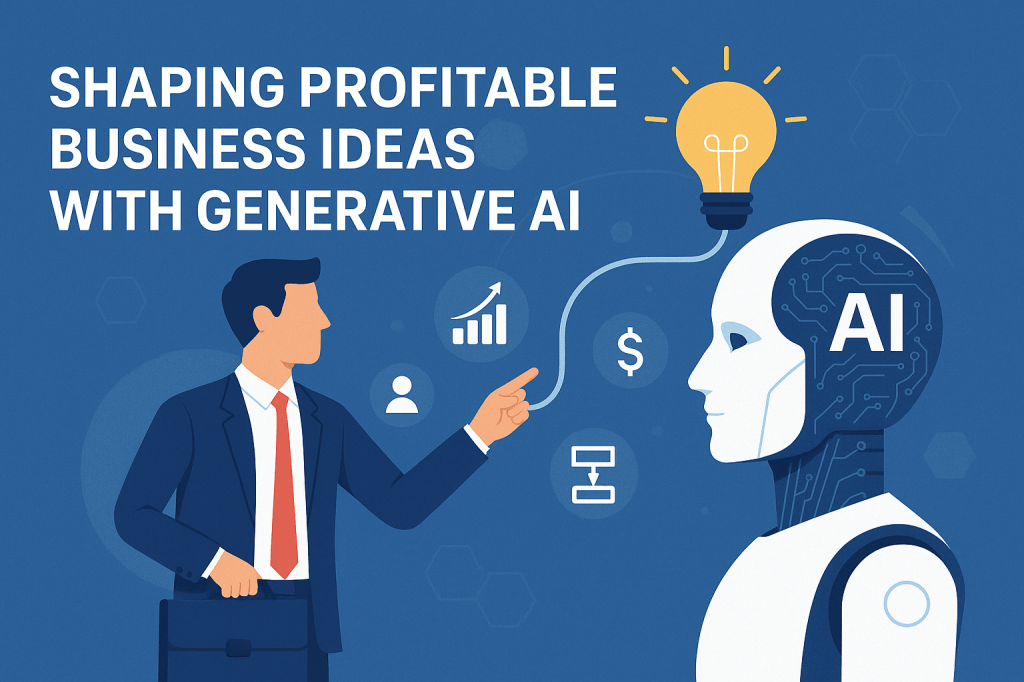
  • How Generative AI Can Shape Profitable Business Ideas?

    How Generative AI Can Shape Profitable Business Ideas?

    Generative AI is transforming the business landscape in ways that were unimaginable just a few years ago. This advanced technology has the capability to create content, designs, music, and even software code autonomously, providing businesses with innovative tools to enhance productivity and drive profitability. Entrepreneurs and organizations are now realizing that leveraging generative AI is not just a way to stay competitive but also a pathway to creating entirely new business models. By generating unique and high-quality outputs, generative AI empowers businesses to explore new ideas, reduce operational costs, and deliver personalized experiences to their customers. This makes it an indispensable resource for anyone looking to develop profitable ventures in the digital age. For those seeking inspiration, a comprehensive guide on Generative AI Business Ideas offers valuable insights into the potential applications and opportunities within this evolving field.

    In this article, we will explore how generative AI can shape profitable business ideas, the sectors where its impact is the most significant, the practical steps to transform AI ideas into tangible businesses, and the future potential of this technology. By understanding its capabilities and strategic applications, businesses can harness generative AI to not only innovate but also establish sustainable competitive advantages.

    Understanding Generative AI

    Generative AI is a branch of artificial intelligence that focuses on creating new content rather than simply analyzing existing data. Unlike traditional AI systems, which are programmed to follow rules or predict outcomes based on historical information, generative AI uses sophisticated algorithms and large datasets to produce original outputs. These outputs can take the form of text, images, audio, video, or even computer code. This capability allows businesses to innovate in ways that were previously impossible, opening doors to entirely new products, services, and experiences.

    There are several types of generative AI technologies currently shaping industries across the globe. One of the most prominent is text generation, where AI models such as GPT-4 can write articles, marketing copy, social media content, or technical documents. These models understand context, tone, and style, enabling them to produce content that is coherent, relevant, and highly engaging. Businesses can leverage this to save time, reduce costs, and maintain a consistent voice across all communication channels.

    Another significant application is image generation. AI tools like DALL·E, MidJourney, and Stable Diffusion can create realistic or artistic images from simple text prompts. This is particularly valuable for marketing, design, advertising, and entertainment industries, where visual content plays a crucial role in capturing audience attention. For instance, a startup can generate thousands of unique product mockups or illustrations without hiring an entire design team, thereby accelerating the creative process and reducing costs.

    Generative AI also extends to video and music creation. AI models can produce animations, short videos, or even original music compositions that meet specific thematic or stylistic requirements. Media companies and independent creators can use these technologies to produce high-quality content faster than traditional methods, offering personalized experiences to their audiences.

    Finally, generative AI has made significant strides in software development. Tools like GitHub Copilot and other AI-assisted coding platforms help developers write code efficiently, debug programs, and even generate entire modules. This accelerates software development cycles, reduces human error, and allows tech companies to innovate rapidly.

    Businesses are adopting generative AI for several reasons. It enables rapid content creation, enhances creative workflows, automates repetitive tasks, and delivers highly personalized solutions to customers. As a result, companies can scale faster, respond to market trends more effectively, and maintain a competitive edge in an increasingly dynamic business environment.

    How Generative AI Sparks Profitable Business Ideas

    Generative AI is not just a technological innovation; it is a catalyst for creating new, profitable business opportunities. By leveraging AI’s ability to generate content, automate tasks, and provide insights, businesses can unlock unique solutions that drive revenue growth and operational efficiency. Entrepreneurs can use generative AI to develop innovative products and services, streamline creative workflows, and deliver personalized experiences that appeal to modern consumers.

    One of the most significant ways generative AI drives business profitability is through the creation of new products and services. For example, fashion brands can utilize AI to design clothing collections based on trending styles and consumer preferences, producing innovative designs without the need for large design teams. Similarly, marketing agencies can generate high-quality advertising copy or social media content tailored to different audiences in a fraction of the time it would take humans to produce.

    Generative AI also enhances creativity across industries. Marketing campaigns, branding strategies, and content creation can be amplified through AI-generated ideas, visuals, and text. Businesses can experiment with multiple versions of advertisements or promotional content, optimizing campaigns for maximum engagement. For instance, a small startup can quickly produce multiple ad variations for social media platforms, allowing them to test performance and identify the most effective messaging.

    Automation is another area where generative AI creates business opportunities. Many companies spend significant time on repetitive tasks such as data entry, report generation, email responses, and content scheduling. Generative AI can handle these processes efficiently, reducing operational costs and freeing human resources to focus on strategic initiatives. For example, a customer service team can implement AI-powered chatbots to manage routine inquiries, allowing employees to focus on complex problem-solving and client relationship building.

    Personalization is a further advantage offered by generative AI. Modern consumers expect highly customized experiences, from product recommendations to personalized communication. AI can analyze user behavior, preferences, and historical data to generate tailored suggestions, emails, or even product designs. This level of personalization increases customer engagement, boosts brand loyalty, and ultimately drives higher revenue. For example, an e-commerce platform can use generative AI to recommend products based on individual browsing patterns, purchase history, and trending trends, creating a more satisfying and efficient shopping experience.

    In essence, generative AI empowers businesses to innovate, reduce costs, and deliver superior experiences. By harnessing AI in creative, operational, and strategic areas, companies can generate profitable business ideas that were previously unimaginable, transforming the way they operate and compete in their respective markets.

    Top Sectors Where Generative AI Can Create Business Opportunities

    Generative AI has transformative potential across multiple industries, enabling businesses to innovate, streamline operations, and deliver more engaging customer experiences. Its versatility allows it to address unique challenges and create new opportunities in diverse sectors. Here are some of the most promising areas where generative AI can shape profitable business ideas:

    E-commerce and Retail

    In the e-commerce and retail sector, generative AI is revolutionizing the way products are presented and sold. AI can generate product descriptions, marketing banners, promotional content, and even virtual try-on experiences for customers. This technology allows businesses to create engaging and personalized shopping experiences that increase conversions and customer satisfaction. For example, a small online retailer can use AI to automatically generate product descriptions for hundreds of items, ensuring each description is unique, appealing, and optimized for search engines. Personalized recommendations powered by AI also help customers discover products that match their preferences, boosting sales and fostering brand loyalty.

    Entertainment and Media

    The entertainment and media industry is another area benefiting significantly from generative AI. Content creators can use AI to generate scripts, music, videos, and digital art. This accelerates production timelines, reduces costs, and enables experimentation with creative ideas that may have been too time-consuming or expensive to pursue manually. For instance, a video production company can use AI to create animated sequences or storyboard concepts, allowing them to focus more on the artistic and narrative aspects of their projects. AI can also help generate personalized media recommendations, improving user engagement on streaming platforms.

    Healthcare

    Generative AI has significant applications in healthcare, where accuracy, efficiency, and personalization are critical. AI can assist in generating medical reports, predicting patient outcomes, and providing recommendations for diagnosis or treatment. Hospitals and clinics can implement AI tools to automate routine administrative tasks, such as patient documentation or appointment scheduling, allowing medical professionals to focus on direct patient care. Additionally, AI-generated insights can support research and development efforts in drug discovery, personalized medicine, and healthcare planning, creating opportunities for businesses that integrate AI into clinical workflows.

    Education

    In education, generative AI can create interactive learning materials, quizzes, assessments, and tutoring content that are tailored to individual student needs. This personalization enhances learning outcomes by addressing each student’s strengths and weaknesses. Educational institutions can also use AI to design engaging lesson plans, generate practice exercises, or provide instant feedback to learners. EdTech startups can leverage these capabilities to create scalable, AI-powered learning platforms that offer students a more customized and effective learning experience.

    Software and Technology

    Generative AI is transforming the software and technology sector by assisting developers in writing code, generating software modules, and debugging programs. Tools like AI-assisted coding platforms allow software companies to accelerate development cycles, reduce errors, and innovate more efficiently. Startups and tech firms can use AI to prototype applications, test multiple solutions rapidly, and optimize software design. This not only reduces development costs but also enables businesses to bring innovative solutions to market faster.

    Overall, generative AI offers industry-specific applications that enable businesses to reduce costs, increase efficiency, and deliver enhanced customer experiences. By identifying opportunities within their sectors and leveraging AI tools effectively, companies can unlock significant growth potential and create profitable ventures.

    How to Transform AI Ideas into Reality

    Having a brilliant generative AI concept is only the first step in building a profitable business. The real challenge lies in translating these ideas into practical solutions that can be implemented, scaled, and monetized. To achieve this, businesses need to combine strategic planning, technical expertise, and industry knowledge. Partnering with experienced Generative AI development companies can significantly increase the chances of success by providing specialized tools, expertise, and guidance throughout the development process.

    The first step in transforming an AI idea into reality is clearly defining the business objective. Understanding what problem the AI solution is solving and how it adds value to customers is critical. This ensures that the AI project aligns with overall business goals and addresses a genuine market need. For example, a startup aiming to enhance customer service might focus on developing an AI-powered chatbot that can handle frequently asked questions efficiently, reducing response times and improving user satisfaction.

    Next, businesses must focus on data quality and availability. Generative AI models rely heavily on large datasets to produce accurate and relevant outputs. Ensuring that the data is clean, diverse, and representative is essential to achieving reliable results. For instance, an AI model generating marketing content must be trained on a wide range of high-quality examples to understand context, tone, and industry-specific language. Without proper data, the AI outputs may be inconsistent or biased, undermining the business objectives.

    Choosing the right AI model and tools is another critical step. Not all AI models are suitable for every application. Text generation, image creation, and code generation each require different types of models with specific capabilities. Collaborating with AI development companies can help businesses select the most appropriate models, fine-tune them for their needs, and integrate them into existing workflows efficiently.

    Prototyping and testing the AI solution is equally important. Starting with a pilot project allows businesses to validate their ideas, gather feedback, and identify potential issues before scaling. During this phase, adjustments can be made to improve accuracy, functionality, and user experience. For example, a company developing an AI-driven content generator may run pilot campaigns to measure engagement, refine the tone of the content, and ensure alignment with brand guidelines.

    Finally, scaling the AI solution requires careful planning and continuous monitoring. As the system is deployed to a larger audience, businesses must ensure it performs consistently and maintains quality standards. This may involve integrating additional data sources, expanding computational resources, and establishing oversight mechanisms to monitor outputs. Continuous improvement and iteration help businesses stay ahead of competitors and maximize the profitability of their AI solutions.

    By following these steps, businesses can effectively transform innovative AI ideas into real-world solutions that generate value, enhance customer experiences, and drive long-term growth. Partnering with experts, focusing on data quality, selecting the right tools, and implementing thorough testing and scaling strategies are key to turning AI concepts into successful ventures.

    Challenges and Risks in Generative AI Businesses

    While generative AI offers immense opportunities, businesses must navigate several challenges and risks to ensure success. Understanding these potential pitfalls and proactively addressing them is crucial for creating sustainable and ethical AI-driven ventures.

    Ethical Concerns

    One of the primary challenges in generative AI is addressing ethical considerations. AI-generated content can sometimes replicate copyrighted material, produce misleading information, or create content that is offensive or inappropriate. Businesses must ensure that their AI solutions adhere to ethical guidelines, respect intellectual property rights, and maintain transparency in their operations. For example, a company using AI to generate marketing content should verify that the outputs do not infringe on existing trademarks or plagiarize content from competitors. Establishing ethical review processes and monitoring AI outputs regularly can help mitigate these risks.

    Quality Control

    Maintaining the quality and accuracy of AI-generated outputs is another significant challenge. While generative AI can produce content quickly and at scale, it may occasionally generate errors, inconsistencies, or biased outputs. Businesses need to implement quality control mechanisms such as human review, automated validation, and continuous model fine-tuning. For instance, a healthcare company using AI to generate patient summaries must ensure that the information is accurate and clinically relevant, as any errors could have serious consequences.

    Data Privacy and Security

    Generative AI systems rely heavily on large datasets, which often contain sensitive information. Protecting customer data and complying with privacy regulations such as GDPR or HIPAA is critical. Businesses must implement robust security protocols, anonymize data when possible, and ensure secure storage and processing. Failure to protect data can result in legal penalties, loss of customer trust, and reputational damage. For example, an AI-driven e-commerce platform must securely handle user purchase histories and preferences while ensuring that this information is not exposed or misused.

    Market Competition

    As more companies adopt generative AI, competition in AI-driven markets is intensifying. Businesses must continuously innovate, differentiate their offerings, and provide unique value to remain competitive. This requires investing in research and development, staying updated with the latest AI advancements, and understanding market trends. For example, an AI content generation startup must constantly enhance its models to produce higher quality, more engaging outputs than competitors to retain its customer base.

    Technical Challenges

    Developing and implementing generative AI solutions can be technically complex. Businesses may face challenges related to model selection, integration with existing systems, computational resource requirements, and ongoing maintenance. Partnering with experienced AI development companies can help overcome these technical hurdles, ensuring smooth deployment and continuous improvement. Proper planning, testing, and monitoring are essential to address these technical risks effectively.

    By recognizing and addressing these challenges, businesses can mitigate potential risks and build reliable, ethical, and profitable AI-driven solutions. Strategic planning, ongoing monitoring, and adherence to ethical and legal standards are essential for successfully leveraging generative AI in a business context.

    Future of Generative AI in Business

    The future of generative AI in business is both exciting and transformative. As AI technology continues to evolve, its capabilities are expected to expand, offering businesses even more sophisticated tools for innovation, efficiency, and customer engagement. Companies that adopt generative AI early and strategically are likely to gain a significant competitive advantage, shaping the markets of tomorrow.

    One emerging trend is the integration of generative AI with other advanced technologies, such as augmented reality, virtual reality, the Internet of Things, and blockchain. This convergence will enable businesses to create immersive and highly personalized experiences for customers. For example, an e-commerce platform could combine AI-generated product designs with augmented reality features, allowing users to visualize products in their environment before purchasing. This level of innovation can enhance customer satisfaction and drive higher sales.

    Another significant development is the continued improvement of AI models in terms of accuracy, efficiency, and creativity. Future generative AI systems are likely to produce outputs that are virtually indistinguishable from human-created content, enabling businesses to scale content creation across multiple channels and languages without sacrificing quality. Marketing agencies, media companies, and content-driven startups can leverage these capabilities to expand their reach and engage global audiences effectively.

    Generative AI will also play a central role in decision-making and strategy. By analyzing vast datasets and generating predictive insights, AI can assist businesses in forecasting trends, identifying opportunities, and optimizing operations. For instance, supply chain companies can use AI to anticipate demand fluctuations, reduce inventory costs, and improve delivery efficiency. Financial services firms can leverage AI to generate risk assessments and investment strategies, enhancing profitability and operational resilience.

    Moreover, AI-driven personalization will become more refined, enabling businesses to offer hyper-customized products, services, and experiences. From personalized education platforms to healthcare solutions tailored to individual patient needs, generative AI will empower companies to deliver highly relevant and valuable offerings. This personalization not only improves customer satisfaction but also strengthens brand loyalty and long-term profitability.

    In the long term, generative AI is expected to create entirely new business models and revenue streams. Startups and enterprises that harness AI to identify unmet market needs or generate innovative solutions will be well-positioned to lead in emerging markets. Companies that combine AI with human creativity, ethical practices, and strategic foresight will be able to unlock unparalleled opportunities and establish themselves as pioneers in the AI-driven economy.

    Overall, the future of generative AI in business is one of continuous evolution, innovation, and growth. Companies that invest in understanding and leveraging this technology now will be able to shape profitable ventures, stay ahead of competitors, and redefine industries for years to come.

    Conclusion

    Generative AI is no longer just a futuristic concept; it is a practical and transformative tool that businesses can leverage to generate profitable ideas, enhance efficiency, and deliver superior customer experiences. By understanding its capabilities, identifying opportunities in various sectors, and implementing AI-driven solutions effectively, companies can unlock new revenue streams and gain a competitive edge in the market.

    From e-commerce and media to healthcare, education, and software development, generative AI offers unique applications that allow businesses to innovate rapidly, reduce operational costs, and provide personalized solutions to customers. While there are challenges, including ethical considerations, quality control, and data privacy, careful planning, strategic partnerships, and continuous monitoring can mitigate risks and ensure success.

    For businesses and entrepreneurs looking to stay ahead in the AI-driven landscape, exploring advanced AI tools and understanding their strategic applications is essential. By embracing generative AI, companies can not only create profitable business ideas today but also position themselves for long-term growth and market leadership in the evolving digital economy.

    To learn more about how AI is reshaping business search and discovery, explore this detailed resource on Generative AI Search.

  • AI in B2B Marketing: 10 Ways to Implement It Today

    AI in B2B Marketing: 10 Ways to Implement It Today

    Artificial Intelligence has moved far beyond being a futuristic concept. It is now one of the most influential technologies shaping how companies attract and engage other businesses. Business to business marketing traditionally relied on human analysis, intuition, and manual processes to reach potential partners or clients. Today, that model is being replaced by intelligent systems that can learn from large volumes of information, spot valuable patterns, and deliver precise insights in real time.

    Modern business environments are highly competitive. Decision makers expect personalized experiences, fast responses, and marketing that aligns with their needs. AI helps marketers meet these expectations by automating repetitive tasks and by turning raw information into useful strategies. It allows teams to better understand buyer behavior, create relevant content, and allocate resources where they will create the most value.

    This article will explore ten proven methods to integrate AI into your business to business marketing activities. Each section provides a practical approach that can be started with a modest budget and scaled as your organization grows. By the end, you will have a clear roadmap for using AI not only as a support tool but as a core driver of marketing success.

    What Is AI in B2B Marketing

    Artificial Intelligence in business to business marketing refers to the use of intelligent technologies to perform tasks that traditionally required human effort. These technologies are designed to analyze large sets of data, identify trends, and make decisions or recommendations that improve marketing performance. In a B2B context, the focus is on building stronger relationships between companies, identifying high quality leads, and delivering messages that match the specific needs of potential partners or clients.

    AI systems in marketing are capable of processing information much faster than any human team. They can review past purchase histories, interaction records, and demographic details to create accurate customer profiles. These profiles help marketers understand who their buyers are and what they are most likely to respond to. The technology can also forecast future behaviors, allowing companies to plan their campaigns based on expected customer actions rather than on assumptions or guesswork.

    Examples of AI in B2B marketing include intelligent chatbots that handle early customer inquiries, automated content creation tools that generate drafts for blogs or proposals, and advanced analytics platforms that evaluate campaign performance in real time. These tools reduce manual workload, improve precision, and make it possible to deliver highly relevant messages to each business contact. As AI continues to evolve, its role in marketing is shifting from a simple assistant to an essential driver of strategy.

    Challenges to Consider

    Before adopting artificial intelligence in business to business marketing, it is important to understand the potential challenges that can affect its performance. While AI offers many advantages, its success depends on the quality of the systems and processes already in place. Below are the main challenges marketers face and what they mean for your business.

    Bad Data

    Artificial intelligence is only as effective as the data it analyzes. Many organizations store information in multiple systems without a unified structure. This leads to incomplete records, duplicate entries, and outdated contact details. When an AI tool processes flawed information, the predictions and insights it generates will not be reliable. For example, an AI system may recommend contacting a lead that no longer represents a viable account simply because the data was never updated. To overcome this challenge, companies should establish strong data management practices. This includes cleaning existing records, merging databases into a single source of truth, and setting up regular reviews to maintain accuracy.

    Data Privacy Concerns

    Privacy regulations around the world require businesses to protect personal and corporate data. Artificial intelligence often processes sensitive information, such as communication history and transaction records. If this information is not handled properly, it can result in legal penalties and a loss of customer trust. Companies need clear privacy policies that outline how data is collected, stored, and used. Access should be limited to authorized staff, and systems should be designed with encryption and secure storage in mind. Regular audits and compliance checks help ensure that your use of AI respects the rights of your customers and partners.

    Lack of Training and Onboarding

    Even the most advanced AI tools can fail if the marketing team does not know how to use them effectively. Introducing a new technology requires proper onboarding and continuous learning. Many teams hesitate to adopt AI because they fear it will be too complex or disruptive to their current processes. To address this, organizations should provide clear training sessions that explain not only how the tool works but also how it fits into daily tasks. Short, practical lessons combined with real examples can help employees feel confident and comfortable with the technology. A support system that answers questions and resolves issues quickly can also increase adoption.

    Accountability and Oversight

    Artificial intelligence can automate tasks and even make recommendations, but it cannot replace human judgment. A common mistake is to allow AI to operate without proper oversight. When this happens, errors can go unnoticed until they cause serious problems, such as sending incorrect pricing to a major account or misclassifying an important lead. Marketing teams must remain responsible for the outcomes produced by AI. This means reviewing key actions, monitoring campaign results, and having clear ownership for each stage of the marketing process. Human oversight ensures that AI works as a supportive tool rather than as an uncontrolled decision maker.

    Ten Practical Ways to Implement AI Today

    Implementing artificial intelligence in business to business marketing does not have to be overwhelming. There are practical methods that can deliver measurable results without disrupting your existing processes. Below are ten effective ways to start using AI in your marketing activities.

    Prepare Your Data for AI

    The success of any AI initiative begins with well organized data. Combine information from customer relationship management systems, email platforms, and support databases into a single, accurate source. Remove duplicate entries, correct outdated records, and standardize fields such as company names and contact information. This clean foundation allows AI models to identify trends with greater accuracy. Without proper preparation, even advanced tools will struggle to deliver meaningful insights. Think of this step as building the foundation for a more intelligent marketing strategy where each decision is based on reliable facts rather than fragmented information.

    Automate Proposals and Reports

    Creating proposals and marketing reports often consumes valuable time. AI tools can analyze existing content, pull data from your systems, and produce first drafts of these materials. Marketers can then review, adjust, and add their personal touch. This approach reduces repetitive manual work and helps deliver proposals faster to potential clients. Automated reporting also ensures that performance updates are consistent and timely. By freeing up hours spent on document creation, your team can focus on strategic thinking, client relationship building, and campaign improvement rather than spending entire days formatting and writing similar documents.

    Improve Customer Segmentation

    Segmenting customers manually can be difficult and often lacks precision. Artificial intelligence can process behavioral data, transaction history, and industry trends to create more accurate segments. This allows marketers to tailor campaigns for each group with specific offers, messages, and timing. For instance, AI might detect patterns showing that certain industries respond better to particular product features. Using this insight, marketing teams can allocate resources more effectively and achieve higher engagement. Accurate segmentation ensures that each message feels relevant to its recipient, increasing the likelihood of a positive response and improved return on marketing investment.

    Enhance Market Research

    Researching competitors, industries, and market trends manually can be a slow process. AI driven tools can scan large datasets, industry publications, and digital platforms to uncover actionable insights. They can highlight which markets are growing, which competitors are gaining ground, and what kind of content resonates with target buyers. Instead of spending weeks gathering information, marketers receive a clear summary within hours. These insights make planning more agile and allow companies to adjust campaigns as market conditions change. The result is a research process that is both faster and more reliable than traditional manual methods.

    Use Conversational AI for Engagement

    Conversational AI, including chatbots and virtual assistants, provides immediate support and engagement for potential clients. These tools answer frequently asked questions, collect essential lead details, and even schedule meetings outside of regular working hours. For business to business marketing, this means prospects can receive information whenever they visit your website or interact with your platform. The collected information feeds directly into your systems, helping sales teams follow up more effectively. Well designed conversational AI enhances customer satisfaction and creates a smooth first impression that often leads to deeper engagement and stronger business relationships.

    Generate High Quality Content

    Artificial intelligence can help marketing teams produce consistent and high quality content at scale. By analyzing audience preferences and trending topics, AI suggests outlines, headlines, and even full draft articles. Marketers should always review, refine, and inject their unique brand voice to maintain authenticity. This collaboration between humans and technology speeds up production for blogs, newsletters, and promotional materials while preserving quality. It also makes it easier to test multiple versions of a message, improving the chances of reaching the right audience with the right tone at the most appropriate time.

    Personalize Customer Journeys

    Every business client interacts with your brand in a unique way. Artificial intelligence helps track each touchpoint and recommends the next best action for every contact. This may include sending a follow up email, sharing a case study, or inviting them to a webinar that matches their interests. Personalized journeys create a feeling of relevance and care, which is essential in business to business relationships. Over time, personalization nurtures trust and accelerates decision making because clients receive the information they need without feeling overwhelmed by generic messages that do not reflect their goals.

    Identify High Value Leads

    AI uses predictive scoring models to determine which leads are most likely to convert. It examines past sales data, engagement history, and interaction patterns to assign scores to prospects. High scoring leads receive priority attention from the sales team, while lower scoring ones can be nurtured over time with targeted content. This ensures that resources are focused where they can create the greatest impact. Accurate lead scoring also reduces wasted efforts on unqualified contacts and improves the efficiency of the marketing and sales pipeline from the first interaction to final contract signing.

    Optimize Lead Generation Campaigns

    Artificial intelligence can improve your advertising and outreach strategies by analyzing which channels, messages, and formats generate the best responses. It can adjust budgets automatically, pause low performing campaigns, and highlight new opportunities based on real time performance data. This type of optimization allows marketers to spend less time manually reviewing campaigns and more time refining their strategies. As the AI learns from ongoing activity, it becomes more precise, helping you reach a higher number of qualified leads at a lower overall cost while keeping your campaigns aligned with business goals.

    Enhance Event Marketing with AI

    Events such as webinars, conferences, and trade shows remain important in B2B marketing. AI can assist before, during, and after these events. Before an event, it can help identify the most relevant attendees and craft personalized invitations. During the event, it can recommend sessions or networking opportunities based on participant profiles. Afterward, AI analyzes engagement data to guide follow up campaigns and measure return on investment. This integrated use of AI ensures that every stage of event marketing is efficient and aligned with your broader marketing objectives, making events more impactful and measurable.

    Action Checklist

    Adopting artificial intelligence in business to business marketing is a step by step process. Marketers who plan carefully are more likely to see meaningful results. Below is a simple checklist to help you start your journey with confidence.

    • Clean and Organize Data Begin by reviewing your existing information. Combine all customer details into one system, remove duplicate entries, and keep records updated for better analysis.
    • Start with a Pilot Project Select one area of marketing where AI can create an immediate impact, such as automated reporting or lead scoring. A focused project helps teams gain early wins.
    • Train and Support Teams Provide your marketing and sales teams with training sessions and practical examples so they understand how to use the tools and how AI fits into daily work.
    • Assign Ownership Make sure someone is responsible for monitoring AI performance. Clear accountability ensures that results are measured and improvements are tracked.
    • Measure and Improve Collect feedback and track the results of your AI initiatives. Adjust the models, rules, or campaigns as you gather more information and experience.

    Conclusion

    Artificial intelligence is transforming how companies connect with other businesses. It makes marketing more efficient by reducing manual work and allows teams to focus on strategy, creativity, and relationship building. When used correctly, AI helps identify the right prospects, tailor communication, and improve overall marketing performance.

    The key to success is to start with a solid foundation, prepare your data, and introduce AI step by step rather than attempting to automate everything at once. Over time, the tools will become more effective as they learn from your unique business environment and customer behavior.

    If you are planning to integrate artificial intelligence into your marketing but do not have in house expertise, consider working with an experienced AI Development Company. Such a partner can help design the right strategy, select suitable technologies, and ensure smooth implementation so your organization can benefit from AI without unnecessary delays or errors.

  • How AI Is Shaping Local Marketing Strategies in 2025

    How AI Is Shaping Local Marketing Strategies in 2025

    Artificial Intelligence (AI) has moved beyond being just a futuristic concept. In 2025, it is now an essential part of how local businesses connect with their customers and stay competitive in their markets. Local marketing focuses on attracting and retaining customers within a specific region or community. With the rise of AI-powered tools, businesses of all sizes can now understand their audience better, deliver relevant content, and optimize their marketing efforts with greater accuracy.

    AI helps in collecting and analyzing customer data, studying local buying patterns, and predicting future needs. This was once a task that required heavy manual effort and resources, but today, even a small local shop can access these capabilities. By using AI, companies can create stronger connections with their audience, provide timely offers, and personalize their services to match the unique preferences of their customers.

    • Improved Targeting: Businesses can reach the right people at the right time with messages that resonate with their needs.
    • Better Engagement: AI-driven content and recommendations create a more personalized customer experience.
    • Enhanced Efficiency: Automation saves time and reduces the manual workload for business owners and marketing teams.

    This article will explore how AI is transforming local marketing strategies in 2025 by focusing on hyper personalization, voice search optimization, predictive analytics, chatbots, and local SEO automation. Each of these areas plays a crucial role in helping local businesses stay ahead of their competition.

    AI Driven Hyper Personalization

    One of the most significant ways AI is transforming local marketing in 2025 is through hyper personalization. Customers today expect content, products, and offers that match their interests and needs. Generic marketing messages are no longer enough to capture attention. Hyper personalization allows businesses to deliver highly relevant messages to individual customers or specific groups based on accurate data analysis.

    Understanding Customer Data

    AI collects and studies a variety of data sources including online browsing behavior, purchase history, location details, and social media interactions. By analyzing these patterns, AI helps businesses create marketing strategies that connect with people on a personal level. Instead of guessing what a customer might like, businesses can now predict preferences with precision.

    • Enhanced Segmentation: AI divides audiences into smaller groups with similar behaviors or interests, ensuring each group receives relevant content.
    • Tailored Offers: Personalized promotions, product suggestions, or discounts are delivered to customers based on their preferences.
    • Optimized Communication Timing: AI identifies the best time to send emails or notifications when customers are most likely to engage.

    Benefits of Hyper Personalization

    Hyper personalization does not just increase sales; it also builds loyalty. When customers feel that a brand understands their needs, they are more likely to return and recommend it to others. This type of marketing also reduces wasted effort by focusing on the most promising leads rather than targeting everyone with the same message.

    • Improved Conversion Rates: Personalized content leads to higher click through rates and purchases.
    • Better Customer Experience: Customers appreciate brands that save them time by offering relevant products and services.
    • Stronger Relationships: Consistent and relevant communication helps businesses maintain long term relationships with their audience.

    Localization of Messaging

    Local marketing becomes more effective when it reflects the culture, language, and specific interests of the target audience. In 2025, AI makes it easier for businesses to adapt their marketing messages to fit different local communities. Customers respond better to content that feels familiar and relevant to their surroundings.

    Creating Localized Campaigns

    AI tools analyze regional data, cultural events, and local customer preferences. This helps businesses create campaigns that match the unique characteristics of each area. For example, a restaurant may promote festive dishes during local holidays in one neighborhood while offering special lunch deals in another.

    • Cultural Relevance: Campaigns can highlight local festivals, holidays, or traditions that appeal to specific communities.
    • Neighborhood Targeting: AI allows different areas to receive different promotions based on their buying behavior and interests.
    • Language Adaptation: Businesses can adjust their messaging to match the preferred language or style of the local audience.

    Benefits of Localization

    Localized messaging improves the connection between a brand and its customers. It shows that a business values the community and understands its unique needs. This approach increases trust and builds a stronger brand reputation.

    • Increased Engagement: Customers are more likely to interact with content that feels personal to their area.
    • Higher Conversion Rates: Offers designed for specific regions tend to generate better responses.
    • Stronger Community Presence: Businesses that invest in local adaptation build lasting relationships with their customers.

    Voice Search Optimization

    Voice search is becoming a vital part of how people find local businesses in 2025. With the growing use of smartphones, smart speakers, and virtual assistants, more customers rely on voice commands to search for nearby services or stores. Businesses that optimize for voice search gain better visibility and attract more local customers.

    Preparing Content for Voice Search

    AI tools help analyze voice search patterns and guide businesses in creating content that matches how people speak rather than how they type. Voice searches are often more conversational and include full questions instead of short keywords.

    • Conversational Keywords: Use natural phrases such as “What is the best pizza place near me” instead of short keywords.
    • Mobile Optimization: Ensure the website is mobile-friendly and loads quickly to match user expectations.
    • Structured Data Markup: Adding proper schema markup helps search engines deliver accurate business information in voice search results.

    Why Voice Search Matters

    Voice search helps local businesses appear in more immediate and actionable search results. Customers using voice queries are often looking for quick answers, directions, or immediate services. By preparing for voice search, businesses increase their chances of being chosen over competitors.

    • Faster Discovery: Voice queries often lead to quick actions like calls or visits.
    • Better Customer Experience: Providing accurate and instant answers builds trust and convenience.
    • Higher Local Traffic: Businesses that appear in voice results gain more foot traffic and inquiries.

    Predictive Analytics for Local Trends

    Predictive analytics is a powerful way AI is helping businesses prepare for customer needs in advance. By analyzing historical data and real-time signals, AI can forecast future trends in specific locations. This is especially valuable for local businesses that want to plan their inventory, promotions, and services ahead of time.

    Forecasting Customer Behavior

    AI gathers information from various sources such as purchase history, website visits, social media interactions, and local events. It uses this data to anticipate what products or services will be in demand. Businesses no longer have to rely only on guesswork; they can now make data-driven decisions that reduce risks and increase opportunities.

    • Inventory Planning: Businesses can stock popular products before demand rises, ensuring availability for their customers.
    • Targeted Promotions: Offers can be scheduled to align with expected demand during holidays or seasonal peaks.
    • Reduced Waste: Accurate predictions help prevent overstocking and minimize losses from unsold inventory.

    Benefits of Predictive Analytics

    Predictive analytics helps businesses become proactive rather than reactive. It allows them to serve customers at the right time with the right product or service. This leads to improved sales, customer satisfaction, and operational efficiency.

    • Higher Profitability: Products and services are offered when customers are most likely to buy.
    • Better Resource Management: Businesses save money by managing their stock and staffing more effectively.
    • Improved Customer Trust: Customers appreciate businesses that anticipate their needs and deliver on time.

    Chatbots and Conversational AI

    Chatbots and conversational AI have become essential tools for local businesses in 2025. They provide instant support, handle customer inquiries, and even guide users toward making purchases. Unlike traditional customer service, these AI systems work around the clock and ensure customers get the help they need whenever they need it.

    Improving Customer Interaction

    AI-powered chatbots can manage a wide range of tasks. They answer frequently asked questions, schedule appointments, and even recommend products or services based on customer preferences. This allows human employees to focus on more complex issues while customers receive quick and reliable assistance.

    • Round the Clock Availability: Chatbots provide uninterrupted support without depending on business hours.
    • Efficient Task Handling: They reduce employee workload by automating routine interactions.
    • Personalized Responses: Advanced systems use data to suggest relevant solutions or products.

    Benefits of Chatbots and Conversational AI

    Implementing chatbots not only improves efficiency but also enhances customer relationships. They create a seamless experience that customers value, especially when they need quick answers or immediate assistance.

    • Faster Response Times: Customers no longer need to wait in queues for simple queries.
    • Higher Customer Satisfaction: Quick and accurate responses lead to a positive impression.
    • Consistent Communication: Chatbots deliver reliable information and maintain a uniform brand tone.

    AI in Local SEO Automation

    Local search engine optimization (SEO) is a key factor in helping businesses become more visible to customers in their area. In 2025, AI has made this process faster and more efficient. Many time-consuming SEO tasks that used to require manual effort can now be automated, allowing business owners to focus on growth and customer relationships.

    Boosting Local Search Visibility

    AI tools update online listings, track reviews, and manage keywords more effectively than traditional methods. These tools ensure that business information remains accurate across search engines, maps, and local directories. This helps potential customers find correct details such as operating hours, locations, and services offered.

    • Automated Listings Management: AI updates business details across multiple platforms to maintain consistency.
    • Local Keyword Research: AI identifies high-impact search terms specific to a region or community.
    • Review Tracking and Response: AI monitors customer feedback and drafts polite responses for timely engagement.

    Benefits of Local SEO Automation

    By automating SEO tasks, businesses save time and avoid mistakes caused by inconsistent updates. A strong local SEO presence leads to better search rankings and increased customer trust.

    • Higher Local Rankings: Consistent and optimized listings improve visibility in search results.
    • Improved Online Reputation: Timely and professional responses to reviews enhance customer trust.
    • Increased Customer Inquiries: Better visibility attracts more local calls, visits, and online interactions.

    Conclusion

    Artificial Intelligence has become an essential part of local marketing strategies in 2025. It is no longer a tool reserved for large corporations; small and medium businesses are also using AI to compete effectively. From hyper personalization to predictive analytics and local SEO automation, AI allows businesses to connect with their communities in smarter ways.

    Companies that embrace these tools can deliver better customer experiences, predict demand more accurately, and engage their audience with personalized content. AI also reduces manual effort, allowing business owners to focus on growth and customer relationships rather than repetitive tasks.

    For organizations looking to implement these strategies effectively, working with professional Digital Marketing Agencies can be a valuable step. These agencies provide expertise, tools, and insights needed to execute powerful AI-driven marketing campaigns that deliver real results.

  • Explainable AI in Big Data Analytics

    In today’s rapidly evolving digital landscape, AI in Big Data has emerged as a transformative force. As vast amounts of data are generated daily, businesses are increasingly turning to artificial intelligence to derive meaningful insights and predictions. However, while AI offers immense potential, one critical challenge remains: the lack of transparency in AI decision-making. This is where Explainable AI (XAI) comes into play.

    Explainable AI refers to AI models and systems that are designed to provide clear, understandable explanations for their decisions. As organizations rely more on Big Data Analytics, the need for transparency becomes essential. Explainable AI helps ensure that these powerful tools are not just “black boxes” but are instead systems that users can trust and interpret. This blog explores the intersection of Explainable AI and Big Data Analytics, emphasizing its importance, challenges, and applications across various industries.

    Understanding Explainable AI (XAI)

    Explainable AI (XAI) is a concept that aims to make artificial intelligence models more transparent and understandable to humans. Traditional AI models, especially those used in Big Data Analytics, often operate as “black boxes,” meaning their decision-making processes are not easily interpretable. This lack of transparency can create challenges, particularly when the AI is making critical decisions that impact people’s lives, such as in healthcare or finance.

    At its core, Explainable AI is about providing users with clear insights into how AI systems arrive at their conclusions. This is crucial because businesses need to trust the decisions made by AI models. For instance, in AI in Big Data, AI systems can process large volumes of data and make predictions or decisions at a scale and speed far beyond human capabilities. However, without explainability, these systems may lack the confidence of users who are uncertain about how these predictions are made.

    The need for transparency becomes even more critical as AI systems become more integrated into real-world applications. The goal of Explainable AI is to bridge the gap between complex AI models and the human users who rely on them for important decisions.

    The Role of Big Data in AI

    Big Data plays a vital role in the development and effectiveness of AI in Big Data. The vast amounts of data generated from various sources, such as social media, sensors, and online transactions, provide the raw material that powers AI models. In turn, AI helps analyze this data to uncover patterns, trends, and insights that can drive business decisions.

    For AI to be effective in Big Data Analytics, it must be able to handle and process large volumes of data at incredible speeds. This is where AI models come into play. They can process structured and unstructured data, making it easier to extract meaningful information. However, as the volume and complexity of data grow, AI models become more intricate, and this complexity can result in decisions that are difficult to explain.

    In the context of Big Data Analytics, having transparent and interpretable AI models becomes even more critical. Without the ability to explain how an AI model arrives at its conclusions, organizations may struggle to trust its outputs. This is why Explainable AI is gaining importance, as it ensures that the insights generated by AI in Big Data are not only accurate but also understandable.

    Challenges in Big Data Analytics with AI

    Despite the numerous advantages that AI in Big Data offers, there are several challenges associated with its application. One of the primary concerns is the complexity of interpreting machine learning models, particularly when dealing with massive datasets. As the volume of data increases, the models used to analyze this data become more sophisticated. This complexity often leads to AI systems that operate as “black boxes,” making it difficult for users to understand how decisions are made.

    The lack of transparency in AI models can pose significant risks, especially when AI is used in critical industries like healthcare or finance. For example, in a healthcare setting, AI may assist in diagnosing diseases or predicting patient outcomes based on large datasets. If the model’s decision-making process is not explainable, it becomes challenging for medical professionals to trust the AI’s recommendations. This lack of trust can lead to hesitation in adopting AI-driven tools, ultimately hindering their potential benefits.

    Furthermore, there are ethical concerns tied to the use of AI in Big Data. AI models are only as good as the data they are trained on, and if the data is biased or incomplete, the AI can produce inaccurate or biased results. Without proper explainability, it becomes difficult to identify and correct these issues. This is why Explainable AI is crucial in addressing these challenges, as it helps ensure that AI models are transparent, fair, and accountable.

    Why Explainability is Crucial in Big Data AI

    The need for Explainable AI becomes even more apparent when considering the growing reliance on AI in Big Data. As organizations leverage vast amounts of data to make critical decisions, the ability to understand and trust AI models is essential. Transparency in AI decision-making helps build confidence among users and stakeholders, ensuring that the outcomes of AI systems are not only accurate but also justifiable.

    One of the main reasons Explainable AI is crucial is that it fosters trust. When decision-makers can see the reasoning behind an AI model’s predictions, they are more likely to adopt the technology and use it in high-stakes environments. This is particularly important for industries like healthcare, finance, and legal sectors, where AI decisions can have serious implications for individuals and businesses alike.

    Additionally, Explainable AI helps ensure fairness and reduces bias in AI models. By making AI decisions more transparent, organizations can identify potential biases in the data or model and take steps to address them. This transparency is key to ensuring that AI models are equitable and do not inadvertently perpetuate harmful stereotypes or unequal treatment.

    For Big Data Analytics Companies, the ability to provide explanations for AI decisions is also vital in maintaining regulatory compliance. As governments and organizations worldwide continue to develop regulations around AI usage, Explainable AI will play a key role in helping businesses adhere to these rules, avoiding legal and reputational risks.

    Approaches to Explainable AI in Big Data Analytics

    There are several approaches to implementing Explainable AI in the context of Big Data Analytics. These approaches aim to make AI models more interpretable, enabling businesses to trust and understand their decisions. Below are some of the most commonly used methods:

    • Model-Based Approaches: These are AI models that are inherently interpretable. For example, decision trees and linear models are relatively simple and provide clear decision-making pathways. These models allow users to trace the logic behind each decision, making it easier to understand how a prediction or recommendation was made.
    • Post-Hoc Methods: In cases where the model is more complex, such as deep learning models, post-hoc explainability methods can be applied. Techniques like LIME (Local Interpretable Model-agnostic Explanations) and SHAP (Shapley Additive Explanations) provide insights into complex models by approximating them with simpler, interpretable models. These methods help explain the behavior of the AI model after it has been trained, offering a layer of transparency.
    • Visualization Techniques: Visualization is another powerful tool for making AI models more understandable. By visualizing the relationships between features in the dataset and the predictions made by the model, businesses can gain a better understanding of how data is influencing the model’s decisions. These visualizations can be particularly useful for analysts working with Big Data Analytics, as they provide a clear, intuitive way to interpret complex models.
    • Hybrid Approaches: A combination of model-based and post-hoc methods can also be used to enhance explainability. For instance, a more complex model can be combined with simpler decision rules or visualizations to give users a deeper understanding of how decisions are being made. This hybrid approach offers a balance between accuracy and interpretability, which is especially important in AI in Big Data environments where large datasets may require complex models.

    These approaches are critical in ensuring that AI models are not only powerful but also understandable and transparent. By implementing these strategies, businesses can improve their decision-making processes and ensure that their AI systems are reliable and trustworthy.

    Explainable AI Use Cases Across Various Industries

    The importance of Explainable AI is evident across various industries that rely heavily on AI in Big Data to drive their decision-making processes. By making AI systems more interpretable, organizations can not only improve trust and transparency but also unlock the full potential of their data. Below are some notable Explainable AI use cases across various industries:

    • Healthcare: In the healthcare industry, AI models are often used to predict patient outcomes, diagnose diseases, and recommend treatment plans based on vast amounts of medical data. Explainable AI is particularly important here because medical professionals need to understand how AI models arrive at their conclusions. For example, an AI model might suggest a particular course of treatment, but doctors need to know the factors that led to that recommendation. Explainable AI helps ensure that healthcare providers can trust AI predictions and integrate them into their clinical decision-making process.
    • Finance: In the financial sector, AI is widely used for tasks such as credit scoring, fraud detection, and algorithmic trading. These AI systems often process massive amounts of transactional data to identify patterns and make predictions. However, the lack of transparency in these models can create challenges, particularly when customers or regulators question the fairness of decisions. By implementing Explainable AI, financial institutions can provide clear explanations for decisions like loan approvals or fraud alerts, ensuring that their AI systems are both fair and transparent.
    • Marketing: AI in Big Data plays a crucial role in the marketing industry, where AI models are used to segment customers, personalize recommendations, and optimize campaigns. Explainable AI allows marketers to understand which features of customer data are influencing AI-generated recommendations. This transparency helps businesses improve their marketing strategies and ensure that their recommendations are not only effective but also ethical and unbiased.
    • Autonomous Systems: One of the most exciting areas where Explainable AI is being applied is in autonomous vehicles and drones. These systems rely on complex AI algorithms to make real-time decisions, such as navigating traffic or avoiding obstacles. Explainable AI is essential in these contexts to ensure that the decision-making process is understandable to engineers, regulators, and even passengers. By providing explanations for actions like turning, braking, or accelerating, Explainable AI can enhance the safety and accountability of autonomous systems.

    These examples demonstrate the versatility of Explainable AI across industries and its potential to foster trust, fairness, and transparency. As AI continues to play a larger role in Big Data Analytics, the demand for explainable models will only grow.

    The Future of Explainable AI in Big Data

    As the reliance on AI in Big Data continues to grow, the future of Explainable AI looks promising. The demand for transparency and trust in AI models is pushing the development of new techniques and technologies that make AI more interpretable. Here are some trends and advancements to look out for in the future of Explainable AI:

    • Advancements in Explainability Techniques: As AI models become more complex, new methods for explainability are being developed. Researchers are focusing on improving the interpretability of deep learning models and other advanced AI techniques. The use of model-agnostic approaches, such as LIME and SHAP, is expected to evolve, making them more effective and accessible for a wide range of AI applications in Big Data Analytics.
    • AI Governance and Regulation: As AI becomes more integrated into decision-making processes, governments and regulatory bodies are increasingly focusing on AI governance and transparency. Regulations may require companies to provide explanations for AI decisions, especially in sectors like healthcare, finance, and law. Explainable AI will play a crucial role in helping businesses comply with these regulations, ensuring that AI systems are not only effective but also accountable.
    • Integration with Human Expertise: In the future, Explainable AI is likely to be more integrated with human expertise. AI systems will not only provide explanations but also work in collaboration with human decision-makers. For example, in healthcare, AI might provide diagnostic suggestions alongside a clear explanation, allowing doctors to make informed decisions based on both human knowledge and AI insights.
    • Improved AI Trust and Adoption: The increasing focus on explainability will lead to greater trust in AI systems. As businesses and consumers become more confident in AI’s decision-making process, the adoption of AI-driven solutions will expand across industries. This will drive further innovation in AI in Big Data and open up new possibilities for AI applications in areas such as personalized medicine, predictive maintenance, and smart cities.

    The future of Explainable AI in Big Data Analytics is bright. As technology evolves, so too will the methods and applications for making AI more transparent. With greater explainability, businesses can unlock the full potential of their AI systems while ensuring that these technologies remain trustworthy, fair, and accountable.

    Conclusion

    In conclusion, Explainable AI plays an essential role in the growing field of Big Data Analytics. As AI systems become increasingly integrated into decision-making processes, it is critical that these systems are transparent, interpretable, and understandable. The benefits of Explainable AI are clear—it fosters trust, ensures fairness, and helps businesses comply with regulatory requirements.

    Across industries like healthcare, finance, marketing, and autonomous systems, the demand for explainable AI use cases across various industries is on the rise. Big Data Analytics Companies are beginning to recognize the importance of explainability and are adopting solutions that provide insights into AI decision-making processes.

    Looking ahead, the future of Explainable AI is bright. Advancements in AI techniques, regulatory developments, and the integration of human expertise will continue to drive the evolution of Explainable AI in Big Data Analytics. By focusing on transparency and accountability, Explainable AI Companies will play a pivotal role in shaping the future of AI technologies, ensuring that businesses can confidently rely on these systems for informed decision-making.

    For businesses looking to integrate AI into their operations, embracing Explainable AI is not just a necessity but an opportunity to build trust, improve outcomes, and drive innovation. As the field continues to evolve, the integration of Explainable AI in Big Data Analytics will unlock new possibilities for AI-powered decision-making across various industries.

  • How AI Companies help Small Businesses?

    How AI Companies help Small Businesses?

    Small businesses often operate with limited resources, smaller teams, and tight budgets. Competing in fast-moving markets while managing customer expectations, operations, and growth can be challenging. That is where AI development companies step in with solutions that were once out of reach for smaller ventures.

    Today, AI companies are no longer focused only on large enterprises. Many offer accessible and affordable tools built specifically for small businesses. These solutions are not only easy to use but also designed to improve everyday functions such as customer service, marketing, inventory, and analytics.

    The growing presence of AI in business processes has opened new possibilities for small enterprises. Intelligent systems now automate tasks, uncover valuable insights, and support faster decision-making. This shift is helping small businesses stay efficient, responsive, and sustainable in increasingly competitive markets.

    How AI Companies Support Small Business Growth?

    AI development companies are playing a key role in helping small businesses stay efficient, customer-focused, and competitive. Their solutions are no longer limited to high-tech enterprises. From local shops to growing startups, small businesses across industries are using AI-powered systems to simplify operations and improve outcomes.

    These AI companies offer practical tools and services that address real challenges. Whether it is automating daily tasks or offering personalized customer experiences, their contributions are both measurable and impactful.

    Providing Simple AI Solutions for Everyday Business Needs

    AI development companies build tools that are specifically designed to fit the needs and limitations of small businesses. These tools focus on solving common challenges like managing customer data, handling schedules, tracking inventory, and streamlining communications.

    Instead of requiring advanced technical skills or large teams, these solutions are created to be user-friendly. Many platforms offer intuitive interfaces, making it easy for business owners and employees to adopt them quickly. This level of simplicity reduces the learning curve and ensures that businesses can start seeing results sooner.

    With flexible pricing models, these services become accessible even to businesses with limited budgets. This practical approach helps small businesses unlock the power of AI without stretching their resources.

    Offering Customized AI Guidance and Setup

    Top Artificial intelligence companies do more than just deliver software. Many offer personalized consultation to understand the unique structure, goals, and pain points of a small business. This makes it easier to implement AI solutions that actually fit the workflow instead of forcing changes.

    Once a solution is selected, AI companies help with integration, ensuring that it works well with existing systems. From training staff to setting up automation rules, their hands-on approach creates a smooth transition.

    By working with an AI development company, small businesses gain a partner that understands their environment and works toward long-term success, not just short-term fixes.

    Automating Repetitive Work to Free Up Time

    Time is one of the most valuable resources for any small business. AI companies help maximize it by automating routine and repetitive tasks that often consume hours every week. Activities like data entry, invoice generation, appointment scheduling, and order processing can be managed more efficiently using AI-powered systems.

    Artificial Intelligence development service providers offer tools that are designed to handle these tasks with minimal supervision. This reduces the risk of manual errors and allows teams to shift their focus to areas that need creative thinking and personal attention. For small businesses that work with tight schedules and limited staff, automation becomes a reliable way to increase productivity.

    As these automated systems continue to learn from data, they become smarter over time, which leads to even better performance and faster results.

    Helping Small Businesses Build Better Customer Relationships

    AI companies play a major role in improving how small businesses connect with their customers. They provide advanced tools such as AI-powered chatbots and virtual assistants that can engage with customers around the clock. These systems respond instantly to inquiries, book appointments, recommend products, and resolve common issues—all without human involvement.

    For small businesses, this means being available at all times without having to expand the team. These tools not only improve response times but also create a more personalized experience for each customer.

    AI developers also help set up systems that collect and analyze customer data. This allows businesses to understand buying patterns, preferences, and feedback more clearly. With that knowledge, it becomes easier to offer services and products that actually meet customer needs, which leads to higher satisfaction and stronger loyalty.

    Improving Marketing and Sales Strategies with AI Insights

    AI development companies provide tools that help small businesses understand their customers better and reach them more effectively. By analyzing data from websites, social media, emails, and past purchases, these Artificial Intelligence tools can highlight current trends, preferences, and buying behaviors of targeted customers.

    This helps businesses create more personalized marketing campaigns, send better-targeted messages, and promote the right products to the right people. AI tools also support automated campaign management, from scheduling posts to following up with leads.

    For sales teams, AI-powered systems can score leads, suggest next steps, and forecast demand more accurately. With support from AI development firms, small businesses can use this information to make smarter decisions, attract more customers, and close deals faster.

    Supporting Smarter Decisions Through Predictive Analytics

    Decision-making is important for small businesses, especially when resources are limited and changes in the market happen quickly. AI companies offer predictive analytics tools that turn data into clear, useful insights that help revolutionize decision-making for them.

    These tools help track business performance, customer trends, seasonal changes, and financial patterns. AI development service-providing companies assist in setting up these systems so that business owners can monitor everything in one place and get alerts when something needs attention.

    By using AI to forecast demand, plan inventory, or identify rising customer needs, small businesses gain a competitive edge. These insights reduce guesswork and allow teams to take action based on data rather than assumptions.

    Offering Scalable AI Solutions That Grow with the Business

    Artificial Intelligence development companies understand that small businesses are always evolving. What works today may need to expand tomorrow, especially as customer demand increases or new markets are explored. That is why leading AI development service providers offer scalable solutions that adapt as the business grows.

    Whether it involves adding new users, features, or locations, these AI systems are built to handle change without requiring a complete overhaul. To scale with AI, businesses can start with a basic setup and gradually introduce more advanced features as their needs expand.

    This flexibility allows small businesses to invest with confidence, knowing that their AI solutions can support both present operations and future goals. With the right AI partner, growth does not come with growing pains.

    Helping Small Businesses Stay Compliant and Secure

    AI companies also play an important role in protecting small businesses from data-related risks. As businesses collect more customer information and rely on digital systems, the need for strong data security and compliance becomes critical.

    AI development services providers offer solutions with built-in protections that follow established standards and legal requirements. This includes tools that manage data access, encryption, backup, and user permissions, all while maintaining transparency.

    By working with experienced AI developers, small businesses gain access to trusted systems that reduce the risk of security breaches or legal issues. This helps build customer trust and ensures that the business runs responsibly.

    Conclusion

    The support provided by AI development companies is changing how small businesses approach growth, efficiency, and customer experience. These solutions are no longer distant innovations meant only for large enterprises. They are practical, accessible, and deeply relevant to the everyday operations of smaller ventures.

    From simplifying processes to improving decision-making, AI companies are enabling businesses to act with more confidence and agility. Their ability to turn raw data into meaningful actions gives small teams the same strategic edge that larger players once dominated.

    As AI tools continue to evolve, small businesses that embrace these advancements early are more likely to set new benchmarks in performance and customer value. The presence of Top AI companies in this space reinforces that intelligent solutions can be delivered with precision, scale, and impact—no matter the size of the business.

  • How to scale a business with AI?

    How to scale a business with AI?

    Scaling a business means more than just increasing sales or opening new branches. It is about building a foundation that supports consistent growth, smoother operations, and stronger customer connections. As businesses look for smarter ways to grow, AI is becoming one of the most trusted tools in the process.

    AI is no longer reserved for large tech companies. Businesses of all sizes are using AI to streamline work, reduce manual tasks, and improve decision-making. With the help of AI development, companies can gain valuable insights, automate key operations, and offer better experiences to customers without always adding more staff or overhead.

    The shift is already visible across industries. From customer service to inventory planning, AI is helping businesses move faster, stay organized, and remain competitive in changing markets. Instead of relying only on traditional strategies, businesses now have access to intelligent systems that learn, adapt, and support scalable growth.

    This blog explores how AI can be used effectively to scale a business, step by step, without overwhelming resources or disrupting existing operations.

    How to Scale a Business with AI?

    Scaling a business with AI begins by understanding where it fits and how it adds value. AI is not a one-size-fits-all solution, but when applied thoughtfully, it becomes a powerful asset for growth. Whether the goal is to serve more customers, expand into new markets, or increase internal efficiency, AI supports these ambitions by doing what traditional systems cannot. The key lies in choosing the right areas to apply AI and following a step-by-step approach that aligns with the business model.

    Below are foundational steps that help start the journey toward AI-driven scaling.

    Understand What Scaling Means for Your Business

    Before using AI, it is important to define what scaling looks like for the business. For some, it could be faster service delivery. For others, it might be reaching more customers across different regions. Every business has its own version of growth, and AI development should align with those specific goals.

    This step also involves identifying challenges that stand in the way of scaling. Whether it’s a shortage of staff, inconsistent customer service, or manual processes slowing down operations, these are areas where AI can help. Once the goals and hurdles are clear, the path to using AI becomes more focused and meaningful.

    Pinpoint the Business Functions Where AI Fits Best

    Not every part of a business may need AI right away, and that is perfectly fine. A good starting point is to find areas that already generate data, involve repetitive work, or require fast responses. These are often the best places to apply AI and see quick results.

    Customer service is one common area. AI chatbots can handle frequent queries and free up human teams to focus on complex issues. In marketing, AI can help segment audiences, recommend content, and predict trends. For operations, AI improves inventory control, supply chain planning, and demand forecasting. Even hiring processes in human resources can benefit through AI tools that screen candidates efficiently.

    By identifying and focusing on the right business functions, AI becomes a practical tool for scaling instead of a complex add-on.

    Choose the Right AI Tools

    Once the business areas for AI are identified, the next step is selecting the right tools. There are many AI solutions available today, ranging from plug-and-play platforms to custom-built systems. Choosing the right one depends on the business size, goals, and technical capabilities.

    For businesses with limited technical teams, ready-to-use AI tools for customer service, analytics, or marketing automation offer a quick start. These tools can often be integrated with existing systems, allowing businesses to benefit from AI without major changes. On the other hand, businesses looking for unique solutions may prefer custom AI development that matches specific workflows or industry needs.

    It is also important to consider long-term goals. As the business grows, the AI solution should be flexible enough to handle more data, more users, or more features. Choosing scalable tools ensures that the AI system grows along with the business instead of holding it back.

    Selecting the Right AI Tech Stack

    Selecting the right AI tech stack is one of the most important decisions when planning to scale a business with AI. A well-suited tech stack ensures that the AI systems work smoothly with existing infrastructure while remaining flexible enough to support future growth. It also directly impacts how quickly solutions can be implemented, how effectively they perform, and how easily they can be improved over time.

    The AI tech stack typically includes tools for data collection, data storage, machine learning frameworks, model training platforms, and deployment environments. For businesses aiming to scale, it is important to choose technologies that support scalability, security, and integration with core business systems. Using cloud-based platforms is often a smart choice, as they offer reliable performance, easy updates, and access to computing resources without the need for heavy investments in hardware.

    Equally important is the compatibility between tools. The AI development process becomes more efficient when components in the stack work together without friction. Whether using pre-built solutions or building custom models, a well-integrated stack reduces delays and simplifies ongoing management.

    In short, choosing the right AI tech stack sets the foundation for how easily AI solutions can be adopted, maintained, and scaled across the business. Making thoughtful choices at this stage helps avoid future roadblocks and supports a smoother path to growth.

    Start with a Focused AI Pilot Project

    Rather than applying AI across all areas at once, it is more effective to begin with a small, focused project. A pilot helps test the technology in a controlled environment, measure outcomes, and understand what works best.

    For example, a retail business might use AI to recommend products to online shoppers. A service-based business might introduce an AI chatbot to handle common inquiries. These small projects create measurable value quickly and help build confidence in AI as a tool for growth.

    Pilots also provide real-time learning. Businesses can gather feedback, fine-tune the system, and ensure that AI is being used in a way that truly supports scaling. Once the pilot shows positive results, the approach can be expanded to other parts of the business smoothly and with less risk.

    Use AI Insights to Make Smarter Business Decisions

    One of the biggest advantages of using AI in business is its ability to analyze data and deliver meaningful insights. These insights help decision-makers act with greater clarity and speed. Instead of relying only on past experiences or guesswork, businesses can now understand trends, customer behavior, and market shifts in real time.

    For example, AI can track buying patterns to forecast demand, helping businesses manage inventory more effectively. It can also monitor customer feedback to improve products or services. In sales and marketing, AI insights can identify which campaigns are working best and where improvements are needed.

    Using these insights allows businesses to stay proactive rather than reactive. It supports better planning, sharper execution, and fewer costly errors. Over time, this contributes directly to steady and scalable business growth.

    Build an AI-Ready Team and Culture

    Scaling with AI is not just about tools and technology. It also requires a team that is ready to work with AI and a culture that welcomes change. Employees play a key role in how well AI is adopted and used across the business.

    The first step is to invest in basic training so that employees understand what AI can do and how it supports their roles. This helps reduce fear or resistance and encourages a more open mindset. It is also useful to assign specific teams or leaders to guide AI adoption, solve problems, and share success stories internally.

    Creating a culture where AI is seen as a support rather than a replacement builds trust and enthusiasm. When teams are engaged and informed, they become more willing to experiment, learn, and grow with the technology.

    Keep Evolving Your AI Strategy as You Grow

    AI is not a one-time setup. As the business scales, its needs and challenges also evolve. To keep getting value from AI, it is important to review the strategy regularly and make adjustments based on changing goals and market conditions.

    This involves tracking key performance indicators, checking system performance, and updating AI tools as needed. As new AI features or technologies become available, businesses should explore how they can enhance current systems or unlock new opportunities.

    Regular evaluation helps identify gaps, improve accuracy, and ensure that AI continues to align with business objectives. Staying flexible and open to change allows businesses to grow without being limited by outdated processes or tools.

    Conclusion: AI Is the Smartest Way to Scale Sustainably

    Scaling a business is no longer limited to hiring more staff or increasing budgets. It now involves making smarter use of technology to handle more work with fewer resources. AI supports this shift by enabling intelligent automation, better decision-making, and data-driven strategies. When used effectively, AI does not just support scaling; it becomes the core engine behind it.

    As AI tools continue to advance, businesses can explore solutions built by top AI companies that offer both innovation and reliability. These technologies are shaping how businesses operate at every level, from internal workflows to customer experiences. The key is to focus on long-term value, not just short-term fixes.

    By keeping AI development aligned with business goals and continuously refining its use, businesses can scale with stability, clarity, and confidence in a fast-changing world.

  • Exploring the Essential Key Technologies Used in AI Model Development

    In the rapidly evolving field of artificial intelligence, the development of AI models relies heavily on a range of advanced technologies. These technologies provide the foundation for creating intelligent systems that can learn from data, recognize patterns, and make decisions. The right combination of tools and technologies is essential for businesses to build AI models that meet specific goals, from automating processes to improving decision-making.

    AI model development encompasses a variety of disciplines, from machine learning to data processing and deep learning. The choice of AI technology stack used plays a significant role in determining the performance and scalability of the final product. In this blog, we will explore the core technologies commonly used in AI model development, shedding light on their importance and how they contribute to the success of AI initiatives.

    Top Technologies Used in AI Model Development

    AI model development involves a wide range of technologies that support every stage, from data collection to model training and deployment. These technologies work together to enable businesses to build sophisticated AI models that can process data, recognize patterns, and make intelligent decisions.

    The core technologies essential to AI model development include programming languages, machine learning frameworks, deep learning architectures, and other supporting tools. Each of these technologies plays a vital role, and their combination can significantly impact the effectiveness and efficiency of AI systems. Top-most AI companies specialize in leveraging these technologies to create powerful AI models tailored to specific business needs. By utilizing the right technologies, AI development companies can help businesses enhance their AI capabilities and stay competitive in their industries.

    Programming Languages

    Programming languages are fundamental to the creation and development of AI models. They provide the structure and syntax for writing algorithms that allow machines to learn, adapt, and make decisions. The choice of programming language directly affects the speed, scalability, and functionality of AI systems. Here are the primary programming languages used in AI model development:

    Python

    • Widely regarded as the most popular language for AI development due to its simplicity and versatility.
    • It boasts an extensive ecosystem of libraries that support AI applications, such as TensorFlow, PyTorch, scikit-learn, and Keras.
    • Python’s rich data handling capabilities make it ideal for working with large datasets, which is essential in AI model training.
    • The ease of integration with other technologies and tools, such as web frameworks and cloud platforms, makes Python an ideal choice for end-to-end AI development.

    R

    • R is a programming language primarily used for statistical analysis and data visualization.
    • It is favored for AI models requiring heavy statistical computations or for analyzing large datasets that need advanced processing.
    • Key libraries such as caret, randomForest, and e1071 support machine learning and statistical modeling in R.
    • Data scientists often choose R for its extensive data manipulation capabilities and statistical modeling tools, making it valuable in fields like finance and healthcare where statistical accuracy is critical.

    Java

    • Java is known for its scalability, portability, and performance, which make it an excellent choice for large-scale AI applications.
    • Java’s object-oriented nature and strong multi-threading capabilities allow it to manage complex and resource-intensive tasks effectively.
    • Libraries such as Deeplearning4j, Weka, and MOA are designed for building AI models in Java, particularly in business and enterprise-level applications.
    • Its use in big data processing, through integration with platforms like Apache Hadoop and Apache Spark, makes Java a top choice for AI projects that deal with large amounts of data and require high-level parallel processing.

    These programming languages are the foundation of AI model development. Each offers distinct advantages depending on the specific needs of the business and the project at hand.

    Machine Learning Frameworks

    Machine learning frameworks provide the tools and structures required to design, train, and deploy machine learning models. These frameworks simplify the process of creating AI models by offering pre-built functions, algorithms, and support for various machine learning techniques. They help businesses streamline development, reduce complexity, and accelerate time-to-market for AI applications. Below are some of the most widely used machine learning frameworks in AI model development:

    TensorFlow

    • Developed by Google, TensorFlow is an open-source machine learning framework that supports a wide range of AI applications.
    • It is particularly well-known for its deep learning capabilities and is widely used in building neural networks.
    • TensorFlow offers flexibility for both research and production-level applications, with tools for deploying models across devices (mobile, web, cloud) and integrating with other technologies.
    • TensorFlow provides a high-level API (TensorFlow Keras) that makes it easy for developers to build deep learning models without needing extensive knowledge of the underlying workings.

    PyTorch

    • PyTorch is an open-source machine learning library that is particularly favored in research and academic circles due to its dynamic computation graph.
    • It is known for its simplicity and flexibility, allowing developers to easily adjust models and experiment with new techniques.
    • PyTorch has become increasingly popular in the industry as well, especially for deep learning tasks, thanks to its ease of use and scalability.
    • Libraries like TorchVision and TorchText extend PyTorch’s capabilities for computer vision and natural language processing tasks.

    scikit-learn

    • scikit-learn is one of the most widely used libraries for classical machine learning techniques, including regression, classification, clustering, and dimensionality reduction.
    • Built on top of NumPy, SciPy, and matplotlib, scikit-learn provides simple and efficient tools for data mining and analysis.
    • It is often the first choice for developers and data scientists working on projects that involve structured data, as it provides easy-to-use APIs and seamless integration with other libraries.
    • While not as focused on deep learning as TensorFlow or PyTorch, scikit-learn is excellent for handling traditional machine learning tasks and for prototyping machine learning models quickly.

    These machine learning frameworks provide the essential infrastructure for developing a wide range of AI applications, from basic machine learning tasks to complex deep learning projects. Their robust tools and libraries help developers accelerate the development process while ensuring the efficiency and scalability of AI systems.

    Deep Learning Architectures

    Deep learning architectures are specialized neural network models designed to handle large datasets, recognize intricate patterns, and perform tasks like image and speech recognition, natural language processing, and more. These architectures form the backbone of many advanced AI systems today, enabling machines to mimic human-like intelligence. Below are some of the most widely used deep learning architectures in AI model development:

    Neural Networks

    • The foundation of deep learning, neural networks consist of layers of interconnected nodes, or “neurons,” that simulate the way the human brain processes information.
    • Each node processes input data and passes the result to the next layer, allowing the network to learn patterns from data through backpropagation and gradient descent.
    • Neural networks are widely used in tasks such as image recognition, speech processing, and time series forecasting, providing powerful solutions for many real-world applications.

    Convolutional Neural Networks (CNNs)

    • CNNs are a specialized type of neural network designed to process grid-like data such as images.
    • They use convolutional layers that apply filters to the input data, allowing the network to detect features like edges, textures, and shapes.
    • CNNs excel at image classification, object detection, and video analysis, making them essential for applications in areas like computer vision and autonomous vehicles.

    Recurrent Neural Networks (RNNs)

    • RNNs are designed to handle sequential data, where the order of information matters, such as in time series analysis, speech recognition, and natural language processing.
    • They use feedback loops within the network to retain information from previous time steps, making them effective at processing sequences like text or audio.
    • Long Short-Term Memory (LSTM) networks and Gated Recurrent Units (GRUs) are advanced RNN variants that help overcome the limitations of traditional RNNs, such as the vanishing gradient problem.

    Generative Adversarial Networks (GANs)

    • GANs consist of two neural networks—the generator and the discriminator—that compete against each other in a process called adversarial training.
    • The generator creates data (like images or text) that mimics real-world examples, while the discriminator evaluates the generated data to determine whether it’s real or fake.
    • GANs are highly effective for generating synthetic data, such as realistic images, videos, and even music, and are used in applications like image enhancement and data augmentation.

    These deep learning architectures are crucial for developing cutting-edge AI models. Their ability to learn from large, complex datasets allows them to solve problems that traditional machine learning techniques might struggle with, pushing the boundaries of what AI can achieve.

    Natural Language Processing (NLP) Tools

    Natural Language Processing (NLP) involves enabling machines to understand, interpret, and generate human language. It plays a key role in AI applications that require interaction with human language, such as chatbots, sentiment analysis, and machine translation. NLP tools help break down human language into a structured form that machines can process, making them essential for AI systems focused on language-related tasks. Below are some of the primary NLP tools used in AI model development:

    NLTK (Natural Language Toolkit)

    • NLTK is one of the most comprehensive libraries for working with human language data in Python.
    • It provides a wide range of resources, such as tokenizers, part-of-speech taggers, and corpora, allowing developers to perform various NLP tasks with ease.
    • NLTK is widely used in text processing, information retrieval, and linguistic analysis, making it suitable for both academic and commercial NLP applications.
    • It supports multiple languages, making it a versatile tool for global applications.

    spaCy

    • spaCy is a high-performance NLP library for Python designed specifically for production use, focusing on speed and efficiency.
    • Unlike NLTK, which is more research-oriented, spaCy is optimized for real-time, large-scale NLP applications, offering tools for tokenization, dependency parsing, and named entity recognition (NER).
    • It includes pre-trained models for multiple languages and integrates seamlessly with deep learning frameworks like TensorFlow and PyTorch, making it suitable for building advanced NLP models in areas like chatbots and question-answering systems.

    GPT Models (Generative Pre-trained Transformers)

    • GPT models, such as OpenAI’s GPT-3, are transformer-based models that use large-scale unsupervised learning to understand and generate human-like text.
    • These models are capable of contextual language generation, allowing them to produce coherent and contextually relevant text for a wide range of applications, from content creation to customer support.
    • GPT models are known for their ability to generate human-like conversations, making them widely used in creating chatbots and automating content creation in fields like marketing and journalism.

    BERT (Bidirectional Encoder Representations from Transformers)

    • BERT is another transformer-based model developed by Google that excels at understanding the context of words in relation to other words in a sentence.
    • BERT’s bidirectional training allows it to capture context from both directions (left-to-right and right-to-left), making it highly effective for tasks like question answering, sentiment analysis, and text classification.
    • BERT has significantly advanced the state of NLP, especially in semantic understanding and contextual text representation, leading to its widespread adoption in a variety of NLP tasks.

    These NLP tools enable businesses to develop systems capable of processing and understanding natural language with high accuracy. Whether for building conversational agents or analyzing large volumes of text data, these tools form the backbone of many language-based AI applications.

    Data Processing and Analysis Tools

    Effective data processing and analysis are critical components of AI model development. AI models rely on large datasets to learn and make predictions, and these datasets often need significant processing to ensure they are clean, structured, and ready for training. Data processing tools help in transforming raw data into a usable format, while analysis tools assist in extracting insights, visualizing patterns, and refining the model’s accuracy. Here are some of the most widely used data processing and analysis tools in AI development:

    Pandas

    • Pandas is a powerful Python library for data manipulation and analysis, making it one of the most widely used tools for working with structured data, such as tables or spreadsheets.
    • It provides easy-to-use data structures like DataFrames that simplify tasks like data cleaning, transformation, and aggregation.
    • Pandas integrates seamlessly with other libraries, such as NumPy and scikit-learn, and is used for data wrangling—removing or replacing missing values, filtering outliers, and merging multiple datasets.

    NumPy

    • NumPy is a foundational library for numerical computing in Python, providing support for multi-dimensional arrays and matrices.
    • It offers a wide range of mathematical functions for performing complex calculations, such as linear algebra, Fourier analysis, and random number generation.
    • NumPy’s high-performance array operations make it essential for large-scale data processing tasks, allowing businesses to efficiently handle and manipulate large datasets before feeding them into machine learning models.

    Matplotlib

    • Matplotlib is a data visualization library in Python that enables the creation of static, animated, and interactive plots and graphs.
    • It is widely used to visualize complex datasets, enabling data scientists to detect patterns, trends, and outliers in the data.
    • Whether creating bar charts, line graphs, or scatter plots, Matplotlib is essential for making sense of data, aiding in model evaluation, and presenting results in a visually appealing format.

    Seaborn

    • Built on top of Matplotlib, Seaborn is a statistical data visualization library that provides more advanced plotting features and themes for improving data visualization.
    • Seaborn is particularly useful for visualizing relationships between variables, such as correlation matrices, distribution plots, and heatmaps, which are crucial when analyzing features in machine learning models.
    • It allows for quick visual insights into the data and helps identify relationships that may be critical for improving model performance.

    SciPy

    • SciPy is an open-source Python library used for scientific and technical computing, providing additional functionality to NumPy with functions for optimization, integration, interpolation, eigenvalue problems, and other advanced mathematical tasks.
    • It plays an important role in AI model development, particularly in data transformation and optimization processes. SciPy’s diverse set of functions supports the fine-tuning of models during the training phase.

    These data processing and analysis tools help businesses prepare high-quality data, which is crucial for developing efficient and accurate AI models. By cleaning, transforming, and analyzing data before training models, businesses can ensure their AI systems are built on a strong foundation.

    Hardware Accelerators

    In AI model development, hardware accelerators play a critical role in speeding up the training and execution of machine learning and deep learning models. AI models, especially those involving large datasets and complex computations, require substantial processing power. Hardware accelerators, such as GPUs and TPUs, are designed to handle these intensive computational tasks efficiently, reducing the time needed for training models and improving overall performance. Below are the primary hardware accelerators used in AI model development:

    Graphics Processing Units (GPUs)

    • GPUs are specialized processors originally designed for rendering images and videos, but they have become essential for accelerating AI tasks, particularly deep learning.
    • Unlike traditional CPUs, which handle tasks sequentially, GPUs are optimized for parallel processing, allowing them to perform multiple computations simultaneously. This makes GPUs highly effective at training neural networks, which require large-scale matrix operations.
    • GPUs are especially beneficial for tasks such as image recognition, natural language processing, and reinforcement learning, where vast amounts of data need to be processed in parallel.
    • Popular models like the NVIDIA Tesla and AMD Radeon are commonly used in AI model development due to their high processing capabilities and support for deep learning libraries like TensorFlow and PyTorch.

    Tensor Processing Units (TPUs)

    • TPUs are specialized hardware accelerators developed by Google to efficiently perform tensor computations, which are the backbone of machine learning and deep learning models.
    • Unlike GPUs, TPUs are specifically designed for accelerating matrix multiplication, a core operation in training deep neural networks. They are optimized to handle large-scale machine learning workloads more efficiently than GPUs.
    • TPUs can deliver up to 100 times more performance than traditional CPUs for certain deep learning tasks, making them ideal for training large-scale models and running AI applications in production.
    • Google Cloud provides access to TPUs, enabling businesses to scale their AI models quickly and reduce training times significantly, especially when working with large datasets and complex algorithms.

    Field-Programmable Gate Arrays (FPGAs)

    • FPGAs are integrated circuits that can be programmed or reconfigured to perform specific tasks, making them highly customizable for various AI applications.
    • These devices are known for their low latency and high throughput, making them suitable for applications that require real-time AI processing, such as in autonomous vehicles or robotics.
    • FPGAs offer flexibility by allowing developers to design custom hardware architectures for specific tasks, such as neural network inference, thereby improving performance and energy efficiency.
    • While not as widely used as GPUs or TPUs, FPGAs are gaining traction in specialized applications where speed and energy efficiency are critical.

    Application-Specific Integrated Circuits (ASICs)

    • ASICs are custom-designed chips created for a specific application, such as training or running AI models. Unlike general-purpose hardware, ASICs are optimized for a single task, offering the highest levels of efficiency and performance.
    • In AI development, AI-specific ASICs can outperform general-purpose hardware by orders of magnitude, providing unmatched speed and energy efficiency for deep learning tasks.
    • Companies like Google have developed specialized AI ASICs, such as the Tensor Processing Unit (TPU), which are used to accelerate machine learning workloads in their cloud services.

    These hardware accelerators are essential for handling the vast computational requirements of AI model development. By using GPUs, TPUs, FPGAs, and ASICs, businesses can significantly reduce the time required for model training and ensure the efficient execution of AI systems at scale.

    Conclusion

    The development of AI models is a complex process that requires a combination of advanced technologies to achieve high performance, scalability, and accuracy. From programming languages and machine learning frameworks to deep learning architectures and hardware accelerators, each component plays a crucial role in building AI solutions that address business needs effectively. By leveraging these technologies, businesses can create powerful AI models capable of transforming data into actionable insights and driving innovation.

    As businesses continue to embrace AI, understanding the technologies that power AI model development becomes essential. Whether it’s selecting the right programming language or utilizing the most effective hardware, businesses must invest in the appropriate tools and expertise. Hiring with top AI model development companies can further ensure that businesses have the necessary resources and guidance to create AI systems that deliver long-term value and competitive advantage.

Design a site like this with WordPress.com
Get started