Category: Business & Technology

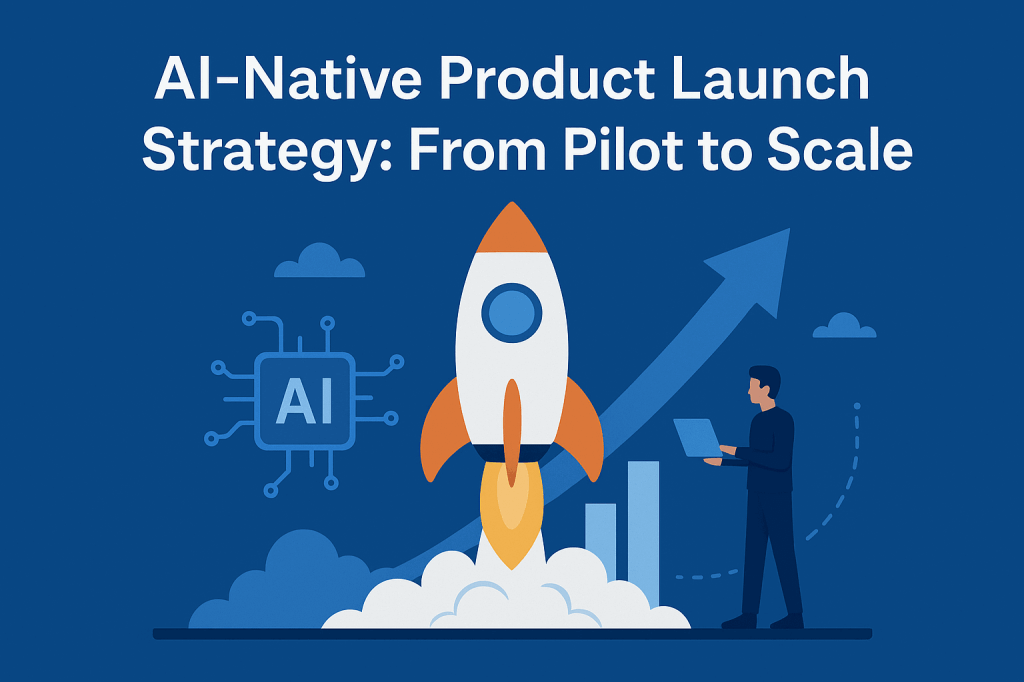
  • AI-Native Product Launch Strategy: From Pilot to Scale

    AI-Native Product Launch Strategy: From Pilot to Scale

    Artificial Intelligence has become one of the most transformative forces in the digital era. What was once seen as a futuristic concept has now evolved into a practical tool that is shaping how organizations operate and compete. The rapid advancement of machine learning, data analytics, and automation has made it possible for companies to build intelligent products that adapt, learn, and improve with every user interaction. This evolution has given rise to a new generation of innovations known as AI-native products.

    An AI-native product is not simply a digital product with an added AI feature. It is a system designed from the ground up with artificial intelligence as its foundation. The AI is embedded within the architecture, allowing the product to think, reason, and optimize outcomes based on real-world data. Such products have the ability to predict trends, personalize experiences, and make autonomous decisions that traditional software cannot achieve. They represent the next step in digital transformation, where intelligence becomes an integral part of the product experience rather than an optional add-on.

    However, moving from the idea of building an AI-native product to successfully launching and scaling it is a challenging process. Many organizations find it difficult to transition from the pilot stage to full-scale implementation. Some struggle with data quality, while others face challenges in aligning technical performance with business outcomes. Without a well-defined strategy, even the most promising AI projects can lose momentum before delivering tangible value.

    To overcome these challenges, many businesses partner with AI development companies that specialize in building end-to-end intelligent solutions. These companies bring expertise in areas such as data strategy, model development, system integration, and deployment at scale. They help organizations move beyond experimentation and build AI-native systems that can operate efficiently in real business environments.

    This article presents a structured roadmap for organizations aiming to launch and scale AI-native products successfully. It explains each stage in detail, beginning with the pilot phase where the concept is tested, followed by validation to ensure alignment with business goals, and then moving into scaling and continuous evolution. The goal is to help decision-makers understand how to turn an AI prototype into a sustainable, value-generating product that can grow and adapt over time.

    By the end of this discussion, you will gain a comprehensive understanding of the journey from pilot to scale, including the key principles, challenges, and best practices involved in developing a successful AI-native product. Whether you are a startup experimenting with AI or an established enterprise looking to modernize your offerings, this guide provides a foundation for making informed and strategic decisions in your AI journey.

    Phase 1: Pilot – Building the Proof of Value

    The first stage in launching an AI-native product begins with the pilot phase. This stage is not about building a complete system but rather proving that the idea has genuine value. The goal is to demonstrate that the AI component can solve a specific problem, deliver measurable results, and operate effectively with real data. A well-executed pilot provides the confidence and insights needed to justify larger investments in scaling and production.

    Define the AI-Native Hypothesis

    Every AI-native product must begin with a clear and testable hypothesis. This involves identifying the problem that artificial intelligence will address and the kind of value it is expected to generate. For example, a company might hypothesize that an AI recommendation engine can increase user engagement by suggesting more relevant content. The hypothesis should focus on how AI enhances performance compared to existing solutions. It acts as the guiding principle for data collection, model design, and success measurement throughout the pilot.

    Focus on a Single Use Case

    During the pilot phase, it is tempting to experiment with multiple AI features at once, but this approach often leads to complexity and diluted outcomes. Focusing on one specific use case allows the team to concentrate efforts and resources on solving a single, well-defined problem. For instance, a healthcare startup might begin by developing an AI tool that predicts patient readmissions before moving on to diagnostic or treatment recommendations. A narrow focus ensures clarity, better evaluation, and faster iteration cycles.

    Data Quality and Availability

    High-quality data is the foundation of every successful AI system. During the pilot stage, organizations must ensure that the data used for training is accurate, consistent, and relevant to the use case. The emphasis should be on quality rather than quantity. A smaller but clean and well-structured dataset can produce more reliable results than a massive collection of noisy or unverified data. It is also important to establish proper data pipelines and storage systems that can later be scaled when moving to production.

    Choose the Right Metrics

    Selecting the correct metrics early in the process is essential for evaluating the success of the pilot. These metrics should include both technical performance and business outcomes. Technical metrics may include model accuracy, precision, recall, or response time, while business metrics could measure improvements in customer satisfaction, cost efficiency, or operational productivity. Connecting the two types of metrics provides a complete picture of how the AI system contributes to real-world objectives.

    User Feedback and Human-in-the-Loop

    Involving human feedback at this stage plays a critical role in refining the AI model and ensuring it behaves as expected. A human-in-the-loop approach means that experts or end users continuously review AI decisions and provide corrections when necessary. This collaboration allows the model to learn faster and adapt more effectively to real-world scenarios. For example, if an AI system designed to sort job applications misclassifies certain profiles, human reviewers can provide input to retrain the model and improve its accuracy over time.

    Iterative Learning and Adaptation

    A successful pilot is built on a cycle of learning, testing, and improvement. After each experiment, teams should analyze results, identify weaknesses, and refine their models accordingly. This iterative approach helps the organization discover what works best before committing to large-scale implementation. By embracing continuous improvement, the AI system becomes more accurate, resilient, and aligned with business needs.

    The pilot phase is essentially a controlled experiment that lays the foundation for the product’s future. It helps uncover technical challenges, data limitations, and user behavior patterns that can influence the overall design. The key to success lies in keeping the scope small, learning rapidly from feedback, and proving that the product can create measurable impact. Once the pilot demonstrates value, the next step is to validate and align it with broader business goals before scaling further.

    Phase 2: Validation – Aligning Technology with Business Outcomes

    Once the pilot has proven that an AI-native concept works in a controlled setting, the next phase is validation. This stage focuses on confirming that the technology can deliver consistent results, align with organizational objectives, and be trusted by both internal teams and end users. Validation bridges the gap between experimentation and real-world deployment, ensuring that the product not only functions as expected but also contributes to measurable business success.

    Translate Technical Metrics into Business Value

    Technical achievements mean little if they do not translate into business results. Many pilots demonstrate excellent performance in terms of accuracy or efficiency, yet they fail to gain executive support because stakeholders cannot see the financial or operational impact. During validation, teams must connect model performance with key business outcomes such as revenue growth, cost savings, or customer satisfaction. For instance, if an AI model predicts customer churn with high precision, the team should show how using these predictions leads to improved retention rates and higher lifetime value. This conversion of technical insights into business metrics builds trust among decision-makers and encourages further investment.

    Model Performance and Compliance

    As the product moves closer to real-world use, it becomes essential to ensure that it performs reliably and ethically. Validation involves rigorous testing under varied conditions to evaluate how the AI model handles incomplete data, outliers, or new patterns it has not seen before. Beyond accuracy, organizations must also address compliance with legal and ethical standards. This includes data privacy regulations, bias prevention, and explainability. A transparent AI system that provides understandable reasoning behind its decisions is far more likely to be adopted and trusted by users.

    Refining Workflows and Integration

    An AI-native product cannot operate in isolation. It must integrate seamlessly into existing workflows and systems used by employees or customers. During validation, teams work on refining these integrations so that the product becomes part of the natural workflow rather than an additional step. For example, an AI-powered logistics tool should integrate with inventory management and supply chain platforms so that predictions automatically influence restocking decisions. Proper integration not only improves efficiency but also increases the likelihood of consistent adoption across departments.

    Internal Trust and Cross-Functional Buy-in

    A major part of validation is building trust within the organization. This involves educating teams about how the AI system works, its limitations, and how it complements their roles. Many employees initially view AI as a threat to their jobs, but when they understand that it helps them make better decisions or automate repetitive tasks, acceptance grows naturally. Open communication, interactive demonstrations, and feedback sessions encourage collaboration and support across departments such as data science, product management, and operations. Without cross-functional alignment, even the most advanced AI solutions can fail due to internal resistance.

    Establishing Clear Governance Structures

    As AI begins to influence business operations, clear governance structures become necessary. Governance defines who is responsible for monitoring the model, updating datasets, and approving changes. It also ensures compliance with internal policies and external regulations. A formal governance framework helps avoid confusion and promotes accountability. By creating transparent ownership and decision-making processes, organizations can manage risk while maintaining innovation.

    This phase also reinforces the importance of AI-native development for business. Unlike traditional systems that rely on manual updates and fixed logic, AI-native products evolve dynamically through data-driven learning. They adapt to changing market conditions, customer needs, and operational patterns without requiring complete redevelopment. When businesses validate these systems properly, they gain a competitive edge that traditional models cannot replicate.

    Creating Feedback Loops for Continuous Validation

    Validation is not a one-time activity. Continuous monitoring and feedback are essential to maintain performance as data and user behavior evolve. Establishing feedback loops allows teams to track how the model behaves over time and identify when adjustments are needed. This ongoing validation ensures that the AI product remains relevant and reliable long after the initial rollout. It also helps capture new insights that can guide future updates or even lead to additional use cases.

    By the end of the validation phase, the organization should have a clear understanding of how the AI-native product delivers value, integrates into business processes, and maintains compliance with standards. This phase sets the stage for scaling, where the system will move from limited use to broader deployment across multiple teams, departments, or customer segments. Without thorough validation, scaling can amplify existing weaknesses, but with proper alignment, it can unlock the full potential of AI-driven innovation.

    Phase 3: Scaling – From Experiment to Enterprise Integration

    Once an AI-native product has been validated and proven to deliver measurable value, the next step is scaling it across the organization or market. This stage focuses on transforming a successful prototype into a robust and production-ready solution that can handle larger data volumes, more users, and complex workflows. Scaling is where the product evolves from an experimental initiative into a core part of business operations. It requires not just technical upgrades but also strategic planning, cultural adaptation, and cross-functional collaboration.

    Architecture Scaling

    During the pilot and validation stages, AI systems often rely on minimal infrastructure suitable for testing and limited data processing. However, when moving toward large-scale deployment, it becomes necessary to re-engineer the architecture for performance, stability, and security. This process typically involves implementing cloud-based environments, establishing continuous integration and deployment pipelines, and using MLOps practices to automate monitoring, retraining, and version control. Scalable architecture ensures that as user demand and data volumes grow, the system can maintain consistent speed and accuracy without requiring major redesigns.

    Another important consideration in architecture scaling is interoperability. The AI product must work seamlessly with other enterprise systems such as customer relationship management tools, enterprise resource planning software, and data warehouses. This integration ensures that insights generated by the AI flow directly into operational decision-making. A modular and API-driven design is often preferred because it allows flexibility in connecting the AI model with various applications without disrupting existing workflows.

    Data Scaling

    As an AI product reaches more users and processes more transactions, the amount of data it handles can increase dramatically. This stage requires developing scalable data pipelines capable of managing large and diverse datasets efficiently. Automated data collection, cleaning, and transformation become essential to ensure that the AI model continues learning from new information in real time. The feedback loop created by continuous data flow allows the model to adapt to changing patterns, user behaviors, and market dynamics.

    Data scaling also involves building robust monitoring systems that detect issues such as data drift, missing values, or inconsistencies that may degrade model performance. By implementing early detection mechanisms, organizations can prevent potential inaccuracies before they affect business outcomes. In addition, data governance must evolve to manage data lineage, versioning, and compliance with privacy regulations, ensuring that all new data is used responsibly and transparently.

    Governance and Compliance

    As the product scales, so does the importance of governance. The organization must establish policies and frameworks to ensure ethical, secure, and compliant use of AI across departments. Governance encompasses everything from data protection to model explainability and user transparency. A well-structured governance process outlines roles and responsibilities, defines escalation procedures for potential risks, and ensures that all updates or retraining cycles are documented and reviewed.

    At this stage, compliance with regional and international regulations becomes a critical priority. Depending on the nature of the product and its market, organizations must adhere to standards related to privacy, fairness, and accountability. Transparent reporting mechanisms also help maintain user trust and demonstrate the organization’s commitment to responsible AI practices.

    Change Management and Organizational Readiness

    Scaling is not only a technical endeavor but also a cultural and organizational transformation. Teams that were previously used to manual processes must now adapt to AI-assisted workflows. Effective change management ensures that employees understand the value of the AI system and how it enhances their productivity rather than replacing their contributions. Training programs, internal workshops, and documentation can help employees develop confidence in using AI tools and interpreting their results accurately.

    Leadership support is another key factor during this phase. When executives champion the adoption of AI, it creates a sense of purpose across the organization and motivates teams to collaborate more effectively. Communicating success stories and sharing measurable outcomes of AI integration further encourages adoption and fosters a culture that embraces data-driven decision-making.

    Go-to-Market and Customer Education

    When scaling involves launching the product to external markets or larger customer segments, a strong go-to-market strategy is vital. The marketing message should highlight how AI capabilities deliver tangible benefits such as improved personalization, faster response times, or enhanced decision support. Clear and transparent communication helps potential users understand how the AI system operates and what value it brings to their business or daily life.

    Customer education plays an equally important role. Many users may not fully grasp the concept of AI-driven features, so providing learning resources, demos, and interactive guides can help build trust and confidence. When customers understand how the system makes recommendations or decisions, they are more likely to use it effectively and provide meaningful feedback that can drive future improvements.

    Financial Planning and Sustainability

    Scaling an AI-native product requires investment in infrastructure, human expertise, and long-term maintenance. Understanding the cost to develop AI-native products is essential to avoid budget overruns. Costs may include cloud computing resources, data acquisition, model retraining, compliance audits, and ongoing technical support. By planning financial resources strategically, organizations can maintain sustainable operations and continue innovating without disrupting business continuity.

    It is also beneficial to explore cost optimization strategies such as using scalable cloud services, optimizing model complexity, and leveraging open-source frameworks. These methods allow teams to manage expenses effectively while still maintaining high-quality AI performance.

    In summary, the scaling phase transforms a successful prototype into a fully operational AI-native product that delivers consistent results across various environments. This stage combines advanced technical practices, organizational adaptation, and customer engagement to ensure that the product is not only scalable but also sustainable. Once scaling is achieved, the focus shifts toward maintaining continuous evolution and ensuring long-term competitiveness in a rapidly changing market.

    Phase 4: Continuous Evolution – Sustaining Competitive Advantage

    Reaching the scaling phase is a major accomplishment, but the journey of an AI-native product does not end there. The real power of artificial intelligence lies in its ability to learn and evolve over time. Continuous evolution is the stage where the product matures, adapts to new data, and maintains its relevance in a constantly changing market. This ongoing process allows organizations to sustain their competitive edge by ensuring that the AI system remains accurate, efficient, and aligned with business objectives long after the initial deployment.

    Model Retraining and Continuous Monitoring

    AI models do not stay accurate forever. They are influenced by changing user behaviors, market conditions, and data patterns. Over time, even the most well-trained models can experience performance degradation if not updated regularly. Continuous monitoring helps identify when the model begins to drift or lose predictive strength. Retraining ensures that the AI system remains in sync with the latest trends and data realities.

    Organizations should establish automated retraining pipelines that periodically refresh the model using new data collected from live environments. This process not only maintains performance but also prevents costly errors that may arise from outdated predictions. Monitoring should cover both technical aspects such as accuracy and latency, and operational aspects such as user satisfaction and error rates. The goal is to maintain a steady balance between automation and human oversight to ensure dependable and ethical outcomes.

    Incorporating User Feedback and Behavioral Insights

    Continuous evolution depends heavily on understanding how users interact with the AI product. By analyzing feedback and usage data, teams can uncover valuable insights about user preferences, pain points, and behavior patterns. These insights can be used to refine algorithms, adjust recommendation strategies, or improve the user interface for greater accessibility.

    For example, if an AI-powered learning platform notices that users frequently skip certain lessons, the system can be retrained to adjust the lesson order or provide additional support materials. Similarly, an AI-driven retail system can identify which product recommendations generate the most engagement and optimize future suggestions accordingly. Incorporating user feedback ensures that the AI system remains aligned with real-world expectations and continues to deliver value over time.

    Tracking ROI and Measuring Long-Term Impact

    To justify ongoing investment in AI-native systems, organizations must measure long-term performance and return on investment. This involves tracking both quantitative and qualitative metrics that reflect the overall impact of the product on business growth. Key performance indicators may include customer retention rates, operational efficiency gains, revenue uplift, or improvements in user experience. Over time, these measurements provide a clear picture of how effectively the AI system supports strategic goals.

    In addition to financial returns, it is also important to assess the broader impact of AI on the organization’s culture and processes. For example, how has AI changed the decision-making approach within teams? Has it fostered innovation or encouraged data-driven thinking across departments? Evaluating these intangible outcomes helps identify new opportunities for improvement and expansion.

    Adapting to Technological Advancements

    The field of artificial intelligence evolves rapidly. New algorithms, frameworks, and computing techniques emerge regularly, offering opportunities to enhance existing systems. Continuous evolution requires staying updated with these advancements and integrating them thoughtfully into the product. This might involve transitioning to more efficient model architectures, adopting federated learning for data privacy, or implementing improved natural language processing models for better interaction quality.

    Keeping pace with innovation ensures that the product remains competitive and resilient. However, adopting new technologies should be guided by practical value rather than trends. Each upgrade must be justified by clear benefits such as improved performance, reduced costs, or enhanced user experience.

    Fostering a Culture of AI Innovation

    Sustaining competitive advantage is not only about maintaining a product but also about building a culture that embraces continuous improvement. Organizations that encourage experimentation and knowledge sharing are better equipped to evolve with the technology. Teams should be encouraged to explore new use cases, test emerging tools, and contribute ideas that can extend the capabilities of existing AI systems.

    Leadership plays an important role in nurturing this culture. When executives prioritize learning and innovation, it motivates employees to remain curious and engaged. Cross-functional collaboration between data scientists, developers, and business analysts leads to the creation of more comprehensive and effective AI solutions. Over time, this culture of innovation becomes a key differentiator that sets the organization apart from its competitors.

    Maintaining Ethical and Responsible AI Practices

    As AI systems evolve, so do the ethical and societal implications of their use. Maintaining responsible AI practices is essential for sustaining long-term trust and compliance. Organizations must continuously review their models for potential bias, unfair outcomes, or unintended consequences. Transparent documentation, regular audits, and clear communication with users help ensure accountability. Responsible AI is not a one-time goal but a continuous commitment that strengthens brand reputation and public confidence.

    In the phase of continuous evolution, the ultimate goal is to create a self-improving system that not only performs tasks efficiently but also adapts intelligently to new circumstances. When combined with human oversight and ethical standards, continuous evolution transforms AI-native products into living systems that learn, grow, and contribute lasting value to the organization and its users.

    Conclusion

    Launching an AI-native product is a transformative journey that evolves from experimentation to full-scale adoption. Each phase, from pilot testing to continuous evolution, serves a specific purpose in ensuring that the product not only functions efficiently but also delivers measurable value to the business and its users. By following a structured approach, organizations can move beyond traditional development models and embrace the dynamic nature of artificial intelligence as a key driver of innovation.

    The process begins with a focused pilot that tests the core hypothesis and verifies the feasibility of the concept. This stage allows teams to learn from limited but meaningful experiments, refining the data strategy and performance metrics before making larger investments. Once the idea proves its value, validation ensures that the AI solution aligns with real business outcomes and integrates seamlessly with existing systems. At this point, organizations can confidently move forward knowing the foundation is stable.

    Scaling represents the turning point where the AI system transitions from an isolated project to an enterprise-wide solution. This phase requires advanced infrastructure, data scalability, and robust governance frameworks. It also involves preparing the organization for widespread adoption by ensuring teams understand the system and feel confident using it. A successful scaling process depends on strong collaboration between technical experts, leadership, and end users.

    However, the journey does not stop after successful scaling. Artificial intelligence thrives on continuous learning. The final stage, continuous evolution, focuses on adapting to new information, retraining models, and refining algorithms to maintain performance. This ongoing improvement cycle ensures that the AI system remains relevant, ethical, and competitive as technologies and market conditions change. Through constant adaptation, an AI-native product can grow stronger, more intelligent, and more beneficial over time.

    The long-term success of an AI-native product depends on balancing innovation with responsibility. As organizations continue to develop and deploy intelligent systems, they must also prioritize transparency, fairness, and data security. Ethical practices not only build trust among users but also create a sustainable foundation for future growth. By approaching AI as a continuously evolving ecosystem rather than a one-time solution, companies position themselves to lead in a rapidly transforming digital economy.

    For businesses planning to take their first steps in artificial intelligence, understanding the AI-Native app development process can provide valuable guidance. It offers insights into planning, architecture, and deployment strategies that help transform creative ideas into impactful AI solutions. By embracing the right approach and maintaining a commitment to learning, organizations can turn innovation into long-term competitive advantage.

    In conclusion, the path from pilot to scale in AI-native product development is not merely a technical process but a strategic journey. It demands vision, patience, and continuous effort. Businesses that invest in each stage with care and foresight will find themselves at the forefront of the AI revolution, ready to deliver intelligent experiences that redefine value and drive sustainable success.
  • The Future of ROI: How Digital Marketing Will Define B2B Profitability

    The Future of ROI: How Digital Marketing Will Define B2B Profitability

    In the rapidly evolving landscape of business-to-business (B2B) marketing, the concept of Return on Investment (ROI) has become more than just a financial metric. It represents how effectively a company utilizes its resources to generate measurable value from its marketing efforts. ROI is the compass that guides organizations in evaluating what is working, what needs improvement, and where to invest next. As the business environment becomes increasingly digital, understanding and optimizing ROI has transformed from a financial exercise into a strategic necessity.

    Traditional marketing once relied on broad campaigns, trade shows, and print advertising, where tracking results was difficult and often based on estimates. While those methods provided brand exposure, they lacked the precise measurement and accountability that today’s business leaders demand. The arrival of digital marketing completely changed this dynamic. With advanced analytics, automation tools, and data-driven insights, B2B marketers can now monitor every interaction and determine exactly how their efforts contribute to revenue growth. This shift has made ROI not only easier to measure but also more central to decision-making.

    Digital marketing allows businesses to go beyond simple conversion tracking. It provides detailed insights into the customer journey, engagement patterns, and behavioral trends. From email campaigns and paid ads to content strategies and social media interactions, every activity can be analyzed for performance and profitability. As a result, ROI in the digital era extends beyond immediate sales to include customer lifetime value, brand trust, and long-term relationship building. These deeper layers of measurement allow B2B organizations to align their marketing efforts more closely with business objectives and customer expectations.

    However, with new opportunities come new challenges. The rapid expansion of digital platforms means businesses must adapt quickly to stay relevant and competitive. Knowing where to invest and how to evaluate success requires expertise, strategy, and consistent refinement. This is why many B2B companies choose to collaborate with a digital marketing agency that understands the intricacies of ROI-focused campaigns. Partnering with professionals ensures that marketing budgets are optimized, performance is tracked accurately, and campaigns are adjusted for maximum profitability.

    For businesses that want to explore how ROI specifically impacts B2B growth, understanding the principles behind Digital Marketing ROI for B2B Companies provides valuable context. It highlights how measuring ROI in digital environments can guide smarter decision-making, improve lead quality, and boost long-term revenue. As technology continues to evolve, the ability to measure and enhance ROI through digital marketing will define which B2B organizations thrive and which struggle to keep pace.

    This discussion sets the stage for a deeper look into how the future of ROI is being shaped by emerging technologies, evolving customer behaviors, and innovative marketing strategies. The following sections will explore how digital transformation is redefining ROI metrics, the key strategies driving profitability, and how B2B organizations can overcome challenges to achieve measurable growth.

    The Future of ROI in B2B Digital Marketing

    Redefining ROI Metrics for the Digital Era

    As businesses transition further into the digital landscape, the traditional definition of ROI is undergoing a complete transformation. In the past, ROI in marketing was largely about direct financial returns, often limited to how much revenue was generated compared to how much money was spent. However, in today’s digital-first world, measuring ROI has become far more complex and insightful. It now encompasses a broader range of performance indicators that go beyond simple profit calculations to evaluate the entire customer experience, brand perception, and long-term growth potential.

    Modern B2B marketing environments involve multiple touchpoints across a variety of platforms. A potential customer might first encounter your business through a blog article, then follow your company on LinkedIn, attend a virtual event, and finally request a product demo after reading a case study. Each of these interactions contributes to the overall decision-making process, and understanding the value of every step requires a more advanced method of measurement. This is where the concept of multi-touch attribution becomes essential.

    Multi-touch attribution provides a holistic view of how different marketing channels and campaigns work together to generate results. Instead of crediting only the final action that leads to a sale, this approach distributes value across each meaningful interaction along the buyer’s journey. For B2B marketers, this is crucial because purchases are rarely impulsive; they are based on trust, information, and consistent engagement. Recognizing the role of every touchpoint ensures that marketing efforts are accurately measured and optimized for maximum efficiency.

    Another key evolution in ROI measurement is the inclusion of non-financial metrics. Traditional models often ignored intangible factors such as brand reputation, audience engagement, and customer satisfaction. In contrast, modern digital ROI frameworks value these qualitative outcomes because they directly influence long-term profitability. For example, a strong brand presence or a positive customer experience may not immediately generate revenue, but it increases loyalty and referral potential, both of which contribute to sustainable business growth.

    Technology has become the backbone of this new ROI measurement process. Advanced analytics platforms now allow marketers to collect and interpret vast amounts of data in real time. Predictive analytics uses historical performance to forecast future outcomes, while artificial intelligence (AI) helps identify trends, optimize ad spend, and personalize campaigns for better results. These tools provide precision and clarity that were previously impossible in traditional marketing, giving businesses the ability to make smarter, data-driven decisions.

    Moreover, understanding ROI in the digital era means focusing on both short-term and long-term value. Short-term metrics, such as click-through rates or conversions, show immediate impact, but they only tell part of the story. Long-term ROI is reflected in customer retention, brand advocacy, and lifetime value, which are far more sustainable indicators of success. The future belongs to companies that know how to balance these two perspectives and build strategies that create lasting impact rather than quick wins.

    As B2B marketing continues to evolve, organizations that embrace this broader and more dynamic approach to ROI will be better equipped to navigate an increasingly competitive environment. By combining advanced analytics, technology integration, and a focus on long-term value creation, businesses can redefine how success is measured and ensure that every marketing effort contributes to genuine profitability.

    Key Digital Marketing Strategies Driving B2B Profitability

    Digital marketing has become the primary growth engine for B2B organizations, offering data-backed strategies that generate measurable and sustainable ROI. Unlike traditional marketing, which often relied on broad outreach and limited tracking capabilities, digital marketing enables businesses to reach highly targeted audiences, personalize communication, and measure every action. In today’s competitive environment, the success of a B2B company depends on how effectively it applies digital tools to attract, nurture, and retain clients. Below are the most influential strategies shaping the future of B2B profitability.

    • Content Marketing and Thought Leadership: Content remains one of the most powerful tools for building trust and authority in B2B industries. Buyers today prefer to engage with brands that provide knowledge, insights, and practical solutions rather than direct sales pitches. High-quality blogs, whitepapers, eBooks, webinars, and case studies help establish your business as a credible source of information. When content consistently delivers value, it not only drives organic traffic but also nurtures leads through the sales funnel. Thought leadership, achieved through expert perspectives and industry insights, positions your brand as a trusted advisor, which ultimately increases conversion rates and customer loyalty.
    • Account-Based Marketing (ABM): ABM is a strategy that focuses on targeting specific high-value accounts instead of a broad market segment. It combines personalized content, dedicated campaigns, and tailored communication to meet the unique needs of each account. This approach ensures that marketing resources are directed toward the most promising opportunities, resulting in a higher return on investment. ABM strengthens relationships with key decision-makers, improves lead quality, and shortens the sales cycle. For B2B organizations, it is one of the most cost-effective strategies for generating meaningful results.
    • Marketing Automation and Artificial Intelligence (AI): The integration of automation and AI technologies has revolutionized how marketing teams operate. Automation simplifies repetitive tasks such as email marketing, lead scoring, and social media posting, ensuring consistent engagement with minimal manual effort. AI enhances this by analyzing customer data to predict buying behavior, identify patterns, and personalize outreach. This combination not only improves efficiency but also allows marketers to deliver more relevant experiences. Businesses that implement automation and AI tools often see reduced acquisition costs and improved ROI, as campaigns become more targeted and conversion-driven.
    • Social Media and LinkedIn Advertising: Social platforms have evolved into essential channels for B2B engagement. Among them, LinkedIn stands out as the most powerful tool for connecting with industry professionals, decision-makers, and potential clients. Sponsored content, targeted ads, and professional networking opportunities make LinkedIn a goldmine for lead generation. Other social media platforms such as X (formerly Twitter) and Facebook can also support brand visibility and engagement when used strategically. Sharing consistent and valuable content, engaging with followers, and participating in industry discussions help position your business as an active and credible player in its field.
    • Search Engine Optimization (SEO) and Data-Driven Decision Making: SEO is fundamental for long-term B2B marketing success. It helps businesses attract organic traffic by improving visibility in search engine results. A well-optimized website that targets relevant keywords can continuously generate leads without ongoing ad spend. However, SEO today goes beyond keyword placement; it requires a deep understanding of search intent, user experience, and content structure. Data-driven decision-making further enhances SEO performance by using analytics to track user behavior, assess campaign outcomes, and refine strategies over time. Together, SEO and analytics create a feedback loop that strengthens ROI and builds sustainable growth.

    Digital marketing strategies are not one-size-fits-all, but their combined impact can be powerful when properly aligned with business goals. Each strategy contributes differently to ROI, but they all share a common foundation data-driven execution and customer-centric communication. Businesses that integrate these approaches into a unified marketing plan are more likely to see measurable improvements in lead quality, conversion rates, and overall profitability.

    For companies looking to refine their marketing mix, exploring the best digital marketing strategies can provide actionable insights into how to maximize performance. Additionally, selecting the right agency partner plays a crucial role in implementing these tactics successfully. Understanding how to select the right digital marketing agency can ensure that your campaigns are supported by expertise, innovation, and measurable results. Combining expert guidance with strategic execution allows B2B businesses to unlock the full potential of digital marketing and achieve sustained profitability.

    The Role of Technology and Innovation

    Technology has become the driving force behind modern marketing success, transforming how B2B companies plan, execute, and evaluate their strategies. As businesses continue to adopt digital-first approaches, technology plays a pivotal role in helping marketers measure, predict, and enhance ROI. Innovations such as artificial intelligence (AI), machine learning, data analytics, and automation have elevated marketing from a creative function into a precise, data-driven discipline. These tools not only simplify complex processes but also reveal valuable insights that guide smarter decision-making and improve overall profitability.

    One of the most significant advancements in this area is the use of predictive analytics. Predictive analytics allows marketers to analyze past behaviors, campaign outcomes, and engagement patterns to forecast future results. For instance, it can identify which leads are most likely to convert, what type of content drives the highest engagement, or which marketing channels yield the best returns. This foresight enables businesses to allocate budgets more effectively and design strategies that deliver measurable outcomes. By understanding which activities have the strongest potential impact, B2B marketers can optimize campaigns in real time and increase their ROI with greater confidence.

    Machine learning takes predictive analytics a step further by continuously improving accuracy through ongoing data collection and analysis. As algorithms process more information, they learn to identify trends and adjust marketing efforts automatically. For example, machine learning can refine ad targeting, recommend the best times to post content, or personalize communication based on user behavior. These intelligent systems reduce guesswork and improve efficiency, allowing marketers to focus on strategy, creativity, and relationship building.

    Customer Relationship Management (CRM) systems have also become essential tools for integrating marketing and sales efforts. A well-implemented CRM captures every interaction between a company and its customers, creating a unified view of each account. When combined with marketing automation platforms, CRMs help ensure that leads are nurtured effectively throughout the buyer journey. This integration bridges the gap between marketing data and sales outcomes, giving teams a complete understanding of how digital activities contribute to revenue generation. The result is a more seamless process that enhances collaboration, accountability, and long-term ROI.

    Another powerful innovation shaping ROI measurement is the use of advanced marketing dashboards. These dashboards consolidate data from multiple sources such as social media platforms, advertising tools, CRM systems, and website analytics. Marketers can view real-time performance metrics, including engagement rates, cost per lead, and conversion ratios, all in one place. This visibility makes it easier to identify which campaigns are performing well and which require adjustments. With access to accurate and timely data, decision-making becomes more strategic, ensuring that every dollar invested in marketing contributes directly to business growth.

    Artificial intelligence is also revolutionizing personalization and customer engagement. Through AI-driven insights, businesses can segment audiences more precisely and deliver content that resonates with specific interests and needs. Personalization increases engagement and improves conversion rates because it creates a more relevant and meaningful experience for each customer. AI tools can automatically adjust messaging, recommend content, and even predict customer churn, giving marketers the ability to take proactive measures that protect and grow ROI.

    Innovation does not only improve measurement; it transforms creativity. Technology enables marketers to experiment with new formats such as interactive content, video storytelling, and immersive experiences that capture attention in unique ways. The combination of creativity and data ensures that marketing is not only impactful but also accountable. Campaigns can now be tested, tracked, and refined continuously, leading to more consistent and predictable returns.

    In the modern digital environment, relying solely on intuition is no longer enough. B2B companies must adopt technology-driven frameworks to stay competitive. The organizations that thrive will be those that embrace innovation, invest in data infrastructure, and integrate advanced tools across their marketing ecosystem. By doing so, they not only enhance efficiency but also gain the agility to adapt to changing market trends. Ultimately, technology and innovation provide the foundation for a future where ROI is not just a reflection of profit but a measure of strategic excellence, customer satisfaction, and sustainable growth.

    Challenges and Considerations

    While digital marketing has opened countless opportunities for B2B organizations to enhance profitability, it also presents unique challenges that require thoughtful planning and strategic execution. The path to achieving a strong ROI is not always straightforward. From balancing short-term financial gains with long-term brand building to managing data privacy concerns and internal skill gaps, businesses must navigate several complexities to ensure sustainable success. Understanding these challenges helps companies prepare for them and develop strategies that drive measurable results without compromising quality or trust.

    • Balancing ROI and Brand-Building: One of the most common challenges B2B marketers face is finding the right balance between campaigns that generate immediate ROI and initiatives that strengthen long-term brand equity. While lead generation and conversions are essential for short-term growth, brand-building activities such as thought leadership, reputation management, and content storytelling play a crucial role in maintaining relevance and trust. Many organizations make the mistake of focusing solely on quick wins, which can limit their growth potential in the future. The most successful companies treat brand-building as a long-term investment, understanding that trust and visibility ultimately increase profitability over time.
    • Data Privacy and Tracking Limitations: As digital marketing becomes more dependent on data, privacy regulations have become stricter across the world. Laws such as GDPR and CCPA have changed how businesses collect, store, and use customer information. These regulations protect consumers but also limit marketers’ ability to track behavior and personalize campaigns. B2B companies must ensure that their data practices are transparent, ethical, and compliant with legal requirements. Building customer trust through responsible data management is not only a legal obligation but also a competitive advantage. Businesses that prioritize privacy are more likely to attract and retain loyal clients who value transparency and integrity.
    • Skill Gaps and Team Alignment: The rapid pace of technological advancement has created a significant skill gap in many organizations. Digital marketing now requires expertise in areas such as data analytics, SEO, automation, and artificial intelligence. Without the right knowledge and training, marketing teams may struggle to use these tools effectively, leading to missed opportunities and inaccurate ROI measurement. Additionally, alignment between marketing and sales teams is critical. Both departments must share common goals, communicate consistently, and collaborate closely to convert leads efficiently. When marketing generates qualified leads and sales teams follow up strategically, ROI naturally improves.
    • Complex Attribution Models: Measuring ROI accurately is often more difficult than it seems. With multiple touchpoints in the customer journey, determining which channel deserves credit for a conversion can be complex. While multi-touch attribution provides better insight, it still requires advanced tracking tools and analytical expertise. Misinterpreting data can lead to poor budget allocation and missed opportunities. Companies must invest in analytics systems and professional expertise to ensure that ROI is measured with precision and used effectively for future planning.
    • Constantly Evolving Technology: Digital marketing tools, platforms, and algorithms evolve at a rapid pace. What works today might become outdated within months. This constant evolution requires marketers to stay agile and adaptable. Regularly updating skills, experimenting with new strategies, and monitoring performance trends are vital to staying ahead of the competition. The challenge lies in balancing innovation with consistency adopting new technologies without disrupting ongoing operations or losing focus on core business goals.

    Overcoming these challenges requires a proactive mindset and a commitment to continuous improvement. Businesses that embrace flexibility, invest in training, and prioritize ethical marketing practices are more likely to sustain long-term profitability. The key is to recognize that ROI is not just about immediate financial outcomes but also about building a system that supports ongoing growth and adaptation. Success in the digital world depends on how effectively an organization combines strategy, technology, and human expertise to create a balanced and future-ready marketing framework.

    Ultimately, addressing these considerations ensures that ROI becomes a reflection of both performance and principles. B2B companies that manage to balance measurement with innovation, compliance with creativity, and automation with human understanding will not only see improved financial results but also gain lasting credibility and customer loyalty in their markets.

    Conclusion

    The future of ROI in B2B marketing is deeply intertwined with digital transformation. As technology continues to advance and buyer behaviors evolve, the ability to measure, analyze, and optimize marketing performance will define business success. Gone are the days when ROI was limited to simple financial calculations. Today, it reflects a combination of strategic alignment, customer experience, and data-driven insights that guide long-term growth. Companies that understand and adapt to this changing landscape will be the ones that achieve sustainable profitability and competitive advantage.

    Digital marketing provides B2B organizations with unprecedented opportunities to connect with their audiences on a deeper level. From personalized communication and automation to content marketing and predictive analytics, every tool contributes to improving engagement and refining ROI measurement. The organizations that succeed are those that embrace innovation, make decisions based on accurate data, and remain flexible enough to respond to shifts in technology and market trends. This continuous evolution ensures that their marketing investments deliver measurable outcomes and lasting value.

    However, achieving a strong ROI is not just about implementing technology. It also requires a clear understanding of business objectives and a consistent commitment to customer satisfaction. Companies must view digital marketing as a long-term process rather than a series of isolated campaigns. Building meaningful relationships, maintaining transparency, and delivering quality at every stage of the buyer journey are what ultimately determine profitability. The true measure of ROI lies in how effectively a business combines creativity, analytics, and human connection to generate results that benefit both the organization and its clients.

    In the years ahead, ROI will continue to evolve as artificial intelligence, data science, and automation become even more integrated into marketing practices. Businesses that focus on holistic measurement, ethical data use, and strategic innovation will not only achieve better financial results but also earn the trust and loyalty of their audiences. In this sense, ROI becomes more than just a number it becomes a reflection of a company’s vision, values, and adaptability in a digital world.

    For organizations ready to take the next step, developing a structured plan is essential. Learning how to create a digital marketing strategy can provide the foundation for building consistent, measurable, and profitable marketing efforts. By combining innovation with disciplined execution, B2B businesses can move confidently into the future, ensuring that every marketing action contributes meaningfully to long-term success.

    As the business environment continues to evolve, the companies that thrive will be those that view ROI not merely as an endpoint, but as an ongoing process of learning, adapting, and growing. Digital marketing will remain at the heart of this transformation, shaping the future of B2B profitability and redefining how success is measured in the modern era.

  • The ROI of Investing in AI-First Mobile App Development

    The ROI of Investing in AI-First Mobile App Development

    In recent years, Artificial Intelligence (AI) has emerged as one of the most transformative technologies across industries. From predictive analytics and voice recognition to automation and personalization, AI is revolutionizing how digital products are created and experienced. One of the most profound areas where AI has made its mark is mobile app development. Businesses across sectors are increasingly realizing that simply adding AI as an afterthought is not enough to meet the rising expectations of tech-savvy users. Instead, a new approach known as AI-first mobile app development is redefining how applications are designed, built, and optimized.

    In traditional app development, AI is often introduced as a supplementary feature, perhaps a chatbot, recommendation engine, or predictive search tool. However, in AI-first app development, artificial intelligence is embedded into the very foundation of the product. This means every function, workflow, and user interaction is guided by AI models that learn, predict, and adapt in real-time. The result is an intelligent application that continuously evolves based on user behavior and data insights, ultimately delivering greater efficiency and stronger ROI for businesses.

    With the surge in digital competition, businesses can no longer rely on static or one-size-fits-all mobile apps. Users today expect apps to understand their preferences, anticipate their needs, and provide seamless, intuitive experiences. Whether it’s personalized recommendations in an e-commerce app, instant voice-based assistance in a travel app, or smart automation in a finance app, AI enables developers to deliver the next level of innovation and customer satisfaction.

    Organizations that want to stay competitive are increasingly collaborating with professional development agencies that specialize in building intelligent applications. To get started, you can explore some of the top mobile app development companies and popular AI companies that have proven expertise in developing AI-driven digital products. For a deeper understanding of how this new development model works, you can also read more about AI-first app development.

    In this blog, we will explore what makes AI-first mobile app development so impactful, how it improves ROI, and why forward-thinking businesses are shifting toward this model. We will also discuss real-world examples, measurable benefits, and practical considerations to help you decide if it’s the right investment for your organization.

    Understanding ROI in AI-First Mobile Apps

    Before exploring how AI-first development delivers measurable value, it is important to understand what ROI (Return on Investment) means in the context of mobile app development. ROI represents the ratio between the net profit gained from an investment and the total cost of that investment. In simple terms, it tells you how much benefit or value your business receives for every dollar spent. When applied to mobile apps, ROI helps determine whether the time, money, and resources invested in building and maintaining an app are truly paying off in terms of user growth, revenue, and long-term business sustainability.

    For AI-first mobile apps, ROI measurement goes beyond basic metrics such as downloads or user ratings. Since AI-first apps are designed to learn and improve continuously, their ROI must also account for long-term efficiencies, automation-driven savings, and user lifetime value that grows over time. This holistic view of ROI allows organizations to assess not only how their apps perform today but also how they will evolve and generate value in the future.

    Key Metrics That Define ROI in AI-Driven Apps

    Several measurable indicators can help evaluate the ROI of AI-first applications. These go beyond traditional analytics and focus on both financial and operational improvements.

    • User Retention Rate: AI-first apps excel at understanding user preferences, predicting intent, and delivering relevant experiences. This personalization leads to higher engagement and retention, reducing churn and increasing the average lifetime value of each user.
    • Customer Lifetime Value (LTV): Through continuous learning and personalization, AI helps businesses maximize the value derived from each customer. Recommendation engines, predictive notifications, and adaptive interfaces all contribute to customers staying active and spending more within the app ecosystem.
    • Conversion Rate Improvement: Intelligent systems can analyze user behavior and suggest the optimal time or method to present offers or actions, improving conversion rates. Whether it’s an upsell, subscription prompt, or call-to-action, AI timing and context-awareness make every interaction more effective.
    • Operational Cost Reduction: One of the clearest ROI benefits of AI-first mobile apps is automation. Tasks such as data analysis, customer support, and resource allocation can be handled by AI with higher accuracy and speed, reducing the need for extensive human intervention and minimizing costs.
    • Faster Decision-Making: AI-first apps generate actionable insights from vast data streams in real time. This allows companies to react faster to market shifts, identify emerging trends, and make smarter strategic decisions without delay.

    How AI-First Thinking Impacts ROI

    The ROI of an AI-first approach is not limited to revenue growth. It encompasses an entire transformation in how a business operates and scales. Traditional apps often reach a plateau in performance once their user base stabilizes, but AI-first apps continue to evolve. Their algorithms refine themselves with every user interaction, meaning they become smarter, more efficient, and more profitable over time.

    For example, a retail app that integrates machine learning for personalized product recommendations will not only boost sales initially but also improve those recommendations as more users interact with the platform. Similarly, a healthcare app using predictive analytics can minimize diagnostic errors and improve patient outcomes, saving both time and resources while enhancing brand reputation.

    Moreover, the long-term ROI of AI-first apps includes qualitative benefits such as improved customer satisfaction, stronger brand loyalty, and a reputation for innovation. These intangible advantages often translate into measurable business growth and competitive positioning that traditional apps cannot achieve.

    ROI as a Continuous Process

    Unlike conventional ROI assessments that are performed at fixed intervals, the ROI of AI-first mobile apps is dynamic. Because AI models continuously evolve through data feedback loops, the returns keep increasing as the system matures. The more data an AI-first app processes, the better it becomes at predicting user needs and streamlining operations. This leads to a compounding effect, where the investment value grows exponentially rather than linearly.

    To summarize, understanding ROI in AI-first mobile app development means looking beyond short-term profits and considering the sustained benefits of adaptability, automation, and user engagement. Businesses that track these factors effectively are better positioned to recognize the full value of their AI investments and make data-driven decisions for future development cycles.

    Why Businesses Are Shifting to AI-First Development

    The rapid evolution of digital technologies has fundamentally changed how companies approach mobile app development. In the past, most apps were designed using a “feature-first” approach, where functionality and design were prioritized, and AI, if included, was added later as an enhancement. Today, this approach no longer satisfies modern users who expect personalized, adaptive, and seamless experiences. As a result, forward-thinking businesses are transitioning to an AI-first development model, where intelligence is built into the core of the application from day one.

    AI-first development reimagines the role of mobile apps, transforming them from static tools into dynamic, self-learning ecosystems. These applications continuously adapt to user behavior, market conditions, and operational goals. This capability not only enhances user satisfaction but also increases the overall ROI by improving efficiency and driving engagement at every touchpoint.

    What Makes AI-First Development Different

    Unlike conventional app development, where features are pre-programmed with fixed logic, AI-first development integrates machine learning models, natural language processing, and predictive analytics from the start. This allows the app to learn patterns, process data in real time, and make intelligent decisions without constant human input. The outcome is a smarter, more responsive application that continuously evolves based on actual user interactions rather than relying solely on manual updates or assumptions.

    • Continuous Learning and Adaptation: AI-first apps analyze user data to refine their performance over time. For instance, a news app might use AI to understand reading habits and automatically adjust article recommendations for each individual.
    • Predictive Functionality: Instead of waiting for user input, AI-first apps anticipate what users might need next. A travel app, for example, could suggest ideal flight times or hotels based on previous bookings or location data.
    • Smarter Automation: By automating routine tasks such as data sorting, report generation, or user query handling, businesses reduce operational overhead while maintaining consistent quality.
    • Real-Time Decision Making: AI-first apps enable instant responses to user actions, providing relevant content, recommendations, or solutions at the exact moment they are needed.

    Key Drivers Behind the AI-First Shift

    There are several compelling reasons why companies are increasingly prioritizing AI-first development. This shift is not just about keeping up with trends, but about achieving tangible business outcomes that traditional approaches can no longer deliver.

    • Evolving User Expectations: Modern consumers are more tech-savvy than ever before. They expect personalized experiences, instant results, and smart recommendations. AI-first apps meet these expectations by tailoring every interaction to individual preferences, creating a sense of relevance and satisfaction that keeps users engaged.
    • Competitive Advantage: Businesses that adopt AI-first strategies early often gain a strong edge in their industries. Intelligent apps can process customer feedback, predict trends, and make quick adjustments, helping companies stay ahead of competitors who rely on static systems.
    • Operational Efficiency and Scalability: AI automates numerous backend operations, allowing businesses to scale effortlessly without significantly increasing their costs. Whether it’s managing customer service requests, analyzing big data, or optimizing logistics, AI-first apps handle tasks that previously required large teams of human specialists.
    • Data-Driven Insights: AI-first apps transform raw data into actionable intelligence. Businesses can use these insights to make better strategic decisions, identify emerging opportunities, and optimize performance across departments. Over time, this leads to smarter investments, improved user acquisition strategies, and increased profitability.
    • Enhanced Personalization and Engagement: Personalization is no longer a luxury; it’s a necessity. AI-first apps can deliver hyper-personalized recommendations, customized notifications, and dynamic user journeys that increase retention and lifetime value. By treating each user as unique, these apps build stronger emotional connections and brand loyalty.

    How AI-First Development Transforms Business Models

    AI-first app development is not just a technological change; it represents a shift in mindset. Instead of building apps as static products, companies now treat them as living systems that evolve with users and data. This transformation leads to a new business model centered on continuous optimization, innovation, and customer-centric growth.

    For instance, an e-commerce brand can use AI-first development to automatically adjust pricing, predict inventory needs, and personalize marketing campaigns. A healthcare provider can implement predictive analytics to identify patient risks early and offer preventative care. A financial institution can deploy AI-driven fraud detection systems that adapt in real time to new threats. In each case, the AI-first approach not only enhances performance but also reduces long-term costs and operational friction.

    Building a Foundation for Future Innovation

    One of the biggest advantages of adopting AI-first development is future readiness. As AI technology continues to evolve, apps designed with an AI-first architecture can easily integrate emerging innovations such as generative AI, computer vision, and advanced predictive modeling. This ensures that businesses remain flexible and scalable without needing to rebuild their systems from scratch every time new AI capabilities emerge.

    By investing in AI-first mobile app development today, businesses are essentially future-proofing their operations. They are creating digital assets that not only serve current needs but also have the potential to adapt and thrive in tomorrow’s rapidly changing digital landscape.

    As the competition for user attention intensifies, the organizations that will lead the next wave of digital innovation are those that embrace intelligence as a fundamental part of their strategy, not as an afterthought. The AI-first mindset empowers companies to operate smarter, deliver superior experiences, and sustain growth through continuous learning and optimization.

    Core Areas Where AI Delivers ROI

    Artificial Intelligence impacts almost every stage of mobile app development, from design to deployment and continuous optimization. However, the true return on investment (ROI) becomes evident when AI begins to deliver measurable business outcomes. These outcomes may include higher user engagement, reduced operational costs, improved marketing efficiency, or faster decision-making. Let’s explore the major areas where AI-first mobile app development consistently drives ROI and how these benefits translate into real-world success.

    Personalization and User Engagement

    One of the most powerful advantages of AI-first mobile app development is its ability to personalize user experiences at scale. Unlike traditional systems that rely on predefined logic, AI-first apps continuously analyze user behavior, demographics, and interaction history to deliver customized recommendations, content, and product suggestions. This level of personalization fosters stronger user relationships and keeps them coming back.

    For instance, a streaming app such as Netflix or Spotify uses AI to study what users watch or listen to, then suggests new shows or playlists that align perfectly with their preferences. Similarly, an e-commerce app can recommend products based on browsing patterns, previous purchases, or even the time of day the user tends to shop. This leads to a significant increase in engagement and conversion rates.

    AI-driven personalization doesn’t just enhance user satisfaction, it also directly improves revenue. Users who feel that an app understands their preferences are more likely to spend, subscribe, and advocate for the brand. To learn more about how AI is shaping mobile user experiences, explore AI in mobile apps.

    Operational Efficiency

    Operational efficiency is one of the most measurable ROI contributors of AI-first development. By automating complex or repetitive tasks, AI allows businesses to reduce manual labor, minimize human error, and speed up processes. This efficiency extends across departments, from customer service and logistics to analytics and performance tracking.

    For example, an AI-first mobile app in logistics can optimize delivery routes in real time, reducing fuel costs and delivery delays. In healthcare, AI can automate appointment scheduling and patient triage, freeing staff to focus on critical care. In retail, AI can analyze thousands of inventory data points to predict restocking needs, ensuring that popular products are always available.

    These operational efficiencies significantly reduce costs and improve productivity. Moreover, AI systems continue to learn and optimize over time, delivering compounding benefits that traditional apps simply cannot match. If you already have an existing app and wish to make it more efficient, you can learn about AI integration in mobile app development and discover how AI can enhance existing solutions.

    Customer Support Automation

    AI-powered customer support has become a game-changer for businesses that prioritize speed, quality, and 24/7 availability. Through natural language processing (NLP) and conversational AI, mobile apps can now offer intelligent chatbots and virtual assistants capable of handling customer inquiries in real time. These bots can answer frequently asked questions, guide users through processes, and even escalate issues to human agents when needed.

    For businesses, this translates into massive cost savings. AI-first customer service reduces the need for large support teams, shortens response times, and ensures consistent communication quality. Over time, AI systems learn from every interaction, becoming more accurate and intuitive in understanding user intent and providing solutions.

    Beyond efficiency, AI-first support improves customer satisfaction. When users receive instant help and relevant responses, they are more likely to trust the brand and remain loyal to the app. This improvement in customer experience has a direct positive impact on ROI by boosting retention and minimizing churn.

    Marketing Optimization

    Marketing is another area where AI-first app development produces impressive ROI. Modern marketing depends heavily on understanding user intent and behavior, and AI excels at uncovering these insights from vast datasets. Machine learning models can predict which customers are likely to make a purchase, when they might do it, and what kind of message will resonate best with them.

    AI-first apps empower marketers with tools like predictive analytics, automated ad targeting, and personalized campaign management. For example, AI can automatically adjust ad placements and bids based on real-time engagement metrics, ensuring the best return on ad spend. It can also segment audiences dynamically, ensuring that each group receives relevant messaging.

    By automating data analysis and decision-making, AI enables businesses to optimize their marketing strategies continuously. This reduces costs associated with trial-and-error campaigns and leads to higher conversion rates, better user retention, and long-term brand growth.

    Data-Driven Decision Making

    Data is the new fuel of the digital economy, and AI-first apps are built to extract maximum value from it. Traditional analytics tools often struggle to keep up with the volume, velocity, and variety of data generated by mobile users. AI systems, on the other hand, thrive in this environment. They process massive datasets in real time and uncover patterns that humans might overlook.

    For instance, an AI-first financial app can detect fraudulent transactions instantly by identifying subtle deviations in user behavior. A fitness app can monitor user progress and automatically suggest personalized routines to improve results. In both cases, decisions are made based on evidence rather than intuition, which reduces risk and increases effectiveness.

    AI-first mobile apps also empower businesses to make proactive decisions. Instead of reacting to problems after they occur, companies can anticipate challenges and act before they impact operations. This predictive capability has a profound effect on ROI, as it minimizes losses, improves resource allocation, and strengthens strategic planning.

    Cross-Platform Intelligence and Synergy

    Another emerging advantage of AI-first mobile app development is the ability to integrate intelligence across multiple platforms. For example, insights generated from a mobile app can inform strategies for web or desktop applications, creating a unified and consistent experience for users. This cross-platform synergy amplifies ROI by ensuring that all digital touchpoints share the same intelligence and work together to improve overall performance.

    To understand how AI-first principles extend beyond mobile to other digital experiences, you can read about AI-first in web development. By applying a unified AI approach across platforms, businesses can achieve scalability, consistency, and smarter user engagement throughout their digital ecosystem.

    The Long-Term ROI Perspective

    What makes AI-first mobile app development especially valuable is its long-term return potential. Traditional apps often reach a point where further growth becomes difficult without major redesigns or new features. AI-first apps, in contrast, continue to evolve organically through ongoing learning and optimization. As they gather more data, their predictions become more accurate, their automation becomes more efficient, and their personalization becomes more effective.

    Over time, this results in an exponential ROI curve rather than a flat one. Each year, the app delivers more value with relatively lower maintenance costs. Businesses that understand this compounding effect are positioning themselves for sustained success in a future dominated by intelligent, adaptive technology.

    Real-World Examples or Case Studies

    While the benefits of AI-first mobile app development sound impressive in theory, the true power of this approach becomes evident when we look at real-world applications. Businesses across various industries have already begun to harness AI to improve performance, enhance user experience, and achieve measurable ROI. From entertainment to retail and healthcare, AI-first strategies have redefined how apps operate and generate value.

    AI in Entertainment: Personalized Streaming Experiences

    One of the most recognizable examples of AI-first app development comes from the entertainment industry. Platforms like Netflix and Spotify have built their entire business models around AI-powered personalization. These apps analyze vast amounts of user data, including watch history, likes, search patterns, and even the time of day content is consumed, to predict what users might enjoy next.

    Netflix, for instance, uses AI algorithms to personalize the homepage layout for every user. It recommends shows and movies that align with viewing habits and continually refines its predictions based on new user interactions. This AI-first approach not only increases watch time but also reduces churn by keeping subscribers consistently engaged. The company reported that over 80% of the content watched on its platform comes from AI-generated recommendations, an undeniable demonstration of ROI driven by personalization.

    AI in Retail: Smarter Shopping and Predictive Analytics

    Retail is another sector where AI-first mobile app development has transformed customer experiences and profitability. Global e-commerce leaders such as Amazon and Alibaba use AI to power everything from search optimization and product recommendations to dynamic pricing and inventory management.

    Amazon’s mobile app leverages AI to predict what customers are likely to buy next, even before they search for it. Its recommendation engine drives a significant portion of total revenue, helping increase average order value and customer lifetime value. Similarly, Alibaba uses AI to monitor shopping trends in real time, optimizing product visibility and pricing to match consumer demand. These AI-first systems allow retailers to anticipate customer needs and adapt instantly, leading to higher sales, reduced inventory costs, and stronger customer loyalty.

    AI in Healthcare: Improving Accuracy and Accessibility

    In healthcare, AI-first mobile applications have made vital contributions to diagnosis accuracy, patient care, and accessibility. For example, Babylon Health and Ada Health use AI-driven symptom checkers that allow users to input their symptoms and receive instant, data-backed recommendations. These apps analyze medical data and use machine learning to identify patterns that match specific conditions, helping patients make informed decisions about their next steps.

    AI-first apps also assist healthcare providers by predicting patient risks, automating administrative workflows, and supporting telemedicine consultations. Hospitals can use AI apps to analyze patient histories, identify potential health issues before they escalate, and improve overall care quality. The ROI here is not just financial but also social, AI helps reduce wait times, lower diagnostic costs, and improve patient outcomes, creating long-term trust and efficiency within healthcare systems.

    AI in Finance: Predictive Insights and Fraud Prevention

    The finance industry has embraced AI-first development to handle massive volumes of data securely and efficiently. Mobile banking and fintech apps like PayPalRevolut, and Capital One rely on AI algorithms to enhance security, detect fraud, and personalize financial recommendations.

    For instance, PayPal uses AI-powered anomaly detection to instantly identify suspicious transactions. The system continuously learns from user behavior, allowing it to improve accuracy and reduce false positives over time. Similarly, AI in credit scoring and loan approval processes enables faster decision-making and a better understanding of customer risk profiles. This saves both time and operational costs while minimizing losses due to fraud.

    AI in Travel and Hospitality: Predictive Experience Design

    AI-first mobile apps are also transforming how people travel and book accommodations. Apps like Airbnb and Hopper rely on machine learning to offer predictive pricing, tailored recommendations, and dynamic travel suggestions. Hopper’s AI predicts flight and hotel price fluctuations, advising users on the best time to book. Airbnb uses AI to analyze guest preferences and provide hosts with insights on pricing and listing optimization.

    These intelligent features not only improve customer satisfaction but also maximize revenue for both platforms and users. By reducing guesswork and delivering data-driven insights, AI-first apps in the travel sector are redefining what “smart booking” means and helping businesses increase profitability through precision and personalization.

    AI in Education: Adaptive Learning Platforms

    Education technology has seen tremendous improvements through AI-first app design. Learning platforms such as Duolingo and Coursera integrate AI to customize learning paths for each user. The AI tracks progress, identifies weak areas, and adjusts lessons accordingly, ensuring learners remain challenged but not overwhelmed. This personalization improves engagement and retention rates significantly.

    For instance, Duolingo’s AI adapts lesson difficulty based on how quickly a user answers questions or how often they make mistakes. It also uses predictive modeling to remind users when to review previous lessons, ensuring optimal knowledge retention. These intelligent adjustments help users achieve better results, which in turn increases app usage and subscription renewals, a direct ROI benefit for the platform.

    Common Patterns Across Successful AI-First Apps

    • Continuous Learning: Every AI-first app that achieves high ROI continually refines its algorithms based on new data. This creates a feedback loop that ensures the app gets smarter over time.
    • Personalized Experiences: Whether in shopping, entertainment, or education, AI-first apps succeed because they make users feel understood and valued.
    • Efficiency at Scale: Automation of repetitive tasks reduces operational costs and allows companies to focus resources on innovation and customer satisfaction.
    • Predictive Power: The ability to forecast user needs or market shifts ensures businesses can make timely and strategic decisions, preventing losses and capturing opportunities faster.

    Across industries, AI-first app development is proving that the future belongs to those who invest in intelligence. The measurable ROI from these examples shows that AI is not just a technological upgrade, it’s a complete business transformation. Companies that embrace this model early gain lasting competitive advantages and are better positioned to innovate continuously in a data-driven world.

    Calculating ROI: Framework or Formula

    Understanding the value of AI-first mobile app development requires more than just recognizing its benefits. To make strategic decisions, businesses need to measure how these benefits translate into real financial outcomes. Calculating ROI for AI-first development involves both quantitative and qualitative analysis. It helps organizations assess whether their investment in AI delivers sustainable growth, cost savings, and improved user satisfaction.

    While every business and app type may use slightly different metrics, the fundamental goal remains the same, to determine whether the returns from the AI-first app justify the cost of developing and maintaining it. Below is a clear framework and formula to help businesses calculate ROI effectively.

    Basic ROI Formula

    The simplest way to calculate ROI is through this standard formula:

    ROI (%) = [(Net Profit from AI-First App – Total Investment) / Total Investment] × 100

    This formula measures how much profit an app generates compared to the total investment required. However, when it comes to AI-first development, the calculation extends beyond immediate profit. Businesses must consider long-term gains such as improved customer retention, operational efficiency, and data-driven insights that contribute to sustained revenue growth.

    Key Metrics to Measure ROI in AI-First Development

    AI-first app development impacts several areas of a business. To evaluate ROI accurately, it’s important to measure performance across multiple dimensions rather than focusing solely on financial returns. The following key metrics help capture both tangible and intangible benefits.

    • User Retention Rate: One of the strongest indicators of AI success is how effectively an app retains users. Personalized experiences powered by AI often lead to higher engagement and longer app usage, increasing customer lifetime value (LTV).
    • Conversion Rate: AI-powered recommendation systems, chatbots, and predictive analytics can significantly boost conversion rates by delivering the right message or product at the right time.
    • Customer Lifetime Value (LTV): AI-first apps increase LTV by improving personalization and loyalty. When users feel understood and supported, they spend more and stay longer.
    • Operational Cost Savings: Automation through AI reduces manual labor, speeds up processes, and minimizes errors. These savings must be included in ROI calculations to reflect the full financial impact.
    • Time-to-Market Efficiency: AI tools in development streamline testing, deployment, and updates, leading to faster releases and quicker revenue generation.
    • Customer Satisfaction and NPS (Net Promoter Score): AI-first apps tend to improve user satisfaction by delivering smoother and smarter experiences. A higher NPS directly correlates with better word-of-mouth marketing and long-term retention.
    • Data Utilization Rate: Businesses that effectively use AI to interpret data often uncover new opportunities. Measuring how much of your collected data contributes to actionable insights can indicate ROI maturity.

    Framework for Calculating AI-First ROI

    To ensure a complete understanding, it’s helpful to use a step-by-step ROI framework that includes both short-term and long-term benefits.

    Step 1: Identify Direct and Indirect Costs

    • Direct Costs: These include app design, AI model development, data infrastructure setup, and cloud storage costs.
    • Indirect Costs: These involve training staff, integrating third-party APIs, ongoing maintenance, and model retraining expenses.

    Step 2: Define Performance Indicators

    • Quantitative Indicators: Revenue growth, cost reduction, and time saved through automation.
    • Qualitative Indicators: User satisfaction, brand trust, and product innovation improvements.

    Step 3: Measure AI-Driven Impact

    After launching the AI-first app, measure how key metrics have changed compared to the pre-AI version. This includes improvements in engagement, conversion, and operational speed. Businesses can use analytics tools to track the app’s learning curve and long-term performance trends.

    Step 4: Project Long-Term ROI

    AI-first applications continue to evolve through machine learning. Their value increases over time as algorithms refine themselves. Therefore, it’s crucial to project ROI over a multi-year period, considering how continued data collection and learning improve performance and reduce costs.

    Balancing Tangible and Intangible Returns

    One challenge with AI-first ROI calculation is accounting for intangible benefits. While financial metrics like revenue and savings are easy to measure, intangible outcomes such as customer trust, innovation potential, and market positioning also hold significant value. These soft metrics often lead to future financial returns, even if not immediately measurable.

    For example, a company that uses AI to improve user personalization may not see an instant profit, but the improved brand loyalty can result in higher customer retention, referrals, and lifetime spending. This long-term compounding effect should always be part of ROI evaluation.

    Example ROI Calculation

    Let’s consider a simplified example. Suppose a business invests $150,000 in AI-first mobile app development. After deployment, the app generates additional revenue of $300,000 through new user subscriptions and reduces operational costs by $50,000 within a year. The ROI would be calculated as follows:

    ROI = [($300,000 + $50,000 – $150,000) / $150,000] × 100 = 133%

    This 133% ROI represents both direct and indirect returns from AI-first integration. Over the next few years, as the AI model continues to learn and optimize, the ROI could increase even further, creating a compounding benefit without additional major investments.

    Using AI to Measure ROI Automatically

    Interestingly, AI itself can assist in calculating ROI. By integrating analytics and data visualization tools within the app, businesses can track performance metrics in real time. AI models can identify which features deliver the highest value, allowing decision-makers to allocate resources more effectively. This level of automation ensures that ROI measurement is not just an afterthought but an ongoing process integrated into the business workflow.

    Ultimately, calculating ROI for AI-first mobile app development is not a one-time task, it’s a continuous process of evaluating, learning, and improving. As AI systems evolve, their ability to deliver insights and financial value grows, turning early investments into long-term competitive advantages.

    Challenges and Considerations in AI-First App Development

    While AI-first mobile app development promises impressive returns and innovation opportunities, it also presents a unique set of challenges. Building an intelligent, self-learning system requires more than just traditional coding skills. It demands strategic planning, quality data, ethical considerations, and ongoing maintenance. Businesses must understand these challenges early to ensure smooth implementation and sustained ROI.

    Let’s explore some of the major challenges that organizations face when adopting an AI-first approach and the best practices to overcome them.

    High Initial Investment

    One of the most common concerns businesses face when adopting AI-first development is the high initial cost. Developing an AI-first mobile app involves not only standard development expenses but also the cost of building and training machine learning models, setting up data pipelines, and integrating AI infrastructure. These tasks require advanced expertise and specialized tools, which can increase development costs compared to conventional apps.

    However, it’s important to view this investment as a long-term strategy rather than a one-time expense. AI-first apps deliver increasing value over time as their models learn and optimize. The ROI grows exponentially as automation, personalization, and predictive capabilities start producing measurable results. Companies that focus on long-term gains rather than short-term costs are more likely to achieve sustainable growth.

    Data Dependency and Quality

    AI-first systems rely heavily on data. The accuracy and effectiveness of an AI model depend entirely on the quality and diversity of the data it learns from. Inadequate, biased, or outdated data can lead to inaccurate predictions, poor personalization, and even negative user experiences.

    To address this, businesses must establish robust data collection and management frameworks. This includes ensuring proper data labeling, regular updates, and compliance with privacy standards. Additionally, using diverse datasets helps eliminate algorithmic bias and ensures that AI delivers fair, inclusive, and accurate results.

    Lack of Skilled Talent

    AI-first mobile app development requires multidisciplinary expertise. Beyond software developers, teams need data scientists, AI engineers, UX designers, and domain experts who can collaborate effectively. Unfortunately, there is still a global shortage of skilled AI professionals, which can make recruitment and training a challenge for many organizations.

    Businesses can overcome this by partnering with experienced AI development firms or outsourcing certain tasks. Collaborating with popular AI companies can provide access to specialized talent and proven frameworks. Over time, investing in in-house training and skill development also ensures that your organization becomes self-sufficient in managing AI-powered systems.

    Integration with Existing Systems

    Many businesses already have operational apps or legacy systems that handle critical functions. Integrating AI into these systems can be complex, especially if they were not initially designed with intelligence in mind. Challenges include compatibility issues, data migration, and the need to restructure backend architecture.

    However, these challenges are surmountable with the right approach. Gradual integration, starting with smaller, modular AI features, can help organizations adopt AI-first development without disrupting their current operations. To understand how this process works in practice, you can explore AI integration in mobile apps, which discusses the best strategies for upgrading existing applications with AI features.

    Data Privacy and Ethical Concerns

    As AI apps collect and process large volumes of user data, privacy and ethics become central concerns. Mishandling sensitive information can lead to legal complications, loss of user trust, and damage to a brand’s reputation. Regulations such as GDPR and CCPA have made it mandatory for businesses to handle user data responsibly and transparently.

    To mitigate these risks, companies must implement strict data protection measures, including anonymization, encryption, and user consent mechanisms. Ethical AI development also requires ensuring that algorithms are transparent, unbiased, and accountable. Regular audits and model explainability can further strengthen trust among users and stakeholders.

    Continuous Learning and Maintenance

    AI-first mobile apps are dynamic systems that evolve over time. Unlike traditional applications that remain static until updated, AI apps must be monitored continuously to ensure that their predictions remain accurate and relevant. Machine learning models can degrade over time due to changes in user behavior or external data patterns, a phenomenon known as “model drift.”

    To maintain performance, businesses should establish continuous learning pipelines where models are retrained using new, high-quality data. Regular updates, testing, and evaluation are essential for sustaining optimal performance. Although this ongoing maintenance adds operational overhead, it is crucial for long-term success and continued ROI growth.

    Scalability Challenges

    As user bases grow and data volume increases, scalability becomes another important consideration. AI systems that perform well with limited data may face performance bottlenecks when scaled. This includes slower response times, higher computational costs, or inefficient resource allocation.

    To achieve scalability, AI-first apps should be built on flexible, cloud-based architectures that support distributed computing and real-time data processing. Platforms such as AWS, Google Cloud, and Microsoft Azure provide scalable infrastructure solutions specifically optimized for AI workloads. Planning for scalability from the start helps businesses avoid costly reengineering later.

    Balancing Automation with Human Oversight

    AI excels at automating routine processes, but complete automation is not always advisable. In many scenarios, human oversight is necessary to ensure that AI decisions align with business goals and ethical standards. Striking the right balance between automation and human input ensures that AI supports, rather than replaces, human judgment.

    For example, in finance and healthcare applications, AI models can assist with analysis and predictions, but human experts should make final decisions. This hybrid approach not only reduces risk but also enhances trust in AI-driven systems, ensuring accountability and reliability.

    Strategic Considerations for Successful Adoption

    • Start Small, Scale Gradually: Begin with smaller AI-driven features such as chatbots or recommendation systems before moving to full-scale intelligence integration.
    • Define Clear Objectives: Set measurable goals for AI implementation, such as reducing costs, improving user engagement, or boosting conversions.
    • Build Data Infrastructure Early: Invest in proper data collection, storage, and processing frameworks before training AI models.
    • Ensure Ethical Transparency: Communicate clearly how AI uses user data and implement explainable AI models to maintain trust.
    • Collaborate with Experts: Partner with top mobile app development companies that have proven expertise in building scalable, AI-first solutions.

    In short, while AI-first mobile app development offers immense potential, its success depends on careful planning and execution. By anticipating these challenges and addressing them proactively, businesses can turn potential obstacles into opportunities for growth and innovation. Overcoming these considerations not only enhances ROI but also builds a solid foundation for future technological advancements.

    Conclusion

    Artificial Intelligence has evolved from being a supporting feature to becoming the foundation of modern mobile app development. Businesses that embrace the AI-first approach are not just improving their products, they are redefining how users interact with technology. By placing intelligence at the core, AI-first mobile apps enhance personalization, automate complex operations, and enable data-driven decision-making, all of which translate into measurable ROI.

    The value of investing in AI-first development extends far beyond initial profits. These apps continue to learn, adapt, and evolve with time, ensuring that their performance improves as user data grows. This continuous cycle of optimization creates compounding returns, making AI-first apps a strategic long-term investment rather than a one-time innovation.

    Summarizing the ROI Benefits

    • Enhanced User Experience: Through predictive personalization, AI-first apps increase user satisfaction and retention, building stronger relationships with customers.
    • Operational Efficiency: Automation and smart analytics significantly reduce manual workload, saving time and resources while improving productivity.
    • Marketing Precision: Predictive targeting and personalized recommendations drive higher conversions and campaign performance.
    • Data-Driven Insights: AI systems transform raw data into actionable intelligence, allowing businesses to make informed strategic decisions.
    • Long-Term Scalability: As AI models improve over time, businesses experience sustainable growth without major reinvestments.

    The ROI of AI-first development is not only financial, it’s also strategic. Companies that adopt this approach gain a competitive edge by anticipating market shifts, delivering seamless customer experiences, and staying agile in a rapidly changing digital environment. In today’s business landscape, where data and automation drive success, being AI-first is no longer optional, it’s essential.

    Looking Ahead: Building the Future with AI

    As the demand for intelligent apps continues to grow, businesses must explore efficient ways to integrate AI into their mobile ecosystems. Thankfully, modern tools and platforms have made this process more accessible. If you are considering building an intelligent app, you can explore resources such as best AI app builders, which provide a range of tools and platforms designed to simplify AI integration for businesses of all sizes.

    Moreover, for entrepreneurs and startups seeking innovative directions, there are numerous opportunities to explore unique concepts. Our guide on AI app ideas offers practical inspiration for developing apps powered by AI technologies like OpenAI, enabling you to create products that align with future market demands.

    The Future Belongs to AI-First Innovators

    AI-first mobile app development represents more than a technological shift, it’s a transformation in how businesses think and operate. Companies that act early position themselves as industry leaders capable of adapting to market changes faster than competitors. With user expectations evolving and data becoming the most valuable digital asset, AI-first development ensures businesses remain relevant, resilient, and ready for the future.

    In conclusion, investing in AI-first mobile app development is not merely about building smarter apps, it’s about building a smarter business. The measurable ROI, combined with long-term scalability, innovation potential, and user engagement, makes this approach one of the most profitable strategies in today’s digital economy. Those who start now will not only stay ahead of the curve but also shape the next era of intelligent app experiences.

  • Why Businesses Are Investing in Speech-to-Retrieval (S2R) Technology?

    Why Businesses Are Investing in Speech-to-Retrieval (S2R) Technology?

    In the modern business landscape, organizations are inundated with vast amounts of information every day. While traditional data such as emails, documents, and spreadsheets are relatively easy to store and search, audio data like meetings, conference calls, and customer service recordings often remain underutilized. Speech-to-Retrieval (S2R) technology is revolutionizing how businesses manage this valuable audio content. By converting spoken words into searchable, structured data, S2R allows companies to access insights quickly, make informed decisions, and improve overall efficiency. Unlike conventional search methods that rely on typed queries, S2R understands spoken language, context, and intent, making it possible to extract precise information from hours of recordings without manual effort. As businesses strive to stay competitive, the adoption of S2R tools has become a strategic necessity. For those looking to explore the tools powering this transformation, see Speech-to-Retrieval tools.

    Furthermore, the rise of hybrid and remote work has increased reliance on voice-based communication. Daily team discussions, client calls, and brainstorming sessions generate a significant volume of audio data. Without a way to efficiently process and retrieve information from these sources, critical insights can be lost, and decision-making can slow down. S2R technology bridges this gap by making audio data as accessible and actionable as text-based information. Businesses now have the opportunity to turn every meeting or conversation into a valuable source of intelligence that can drive growth, improve customer satisfaction, and reduce operational inefficiencies.

    What is Speech-to-Retrieval (S2R) Technology?

    Speech-to-Retrieval (S2R) technology is an advanced artificial intelligence solution that combines speech recognition, natural language processing (NLP), and information retrieval to convert spoken language into actionable data. In simple terms, it allows businesses to turn audio content from meetings, calls, podcasts, and voice notes into searchable text, enabling instant access to relevant information without manually reviewing hours of recordings.

    Traditional search systems rely on typed keywords to locate information within documents or databases. However, these methods are not optimized for audio content. S2R overcomes this limitation by understanding human speech, including nuances, accents, and context, making it possible to extract precise insights from spoken language. This capability is particularly valuable for industries like customer service, healthcare, legal, sales, and marketing, where critical information often exists in audio format.

    The working of S2R technology typically involves three major stages:

    • Transcription: Advanced speech recognition algorithms automatically convert audio recordings into accurate text. This process involves detecting individual words, identifying speakers, and handling different accents or speech patterns.
    • Analysis: Once transcribed, NLP algorithms analyze the text to understand context, intent, and meaning. This includes identifying key phrases, sentiment, and topics discussed in the conversation.
    • Indexing and Retrieval: The processed text is indexed into a searchable database. Businesses can then perform queries in natural language or keywords to retrieve precise information quickly, saving time and reducing errors.

    By combining these three stages, S2R technology ensures that businesses can access insights from audio data in a manner similar to text-based searches. Unlike manual transcription or listening to recordings, which are time-consuming and prone to error, S2R delivers accurate results efficiently, enabling employees to focus on higher-value tasks. Over time, the system can also learn and adapt to specific terminology, industry jargon, or company-specific language, further improving its effectiveness and relevance.

    Moreover, S2R is not limited to just retrieval of information. When integrated with AI-driven analytics, it can provide deeper insights, such as customer behavior patterns, team collaboration efficiency, or compliance issues, turning raw audio data into a strategic business asset.

    Key Benefits of S2R for Businesses

    Speech-to-Retrieval technology offers multiple benefits that make it an essential tool for modern organizations. By transforming audio content into actionable data, businesses can improve efficiency, reduce costs, and gain strategic advantages. Below are the primary benefits of adopting S2R technology:

    • Enhanced Accessibility: S2R allows employees to access insights from voice notes, meetings, and calls without needing to manually review recordings. For example, a project manager can quickly search for action items discussed in a team meeting from the previous week, saving hours of listening time. This ensures that critical information is always available when needed, improving productivity and decision-making.
    • Improved Efficiency: By automating transcription, analysis, and retrieval, S2R significantly reduces the time employees spend searching for information. Support teams can instantly locate relevant customer interactions, sales teams can review client conversations without delays, and executives can extract key insights from multiple meetings in minutes. This efficiency allows employees to focus on high-value tasks that directly impact business growth.
    • Cost Reduction: Manual transcription and data extraction are labor-intensive and costly, especially for organizations dealing with large volumes of audio data. Implementing S2R technology reduces reliance on human transcription, minimizes errors, and decreases operational costs. For example, call centers that record thousands of customer calls daily can save significant resources by automatically indexing and retrieving critical information using S2R.
    • Better Customer Experience: Quick access to voice data enables support teams to respond to customer queries faster and more accurately. By analyzing audio interactions, companies can identify recurring issues, monitor sentiment, and proactively address concerns. For instance, analyzing call recordings can help identify service bottlenecks, enabling businesses to optimize processes and deliver a more seamless customer experience.
    • Data-Driven Decision Making: Beyond retrieving information, S2R technology provides insights that guide strategic decisions. By analyzing trends in customer conversations, sales interactions, or team meetings, businesses can make informed choices about product development, marketing campaigns, and operational improvements. This transforms raw audio data into a valuable source of intelligence that drives growth.
    • Scalability: As organizations grow, the volume of audio data increases. S2R technology scales easily, handling large datasets without compromising accuracy or speed. Unlike manual processes that become slower and more error-prone as data volume increases, S2R ensures consistent performance, making it suitable for businesses of any size or industry.

    Real-World Use Cases

    Customer Support

    Customer support teams generate a significant volume of audio data from calls, chats, and voicemails every day. S2R technology allows businesses to transcribe these recordings automatically, making it easier to analyze and retrieve relevant information. For example, a call center can identify common customer complaints, monitor agent performance, and detect sentiment trends in real time. By quickly accessing insights from past conversations, support teams can provide faster resolutions, reduce call handling times, and improve overall customer satisfaction.

    Sales and Marketing

    Sales teams often rely on client calls, meetings, and presentations to gather information about customer needs and preferences. S2R technology enables them to transcribe these interactions and extract key insights, such as frequently mentioned challenges, product requests, or competitor information. Marketing teams can also analyze audio interactions to understand audience sentiment and identify trends, which can inform targeted campaigns and personalized messaging. By leveraging voice data, businesses can create more effective sales strategies and improve customer engagement.

    Legal and Compliance

    In the legal and compliance sectors, organizations must review large volumes of audio recordings, such as depositions, conference calls, or internal communications. S2R technology allows legal teams to search and retrieve relevant information quickly, reducing the time spent manually reviewing recordings. For instance, a compliance officer can locate specific discussions related to regulatory requirements or policy violations within minutes. This not only increases accuracy but also ensures that organizations meet legal and regulatory obligations efficiently.

    Healthcare

    Healthcare professionals often dictate patient notes, consultations, or treatment plans, which need to be accurately recorded and easily accessible. S2R technology transcribes these audio records and indexes them for quick retrieval, enabling doctors and nurses to access critical patient information instantly. For example, during a patient emergency, a doctor can search past consultation recordings to review medical history or previous treatment recommendations. This improves the quality of care, reduces administrative burden, and allows healthcare staff to focus more on patient outcomes.

    Why Businesses Are Investing Now

    The adoption of Speech-to-Retrieval technology has accelerated in recent years due to several converging factors. Businesses are increasingly realizing the value of voice data and the competitive advantage offered by S2R solutions. The following reasons explain why organizations are investing in this technology now:

    • Rise of Remote and Hybrid Work: The global shift to remote and hybrid work models has increased the volume of voice-based communication. Meetings, team discussions, client calls, and virtual brainstorming sessions generate massive amounts of audio content daily. Without a way to efficiently process and retrieve information from these recordings, critical insights are at risk of being lost. S2R technology enables businesses to convert this audio into actionable data, ensuring that information remains accessible regardless of location.
    • Advancements in Artificial Intelligence and NLP: Recent improvements in AI and natural language processing have made S2R systems more accurate and reliable. Modern algorithms can understand context, detect intent, and handle multiple accents or languages, making transcription and retrieval highly precise. This accuracy builds confidence among businesses that their investment will deliver meaningful results without the limitations of earlier technologies.
    • Cost Efficiency: Organizations dealing with large volumes of audio data face significant costs for manual transcription, analysis, and storage. S2R automates these processes, reducing labor expenses, minimizing errors, and accelerating workflows. For example, call centers that handle thousands of calls daily can save thousands of hours and substantial operational costs by implementing S2R systems.
    • Competitive Advantage: Businesses that adopt S2R technology gain an edge over competitors by making faster, data-driven decisions. They can uncover customer insights, detect trends, and respond proactively to market changes. Early adopters of S2R can leverage their audio data to improve customer experience, optimize internal processes, and develop innovative products or services that meet evolving market demands.
    • Scalability and Future-Proofing: As companies grow, the volume of voice data naturally increases. S2R systems are scalable, capable of handling large datasets without compromising accuracy or speed. By investing in this technology now, organizations future-proof their operations, ensuring that they can manage increasing volumes of audio data efficiently.
    • Integration with Existing Technologies: S2R can integrate seamlessly with other AI-driven tools, such as predictive analytics, CRM systems, and conversational AI platforms. This allows businesses to gain deeper insights from voice data and combine it with other datasets for more comprehensive decision-making. For insights into the future of this technology, see Speech-to-Retrieval.

    Future of S2R Technology in Business

    The future of Speech-to-Retrieval technology looks very promising as businesses continue to recognize the value of audio data. With ongoing advancements in artificial intelligence, natural language processing, and machine learning, S2R is expected to become even more accurate, intelligent, and widely adopted across industries. Here are some of the key trends and future developments:

    • Integration with Predictive Analytics: S2R systems will increasingly integrate with predictive analytics tools, enabling organizations to not only retrieve past information but also forecast trends. For instance, sales teams could analyze customer calls to predict buying behavior, helping them tailor outreach and optimize conversions.
    • Enhanced Context Understanding: Future S2R solutions will better understand context, sentiment, and intent within conversations. This will allow businesses to extract nuanced insights, such as customer emotions or the urgency of specific requests, providing a deeper understanding than simple keyword-based searches.
    • Seamless Collaboration Across Platforms: S2R will become more integrated with collaboration tools like video conferencing, CRM systems, and cloud storage platforms. This will allow users to search and retrieve information from multiple sources in real time, improving productivity and reducing silos within organizations.
    • Advanced Industry-Specific Applications: Different industries will benefit from specialized S2R applications. In healthcare, S2R could analyze doctor-patient conversations to flag potential health risks. In finance, it could review calls for compliance and fraud detection. In retail, it could monitor customer feedback to improve products and services. These targeted applications will make S2R even more indispensable.
    • Voice-Activated Decision Making: As voice interfaces become more sophisticated, employees may interact directly with S2R systems to retrieve information or execute tasks using natural language commands. This will streamline workflows and make access to information faster and more intuitive than ever before.
    • Global Adoption and Multilingual Support: With globalization, businesses require S2R systems capable of understanding multiple languages and regional accents. Future solutions are expected to offer multilingual support, allowing organizations to analyze voice data across different geographies seamlessly.

    Overall, the future of S2R technology points toward greater intelligence, broader applicability, and deeper integration into business operations. Organizations that adopt S2R early will benefit from faster decision-making, more effective collaboration, and enhanced insights derived from audio data, positioning themselves for long-term growth and innovation.

    Conclusion

    Speech-to-Retrieval (S2R) technology has emerged as a transformative tool for modern businesses, enabling organizations to convert voice data into actionable insights efficiently. By providing enhanced accessibility, improving operational efficiency, reducing costs, and enabling data-driven decision-making, S2R is helping businesses unlock the full potential of their audio content. Companies can now leverage conversations, meetings, and customer interactions as a strategic asset rather than leaving them unutilized.

    As organizations continue to adopt S2R, the benefits extend beyond simple retrieval of information. The technology allows for better customer experience, faster response times, and improved internal collaboration. Additionally, by integrating S2R with AI-driven analytics and predictive tools, businesses can gain deeper insights, anticipate trends, and make smarter decisions that drive growth.

    Looking ahead, S2R is set to become even more intelligent and integrated across industries, with capabilities such as context understanding, sentiment analysis, voice-activated retrieval, and multilingual support. Early adoption of this technology provides businesses with a competitive edge, ensuring they remain agile and informed in an increasingly data-driven world. Companies seeking to explore advanced voice-based AI solutions and leverage the full potential of audio data can check out Conversational AI companies.

  • How to Run a Marketing Audit Before You Hire a Digital Marketing Agency?

    How to Run a Marketing Audit Before You Hire a Digital Marketing Agency?

    Choosing the right digital marketing agency can significantly impact your business growth and profitability, but it is often one of the most challenging decisions for companies today. With hundreds of digital marketing companies and experts offering a variety of digital marketing services, selecting the wrong partner can lead to wasted budgets, poor ROI, and missed business opportunities. Many businesses rush into hiring a digital marketing service provider without understanding their current marketing performance or strategy, and this often results in misaligned goals and disappointing outcomes.

    This is where conducting a marketing audit becomes critical. A marketing audit is a structured evaluation of your existing marketing efforts, designed to identify strengths, weaknesses, and opportunities for improvement. By performing a thorough audit, you gain insights into which channels are performing well, which strategies are underperforming, and what gaps exist in your current marketing approach. This knowledge is crucial when you are planning to hire a digital marketing agency, as it ensures you choose a partner who can deliver measurable results and align with your business objectives.

    Today, the use of Artificial Intelligence (AI) has revolutionized how marketing audits are conducted. AI-powered analytics tools can process massive amounts of data from multiple sources, including website traffic, social media engagement, email campaigns, and paid advertising, to provide actionable insights quickly. These insights allow you to make data-driven decisions, optimize marketing strategies, and predict future performance trends, giving your business a competitive advantage. For businesses exploring potential agency partners, you can check some of the Digital Marketing Agencies to see which agencies align with your needs and expertise requirements.

    In this blog, we will guide you through the complete process of running a marketing audit before hiring a digital marketing agency. We will cover why a marketing audit is essential, a step-by-step approach to performing it, and how the insights can help you choose the right agency. Whether you are a startup, an established business, or a company looking to optimize your marketing spend, this guide will provide valuable insights to ensure you make the most informed decision.

    Why a Marketing Audit is Essential Before Hiring a Digital Marketing Agency

    1. Understand Your Current Marketing Strategy

    Before you invest in hiring a digital marketing agency, it is crucial to understand where your business currently stands. A marketing audit provides a clear picture of your ongoing marketing campaigns, including website performance, social media presence, search engine optimization (SEO), paid advertising, and email marketing. By evaluating each channel, you can identify what is driving results and what is underperforming.

    For example, you may discover that your website is generating significant traffic through organic search, but your landing pages fail to convert visitors into leads. Or you might find that your social media campaigns receive high engagement, but they are not effectively driving sales. By uncovering these insights, you can focus on the digital marketing services that will truly improve your business performance.

    Understanding your current strategy also allows you to set benchmarks. These benchmarks are essential when you evaluate potential agencies because they provide a reference point to measure the success of new campaigns.

    2. Identify Gaps in Your Marketing

    A marketing audit helps pinpoint areas of weakness in your existing marketing strategy. It highlights gaps that need attention, whether it is low-performing SEO, underutilized social media platforms, inconsistent content quality, or poor email campaign results. Identifying these gaps ensures that you know exactly what type of services to request from a digital marketing service provider.

    For instance, if your audit reveals that your email marketing open rates are below industry standards, you may require an agency with expertise in automated email campaigns and AI-driven personalization. Similarly, if your competitors are outperforming you on social media, you can hire a team that specializes in targeted ad campaigns and influencer partnerships. This targeted approach ensures that every dollar you spend on marketing delivers measurable results.

    3. Make Cost-Effective Decisions

    One of the most important advantages of a marketing audit is understanding how to allocate your marketing budget efficiently. Without a clear picture of your current performance, businesses often overspend on services they do not need or underinvest in areas that could yield high returns. By evaluating your marketing gaps, you can make informed decisions about which digital marketing services are essential and which can be deprioritized.

    AI-powered tools can enhance this process by predicting ROI for different campaigns, estimating the cost of digital marketing, and analyzing potential outcomes. This ensures that your marketing budget is spent strategically, maximizing your return on investment and allowing you to choose the right agency without financial guesswork.

    4. Stay Ahead of Competitors

    In today’s competitive digital landscape, staying ahead of your competitors is critical. A marketing audit includes competitor analysis, which allows you to benchmark your business against leading players in your industry. AI tools can scan competitors’ websites, social media activity, content strategies, and advertising campaigns to identify trends, strengths, and weaknesses.

    For example, you might find that competitors are using video content effectively on social media, while your campaigns rely solely on static posts. Or you may discover they are ranking higher for certain high-value keywords, indicating an SEO gap. This analysis ensures that when you hire a digital marketing agency, they are prepared to implement strategies that not only improve your current performance but also give you a competitive edge.

    5. Leverage AI for Smarter Insights

    Artificial Intelligence has transformed how businesses conduct marketing audits. AI tools can quickly analyze massive amounts of data across multiple channels, providing actionable insights that would take weeks to compile manually. These tools can identify patterns in consumer behavior, optimize content strategies, predict campaign performance, and even recommend personalized marketing actions.

    By integrating AI into your marketing audit, you gain a detailed, data-driven understanding of your marketing landscape. This ensures that when you approach digital marketing companies, you are equipped with precise insights to ask the right questions, define your goals, and evaluate their expertise effectively.

    Step-by-Step Guide to Running a Marketing Audit

    Step 1: Analyze Your Current Digital Presence

    The first step in any marketing audit is a comprehensive review of your existing digital presence. This includes evaluating your website, social media channels, paid advertising campaigns, email marketing, and any other online touchpoints. The goal is to understand how your brand is currently being perceived and how well your marketing efforts are performing.

    Key areas to examine include:

    • Website Performance: Check your site’s load time, mobile responsiveness, user experience, and conversion rates. AI tools like heatmaps and visitor tracking can reveal how users interact with your site and where drop-offs occur.
    • Social Media Channels: Analyze engagement rates, follower growth, content reach, and posting frequency. AI-powered analytics can help identify which platforms are most effective for your audience.
    • Paid Advertising: Evaluate the performance of campaigns across Google Ads, social media, and display networks. Look at metrics such as click-through rates, cost-per-click, and conversion rates to identify areas for improvement.
    • Email Marketing: Review open rates, click rates, and overall campaign performance. AI tools can help segment audiences and recommend personalization strategies for higher engagement.

    This detailed analysis helps identify strengths and weaknesses in your current digital presence, providing a baseline for improvement.

    Step 2: Evaluate Your Marketing Strategy and ROI

    Once you understand your digital presence, the next step is to assess the effectiveness of your marketing strategy. This involves reviewing all campaigns and tactics to determine how well they align with your business goals.

    • Assess Key Performance Indicators (KPIs): Measure lead generation, conversion rates, customer acquisition cost, and retention rates. AI analytics tools can automatically collect and analyze this data, providing a clearer picture of your ROI.
    • Evaluate Marketing Channels: Determine which channels are driving the most conversions and which are underperforming. For example, your SEO efforts might generate high traffic, but your social media campaigns may have low engagement, indicating a need for strategy adjustment.
    • Align with Business Goals: Ensure that every marketing activity supports your overall objectives. An audit allows you to see whether your resources are being used efficiently and which areas require improvement.

    Step 3: Assess Content and Messaging Quality

    Content plays a central role in digital marketing. Assessing the quality, relevance, and consistency of your content is vital to identify opportunities for improvement and ensure your messaging resonates with your audience.

    • Content Performance: Evaluate engagement metrics such as likes, shares, comments, and time spent on page. AI tools can identify high-performing content topics and recommend areas where content can be optimized.
    • Consistency and Brand Voice: Ensure your messaging across all channels aligns with your brand identity. Inconsistent messaging can confuse your audience and reduce trust.
    • Content Gaps: Identify topics or formats that your competitors are using effectively but are missing from your strategy. This helps you stay competitive and provide content that your audience finds valuable.

    Step 4: Benchmark Against Competitors

    Competitive analysis is an essential part of a marketing audit. By comparing your marketing efforts with leading competitors, you can identify opportunities to improve and differentiate your brand.

    • Website Comparison: Review competitors’ website structure, content quality, and SEO rankings. AI tools can quickly highlight where competitors are outperforming you.
    • Social Media and Advertising: Analyze competitors’ campaigns, engagement strategies, and ad creatives to see what works well in your industry.
    • Content Strategy: Study the type of content your competitors publish, the topics they cover, and the formats they use. This can inspire new ideas for your own campaigns.

    Step 5: Define Your Needs Before Hiring

    After completing the audit, consolidate your findings to clearly define your marketing requirements. Understanding your needs ensures you hire a digital marketing service provider who can deliver measurable results.

    • Identify Required Services: Decide whether you need SEO, PPC, social media management, email marketing, or AI-driven marketing automation. This ensures you are hiring an agency with the right expertise.
    • Set Clear Objectives: Define goals for lead generation, brand awareness, website traffic, or sales growth. Clear objectives allow you to evaluate potential agencies effectively.
    • Prioritize Budget Allocation: Use the audit results to determine which services require immediate investment and which can be phased in later. AI tools can help forecast potential ROI for different marketing tactics.

    By following this step-by-step approach, your marketing audit will provide a clear roadmap for hiring the right digital marketing agency and maximizing your marketing budget and results.

    How a Marketing Audit Helps You Hire the Right Digital Marketing Agency

    Once your marketing audit is complete, the insights you gain play a crucial role in guiding your decision when choosing a digital marketing agency. Many businesses make the mistake of selecting agencies based solely on price or reputation, without understanding whether the agency’s expertise aligns with their specific needs. A thorough audit ensures you have the data and clarity to make an informed, confident choice.

    • Clear Expectations: A marketing audit provides a detailed understanding of your current marketing performance and gaps. This allows you to communicate clear expectations to potential agencies. Instead of vague requests, you can specify exactly which services are needed, such as improving SEO rankings, creating AI-driven content campaigns, or increasing conversion rates.
    • Focus on Expertise: Different agencies specialize in different areas. Some are experts in paid advertising, while others excel in content marketing, social media strategy, or AI-powered automation. By identifying your marketing gaps, you can select an agency with the specific expertise required to address your challenges. This ensures that the agency’s skill set aligns perfectly with your business goals.
    • Data-Driven Decision Making: The audit equips you with concrete data, rather than relying on marketing promises or sales pitches. For example, AI insights from your audit might reveal that your social media campaigns need stronger targeting or that your content strategy requires optimization for search engines. This allows you to evaluate potential agencies based on measurable outcomes, ensuring they can deliver tangible results.
    • Better Cost Management: Understanding your marketing needs allows you to evaluate digital marketing pricing effectively. You can compare agencies’ proposals against your audit findings to ensure that your budget is spent on the areas that will deliver the highest ROI. This prevents overpaying for unnecessary services and ensures your marketing investment is strategic and efficient.
    • Long-Term Partnership: Choosing the right agency based on audit insights increases the likelihood of forming a long-term partnership. Agencies that understand your current challenges and goals are better equipped to create campaigns that align with your strategy, drive measurable results, and grow alongside your business. This approach emphasizes quality, trust, and sustained growth over short-term gains.

    In addition to guiding agency selection, a marketing audit also helps you develop a realistic timeline and roadmap for achieving your marketing objectives. It ensures that any new campaigns launched by the agency are aligned with your overall business goals, performance benchmarks, and customer expectations. When combined with AI-driven insights, this approach guarantees that your marketing initiatives are both innovative and effective.

    Ultimately, a marketing audit transforms the process of hiring a digital marketing company from a guessing game into a structured, strategic decision. By identifying the exact services you need, highlighting areas for improvement, and leveraging AI insights, you can confidently choose a partner who will help you achieve sustained growth and measurable success.

    Conclusion

    Conducting a comprehensive marketing audit before hiring a digital marketing service provider is one of the smartest investments any business can make. It provides clarity on your current marketing performance, identifies gaps in your strategy, and highlights areas where additional expertise is needed. By performing a thorough audit, you can ensure that your marketing budget is spent efficiently and that every campaign delivers measurable results.

    Incorporating AI tools into your marketing audit enhances its accuracy and speed. AI can analyze website traffic, social media engagement, email performance, and competitor strategies to provide actionable insights. These insights not only help you understand your current marketing effectiveness but also allow you to predict the potential success of new campaigns. With this data-driven approach, you can confidently evaluate digital marketing companies and choose a partner that aligns with your goals.

    A marketing audit also provides a framework for long-term growth. By identifying strengths and weaknesses, you can set clear objectives and timelines for your campaigns. This ensures that your chosen agency can deliver on your business goals and continuously optimize strategies for better results. Whether you need SEO, PPC, social media management, or AI-driven marketing automation, a marketing audit ensures that you select the right services and the right experts.

    Ultimately, a marketing audit transforms the hiring process from guesswork into a strategic decision. It enables you to focus on quality over cost, prioritize services that matter most, and build a partnership with a leading digital marketing agency that can drive sustainable growth. For a detailed understanding of various digital marketing pricing models.

    Remember, a successful digital marketing strategy starts with knowledge. By investing time in a detailed audit, leveraging AI insights, and clearly defining your needs, you set the foundation for a strong, results-driven partnership with your chosen agency. This ensures that every marketing dollar is used effectively and positions your business for long-term success in the competitive digital landscape.

  • How Startups Can Build a Scalable AI Strategy on a Budget

    How Startups Can Build a Scalable AI Strategy on a Budget

    Artificial Intelligence (AI) has rapidly transformed the business landscape, and today, it is no longer a luxury reserved for large corporations. Startups, despite having limited resources, can leverage AI to gain a competitive advantage, streamline operations, and deliver smarter products or services. The ability to automate tasks, analyze large volumes of data, and provide personalized experiences can significantly accelerate growth for small businesses. However, many startups hesitate to embrace AI due to concerns about costs, technical expertise, and the perceived complexity of implementation.

    Building a scalable AI strategy on a budget might seem daunting, but with careful planning, strategic prioritization, and the right tools, it is entirely achievable. The key is to understand where AI can provide the most value, start small with pilot projects, and gradually scale solutions as resources and expertise grow. Leveraging external expertise, such as AI consultants, can also help startups avoid common pitfalls and accelerate the implementation process without overspending.

    In this article, we will explore practical approaches for startups to build a cost-effective, scalable AI strategy. From identifying high-impact use cases to choosing the right tools, and from developing a structured strategy to forming partnerships for outsourcing, every aspect of creating a robust AI plan will be covered in detail. By following these steps, startups can harness the power of AI efficiently and sustainably.

    Understanding Your AI Needs

    Before diving into AI implementation, startups need to clearly identify where AI can provide the most value. Many startups make the mistake of trying to implement AI in every aspect of their business without prioritizing, which can quickly drain resources and yield limited results. Understanding your AI needs involves evaluating business processes, identifying challenges, and defining measurable goals that AI can help achieve.

    Identify High-Impact Areas

    Startups should focus on processes that are repetitive, data-intensive, or require decision-making based on large amounts of information. Examples include:

    • Customer Support: Automating responses to common customer queries through chatbots or AI-powered help desks can reduce response time and free up staff for complex tasks.
    • Marketing and Sales: AI can analyze customer behavior and preferences, helping startups create personalized campaigns and optimize conversion rates.
    • Operations and Logistics: Predictive analytics can improve inventory management, supply chain efficiency, and demand forecasting.

    Define Measurable Goals

    To ensure AI investments deliver tangible value, startups must establish clear, measurable objectives. This allows them to track progress, measure ROI, and make data-driven decisions about scaling AI initiatives. Goals may include:

    • Cost Reduction: Automating repetitive tasks or optimizing processes to lower operational costs.
    • Revenue Growth: Leveraging AI insights to improve sales strategies or personalize marketing efforts.
    • Efficiency Gains: Streamlining internal processes such as project management, data analysis, or customer support.

    Prioritize AI Use Cases

    Not all AI initiatives will deliver equal value. Startups should prioritize use cases based on their potential impact, ease of implementation, and alignment with business goals. A practical approach is to start with pilot projects that require minimal investment but can demonstrate measurable results. Once successful, these solutions can be expanded to other areas of the business.

    Evaluate Data Readiness

    AI relies heavily on high-quality data. Startups must assess the availability and quality of the data needed to train AI models. Data should be accurate, consistent, and representative of the scenarios the AI system will encounter. Startups with limited data can consider starting with publicly available datasets, synthetic data generation, or partnering with third-party providers to obtain the necessary data for pilot projects.

    By understanding AI needs in this structured way, startups can avoid unnecessary spending, reduce the risk of failed initiatives, and ensure that AI projects align with their strategic goals. Properly identifying high-impact areas, defining measurable goals, prioritizing use cases, and evaluating data readiness lays a strong foundation for a budget-friendly and scalable AI strategy.

    Budget-Friendly AI Tools and Platforms

    Many startups assume that implementing AI requires huge investments in infrastructure, software, and expert teams. While building custom AI solutions from scratch can be expensive, there are numerous cost-effective tools and platforms that allow startups to experiment, build, and scale AI solutions without overspending. Choosing the right tools can dramatically reduce both upfront costs and the time required for implementation.

    Open-Source Frameworks

    Open-source AI frameworks provide startups with powerful tools for developing machine learning models without licensing fees. These frameworks also benefit from large, active communities that continuously contribute tutorials, pre-trained models, and troubleshooting support.

    • TensorFlow: Developed by Google, TensorFlow is a versatile library for machine learning and deep learning. It supports large-scale data processing, multiple platforms, and has a strong ecosystem for deployment.
    • PyTorch: Known for its flexibility and dynamic computation graphs, PyTorch is ideal for startups experimenting with complex AI models and rapid prototyping. It is widely used in research and industry applications.
    • Hugging Face: Particularly useful for natural language processing tasks, Hugging Face offers pre-trained models for text analysis, translation, and sentiment detection, reducing the need for extensive model training.

    Cloud-Based AI Services

    Cloud-based AI services offer startups a scalable, cost-effective way to access advanced AI capabilities without investing in expensive hardware. Many cloud providers offer pay-as-you-go pricing, which ensures that startups only pay for the resources they actually use.

    • Amazon Web Services (AWS): AWS provides a wide range of AI and machine learning services, including image recognition, predictive analytics, and natural language processing. Startups can start small and scale as their needs grow.
    • Google Cloud AI: Google Cloud offers AI solutions for data analysis, vision recognition, and automated recommendations. The platform also provides AutoML, allowing users to train models with minimal coding experience.
    • Microsoft Azure AI: Azure’s AI services include pre-built models for speech, vision, and language processing. Its integration with other Microsoft tools makes it a convenient option for startups already using Microsoft products.

    No-Code and Low-Code AI Platforms

    For startups without deep technical expertise, no-code and low-code AI platforms can be a game-changer. These platforms allow teams to build, deploy, and test AI models using visual interfaces rather than extensive programming.

    • Rapid Prototyping: No-code platforms enable startups to quickly create AI models for tasks like predictive analytics, recommendation systems, or chatbots without writing complex code.
    • Cost Efficiency: These platforms reduce the need for hiring specialized AI engineers, allowing small teams to experiment with AI while keeping costs low.
    • Validation Before Scaling: Startups can test AI applications in controlled environments, gather insights, and improve models before investing in full-scale implementation.

    By leveraging open-source frameworks, cloud-based AI services, and no-code platforms, startups can access powerful AI capabilities without the burden of high costs. The combination of flexibility, scalability, and affordability ensures that AI initiatives remain sustainable and adaptable as the business grows. Selecting the right mix of tools also reduces implementation time, allowing startups to focus on delivering business value rather than managing technical complexity.

    Building an AI Strategy Without Overspending

    Developing a well-structured AI strategy is crucial for startups aiming to maximize value while minimizing costs. A carefully designed strategy ensures that AI initiatives align with business objectives, deliver measurable results, and can be scaled effectively. Many startups fail to achieve meaningful AI outcomes because they attempt to implement AI without a plan, invest in unnecessary features, or overlook data quality. A budget-friendly AI strategy focuses on prioritization, phased implementation, and efficient resource utilization.

    Align AI Initiatives with Business Goals

    Startups should ensure that every AI initiative directly supports strategic business objectives. AI should not be implemented for novelty but rather to solve real business problems or enhance value creation. Examples include:

    • Customer Experience: AI-powered recommendation systems or chatbots can improve engagement and satisfaction.
    • Operational Efficiency: Automating routine processes or optimizing resource allocation can reduce costs and increase productivity.
    • Revenue Generation: Predictive analytics can identify opportunities for cross-selling, upselling, or market expansion.

    Start with Pilot Projects

    Launching small-scale pilot projects allows startups to test AI solutions with minimal investment. Pilots provide insights into feasibility, model performance, and business impact. Key benefits include:

    • Risk Reduction: Testing on a smaller scale limits financial exposure if the solution fails.
    • Faster Learning: Early pilot projects help teams identify challenges and improve models before scaling.
    • Measurable Outcomes: Pilots allow startups to define clear metrics and measure the return on investment, which helps justify further investment.

    Invest in Data Quality

    High-quality data is the backbone of any AI initiative. Without clean, accurate, and consistent data, AI models cannot deliver reliable results. Startups should prioritize data preparation before deploying AI solutions. This includes:

    • Data Cleaning: Removing errors, duplicates, and inconsistencies ensures that AI models are trained effectively.
    • Data Organization: Structuring data logically helps in model training and future scaling.
    • Small, Focused Datasets: For startups with limited resources, starting with smaller datasets can help validate AI solutions before moving to large-scale data.

    Guidance from Experts

    Even with a clear plan, startups may encounter challenges related to model selection, deployment, or integration. Leveraging expert guidance can accelerate implementation and prevent costly mistakes. AI consultants provide insights into best practices for creating strategies, managing data, and scaling AI solutions efficiently. Startups can access step-by-step guidance and case studies to reduce trial-and-error costs. For more detailed insights on crafting a robust AI strategy, startups can refer to AI strategy.

    By aligning initiatives with business goals, starting with pilot projects, investing in data quality, and seeking expert guidance, startups can develop an AI strategy that is both cost-effective and scalable. This approach ensures that resources are focused on high-impact projects, reducing wasted effort while building a foundation for long-term AI success.

    Leveraging Partnerships and Outsourcing

    Startups often face limitations in terms of budget, talent, and infrastructure when implementing AI. One of the most practical ways to overcome these challenges is by leveraging partnerships and outsourcing certain AI functions. Collaborating with external experts allows startups to access specialized skills and advanced technologies without the overhead costs of hiring a full-time AI team.

    Collaborate with AI Development Companies

    Partnering with AI development companies can provide startups with end-to-end support for building AI solutions. These companies bring expertise in model development, data handling, and deployment, helping startups implement solutions efficiently. Benefits include:

    • Expertise on Demand: AI development companies have experienced teams that can design and implement solutions quickly, reducing trial-and-error costs.
    • Faster Time to Market: Startups can accelerate AI adoption by leveraging proven methodologies and pre-built models.
    • Scalable Solutions: Professional partners can ensure that AI systems are designed to scale with the business, supporting growth without requiring significant rework.

    Use Freelance AI Experts

    For startups with smaller budgets, hiring freelance AI experts can be an effective alternative. Freelancers bring specific skills for targeted tasks such as model training, data preprocessing, or algorithm optimization. Benefits of using freelancers include:

    • Cost Efficiency: Startups pay only for the specific expertise needed, avoiding the expense of full-time hires.
    • Flexibility: Freelancers can be hired on a project basis, allowing startups to scale AI initiatives up or down based on business needs.
    • Access to Specialized Skills: Freelancers often have niche expertise, such as natural language processing, computer vision, or predictive analytics.

    Incremental AI Integration

    Rather than implementing AI across the entire business at once, startups should adopt a phased approach. Incremental integration allows teams to test, learn, and optimize AI solutions before scaling them further. Key steps include:

    • Start Small: Begin with one department, workflow, or product feature that can benefit from AI.
    • Test and Learn: Monitor performance, gather feedback, and refine models based on real-world results.
    • Expand Gradually: Once a pilot project shows measurable results, replicate the solution in other areas of the business.

    By leveraging partnerships, hiring freelance experts, and integrating AI incrementally, startups can achieve high-impact results without overspending. This approach allows them to access advanced expertise, scale efficiently, and focus resources on areas that deliver the greatest business value. Collaborating strategically ensures that AI adoption is sustainable and aligned with long-term growth objectives.

    Monitoring and Scaling Your AI Efforts

    Implementing AI is only the first step; startups must continuously monitor and evaluate their AI initiatives to ensure they deliver measurable results and align with business objectives. Proper monitoring not only helps identify issues early but also provides insights that guide future improvements and scaling decisions. Scaling AI effectively ensures that startups maximize the value of their investments without unnecessary costs or disruptions.

    Track Key Performance Indicators (KPIs)

    Startups should define and track KPIs to measure the success of AI projects. KPIs help quantify the impact of AI and provide actionable insights for optimization. Important KPIs may include:

    • Cost Savings: Measure reductions in operational expenses resulting from automation or optimized processes.
    • Efficiency Gains: Track improvements in productivity, task completion time, or resource utilization.
    • Customer Engagement: Monitor metrics such as customer satisfaction, response times, and conversion rates to evaluate AI-driven interactions.
    • Revenue Impact: Evaluate how AI contributes to increased sales, cross-selling, or upselling opportunities.

    Analyze and Optimize AI Models

    Regular analysis of AI models ensures that they remain accurate, reliable, and aligned with evolving business needs. Startups should:

    • Evaluate Model Performance: Use metrics like precision, recall, and accuracy to assess how well models achieve their intended outcomes.
    • Update Models Regularly: Retrain models with new data to adapt to changing patterns, behaviors, or market conditions.
    • Identify Bottlenecks: Monitor AI workflows to uncover inefficiencies or areas where performance can be improved.

    Scale AI Incrementally

    Scaling AI solutions should be a gradual, well-planned process. Rapid, untested expansion can lead to high costs, operational issues, and poor adoption. Startups can follow these steps:

    • Replicate Successful Pilots: Expand AI applications that have demonstrated measurable results in initial pilots.
    • Integrate Across Departments: Gradually implement AI in additional business units or processes to maximize impact.
    • Maintain Flexibility: Design AI solutions to be modular and adaptable, allowing for quick adjustments as business needs change.

    Leverage Feedback Loops

    Continuous improvement is key to scaling AI effectively. Startups should establish feedback loops where insights from monitoring inform refinements in models, strategies, and processes. Engaging both internal teams and end-users in feedback collection ensures that AI systems deliver value while remaining user-friendly and aligned with business objectives.

    By systematically tracking KPIs, optimizing AI models, scaling incrementally, and leveraging feedback loops, startups can maximize the effectiveness of their AI initiatives. This approach ensures that AI projects deliver measurable results, support business growth, and remain sustainable over time.

    Conclusion

    Building a scalable AI strategy on a budget is entirely achievable for startups that approach AI thoughtfully and strategically. The key is to focus on high-impact areas, prioritize measurable outcomes, and leverage cost-effective tools and resources. By understanding AI needs, startups can identify processes that will benefit most, set clear goals, and prioritize use cases that deliver tangible value.

    Budget-friendly AI tools such as open-source frameworks, cloud-based services, and no-code platforms allow startups to experiment, build, and scale AI solutions without heavy upfront investments. Complementing these tools with structured AI strategies, pilot projects, and robust data preparation ensures that AI initiatives remain effective, efficient, and aligned with business objectives.

    Collaborations and outsourcing also play a crucial role in scaling AI without overspending. By partnering with AI development companies, hiring freelance experts, and integrating AI incrementally, startups can access specialized skills, accelerate implementation, and reduce risk. Continuous monitoring, tracking KPIs, analyzing model performance, and leveraging feedback loops ensure that AI solutions evolve alongside business needs and maintain maximum impact.

    Ultimately, the combination of strategic planning, smart tool selection, external partnerships, and careful monitoring empowers startups to harness the full potential of AI while staying within budget. Startups that adopt this approach can improve operational efficiency, enhance customer experiences, and generate measurable business growth. For professional support and scalable AI solutions, startups can explore AI development companies to transform their AI initiatives from concept to reality.

    With a clear roadmap, careful prioritization, and the right guidance, even resource-constrained startups can successfully implement AI, create competitive advantages, and position themselves for long-term success in today’s rapidly evolving market.

  • The Business Cost of Technical Debt in Software Development

    The Business Cost of Technical Debt in Software Development

    Software development is at the core of nearly every modern business. From startups releasing their first mobile app to multinational enterprises upgrading their enterprise systems, software is the engine that drives innovation, customer engagement, and operational efficiency. However, behind every release and feature update, there is an often invisible challenge that businesses face—technical debt.

    Technical debt can be thought of as the price organizations pay when they prioritize speed over sustainability in software development. It is the accumulation of shortcuts, compromises, and incomplete work that allows a product to move forward quickly but leaves hidden costs to be paid later. Just like financial debt, the longer it is left unpaid, the more “interest” it accrues in the form of delays, bugs, and increased maintenance costs.

    The issue of technical debt is not just a concern for developers. It is a business challenge that affects time-to-market, customer satisfaction, and overall profitability. For companies aiming to scale or maintain a competitive edge, ignoring technical debt can have serious long-term consequences.

    To understand why technical debt emerges in the first place, it is worth looking at the steps to develop software. Each stage of the software development life cycle—whether it is requirement gathering, planning, testing, or deployment—has the potential to either minimize or increase technical debt. When organizations neglect best practices at any of these steps, they set the stage for future challenges that may cost far more than the time saved during development.

    In this article, we will explore the true business cost of technical debt, how it impacts key areas of software projects, and what companies can do to minimize its impact. By the end, you will see why technical debt is not just a technical issue but a strategic business decision that requires careful management.

    Understanding Technical Debt

    Before analyzing the financial and operational impact of technical debt, it is essential to clearly understand what it means. Technical debt is a metaphor used to describe the additional work that arises when a development team chooses an easier or faster solution instead of a more sustainable, long-term approach. These shortcuts are not inherently bad—sometimes they are even necessary—but they always come with a cost that must eventually be paid.

    The term was first coined by Ward Cunningham, one of the pioneers of agile software development. He compared poorly structured or hastily written code to financial debt. Just as borrowing money allows you to make progress faster but requires repayment with interest, taking shortcuts in code accelerates delivery but adds complexity and maintenance overhead that must be resolved later. If the debt is not addressed, it accumulates and makes the system increasingly expensive and difficult to maintain.

    Types of Technical Debt

    Not all technical debt is the same. It can be classified into different types depending on how it occurs and whether it is intentional or accidental. Understanding these distinctions helps businesses decide how to manage and prioritize repayment.

    • Deliberate Technical Debt – This occurs when teams knowingly take shortcuts to meet a deadline or release a feature quickly. For example, they might skip writing unit tests, defer code refactoring, or use a quick hack to solve an immediate problem. This type of debt is manageable if tracked carefully, as long as the organization commits to addressing it soon after the release.
    • Inadvertent Technical Debt – Sometimes, debt arises without intention. Developers may lack complete knowledge of a system, requirements may be unclear, or the team may make decisions based on outdated assumptions. Over time, as the system grows and new requirements emerge, these early choices reveal themselves as inefficient or costly to maintain.
    • Environmental or Outdated Technology Debt – Software that depends on outdated frameworks, libraries, or infrastructure carries hidden debt. When technologies evolve, older systems require significant effort to upgrade or integrate with modern solutions.
    • Process Debt – Beyond code, poor development practices such as weak documentation, insufficient testing, or a lack of communication between teams also contribute to technical debt. These process-related issues create inefficiencies that slow down development and increase long-term costs.

    Why Technical Debt is Different from Bugs

    It is important to differentiate between technical debt and bugs. A bug is a defect in software that causes incorrect or unexpected results. Technical debt, on the other hand, refers to the structural inefficiencies that slow down future development. While bugs are usually fixed quickly, debt often lingers in the background, accumulating silently until it reaches a critical level.

    Think of technical debt as the weight that slows down the development team over time. Every new feature takes longer to implement because developers must work around poorly structured code, outdated frameworks, or missing documentation. This is why managing debt is as important as fixing bugs—it directly influences the agility and long-term success of a business.

    The Business Cost of Technical Debt

    Technical debt may start as a technical issue, but its consequences extend far beyond the development team. For businesses, unchecked technical debt translates into financial loss, slower innovation, and decreased competitiveness. Understanding the full scope of these costs is essential for making informed decisions about project management, resource allocation, and long-term strategy.

    Short-term vs. Long-term Costs

    In the short term, technical debt can appear beneficial. By taking shortcuts, a development team can meet tight deadlines, launch products faster, and respond quickly to market opportunities. This approach can help a company gain early market share or satisfy stakeholder demands.

    However, the long-term costs often outweigh these initial gains. Over time, systems become harder to maintain, simple changes take longer to implement, and the need for extensive refactoring arises. These delayed consequences are the “interest payments” of technical debt. Ignoring them can lead to projects going over budget, missing deadlines, and consuming resources that could have been used for innovation and growth.

    Impact on Development Models

    Different software development models handle technical debt in varying ways. Agile methodologies, for example, encourage iterative development and frequent refactoring, allowing teams to manage debt incrementally. In contrast, traditional Waterfall models often push all development to the end of the project, which can result in a large accumulation of technical debt before it is even discovered. DevOps practices, with their emphasis on automation and continuous integration, can mitigate debt but require discipline and careful monitoring.

    Regardless of the development model, failure to acknowledge and manage debt reduces the efficiency and productivity of the team. Even the most sophisticated development frameworks cannot fully compensate for poorly written or outdated code.

    Increased Costs and Delays

    Unaddressed technical debt directly increases operational costs. When a system is built with inefficient code, missing documentation, or outdated technology, simple updates or new feature implementations become time-consuming and expensive. What should take a few days can take weeks as developers navigate through convoluted logic, debug hidden errors, and rebuild unstable modules.

    Additionally, technical debt can cause project delays that ripple across the organization. Delays affect not just development teams but also marketing, sales, and customer support, creating a broader impact on the business.

    Loss of Competitiveness

    Technical debt also affects a company’s ability to compete. Organizations that carry high debt are slower to respond to market changes, slower to launch innovative features, and often face higher operational costs. Meanwhile, competitors with cleaner, more maintainable codebases can innovate faster, delight customers with frequent updates, and capture market share more efficiently.

    In this sense, technical debt is not just a technical issue—it is a strategic business risk. Companies that fail to recognize its impact may see reduced revenue, declining customer satisfaction, and lost opportunities over time.

    Key Areas Affected by Technical Debt

    Technical debt is not confined to code alone—it can affect nearly every aspect of a software project. From planning to execution, shortcuts and poor practices can create challenges that slow development, increase costs, and reduce overall efficiency. Understanding the key areas where debt accumulates helps organizations take proactive steps to manage it effectively.

    • Software Development Plan – A well-defined software development plan is the foundation of a successful project. When planning is weak, teams often overlook potential technical debt. Ambiguous goals, unclear priorities, or unrealistic timelines force developers to take shortcuts, which accumulate debt that may not be visible until later stages. A strong plan includes clear standards, proper time allocation for quality assurance, and provisions for refactoring and maintenance.
    • Technical Documentation – Documentation is often undervalued, yet it is critical for managing technical debt. Poor or missing technical documentation makes it difficult for developers to understand system architecture, dependencies, and previous decisions. This lack of clarity increases the risk of repeated mistakes, inefficient coding practices, and prolonged debugging, all of which add to the cost of debt.
    • Risk Management – Effective risk management involves anticipating potential challenges and creating strategies to mitigate them. Ignoring technical debt in this context leaves the project vulnerable to unexpected failures, security issues, and regulatory non-compliance. Addressing debt proactively reduces operational risk and ensures smoother project execution.
    • Proof of Concept (PoC) – The PoC stage is critical for testing ideas before full-scale development. A poorly executed proof of concept often contains quick solutions that are not designed for long-term use. If these shortcuts are carried into the final product, they create structural inefficiencies that become difficult and expensive to correct later.
    • Scope of Work – Accurately defining the scope of work prevents teams from rushing and taking unnecessary shortcuts. When project scope is ambiguous or unrealistic, developers often prioritize speed over quality. This results in technical debt that compromises future development and increases maintenance costs.
    • Requirement Analysis – A thorough requirement analysis ensures that developers build exactly what is needed, avoiding unnecessary features or rework. Inadequate requirement analysis often forces teams to implement temporary fixes or quick changes, which add layers of technical debt and make the system harder to maintain.
    • Feasibility Study – Skipping or rushing the feasibility study can result in unrealistic technology choices or architectures that cannot scale. Technical debt in this stage is particularly costly because it may require significant redesigns or re-implementation as the system grows, consuming both time and budget.

    By understanding these areas, organizations can take proactive measures such as regular reviews, proper planning, and early intervention to prevent technical debt from becoming a strategic liability.

    How Companies Can Minimize Technical Debt

    While technical debt is an inevitable part of software development, businesses can take proactive steps to minimize its impact. Treating debt as a predictable and manageable aspect of the development process allows teams to maintain agility, reduce costs, and improve product quality. Here are some of the most effective strategies:

    • Emphasize Strong Documentation – Comprehensive and up-to-date documentation is critical for reducing technical debt. Proper documentation allows developers to understand the system’s architecture, dependencies, and previous decisions. Teams can identify areas of potential risk quickly and make informed changes without introducing new inefficiencies. A culture of documentation reduces repeated mistakes and ensures knowledge continuity even when team members leave or transition to other projects.
    • Refactoring as a Habit – Regular refactoring is one of the most effective ways to manage technical debt. Refactoring involves restructuring existing code without changing its functionality to make it cleaner, more efficient, and easier to maintain. By integrating refactoring into regular development cycles rather than postponing it until problems arise, teams prevent debt from accumulating to unmanageable levels.
    • Balance Speed with Sustainability – Fast delivery is important in today’s competitive market, but prioritizing speed over quality can create long-term costs. Companies must carefully evaluate the trade-offs between immediate release and sustainable code quality. This includes setting realistic deadlines, allocating time for testing and review, and avoiding shortcuts that compromise maintainability.
    • Integrate Debt Management into Planning – Managing technical debt should be a regular part of project planning. Teams can track debt through tools, code reviews, and sprint retrospectives. By making debt visibility part of the workflow, organizations ensure that it is addressed systematically rather than ignored. Setting aside specific time in each sprint to resolve high-priority debt helps maintain the health of the codebase.
    • Leadership and Communication – Technical debt is not only a developer’s concern; it is a business issue. Management must understand its long-term impact and communicate its importance across teams. When leadership prioritizes code quality, allocates resources for refactoring, and encourages open discussions about debt, the entire organization becomes aligned in managing it effectively.

    Other practical approaches include implementing automated testing, code reviews, and monitoring tools to detect code inefficiencies early. Additionally, fostering a culture of continuous learning and knowledge sharing helps prevent accidental debt from accumulating due to lack of experience or understanding.

    By proactively managing technical debt, companies can reduce unexpected costs, speed up future development, and maintain a sustainable software ecosystem that supports business growth.

    Real-World Examples of Technical Debt Costs

    Understanding technical debt in theory is important, but seeing its real-world impact brings clarity to why it matters for businesses. Organizations of all sizes have faced serious consequences when shortcuts and poor planning accumulate over time.

    Startup Example

    Consider a startup developing its first mobile app. The team is small and under pressure to launch quickly to capture early market share. To meet tight deadlines, the developers skip writing unit tests, postpone code refactoring, and use quick fixes for feature implementation. Initially, the app gains traction and receives positive feedback.

    However, within months, the company begins to face problems. Frequent crashes, slow feature updates, and difficulty fixing bugs frustrate users. Each new update takes longer than expected because the development team must navigate poorly structured code and unclear documentation. The technical debt accrued during the initial rush slows down innovation and increases operational costs, ultimately affecting user retention and the startup’s growth trajectory.

    Enterprise Example

    Large organizations are not immune to technical debt. For instance, a multinational company adopted a monolithic software architecture without conducting a proper feasibility study. As the company expanded, integrating new features and scaling the system became increasingly difficult. The outdated architecture, coupled with missing documentation and complex dependencies, meant that even minor updates required extensive time and effort.

    Ultimately, the technical debt forced the company to invest millions in redevelopment, including refactoring core modules, updating frameworks, and retraining teams. The delays not only increased costs but also allowed competitors to introduce innovative products faster, impacting market share and brand reputation.

    Lessons Learned

    • Early investment pays off – Addressing technical debt during initial development prevents exponential accumulation and reduces long-term costs.
    • Documentation is critical – Teams that maintain clear documentation can minimize the risk of repeating mistakes and accelerate future development.
    • Proactive debt management is strategic – Technical debt is not just a technical problem; it is a business risk that affects competitiveness, profitability, and innovation.
    • Feasibility and planning matter – Conducting thorough feasibility studies and requirement analyses prevents costly architectural mistakes and reduces debt accumulation.

    These examples illustrate that technical debt, if ignored, can evolve from a minor inconvenience into a strategic liability. Organizations that understand its impact and take proactive measures are better positioned to maintain agility, control costs, and sustain long-term growth.

    Conclusion

    Technical debt is an unavoidable reality in software development, but its impact on businesses depends on how it is managed. When teams prioritize speed over quality without considering long-term consequences, debt accumulates and can slow development, increase costs, and reduce competitiveness. However, when acknowledged and managed strategically, technical debt becomes a manageable part of the development process rather than a hidden liability.

    Companies that integrate technical debt management into their software development lifecycle, maintain proper documentation, perform regular refactoring, and conduct thorough feasibility studies can maintain agility while delivering high-quality products. Balancing immediate delivery needs with sustainable practices is key to preventing debt from spiraling out of control.

    For organizations aiming to grow sustainably, partnering with experienced software development companies can make a significant difference. These companies bring the expertise, processes, and frameworks necessary to manage debt proactively, design maintainable architectures, and implement long-term solutions that support business growth.

    In the end, technical debt is not inherently negative. Like financial debt, it can be a useful tool for achieving short-term goals when handled responsibly. The true cost lies in neglect and poor management. Organizations that understand, monitor, and actively address technical debt will enjoy faster innovation, lower costs, and a stronger position in the competitive market.

    By treating technical debt as both a technical and business concern, companies can turn potential challenges into strategic advantages, ensuring their software remains a valuable asset rather than a liability.

  • How to Define Your Mobile App’s Unique Value Proposition

    How to Define Your Mobile App’s Unique Value Proposition

    In the fast-paced world of mobile apps, millions of apps are competing for users’ attention. Simply developing an app with good features is no longer enough. To ensure that your app stands out and attracts loyal users, you need a clearly defined Unique Value Proposition (UVP). A UVP explains why your app is different, what problems it solves, and why users should choose it over the competition.

    Your UVP acts as the foundation of your app’s success. It not only guides your development decisions but also shapes your marketing messages, helps in acquiring users, and ensures long-term engagement. Without a clear UVP, even a well-designed app can struggle to gain traction in a crowded market.

    Understanding and defining a UVP is crucial before you invest time and resources into app development. It allows you to identify your app’s strengths, highlight its benefits, and communicate its value in a compelling way to your target audience. A strong UVP also helps in prioritizing features that truly matter to users rather than adding functionalities that may not contribute to solving their problems.

    In addition, a clear UVP provides clarity to your internal teams, including designers, developers, and marketers, ensuring everyone is aligned with the app’s core purpose. By focusing on what makes your app unique, you can craft a strategy that resonates with users and drives engagement from the first interaction.

    If you are looking to understand the bigger picture of launching a successful app, you can check out this guide on Successful Mobile App Launch. It provides insights on planning, development, and promotion strategies that complement your UVP and set your app on the path to success.

    What is a Unique Value Proposition?

    Unique Value Proposition (UVP) is a concise statement that clearly communicates the unique benefits your mobile app offers, the problems it solves, and why it stands out from competitors. In simple terms, your UVP answers the question: “Why should users choose my app over others?”

    Many app developers make the mistake of focusing solely on features, such as “our app tracks workouts” or “our app manages expenses.” While features are important, a UVP goes beyond that by highlighting the actual benefits users gain from using the app. For example, instead of saying “tracks workouts,” a strong UVP might say, “We provide AI-driven personalized workout plans that help you achieve your fitness goals in just 10 minutes a day.” This immediately communicates value, differentiates your app, and gives users a reason to engage.

    Having a clearly defined UVP is crucial because it:

    • Guides Your Development: A UVP helps prioritize app features and functionality that directly contribute to your unique value, ensuring resources are focused on what matters most to users.
    • Shapes Marketing Messages: It informs all your marketing communication, from app store descriptions to advertisements, making your messaging clear, compelling, and consistent.
    • Attracts the Right Users: By clearly articulating your app’s benefits, a UVP draws users who truly need your solution, improving retention and engagement.
    • Sets You Apart from Competitors: In a saturated app market, a UVP helps your app stand out by highlighting what makes it unique and why users should choose it over alternatives.

    For instance, consider popular apps like Duolingo or Headspace. Duolingo’s UVP focuses on making language learning fun, effective, and accessible to everyone, while Headspace emphasizes mindfulness and stress relief through guided meditation. Both apps clearly communicate the unique value they offer, which helps them attract and retain millions of users worldwide.

    In summary, your UVP is the backbone of your app strategy. It is not just a marketing slogan but a strategic tool that influences product development, user acquisition, and overall business success. A well-crafted UVP ensures that users immediately understand your app’s purpose and benefits, which is crucial for adoption in today’s competitive app ecosystem.

    Steps to Identify Your App’s Unique Value Proposition

    Understand Your Target Audience

    Understanding your target audience is the first and most important step in defining your UVP. If you don’t know who your app is for, you can’t effectively communicate its value. A deep understanding of your users helps you design features, messaging, and marketing strategies that truly resonate.

    • User Research: Conduct surveys, interviews, and focus groups to gather insights about your audience’s pain points, goals, and preferences. Ask questions like “What problem are you trying to solve?” or “What features do you wish your current apps had?” This will give you real, actionable data to guide your UVP.
    • Segmentation: Divide your audience into meaningful groups based on behavior, demographics, or needs. For example, a fitness app may target students, working professionals, and seniors differently, tailoring messaging and features to each segment.
    • Analytics: Use app analytics tools such as Google Analytics, Firebase, or Mixpanel to track user behavior and identify patterns. Understanding how users interact with existing apps or your beta version can provide insights into what they value most.

    By understanding your target audience, you can identify what matters most to them and create a UVP that addresses their specific needs. Without this knowledge, your UVP may be too generic and fail to attract the right users.

    Analyze Competitors

    Next, examine the competitive landscape to determine where your app can stand out. Analyzing competitors helps you understand what users are already experiencing and identify gaps in the market.

    • Competitive Research: Look at top apps in your category, reviewing features, pricing, user reviews, and ratings. Identify what users like and dislike about existing solutions.
    • Identify Gaps: Look for unmet needs or problems that competitors haven’t fully addressed. For example, if users complain about a lack of personalized features in existing apps, that can be your opportunity to differentiate.
    • Differentiation: Highlight what makes your app better or unique. This could be a standout feature, superior user experience, better performance, or even a specific niche focus.

    By analyzing competitors, you not only avoid repeating what’s already available but also position your app to fill gaps in the market. This creates a compelling reason for users to choose your app over others.

    Define Core Benefits of Your App

    Once you know your audience and competitors, it’s time to define the core benefits your app provides. These benefits should directly solve user problems and create real value.

    • Problem-Solving: Clearly state the problem your app addresses. Users are more likely to download an app that solves a specific pain point, whether it’s saving time, improving productivity, or enhancing well-being.
    • Feature Benefits: Focus on how your features translate into tangible advantages. For example, an expense tracker with automatic categorization saves users time and reduces the mental load of managing finances.
    • User Impact: Emphasize the positive outcomes for users, such as improved efficiency, better health, or increased enjoyment. This makes your UVP more relatable and persuasive.

    Defining core benefits ensures that your UVP is not just a list of features but a compelling explanation of the value your app delivers to users’ lives.

    Craft a Clear and Concise UVP Statement

    With a deep understanding of your audience, competitors, and core benefits, you can now craft a UVP statement that clearly communicates your app’s value. This statement should be simple, specific, and persuasive.

    • Keep It Simple: Avoid technical jargon or long sentences. Users should understand your app’s value within seconds of reading your statement.
    • Be Specific: Highlight what makes your app unique. For example, instead of “we help you stay fit,” say “We create AI-powered personalized workouts in just 10 minutes a day.”
    • Make It Persuasive: Emphasize tangible benefits that motivate users to take action, whether it’s downloading the app or engaging with its features.

    A strong UVP statement becomes the core message across your app store description, website, marketing campaigns, and even onboarding screens. It should instantly communicate why your app is the best solution for your target audience.

    Test and Refine Your UVP

    Your UVP is not static; it needs continuous testing and refinement to ensure it resonates with your audience. User feedback and data-driven insights are essential in this stage.

    • User Testing: Conduct A/B tests with different UVP statements to see which one drives higher downloads or engagement.
    • Collect Feedback: Gather insights from beta users, early adopters, or focus groups to understand how well your UVP communicates value.
    • Iterate: Continuously refine your UVP based on feedback, changing user needs, and evolving market trends. A flexible UVP ensures your app remains relevant and competitive.

    Testing and refinement make sure your UVP is not just theoretically strong but also practically effective in attracting and retaining users. This step transforms your UVP into a dynamic tool that evolves with your app’s growth and market demands.

    Tools and Resources to Help Define Your UVP

    Defining a compelling UVP requires research, insights, and sometimes professional guidance. Fortunately, there are several tools and resources that can help you analyze the market, understand your users, and refine your app’s unique value proposition effectively.

    Market Research Tools

    Market research tools provide critical insights into user behavior, app trends, and competitor strategies. These insights are crucial for identifying gaps in the market and validating your app’s value proposition.

    • App Annie: App Annie is a powerful analytics platform that tracks app downloads, user engagement, and revenue metrics. By analyzing top-performing apps, you can understand what features resonate with users and identify opportunities for differentiation.
    • Sensor Tower: Sensor Tower offers competitive analysis, keyword research, and market intelligence. It helps you understand trends, app store performance, and competitor strategies, enabling you to position your UVP effectively.
    • Statista: Statista provides comprehensive market data and statistics on app usage, user demographics, and industry trends. These insights help validate your app’s potential and shape your UVP based on data-backed evidence.

    User Feedback Tools

    Direct feedback from users is invaluable when defining your UVP. User feedback tools allow you to gather opinions, test features, and understand user preferences in a structured way.

    • Typeform: Typeform enables you to create engaging surveys and questionnaires that capture detailed user insights. You can ask users about their pain points, feature preferences, and expectations from an app in your niche.
    • SurveyMonkey: SurveyMonkey is a robust platform for conducting surveys and collecting structured feedback. It provides analytics and reporting features to identify trends and key insights.
    • Google Forms: Google Forms is a free and easy-to-use option for collecting user feedback. You can quickly set up surveys, polls, and questionnaires to validate your UVP ideas with real users.

    Professional Guidance

    Sometimes, leveraging expert knowledge can accelerate the process of defining a strong UVP. Professional guidance ensures that your UVP is strategically aligned with your app’s goals and market needs.

    • Mobile App Development Companies: Consulting experienced Mobile App Development Companies can provide insights into market trends, competitive differentiation, and user expectations. Experts can help refine your UVP and suggest features that align with your app’s unique value.
    • Industry Consultants: Hiring consultants with experience in your app category can offer an external perspective, helping you spot opportunities that internal teams might miss.

    Other Useful Resources

    In addition to tools, there are other resources that can support the process of defining your UVP:

    • Competitor App Reviews: Reading user reviews of competitor apps can reveal pain points, unmet needs, and features users appreciate. This information is critical for crafting a UVP that truly stands out.
    • Case Studies: Studying case studies of successful apps can provide inspiration for defining value propositions, understanding user engagement strategies, and learning from real-world examples.
    • Online Communities: Participating in forums, social media groups, and app development communities can provide insights into user expectations, trends, and potential niches to explore.

    Using these tools and resources effectively helps ensure that your UVP is not based on assumptions but grounded in real user needs, competitive insights, and strategic analysis. Combining data-driven research with professional guidance allows you to create a UVP that is compelling, unique, and tailored for success.

    Common Mistakes to Avoid

    Even when you understand your audience and competitors, defining a strong UVP can be challenging. Many app developers make common mistakes that weaken their UVP and reduce the app’s chances of success. Being aware of these pitfalls helps you craft a more effective and compelling value proposition.

    • Overcomplicating Your UVP: One of the most common mistakes is making the UVP too complex. A confusing or lengthy statement can overwhelm users and fail to communicate the core value. Keep your UVP simple and focused on one clear benefit. For example, instead of saying, “Our app tracks your workouts, manages your diet, monitors sleep, and provides personalized fitness insights,” simplify it to, “AI-driven workouts that help you reach your fitness goals in just 10 minutes a day.”
    • Focusing Only on Features: Many developers make the mistake of listing features rather than benefits. Features describe what the app does, while benefits describe why it matters to the user. For example, a messaging app might list “supports video calls, emojis, and stickers,” but a strong UVP would emphasize “connect with friends and family instantly, no matter where you are.” Focusing on benefits makes your UVP more relatable and persuasive.
    • Ignoring Competition: Failing to analyze competitors can lead to a generic UVP that doesn’t stand out. Users are unlikely to choose your app if it offers the same features and benefits as existing solutions. Research competitors carefully, understand their strengths and weaknesses, and highlight what makes your app different. For example, if most meditation apps offer generic sessions, your UVP could focus on personalized meditation plans tailored to stress levels and lifestyle.
    • Neglecting User Feedback: Some developers define a UVP based solely on internal assumptions without testing it with real users. This can result in a value proposition that doesn’t resonate with your audience. Always collect feedback through surveys, beta testing, or focus groups to ensure your UVP aligns with user expectations and needs.
    • Being Too Broad: A UVP that is too broad or vague fails to capture attention. Statements like “Our app helps people be healthier” are generic and uninspiring. Instead, focus on a specific problem your app solves and the exact benefit it provides, making it memorable and compelling.

    Avoiding these mistakes ensures that your UVP is clear, specific, and effective. By simplifying your message, focusing on benefits, analyzing competitors, gathering user feedback, and being precise, you can create a UVP that truly differentiates your app and attracts the right users.

    Conclusion

    Defining a clear and compelling Unique Value Proposition (UVP) is one of the most critical steps in building a successful mobile app. Your UVP not only communicates why your app is different but also explains how it solves user problems and provides tangible benefits. A well-crafted UVP serves as the foundation for your app development, marketing strategy, and user engagement efforts.

    Throughout this guide, we explored the key steps to define a strong UVP. Understanding your target audience ensures that your app addresses real user needs. Analyzing competitors allows you to identify gaps in the market and position your app in a way that stands out. Defining the core benefits focuses on what truly matters to users, while crafting a concise and persuasive UVP statement ensures that your value is communicated clearly. Testing and refining your UVP based on real feedback ensures that it remains relevant and effective over time.

    We also discussed valuable tools and resources that can support this process, such as market research platforms, user feedback tools, and professional guidance from Mobile App Development Companies. Avoiding common mistakes, such as overcomplicating your UVP, focusing only on features, ignoring competitors, or being too broad, ensures your message is clear and resonates with your target audience.

    Ultimately, a strong UVP is more than just a marketing statement—it is a strategic asset that guides your app development and growth. By investing time and effort into defining your UVP, you increase the likelihood of attracting the right users, retaining them, and achieving long-term success.

    If you are ready to turn your UVP into a fully developed and successful app, check out this step-by-step guide on Steps to Develop a Mobile App. It provides actionable insights on planning, designing, and launching an app that delivers real value to your users.

    Remember, the journey of defining your UVP is continuous. As your app grows and the market evolves, revisit and refine your UVP to ensure it always communicates the unique value your app provides. With a strong UVP, your app can truly stand out in a crowded marketplace and achieve lasting success.

  • Maximizing Event Success Through Data Analytics in Event Planning 

    Maximizing Event Success Through Data Analytics in Event Planning 

    Event planning has always been about bringing people together to share experiences, exchange ideas, and build meaningful connections. In the past, many decisions were based on instinct, tradition, or industry norms. While experience still matters, relying only on gut feelings in today’s competitive environment is risky. Audiences expect more, budgets are scrutinized more closely, and stakeholders demand clear evidence of success.

    This is where data analytics changes the entire process. Data allows event planners to move beyond assumptions. It gives them the ability to see patterns, measure results, and take decisions supported by facts. Whether it is understanding how people register, what content they engage with most, or how they feel after the event, analytics provides clarity. That clarity saves resources, improves experiences, and proves return on investment.

    By the end of this article, you will understand how data can be used at every stage of an event. We will explore what event data actually means, why it is valuable, the key metrics every planner should monitor, and the tools that help make sense of it all. More importantly, you will see how analytics leads to smarter strategies, stronger engagement, and measurable impact.

    What Is Event Data Analytics

    Event data analytics is the process of collecting, reviewing, and interpreting information that is generated during the planning, execution, and follow up of an event. Instead of only looking at the surface results such as ticket sales or attendance, analytics digs deeper into every interaction that happens around the event. It turns raw numbers into insights that planners can use to make informed choices.

    For example, when someone visits an event website, clicks a link on social media, or signs up for a newsletter, that action becomes part of event data. When attendees participate in a session, interact in a live poll, or complete a post-event survey, more data is created. These actions may seem small on their own, but together they reveal important patterns about audience behavior and preferences.

    Analytics is not just about collecting as much data as possible. The true value lies in interpreting it correctly. By studying data, planners can see which marketing channels bring the most attendees, what type of content keeps people engaged, and how satisfied guests feel after the event. These insights allow planners to adjust strategies, improve event design, and create experiences that feel more personal and meaningful.

    In short, event data analytics transforms guesswork into strategy. It gives planners the ability to predict outcomes, avoid risks, and deliver measurable success. The result is not just a smoother event but also a stronger relationship between organizers, sponsors, and attendees.

    What Counts As Event Data

    Event data is every piece of information that comes from the actions of attendees, sponsors, partners, or even staff before, during, and after an event. Many planners often focus only on the big numbers such as registrations or ticket sales. While those are important, they are only one part of a much bigger picture. Every click, every response, and every interaction provides clues that can improve planning and execution.

    Understanding the different types of event data helps organizers know what to track and how to use it. The following categories cover the most common and useful sources of data for any event.

    Registration and Ticketing Data

    Registration forms and ticket sales are usually the first touchpoint between the attendee and the event. These records show where people come from, which ticket types are most popular, and how early or late participants tend to register. This helps planners forecast attendance and adjust marketing efforts to target groups that may need more encouragement to sign up.

    Website and Digital Traffic

    Website analytics show which pages visitors explore most, how long they stay, and whether they leave without completing registration. This data highlights the strengths and weaknesses of the event website. If many people visit but few register, it signals the need for clearer messaging or a simpler registration process.

    Engagement During the Event

    Engagement data reflects how attendees interact once they are part of the event. It includes session attendance, participation in polls, questions asked during panels, downloads of event materials, and social media activity during the event. High engagement usually means the content is relevant and the format is working well.

    Feedback and Surveys

    Post-event surveys and feedback forms provide direct insights into attendee satisfaction. Ratings on sessions, comments on logistics, and suggestions for improvement give planners a clear sense of what worked and what needs change. Feedback is one of the most valuable types of data because it comes straight from the audience.

    Financial and Sponsorship Data

    Revenue from ticket sales, costs for logistics, and sponsorship contributions also form part of event data. These numbers are critical for measuring return on investment. They show whether the event met its financial goals and whether sponsors received the visibility and value they expected.

    • Before the event Website traffic, marketing reach, registration details, and ticket sales.
    • During the event Attendance, participation in sessions, polls, Q and A, networking activity, and social mentions.
    • After the event Surveys, testimonials, financial reports, sponsor feedback, and post-event engagement.

    By looking at all these different forms of data, planners gain a full view of the attendee journey. It becomes possible to see not only how many people came but also why they came, what they enjoyed most, and what would make them return again. This knowledge is the foundation for stronger planning in future events.

    Why Event Data Matters

    Event data matters because it gives organizers the power to make informed decisions rather than relying only on assumptions or past habits. Every event is unique, and what worked before may not always work again. Data creates a reliable foundation by showing what attendees truly want, how they behave, and what value the event delivers to sponsors and stakeholders.

    Without data, planning can become a guessing game. Organizers might spend money on marketing channels that do not attract the right audience, choose speakers who do not resonate with attendees, or plan schedules that cause frustration. With data, these risks are greatly reduced because decisions are guided by real evidence.

    Improving Attendee Experience

    One of the most important reasons to use data is to improve the attendee experience. Analytics highlights which sessions attract the most people, how attendees move through the venue, and what features they engage with most. This information allows planners to design schedules, spaces, and activities that keep participants comfortable, engaged, and satisfied. When attendees enjoy the event, they are more likely to return and recommend it to others.

    Proving Return on Investment

    Stakeholders, sponsors, and leadership teams want clear evidence that an event was worth the investment. Data provides the proof. By tracking revenue, leads, engagement levels, and post-event conversions, organizers can show exactly how the event delivered value. This transparency builds trust and makes it easier to secure funding and sponsorship for future events.

    Guiding Future Planning

    Another major benefit of event data is that it informs future strategies. The results of one event become the starting point for the next. If data shows that attendees preferred interactive workshops over long lectures, planners can focus on adding more hands-on sessions in the future. If a specific marketing campaign brought in the highest number of quality attendees, similar campaigns can be repeated. Each cycle of data collection and review makes future events stronger and more effective.

    Reducing Risks and Surprises

    Events are full of moving parts, and unexpected problems can easily occur. Data helps reduce these risks by identifying weak spots early. For example, if registrations are lower than expected a few weeks before the event, planners can adjust marketing strategies quickly. If survey data shows that attendees found the registration process confusing, organizers can simplify it for next time. By catching issues through data, planners avoid last-minute surprises and ensure smoother execution.

    In summary, event data matters because it gives clarity, reduces risk, and increases impact. It is not just a tool for measuring results after the event but also a guide for creating better experiences and achieving long-term success.

    Turning Insights Into Results

    Collecting data is only the beginning. The true value of analytics comes when those insights are transformed into meaningful actions that improve the event. Numbers on a spreadsheet are not helpful unless they influence decisions about marketing, logistics, content, and engagement. Event organizers must treat insights as a guidebook for action.

    Turning insights into results means building a habit of checking data regularly, interpreting what it reveals, and applying small but powerful changes that improve the experience for attendees and stakeholders.

    From Analysis to Action

    Analysis is about more than reviewing reports. It is about asking the right questions. Why did more people register on one platform than another? Which sessions had the highest attendance, and what made them different? Why did some attendees leave before the closing keynote? Each answer points to an action. A successful session format can be expanded next time. A weak marketing channel can be dropped or improved. A confusing schedule can be redesigned. When insights are translated into practical steps, every event becomes smarter than the last.

    Predictive Insights and Forecasting

    Data also helps organizers look forward instead of only looking back. Predictive analytics uses past patterns to estimate future outcomes. For example, by studying registration curves from previous events, planners can predict how many people are likely to sign up at each stage. This helps in setting realistic targets and preparing the right capacity. Predictive models can also suggest which sessions will be most popular, how many meals will be needed, or how much staff to schedule. Forecasting reduces uncertainty and allows planners to manage resources more effectively.

    Real-Time Decision Making

    Some of the most powerful insights come during the event itself. Real-time dashboards and monitoring tools allow planners to respond immediately to what is happening on the ground. If a session is overcrowded, staff can direct people to a different room. If feedback shows confusion about the schedule, notifications can be sent through the event app. If engagement on social media spikes, the marketing team can amplify the moment. Real-time adjustments keep the event running smoothly and show attendees that their experience truly matters.

    Insights are not valuable if they stay locked in reports. By turning them into actions, forecasts, and live improvements, event organizers can move from simply hosting events to creating dynamic, responsive experiences that leave a lasting impact.

    Key Metrics To Track

    Not every piece of data is equally useful. To truly maximize success, event planners must focus on the metrics that reflect impact, engagement, and overall performance. Tracking the right numbers makes it possible to measure success in real time and make improvements in future events. These metrics give planners clarity on how well the event performed and where changes are needed.

    By consistently monitoring these indicators, planners can compare results across different events and build a stronger long-term strategy. The following are the key areas that deserve close attention.

    Registration and Attendance

    Registration numbers reveal how many people are interested in attending. They also show which marketing channels are driving the most sign ups. Attendance goes one step further by showing how many registrants actually show up. A large gap between registrations and attendance often signals issues such as inconvenient timing, unclear reminders, or lack of value perception. By analyzing registration patterns, planners can identify which audiences are most committed and which groups need more attention.

    Engagement and Interaction

    Engagement metrics show the level of participation during the event. This includes session check ins, Q and A activity, polling responses, app usage, and networking activity. High engagement signals that attendees are not just present but actively involved. Engagement also helps identify the most effective formats, such as whether interactive workshops perform better than lectures. By measuring how people interact, organizers can design future events that keep energy levels high and participation strong.

    Satisfaction and Feedback

    Feedback from surveys and reviews provides insight into how attendees felt about the event. It highlights both strengths and weaknesses. Ratings for sessions, venue, and logistics can reveal clear patterns, while written comments give deeper context. Satisfaction scores are valuable not only for improving the next event but also for demonstrating value to sponsors and stakeholders. A high satisfaction rate builds loyalty and increases the likelihood of attendees returning in the future.

    Marketing and Reach

    Tracking marketing performance is essential for understanding which channels bring the best results. Metrics such as email open rates, click through rates, website visits, and social media engagement show how well promotional campaigns perform. By comparing the cost and effectiveness of each channel, planners can allocate future budgets more wisely. Strong marketing metrics also prove the event’s ability to attract attention and build awareness.

    Financial and ROI Metrics

    Financial performance is a key part of event success. This includes revenue from ticket sales, sponsorship income, and exhibitor fees compared to overall expenses. ROI calculations demonstrate whether the event generated profit or met financial goals. Sponsors and partners also look for return on their investment, which can be measured through leads, visibility, and audience engagement. Strong financial data proves the business value of the event and secures support for future editions.

    • Before the event: Registrations, marketing performance, and website traffic.
    • During the event: Attendance, session participation, live polls, and app activity.
    • After the event: Feedback surveys, satisfaction scores, leads generated, and ROI analysis.

    By focusing on these metrics, event planners can create a clear performance picture. Each metric tells part of the story, and together they provide a complete view of success. This ensures that every event is measured not just by attendance numbers but by its true impact on attendees, sponsors, and business goals.

    Tools And Technology

    Data analytics becomes far more effective when paired with the right tools and technology. Modern event planning platforms make it easier to collect, organize, and analyze large amounts of information. Instead of manually piecing together spreadsheets, these tools provide real time dashboards and automated reports that simplify decision making. Choosing the right technology allows organizers to save time, reduce errors, and make smarter choices throughout the event cycle.

    Technology is not just about convenience. It also helps planners see patterns that would be invisible without advanced tracking. From registration software to AI powered platforms, the right tools turn raw data into clear strategies.

    Event Management Platforms

    Event management software combines registration, scheduling, communication, and analytics into one system. These platforms track attendee data from the moment someone signs up until the event is complete. Features such as personalized agendas, ticket scanning, and session tracking provide valuable insights into how attendees move through the event. This centralized approach makes it easier to see the full picture of attendee behavior and preferences.

    Customer Relationship Management Tools

    CRM systems store and organize attendee, sponsor, and partner data. They make it easier to manage ongoing relationships beyond a single event. By connecting event data with CRM tools, organizers can understand attendee history, interests, and engagement levels. This creates opportunities for targeted marketing, personalized invitations, and stronger long term connections. A well integrated CRM ensures that the event contributes to broader business growth.

    Survey And Feedback Tools

    Dedicated survey platforms help collect structured feedback before, during, and after events. These tools allow organizers to design custom questionnaires, analyze responses quickly, and identify trends in satisfaction and engagement. When combined with real time polls during sessions, survey tools give immediate insights into what attendees are thinking. This helps organizers adjust content, logistics, or communication instantly rather than waiting until the event is over.

    Data Visualization And Analytics Software

    Raw data can be overwhelming, especially when collected in large volumes. Visualization tools simplify information by presenting it in charts, graphs, and dashboards that are easy to interpret. Analytics platforms can highlight patterns such as peak registration times, most visited website pages, or the highest performing sessions. Clear visuals help planners communicate results to stakeholders in a way that is persuasive and easy to understand.

    Artificial Intelligence And Automation

    AI powered tools are becoming increasingly popular in event planning. They can predict attendance, recommend personalized session schedules for attendees, and even automate communication based on user behavior. Automation saves time on repetitive tasks such as sending reminders, tracking check ins, or updating reports. With AI and automation, planners can focus more on creating meaningful experiences while technology handles the background work.

    By using the right tools and technology, event planners unlock the full potential of data. These systems transform scattered information into clear insights, enabling smarter strategies and more successful events.

    Best Practices For Event Data Analytics

    Collecting data is important, but the way it is managed and applied determines how useful it will be. Without clear practices, information can become overwhelming or even misleading. Event planners need a structured approach to ensure data supports the right goals and delivers reliable insights. Following best practices helps transform scattered numbers into meaningful strategies that improve every event.

    These practices act as a framework for turning raw information into valuable results. By applying them consistently, organizers build a culture of data driven planning that grows stronger with every event.

    Set Clear Objectives

    Every event should begin with clear goals. Do you want to increase attendance, generate leads, improve attendee satisfaction, or strengthen sponsor relationships? Knowing the purpose of the event allows planners to decide which metrics matter most. Without clear objectives, data collection can become random and unfocused. Setting goals ensures that insights are relevant and directly connected to event success.

    Collect Data At Every Stage

    Effective analytics requires information from before, during, and after the event. Pre event data includes registration numbers, marketing results, and website activity. During the event, engagement and participation data show how attendees interact with content. Post event surveys and ROI analysis provide feedback on long term impact. By gathering data across all stages, planners can understand the full journey rather than only one part of it.

    Focus On Data Quality

    More data is not always better. Poor quality information leads to weak decisions. Planners should make sure data is accurate, consistent, and complete. This may involve cleaning up duplicate records, checking that survey questions are clear, or verifying that tracking systems are working correctly. Reliable data provides stronger insights, while inaccurate data can easily create confusion and wasted effort.

    Respect Privacy And Transparency

    Attendees trust organizers with their personal information, so protecting privacy must always be a priority. Data collection should follow legal standards and ethical practices. Attendees should also know how their data will be used. Transparency builds confidence and encourages people to share honest feedback. When participants feel safe, the quality of data improves and the relationship with the audience becomes stronger.

    Turn Insights Into Continuous Improvement

    Data should not be collected only for reporting purposes. The real value comes from applying insights to improve future planning. Each event creates lessons that can be used to refine the next one. Over time, this cycle of analysis and improvement leads to stronger strategies, higher satisfaction, and better business results. Continuous improvement makes event data analytics a long term investment rather than a one time activity.

    By following these best practices, event planners ensure that data is not just collected but also applied effectively. With clear goals, high quality information, respect for privacy, and a focus on action, analytics becomes a powerful tool for maximizing event success.

    Conclusion

    Data analytics has become a vital part of modern event planning. It shifts the focus from guesswork to evidence based decisions, allowing organizers to design events that are engaging, efficient, and impactful. From understanding attendee behavior to proving return on investment, data provides the insights needed to plan with confidence and achieve measurable success.

    When used correctly, analytics transforms every stage of the event journey. It helps identify the right audience, improves engagement during the event, and ensures that post event evaluation is grounded in facts rather than assumptions. This cycle of learning and improvement makes each event stronger than the last.

    For organizations looking to maximize results, partnering with professional Data Engineering Consulting Companies can bring even greater value. These experts have the tools, technology, and experience to apply data in ways that deliver consistent success. By combining their expertise with powerful analytics, events can reach higher levels of efficiency, attendee satisfaction, and long term impact.

  • Sentiment-Driven Marketing: How To Use Consumer Emotions to Inform Your Brand Strategy

    Sentiment-Driven Marketing: How To Use Consumer Emotions to Inform Your Brand Strategy

    Modern marketing has shifted from being only about products and services to focusing on relationships. Customers today have endless options, and they decide which brands to support based on how those brands make them feel. Emotions drive loyalty, shape reputation, and influence every stage of the buyer journey. A campaign that connects emotionally can inspire action far more effectively than one that simply lists features or benefits.

    Sentiment-driven marketing is the response to this new reality. It acknowledges that behind every purchase is a human being with emotions, expectations, and personal values. By paying attention to how customers feel and by making strategies around those emotions, businesses can create stronger connections and lasting trust. This approach is not about manipulating feelings but about listening and aligning brand values with consumer expectations.

    What Is Sentiment-Driven Marketing

    Sentiment-driven marketing is the practice of shaping brand strategies using consumer emotions as the foundation. Instead of viewing customers as numbers or demographic categories, it treats them as people with unique emotional drivers. The goal is to understand whether audiences feel positive, negative, or neutral about a brand, and then use those insights to guide communication, product development, and customer experiences.

    At the core of this approach is sentiment analysis. This process uses advanced tools to study how people express their feelings in online conversations, reviews, or feedback. By interpreting this data, brands can measure emotional tone and identify key triggers that influence decision-making. For example, if customers frequently express happiness about fast delivery, that emotion becomes a strength the company can highlight in its campaigns. On the other hand, if frustration arises about customer service, the brand knows where improvements are needed.

    Why Emotions Matter in Marketing

    Emotions are powerful because they shape decisions more than logic does. When faced with two similar products, a customer will often choose the one that makes them feel more confident, inspired, or valued. Positive emotions build trust and attachment, while negative ones create distance. A brand that consistently evokes positive emotions becomes more than a provider of goods. It becomes part of the customer’s lifestyle and identity.

    Consider simple examples from daily life. People buy certain coffee brands because the experience feels warm and comforting. They choose specific fitness brands because the message makes them feel strong and motivated. In both cases, the decision is less about the product itself and more about the emotions it represents.

    Sentiment Analysis as a Tool

    Sentiment analysis is the technical side of this marketing approach. It involves collecting large amounts of customer feedback from platforms such as social media, online reviews, and chat conversations. Artificial intelligence and natural language processing examine the language customers use to identify whether it carries a positive, negative, or neutral emotion.

    This process does more than categorize comments. It looks for repeated themes and emotional patterns. For example, if many customers use words like “love” or “amazing” when describing product quality, the brand gains confidence that quality is a strong advantage. If others frequently mention “slow” or “confusing” about checkout processes, the company has clear evidence of a pain point. These insights are invaluable because they go beyond numbers and reveal what customers truly feel.

    Another strength of sentiment analysis is its speed. Emotions shift quickly, and real time monitoring allows brands to detect changes instantly. If negative sentiment spikes after a product update, the business can respond immediately to address concerns before they damage reputation. Likewise, positive waves of emotion provide opportunities to strengthen engagement through timely campaigns.

    How To Incorporate Consumer Emotions Into Your Brand Strategy

    Understanding customer emotions is only the first step. The real value comes from using those insights to guide brand strategy. A structured approach ensures that emotional data does not remain theoretical but becomes part of practical decision-making. By listening, analyzing, segmenting, and acting, businesses can turn emotions into opportunities for growth and stronger connections.

    Step 1: Listen to Your Customers

    Listening is the foundation of sentiment-driven marketing. Brands must actively collect feedback from as many touchpoints as possible. Social media conversations, online reviews, emails, and customer service calls provide unfiltered insights into how people feel. When a customer complains about slow delivery or praises a helpful support agent, they are revealing valuable emotions that the brand can learn from.

    Listening also requires consistency. Gathering data once is not enough. Emotions evolve as market conditions, competitor actions, and consumer expectations change. Continuous monitoring ensures that brands stay updated about the real-time pulse of their audience.

    Step 2: Analyze Emotional Data

    Once feedback is gathered, it needs careful study. Artificial intelligence and natural language processing tools can categorize thousands of comments in seconds. They identify whether customers express happiness, disappointment, curiosity, or frustration. This categorization highlights which areas of the business create positive emotions and which trigger negative ones.

    For example, analysis may reveal that customers frequently associate positive words with fast delivery times but negative emotions with product packaging. These findings go deeper than numbers. They explain why customers behave in certain ways and what can be improved to make the brand experience more enjoyable.

    Step 3: Segment Audiences by Emotion

    Not every customer shares the same emotional state. Some may feel enthusiastic, while others may be cautious or even dissatisfied. By segmenting audiences based on emotions, brands can create personalized strategies that speak directly to each group.

    Consider three possible emotional segments. The first group is highly satisfied customers who express excitement. They may respond well to loyalty programs or exclusive offers. The second group feels neutral, and they may need more education or encouragement to build trust. The third group expresses dissatisfaction, and they require reassurance, quick solutions, and transparent communication. Personalization based on emotion makes marketing more relevant and impactful.

    Step 4: Craft Emotion Led Content

    Content is one of the most powerful tools for reflecting consumer emotions. A well-designed campaign should not only describe features but also evoke feelings that align with the brand’s promise. Storytelling, imagery, and tone of voice all contribute to this emotional connection.

    For example, a travel company may highlight not just destinations but the joy of discovery, family bonding, or relaxation. A health brand may focus on hope, empowerment, and confidence instead of only listing product benefits. When content speaks to emotions, it resonates more deeply and becomes memorable.

    Step 5: Act on Real Time Feedback

    Emotions are dynamic. A positive impression can quickly fade if a problem goes unresolved. This is why brands must act on feedback in real time. Monitoring tools help detect sudden changes in customer mood, allowing companies to respond quickly and effectively.

    If customers express frustration on social media about a service outage, immediate acknowledgment and transparent updates can prevent long-term damage. On the other hand, when positive emotions trend upward after a successful campaign, brands can build on that momentum with timely promotions or gratitude messages. Acting on feedback demonstrates care and strengthens trust.

    Measuring Consumer Sentiment

    Collecting emotional data is important, but it must be measured to bring real value. Without proper measurement, feedback remains a collection of opinions with no clear direction. Measuring sentiment allows businesses to track progress, evaluate campaigns, and make informed decisions. It also helps identify whether strategies are building positive emotions or creating frustration. There are three main ways to measure sentiment effectively.

    Sentiment Scoring

    Sentiment scoring is one of the most common methods used by companies. This process assigns a numerical value to consumer emotions. For example, feedback may be grouped into positive, neutral, and negative categories, with each category represented by a percentage. A higher percentage of positive sentiment suggests that customers are satisfied, while a rise in negative sentiment shows that problems need attention.

    Tracking scores over time provides a clear view of brand health. For instance, if positive sentiment increases after the launch of a new feature, it indicates that customers appreciate the improvement. If negative sentiment rises after a price increase, it signals that the change may not have been well received. Scores make it easier for managers to understand overall mood without reading every individual comment.

    Trend Analysis Over Time

    One-time measurements offer only a snapshot of consumer mood. To truly understand emotions, brands must study sentiment over time. This approach helps identify patterns and long-term changes in how people feel about the brand.

    For example, a company may track sentiment before, during, and after a major campaign. If excitement builds before launch, peaks during, and then drops afterward, it shows that the campaign created short-term buzz but failed to sustain long-term engagement. On the other hand, if positive sentiment remains high weeks after a campaign, it proves that the message had lasting impact. Trend analysis provides context that single scores cannot reveal.

    Emotional Engagement Metrics

    Beyond scores and trends, engagement metrics reveal how much content truly resonates with audiences. Likes, shares, comments, and mentions provide evidence of emotional impact. A post that receives thousands of likes may show approval, but a post that sparks meaningful comments and discussions demonstrates deeper emotional involvement.

    For example, a heartfelt campaign about community values may not only generate shares but also personal stories from customers in the comments. This type of engagement indicates that the message touched people on an emotional level. Monitoring these metrics helps brands understand which types of content inspire the strongest connections and which fall flat.

    Benefits of Sentiment-Driven Marketing

    When emotions become the foundation of marketing, the relationship between a brand and its customers changes. It is no longer about transactions but about connection. By focusing on how people feel, businesses unlock advantages that improve loyalty, engagement, and responsiveness. These benefits make sentiment-driven marketing one of the most powerful approaches available today.

    Builds Loyalty and Trust

    Loyalty is not built on discounts or promotions alone. It grows when customers feel understood and valued. Sentiment-driven marketing helps identify what makes people happy and ensures those emotions are repeated in future experiences. When customers consistently associate a brand with positive feelings, they are more likely to remain loyal even when competitors try to win them over.

    Trust is also a natural result of emotional connection. If customers feel that a brand listens to their concerns, responds with care, and delivers on promises, they begin to trust that brand. This trust makes them less likely to switch to alternatives, creating stability and long-term relationships.

    Enhances Personalization

    Personalization is a central benefit of sentiment-driven strategies. By segmenting audiences based on emotions, brands can deliver content that feels tailored rather than generic. For instance, a customer who feels frustrated may appreciate clear guidance and support, while a satisfied customer may respond better to reward programs or exclusive offers.

    Personalization goes beyond simply inserting a name into an email. It involves crafting experiences that reflect the customer’s state of mind. When customers see that a brand acknowledges their feelings, they are more likely to engage positively and maintain the relationship.

    Improves Responsiveness

    Real-time monitoring of emotions allows companies to respond quickly to changes in customer sentiment. This agility can make the difference between a lost customer and a loyal one. If negative sentiment rises due to a service issue, acknowledging the problem immediately and providing updates demonstrates responsibility and care. Customers often forgive mistakes when they see transparency and genuine effort to resolve issues.

    On the other hand, when positive emotions trend upward, brands can use the momentum to strengthen connections. Celebrating milestones with customers, sharing success stories, or simply expressing gratitude can build stronger emotional bonds. Responsiveness shows that a brand does not ignore feelings but embraces them as part of the customer experience.

    Challenges of Sentiment-Driven Marketing

    While sentiment-driven marketing offers many advantages, it also comes with challenges. Emotions are complex, and interpreting them correctly requires care. Brands must understand the difficulties involved so they can create effective strategies without missteps. Recognizing these challenges helps avoid mistakes and ensures that emotional data is used in a responsible way.

    Complexity of Emotions

    Human emotions are not simple. A customer can feel both satisfaction and frustration during the same interaction. For example, someone may love a product but dislike the delivery process. If a brand only focuses on one emotion, it risks missing the complete picture. Understanding this complexity requires analyzing multiple layers of feedback and acknowledging that feelings often overlap.

    Another complication is that people express emotions differently. Some may openly share excitement, while others may use sarcasm or subtle language. This makes it difficult for automated tools to capture the full meaning of their words. Brands must combine technology with human judgment to correctly interpret the full range of emotions.

    Data Privacy Concerns

    Sentiment analysis depends on collecting and studying large amounts of customer data. This raises concerns about privacy. Customers want to feel understood, but they also want assurance that their information is safe. If a brand collects data without clear communication or consent, it risks losing trust.

    Respecting privacy means being transparent about how feedback is used and protecting personal information. Companies must follow regulations and assure customers that their data will not be misused. Building trust through responsible data practices is just as important as measuring sentiment itself.

    Risk of Misinterpretation

    Even with advanced tools, there is always a risk of misinterpreting emotions. Language is full of context, cultural nuances, and local expressions. A word that appears positive in one region may carry a negative meaning in another. Without proper context, analysis may produce inaccurate results.

    For example, a customer may say a product is “sick,” which could mean excellent in modern slang but poor in a traditional sense. Misinterpreting this could lead to wrong conclusions about customer satisfaction. Brands need skilled analysts and cultural awareness to avoid such mistakes and ensure that insights are accurate.

    Case Studies and Examples of Sentiment-Driven Marketing

    One of the best ways to understand sentiment-driven marketing is by looking at how brands have applied it successfully. Real-world examples show how emotional insights can shape campaigns, improve customer experiences, and strengthen loyalty. These stories highlight the power of using emotions as a guide for strategy.

    Starbucks: Creating Personalized Customer Experiences

    Starbucks is known for its ability to connect with customers on a personal level. By listening to customer feedback across social media and mobile app reviews, the company identifies common emotions and expectations. These insights are then used to personalize promotions, menu suggestions, and even store experiences.

    For example, many customers associate Starbucks with comfort and routine. By focusing on this emotion, the company promotes seasonal drinks and cozy in-store environments that emphasize warmth and familiarity. This approach transforms everyday coffee purchases into moments of personal connection, which keeps customers coming back.

    Coca-Cola: Celebrating Happiness

    Coca-Cola has long positioned itself as a brand that represents joy and togetherness. Through campaigns such as “Share a Coke,” the company tapped into the emotion of happiness by personalizing bottles with customer names. This campaign created excitement and encouraged people to share products with friends and family.

    By tying the product to emotional experiences like friendship and celebration, Coca-Cola reinforced its image as more than a drink. It became a symbol of positive emotions and memorable moments, demonstrating the power of aligning brand identity with consumer feelings.

    Amazon: Responding to Customer Sentiment

    Amazon constantly measures customer sentiment to improve service. Reviews, ratings, and feedback are analyzed to detect emotions such as satisfaction, frustration, or anticipation. This real-time sentiment tracking allows Amazon to adapt quickly to customer needs.

    For instance, when negative feedback highlights issues with delivery speed, the company invests in logistics improvements. When positive emotions surround new product features, Amazon promotes them more aggressively. This continuous cycle of listening and responding ensures that customer emotions directly shape service quality.

    Future of Sentiment-Driven Marketing

    Consumer behavior is always evolving, and so is the technology that tracks emotions. The future of sentiment-driven marketing looks promising as new tools, artificial intelligence, and cultural changes redefine how brands understand and connect with people. Companies that prepare for these changes will be able to create even stronger emotional connections with their audiences.

    Integration with Artificial Intelligence

    Artificial intelligence is becoming the backbone of sentiment analysis. Advanced algorithms can now detect not only positive or negative emotions but also subtle tones such as sarcasm, excitement, or disappointment. This level of detail gives brands a much clearer view of how customers feel.

    In the future, AI will not just analyze emotions but predict them. For example, if a customer shows early signs of frustration in their browsing behavior, AI could trigger proactive support before they even complain. This predictive capability will help businesses stay ahead and create smoother experiences.

    Cross-Platform Emotional Insights

    Consumers no longer interact with brands on a single platform. They move between websites, apps, social media, and even voice assistants. The future of sentiment-driven marketing involves connecting all these touchpoints to create a unified emotional profile for each customer.

    When a brand can recognize that the same customer expressed excitement on Instagram, curiosity on a website, and hesitation in a support chat, it gains a complete understanding of the journey. These cross-platform insights will allow for more personalized campaigns and consistent emotional experiences.

    Greater Role of Ethical Marketing

    As technology makes it easier to track emotions, ethical concerns will grow. Customers want personalization, but they also value privacy and fairness. The future will demand transparent communication about how emotional data is used and stronger protections to prevent misuse.

    Brands that act responsibly will stand out. Showing respect for privacy and setting clear boundaries around data collection will build trust. Ethical marketing will not only meet legal requirements but also strengthen emotional bonds by proving that a brand cares about customer values.

    Conclusion

    Sentiment-driven marketing is no longer an optional strategy. It is becoming a vital part of how brands understand and connect with their audiences. By measuring emotions, applying insights to campaigns, and adapting quickly to feedback, companies can build loyalty, trust, and long-term success. The examples of Starbucks, Coca-Cola, and Amazon show that emotions are a driving force behind customer decisions and brand growth.

    The future of this approach will rely heavily on artificial intelligence, ethical data practices, and cross-platform emotional insights. Businesses that embrace these trends will not only gain a competitive edge but also create meaningful relationships that last. In a marketplace where attention is short and choices are endless, emotions provide the strongest link between a customer and a brand.

    For organizations seeking expert guidance in applying these strategies, working with experienced Digital Marketing Companies can be the right step. These professionals bring the knowledge, tools, and creativity needed to translate consumer emotions into powerful brand strategies that deliver results.

Design a site like this with WordPress.com
Get started