Tag: finance

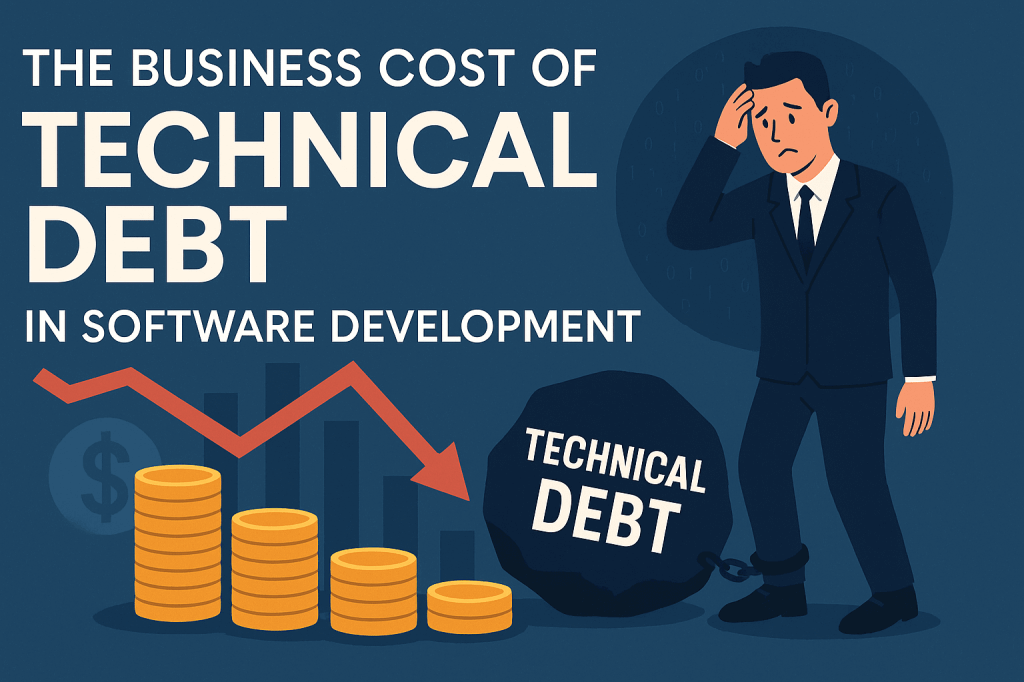
  • The Business Cost of Technical Debt in Software Development

    The Business Cost of Technical Debt in Software Development

    Software development is at the core of nearly every modern business. From startups releasing their first mobile app to multinational enterprises upgrading their enterprise systems, software is the engine that drives innovation, customer engagement, and operational efficiency. However, behind every release and feature update, there is an often invisible challenge that businesses face—technical debt.

    Technical debt can be thought of as the price organizations pay when they prioritize speed over sustainability in software development. It is the accumulation of shortcuts, compromises, and incomplete work that allows a product to move forward quickly but leaves hidden costs to be paid later. Just like financial debt, the longer it is left unpaid, the more “interest” it accrues in the form of delays, bugs, and increased maintenance costs.

    The issue of technical debt is not just a concern for developers. It is a business challenge that affects time-to-market, customer satisfaction, and overall profitability. For companies aiming to scale or maintain a competitive edge, ignoring technical debt can have serious long-term consequences.

    To understand why technical debt emerges in the first place, it is worth looking at the steps to develop software. Each stage of the software development life cycle—whether it is requirement gathering, planning, testing, or deployment—has the potential to either minimize or increase technical debt. When organizations neglect best practices at any of these steps, they set the stage for future challenges that may cost far more than the time saved during development.

    In this article, we will explore the true business cost of technical debt, how it impacts key areas of software projects, and what companies can do to minimize its impact. By the end, you will see why technical debt is not just a technical issue but a strategic business decision that requires careful management.

    Understanding Technical Debt

    Before analyzing the financial and operational impact of technical debt, it is essential to clearly understand what it means. Technical debt is a metaphor used to describe the additional work that arises when a development team chooses an easier or faster solution instead of a more sustainable, long-term approach. These shortcuts are not inherently bad—sometimes they are even necessary—but they always come with a cost that must eventually be paid.

    The term was first coined by Ward Cunningham, one of the pioneers of agile software development. He compared poorly structured or hastily written code to financial debt. Just as borrowing money allows you to make progress faster but requires repayment with interest, taking shortcuts in code accelerates delivery but adds complexity and maintenance overhead that must be resolved later. If the debt is not addressed, it accumulates and makes the system increasingly expensive and difficult to maintain.

    Types of Technical Debt

    Not all technical debt is the same. It can be classified into different types depending on how it occurs and whether it is intentional or accidental. Understanding these distinctions helps businesses decide how to manage and prioritize repayment.

    • Deliberate Technical Debt – This occurs when teams knowingly take shortcuts to meet a deadline or release a feature quickly. For example, they might skip writing unit tests, defer code refactoring, or use a quick hack to solve an immediate problem. This type of debt is manageable if tracked carefully, as long as the organization commits to addressing it soon after the release.
    • Inadvertent Technical Debt – Sometimes, debt arises without intention. Developers may lack complete knowledge of a system, requirements may be unclear, or the team may make decisions based on outdated assumptions. Over time, as the system grows and new requirements emerge, these early choices reveal themselves as inefficient or costly to maintain.
    • Environmental or Outdated Technology Debt – Software that depends on outdated frameworks, libraries, or infrastructure carries hidden debt. When technologies evolve, older systems require significant effort to upgrade or integrate with modern solutions.
    • Process Debt – Beyond code, poor development practices such as weak documentation, insufficient testing, or a lack of communication between teams also contribute to technical debt. These process-related issues create inefficiencies that slow down development and increase long-term costs.

    Why Technical Debt is Different from Bugs

    It is important to differentiate between technical debt and bugs. A bug is a defect in software that causes incorrect or unexpected results. Technical debt, on the other hand, refers to the structural inefficiencies that slow down future development. While bugs are usually fixed quickly, debt often lingers in the background, accumulating silently until it reaches a critical level.

    Think of technical debt as the weight that slows down the development team over time. Every new feature takes longer to implement because developers must work around poorly structured code, outdated frameworks, or missing documentation. This is why managing debt is as important as fixing bugs—it directly influences the agility and long-term success of a business.

    The Business Cost of Technical Debt

    Technical debt may start as a technical issue, but its consequences extend far beyond the development team. For businesses, unchecked technical debt translates into financial loss, slower innovation, and decreased competitiveness. Understanding the full scope of these costs is essential for making informed decisions about project management, resource allocation, and long-term strategy.

    Short-term vs. Long-term Costs

    In the short term, technical debt can appear beneficial. By taking shortcuts, a development team can meet tight deadlines, launch products faster, and respond quickly to market opportunities. This approach can help a company gain early market share or satisfy stakeholder demands.

    However, the long-term costs often outweigh these initial gains. Over time, systems become harder to maintain, simple changes take longer to implement, and the need for extensive refactoring arises. These delayed consequences are the “interest payments” of technical debt. Ignoring them can lead to projects going over budget, missing deadlines, and consuming resources that could have been used for innovation and growth.

    Impact on Development Models

    Different software development models handle technical debt in varying ways. Agile methodologies, for example, encourage iterative development and frequent refactoring, allowing teams to manage debt incrementally. In contrast, traditional Waterfall models often push all development to the end of the project, which can result in a large accumulation of technical debt before it is even discovered. DevOps practices, with their emphasis on automation and continuous integration, can mitigate debt but require discipline and careful monitoring.

    Regardless of the development model, failure to acknowledge and manage debt reduces the efficiency and productivity of the team. Even the most sophisticated development frameworks cannot fully compensate for poorly written or outdated code.

    Increased Costs and Delays

    Unaddressed technical debt directly increases operational costs. When a system is built with inefficient code, missing documentation, or outdated technology, simple updates or new feature implementations become time-consuming and expensive. What should take a few days can take weeks as developers navigate through convoluted logic, debug hidden errors, and rebuild unstable modules.

    Additionally, technical debt can cause project delays that ripple across the organization. Delays affect not just development teams but also marketing, sales, and customer support, creating a broader impact on the business.

    Loss of Competitiveness

    Technical debt also affects a company’s ability to compete. Organizations that carry high debt are slower to respond to market changes, slower to launch innovative features, and often face higher operational costs. Meanwhile, competitors with cleaner, more maintainable codebases can innovate faster, delight customers with frequent updates, and capture market share more efficiently.

    In this sense, technical debt is not just a technical issue—it is a strategic business risk. Companies that fail to recognize its impact may see reduced revenue, declining customer satisfaction, and lost opportunities over time.

    Key Areas Affected by Technical Debt

    Technical debt is not confined to code alone—it can affect nearly every aspect of a software project. From planning to execution, shortcuts and poor practices can create challenges that slow development, increase costs, and reduce overall efficiency. Understanding the key areas where debt accumulates helps organizations take proactive steps to manage it effectively.

    • Software Development Plan – A well-defined software development plan is the foundation of a successful project. When planning is weak, teams often overlook potential technical debt. Ambiguous goals, unclear priorities, or unrealistic timelines force developers to take shortcuts, which accumulate debt that may not be visible until later stages. A strong plan includes clear standards, proper time allocation for quality assurance, and provisions for refactoring and maintenance.
    • Technical Documentation – Documentation is often undervalued, yet it is critical for managing technical debt. Poor or missing technical documentation makes it difficult for developers to understand system architecture, dependencies, and previous decisions. This lack of clarity increases the risk of repeated mistakes, inefficient coding practices, and prolonged debugging, all of which add to the cost of debt.
    • Risk Management – Effective risk management involves anticipating potential challenges and creating strategies to mitigate them. Ignoring technical debt in this context leaves the project vulnerable to unexpected failures, security issues, and regulatory non-compliance. Addressing debt proactively reduces operational risk and ensures smoother project execution.
    • Proof of Concept (PoC) – The PoC stage is critical for testing ideas before full-scale development. A poorly executed proof of concept often contains quick solutions that are not designed for long-term use. If these shortcuts are carried into the final product, they create structural inefficiencies that become difficult and expensive to correct later.
    • Scope of Work – Accurately defining the scope of work prevents teams from rushing and taking unnecessary shortcuts. When project scope is ambiguous or unrealistic, developers often prioritize speed over quality. This results in technical debt that compromises future development and increases maintenance costs.
    • Requirement Analysis – A thorough requirement analysis ensures that developers build exactly what is needed, avoiding unnecessary features or rework. Inadequate requirement analysis often forces teams to implement temporary fixes or quick changes, which add layers of technical debt and make the system harder to maintain.
    • Feasibility Study – Skipping or rushing the feasibility study can result in unrealistic technology choices or architectures that cannot scale. Technical debt in this stage is particularly costly because it may require significant redesigns or re-implementation as the system grows, consuming both time and budget.

    By understanding these areas, organizations can take proactive measures such as regular reviews, proper planning, and early intervention to prevent technical debt from becoming a strategic liability.

    How Companies Can Minimize Technical Debt

    While technical debt is an inevitable part of software development, businesses can take proactive steps to minimize its impact. Treating debt as a predictable and manageable aspect of the development process allows teams to maintain agility, reduce costs, and improve product quality. Here are some of the most effective strategies:

    • Emphasize Strong Documentation – Comprehensive and up-to-date documentation is critical for reducing technical debt. Proper documentation allows developers to understand the system’s architecture, dependencies, and previous decisions. Teams can identify areas of potential risk quickly and make informed changes without introducing new inefficiencies. A culture of documentation reduces repeated mistakes and ensures knowledge continuity even when team members leave or transition to other projects.
    • Refactoring as a Habit – Regular refactoring is one of the most effective ways to manage technical debt. Refactoring involves restructuring existing code without changing its functionality to make it cleaner, more efficient, and easier to maintain. By integrating refactoring into regular development cycles rather than postponing it until problems arise, teams prevent debt from accumulating to unmanageable levels.
    • Balance Speed with Sustainability – Fast delivery is important in today’s competitive market, but prioritizing speed over quality can create long-term costs. Companies must carefully evaluate the trade-offs between immediate release and sustainable code quality. This includes setting realistic deadlines, allocating time for testing and review, and avoiding shortcuts that compromise maintainability.
    • Integrate Debt Management into Planning – Managing technical debt should be a regular part of project planning. Teams can track debt through tools, code reviews, and sprint retrospectives. By making debt visibility part of the workflow, organizations ensure that it is addressed systematically rather than ignored. Setting aside specific time in each sprint to resolve high-priority debt helps maintain the health of the codebase.
    • Leadership and Communication – Technical debt is not only a developer’s concern; it is a business issue. Management must understand its long-term impact and communicate its importance across teams. When leadership prioritizes code quality, allocates resources for refactoring, and encourages open discussions about debt, the entire organization becomes aligned in managing it effectively.

    Other practical approaches include implementing automated testing, code reviews, and monitoring tools to detect code inefficiencies early. Additionally, fostering a culture of continuous learning and knowledge sharing helps prevent accidental debt from accumulating due to lack of experience or understanding.

    By proactively managing technical debt, companies can reduce unexpected costs, speed up future development, and maintain a sustainable software ecosystem that supports business growth.

    Real-World Examples of Technical Debt Costs

    Understanding technical debt in theory is important, but seeing its real-world impact brings clarity to why it matters for businesses. Organizations of all sizes have faced serious consequences when shortcuts and poor planning accumulate over time.

    Startup Example

    Consider a startup developing its first mobile app. The team is small and under pressure to launch quickly to capture early market share. To meet tight deadlines, the developers skip writing unit tests, postpone code refactoring, and use quick fixes for feature implementation. Initially, the app gains traction and receives positive feedback.

    However, within months, the company begins to face problems. Frequent crashes, slow feature updates, and difficulty fixing bugs frustrate users. Each new update takes longer than expected because the development team must navigate poorly structured code and unclear documentation. The technical debt accrued during the initial rush slows down innovation and increases operational costs, ultimately affecting user retention and the startup’s growth trajectory.

    Enterprise Example

    Large organizations are not immune to technical debt. For instance, a multinational company adopted a monolithic software architecture without conducting a proper feasibility study. As the company expanded, integrating new features and scaling the system became increasingly difficult. The outdated architecture, coupled with missing documentation and complex dependencies, meant that even minor updates required extensive time and effort.

    Ultimately, the technical debt forced the company to invest millions in redevelopment, including refactoring core modules, updating frameworks, and retraining teams. The delays not only increased costs but also allowed competitors to introduce innovative products faster, impacting market share and brand reputation.

    Lessons Learned

    • Early investment pays off – Addressing technical debt during initial development prevents exponential accumulation and reduces long-term costs.
    • Documentation is critical – Teams that maintain clear documentation can minimize the risk of repeating mistakes and accelerate future development.
    • Proactive debt management is strategic – Technical debt is not just a technical problem; it is a business risk that affects competitiveness, profitability, and innovation.
    • Feasibility and planning matter – Conducting thorough feasibility studies and requirement analyses prevents costly architectural mistakes and reduces debt accumulation.

    These examples illustrate that technical debt, if ignored, can evolve from a minor inconvenience into a strategic liability. Organizations that understand its impact and take proactive measures are better positioned to maintain agility, control costs, and sustain long-term growth.

    Conclusion

    Technical debt is an unavoidable reality in software development, but its impact on businesses depends on how it is managed. When teams prioritize speed over quality without considering long-term consequences, debt accumulates and can slow development, increase costs, and reduce competitiveness. However, when acknowledged and managed strategically, technical debt becomes a manageable part of the development process rather than a hidden liability.

    Companies that integrate technical debt management into their software development lifecycle, maintain proper documentation, perform regular refactoring, and conduct thorough feasibility studies can maintain agility while delivering high-quality products. Balancing immediate delivery needs with sustainable practices is key to preventing debt from spiraling out of control.

    For organizations aiming to grow sustainably, partnering with experienced software development companies can make a significant difference. These companies bring the expertise, processes, and frameworks necessary to manage debt proactively, design maintainable architectures, and implement long-term solutions that support business growth.

    In the end, technical debt is not inherently negative. Like financial debt, it can be a useful tool for achieving short-term goals when handled responsibly. The true cost lies in neglect and poor management. Organizations that understand, monitor, and actively address technical debt will enjoy faster innovation, lower costs, and a stronger position in the competitive market.

    By treating technical debt as both a technical and business concern, companies can turn potential challenges into strategic advantages, ensuring their software remains a valuable asset rather than a liability.


  • The Role of AI and ML in Modern Fintech Apps

    The Role of AI and ML in Modern Fintech Apps

    The financial technology (fintech) sector is undergoing rapid transformation. At the center of this evolution are two game-changing technologies—Artificial Intelligence (AI) and Machine Learning (ML). These tools are no longer experimental; they are foundational. From fraud detection to investment planning, AI and ML have become essential to delivering smarter, faster, and more secure financial services.

    Modern fintech apps deal with massive volumes of data. Users expect instant responses, personalized insights, and iron-clad security. Meeting these expectations manually is nearly impossible. That’s where AI and ML step in. They allow systems to learn from patterns, make predictions, and improve over time without direct human input. This enables companies to automate tasks, reduce errors, and better understand user behavior.

    Whether you’re a startup building a finance app or an established company upgrading legacy systems, understanding how AI and ML fit into fintech is key to staying ahead of the curve. In this guide, we’ll explore the main roles of these technologies in today’s fintech landscape, their benefits, challenges, and the future they are shaping.

    What Makes AI and ML Crucial in Fintech Today?

    AI and ML have become core components of fintech because they allow companies to process vast amounts of financial data and extract meaningful, real-time insights. Unlike traditional software that relies on static rules, AI systems evolve by learning from past data and user behavior. This makes them uniquely equipped to handle dynamic, fast-paced environments like online finance, digital banking, and cryptocurrency trading.

    Fintech apps deal with diverse challenges—fraud, high user expectations, regulatory requirements, and intense competition. AI and ML offer solutions that address all these areas simultaneously. They allow financial applications to do the following:

    • Automate decision-making: AI helps apps make instant credit decisions, detect fraud, or suggest investments without waiting for human input.
    • Deliver hyper-personalization: ML algorithms learn each user’s habits and tailor the app experience accordingly—improving satisfaction and retention.
    • Improve scalability: These technologies handle millions of transactions or users simultaneously with consistent accuracy and performance.
    • Enhance security: By analyzing historical data and detecting outliers, AI systems identify risks faster than manual monitoring ever could.

    AI and ML are not just helpful—they’re strategic. They give fintech startups and enterprises a competitive edge by enabling faster innovation and reducing operational costs. As more companies digitize their services, the ability to deploy intelligent automation and predictive analytics becomes a must-have, not a nice-to-have.

    Fraud Detection & Security

    One of the most critical areas where AI and ML are making a profound impact is fraud detection. Financial fraud has become increasingly sophisticated, and traditional rule-based systems often fail to keep up with evolving threats. Machine Learning, however, offers a dynamic solution by learning from historical data and detecting subtle patterns that may indicate fraudulent behavior.

    These intelligent systems monitor transaction data in real time, identify anomalies, and flag suspicious activities almost instantly. For example, if a user logs in from a new location or initiates an unusually large transfer, the system can trigger a warning or even block the transaction until verified.

    • Real-time fraud alerts: AI systems analyze millions of transactions per second, enabling financial apps to detect and respond to potential threats within moments.
    • Behavioral pattern analysis: ML models study user behavior over time—like spending habits, device usage, and login timing—to recognize abnormal actions that could signal fraud.
    • Reduced false positives: Unlike static systems that might flag legitimate transactions, AI becomes more accurate over time, minimizing user disruptions.
    • Adaptive learning: As fraud techniques evolve, ML algorithms adapt by updating their models based on new fraud trends, making the system increasingly robust.

    By integrating AI-powered fraud detection into fintech applications, companies can protect both themselves and their users. It builds trust, ensures compliance with financial regulations, and minimizes financial losses from unauthorized activities.

    Credit Scoring & Risk Assessment

    Traditional credit scoring relies heavily on historical financial records and credit bureau data. However, this method can overlook individuals who have limited credit histories or unconventional income sources. AI and ML change the game by introducing more inclusive and flexible credit assessment techniques that draw from a wider set of data points.

    Modern fintech apps powered by ML can analyze alternative data such as payment history for rent, utilities, mobile phone usage, or even social behavior patterns to determine a person’s creditworthiness. This broadens access to financial services and makes lending decisions more accurate.

    • Alternative data analysis: AI models consider non-traditional sources like online purchases, bill payments, and employment records to form a more complete risk profile.
    • Faster loan approvals: Automated systems analyze applications in real time, reducing waiting periods for users.
    • Dynamic credit models: ML models continuously update risk assessments based on new data, helping lenders stay ahead of emerging risks.
    • Reduced human bias: AI uses data-driven logic, lowering the risk of discrimination in lending decisions.

    By integrating AI-driven credit scoring, fintech companies can extend credit more responsibly and inclusively. This not only improves business outcomes but also opens up access to financial resources for underserved populations.

    Personalized Services

    In today’s digital economy, users expect financial services tailored to their individual needs. AI and ML make this level of personalization possible by analyzing user behavior, spending habits, goals, and preferences. Fintech apps that integrate these technologies can offer smarter, more intuitive services that feel custom-built for each user.

    Personalized experiences go far beyond product recommendations. They help users make better financial decisions through automated insights, timely nudges, and contextual suggestions. Whether it’s a custom savings plan or tailored investment advice, personalization adds real value to the user journey.

    • Behavior-driven insights: ML tracks how users interact with the app and recommends actions based on their financial patterns.
    • Smart financial planning: AI can suggest personalized budgets, investment opportunities, and savings goals aligned with a user’s income and spending.
    • Dynamic content: Interfaces update in real time to reflect relevant content, offers, or alerts tailored to the individual user.
    • Improved engagement: Personalized features make users feel understood, leading to increased app usage and loyalty.

    By delivering a more personal experience, fintech apps can stand out in a crowded market and build long-term relationships with their users. AI and ML enable this through continuous learning and adaptation, ensuring the app evolves with the user’s needs.

    Customer Support Automation

    Customer support is a vital part of any fintech platform, but offering 24/7 assistance with a human-only team can be expensive and slow. That’s where AI-powered customer service tools, like chatbots and virtual assistants, come in. These tools can handle a wide range of user queries instantly and with consistent accuracy.

    Thanks to Natural Language Processing (NLP), AI systems understand user intent even when questions are asked in everyday language. They can resolve issues related to payments, account access, KYC verification, and more—without human intervention.

    • 24/7 instant support: AI chatbots can answer customer questions at any time of day, reducing wait times significantly.
    • Efficient issue routing: If the query is complex, the system automatically escalates it to a human agent with all relevant context.
    • Learning from past interactions: ML-based systems improve over time by analyzing user feedback and support history.
    • Lower operational costs: Automating frequent support tasks reduces the need for large customer service teams.

    Fintech companies using AI for support see higher customer satisfaction and reduced churn. It ensures that users get the help they need—faster, smarter, and more conveniently—making support a strength rather than a bottleneck.

    Automation & Efficiency

    One of the most powerful advantages of using AI and ML in fintech is the ability to automate repetitive and time-consuming tasks. From back-office operations to customer onboarding, these technologies streamline workflows, reduce errors, and help companies scale with fewer resources.

    Manual data entry, compliance checks, transaction processing, and document verification can all be handled by intelligent systems. This allows employees to focus on more strategic, creative, or customer-focused activities—improving productivity across the organization.

    • Process automation: AI bots can handle routine financial tasks like data entry, transaction validation, and reporting with speed and accuracy.
    • Workflow optimization: ML identifies inefficiencies in current processes and suggests improvements based on performance data.
    • Error reduction: By automating rule-based operations, the chance of human error is drastically minimized.
    • Faster onboarding: AI accelerates KYC (Know Your Customer) and identity verification, making it quicker for users to start using the app.

    Efficiency isn’t just about doing things faster—it’s about doing them smarter. Fintech apps that leverage automation save time, reduce costs, and ensure greater consistency across operations. This ultimately leads to better service delivery and stronger user trust.

    AI in Investment Advisory and Robo-Advisors

    AI and ML are transforming how people manage their investments. Traditional financial advisors are being complemented—or even replaced—by robo-advisors: automated platforms that provide data-driven investment guidance. These systems use algorithms to assess a user’s financial goals, risk appetite, and market trends to create tailored investment strategies.

    Unlike human advisors, robo-advisors can analyze vast datasets in seconds, rebalance portfolios automatically, and remain emotion-free during market volatility. This makes them an ideal solution for both beginner and experienced investors looking for efficient, low-cost financial planning.

    • Personalized portfolio management: AI algorithms customize investment plans based on each user’s risk tolerance, goals, and financial behavior.
    • Automated rebalancing: Robo-advisors monitor market movements and adjust asset allocations without user intervention to keep the strategy aligned.
    • Lower fees: Because these platforms require minimal human involvement, they offer services at a fraction of the cost of traditional advisors.
    • Accessibility: Even users with small investment amounts can benefit from AI-powered advisory, making wealth management more inclusive.

    These smart advisory tools are redefining the future of investing. By combining financial algorithms with real-time market data, they offer consistent, unbiased, and highly scalable investment support through fintech apps.

    Challenges of Implementing AI in Fintech

    While the benefits of AI and ML in fintech are impressive, the path to successful implementation is not without obstacles. These technologies come with complexities that fintech companies must navigate carefully, especially in highly regulated financial environments.

    From data quality concerns to regulatory risks, several challenges can slow or complicate the deployment of intelligent systems. Understanding these roadblocks is essential for planning a responsible, scalable AI strategy in fintech apps.

    • Data privacy and compliance: Fintech apps deal with sensitive financial information. Meeting regulations like GDPR, CCPA, and PCI-DSS while using AI requires strict data handling protocols.
    • Model transparency: ML models often operate as “black boxes,” making it difficult to explain how decisions are made—especially important when dealing with credit approvals or fraud cases.
    • Bias in algorithms: If the data used to train AI is biased or incomplete, the outcomes may be unfair or discriminatory—posing ethical and legal risks.
    • Talent and cost barriers: Building and maintaining AI infrastructure requires skilled professionals and significant investment, which can be challenging for smaller fintech startups.

    Overcoming these challenges requires a thoughtful mix of ethical AI practices, ongoing monitoring, and collaboration with legal and technical teams. With the right safeguards in place, fintech companies can confidently embrace AI while minimizing risks.

    Future of AI and ML in Fintech

    The future of AI and ML in fintech is incredibly promising. As these technologies become more advanced, their role in financial services will continue to grow—reshaping how people bank, invest, save, and interact with money. Fintech companies will increasingly rely on intelligent automation, predictive analytics, and personalized experiences to stay ahead of user expectations and competitors.

    In the years ahead, we can expect to see fintech apps moving from reactive systems to fully proactive financial advisors. AI will not just assist but anticipate user needs, offering real-time financial coaching and risk alerts before issues arise.

    • Hyper-personalized banking: Fintech apps will deliver real-time, personalized financial insights based on individual life events, income changes, and goals.
    • AI-led financial planning: Intelligent assistants may replace human advisors entirely, using real-time data to build and adjust comprehensive financial plans.
    • Voice and conversational AI: More apps will integrate voice commands and natural language conversations to make managing finances easier and more intuitive.
    • Improved compliance and auditing: AI will be used to monitor regulatory compliance in real-time, reducing risk and manual oversight.

    Ultimately, the future of fintech is smart, fast, and personalized. Companies that invest in responsible AI development today will be better positioned to deliver the financial tools of tomorrow—secure, adaptive, and user-centric.

    Conclusion

    Artificial Intelligence and Machine Learning are not just enhancements to fintech apps—they’re foundational to their innovation, scalability, and competitiveness. From fraud detection and personalized services to automated investment advice and efficient operations, AI-driven technologies are unlocking new possibilities across every layer of financial services.

    However, implementing AI comes with challenges such as data privacy, algorithm bias, and high development costs. With a balanced, ethical, and strategic approach, fintech companies can overcome these hurdles and harness the full potential of intelligent systems.

    If you’re looking to build future-ready financial solutions powered by AI, partnering with experienced Fintech App Development Companies can help bring your vision to life with precision and scalability.

  • Why Investing in Artificial Intelligence is the Smart Move Right Now

    Why Investing in Artificial Intelligence is the Smart Move Right Now

    We are living in a time of rapid technological change, and one of the most influential forces driving this change is Artificial Intelligence (AI). Unlike previous tech waves, AI is not confined to a single sector—it’s a universal enabler. From the apps on our phones to the factories powering our economy, AI is quietly and profoundly transforming how the world operates.

    What makes this moment particularly exciting is that AI is crossing from experimental phases into full commercial maturity. Companies are no longer asking “if” they should adopt AI—but “how fast” they can implement it. As more organizations digitize their operations and prioritize innovation, AI has become central to strategy and growth. For investors, this isn’t just a passing trend—it’s an evolution, and investing now means getting ahead of the next global economic wave.

    In this article, we’ll explore why AI is such a powerful investment opportunity right now. We’ll examine its rapid growth, diverse applications, real-world use cases, and the key indicators of a promising AI venture. Whether you’re an experienced investor or exploring new markets, understanding the AI landscape is crucial to making informed, future-ready decisions.

    The Rise of AI: A Digital Revolution

    Artificial Intelligence is no longer a futuristic dream—it’s a present-day reality that’s transforming the way we live and work. Over the past decade, AI has evolved from a niche academic field to a cornerstone of modern technology. Whether it’s voice assistants like Siri and Alexa, recommendation engines on Netflix, or fraud detection systems in banking, AI is quietly powering countless systems that affect our daily lives.

    This rapid transformation has been fueled by several converging trends: the explosion of data, breakthroughs in machine learning algorithms, and the rise of affordable cloud computing. These developments have removed many of the barriers that once made AI inaccessible. As a result, startups, enterprises, and even governments are now adopting AI at an unprecedented pace. This mass adoption isn’t just about technology—it’s about staying competitive in a digital-first world.

    What makes AI especially revolutionary is its ability to learn, adapt, and improve over time. Unlike traditional software that follows static rules, AI systems get smarter the more data they process. This makes them ideal for tasks that require judgment, prediction, or personalization—capabilities that are invaluable across every major industry. We are not just witnessing the rise of a new technology. We are witnessing a digital revolution with long-term economic implications.

    Growth Backed by Numbers

    The numbers behind AI’s expansion tell a compelling story for investors. According to market research firms, the global Artificial Intelligence market was valued at over $150 billion in 2023—and it’s projected to grow beyond $1.3 trillion by 2030. [Source] That’s an annual compound growth rate exceeding 35%. These aren’t speculative estimates. This growth is driven by actual demand across every sector—from healthcare and finance to manufacturing and logistics.

    More than 90% of top-performing companies are already investing in AI technologies, and adoption rates continue to climb. In the enterprise world, AI is no longer a luxury; it’s becoming essential to remain competitive. Governments are also committing billions in public investment and regulatory infrastructure to build national AI strategies, adding further momentum to the ecosystem.

    These trends suggest that we’re still in the early innings of AI’s adoption curve. Early investors who recognize this momentum and align with forward-thinking companies stand to benefit significantly as the market expands and matures over the next decade.

    Fueling Factors Behind AI Growth

    AI’s rapid rise isn’t a coincidence. Several powerful forces are converging to accelerate its adoption across industries. These driving factors are creating the perfect environment for innovation and scalability, making AI one of the most attractive investment sectors of our time.

    • Explosion of Data: Every second, people and machines generate vast amounts of data. From online transactions and social media posts to IoT sensors and mobile apps, this data feeds AI models and makes them smarter over time.
    • Advances in Algorithms: Machine learning and deep learning models have improved dramatically. These algorithms can now process unstructured data like text, images, and video, enabling more accurate and dynamic outputs.
    • Cloud Computing: Access to scalable cloud infrastructure from providers like AWS, Azure, and Google Cloud has made deploying AI faster and more cost-effective, even for smaller companies.
    • Increased Processing Power: Powerful GPUs and specialized chips (like TPUs) have shortened the training time for AI models, allowing faster innovation and product development.
    • Business and Consumer Demand: Companies are under pressure to innovate and improve efficiency, while consumers expect smarter, more personalized digital experiences. AI meets both needs simultaneously.

    These factors form the backbone of AI’s evolution, and they continue to expand. Together, they create a self-reinforcing cycle: more adoption leads to more data, which leads to better AI—and even wider adoption.

    A Broad Range of Real-World Applications

    Artificial Intelligence is not limited to one field or function. Its versatility is one of the biggest reasons behind its growing demand. Today, AI is being used across industries to solve complex problems, streamline operations, and create personalized experiences. From hospitals to retail stores and manufacturing floors to classrooms, AI is embedded in the core processes of many modern businesses.

    For example, in healthcare, AI algorithms assist doctors in diagnosing diseases earlier and more accurately. In logistics, AI helps companies optimize delivery routes and reduce shipping costs. Meanwhile, retailers use AI to analyze customer behavior and make product recommendations in real time. Even creative industries like film, music, and gaming are now using AI for content generation and editing.

    What’s most exciting is that we’re only scratching the surface. As technology advances, AI applications will continue to multiply—opening new possibilities for innovation, efficiency, and business transformation. For investors, this means endless avenues for growth across a wide array of verticals.

    Why Now is the Right Time to Invest

    Timing is everything in the world of investment. And right now, the conditions for investing in Artificial Intelligence couldn’t be more favorable. AI is moving out of the research labs and pilot programs and into mainstream business operations. What was once an experimental technology is now essential infrastructure for modern enterprises.

    More companies are building AI-first strategies. From startups disrupting traditional markets to global enterprises upgrading their systems, AI adoption is gaining speed. Investors who enter the market today are doing so before it reaches full maturity—meaning there’s still significant upside potential ahead.

    Moreover, consumer expectations are shifting rapidly. People want faster, more accurate, and highly personalized digital experiences. Companies that use AI to meet these expectations are seeing stronger customer retention, lower operational costs, and higher margins. This combination of operational value and market demand makes AI not just an innovative investment—but a strategic one.

    Mature Technology, Ready for Scale

    One of the biggest misconceptions about Artificial Intelligence is that it’s still a work-in-progress. In reality, AI has already matured to the point where it’s reliable, efficient, and scalable. Many companies are not just experimenting with AI—they’re embedding it into their core operations to automate tasks, improve decision-making, and deliver personalized services at scale.

    Thanks to advancements in infrastructure, cloud computing, and AI development frameworks, businesses can now deploy AI solutions faster and at lower costs than ever before. Tools like machine learning APIs, open-source libraries, and pre-trained models have made the technology more accessible to organizations of all sizes.

    This maturity also reduces risk for investors. Instead of betting on unproven tech, you’re investing in platforms and services that have already demonstrated real-world success. From autonomous systems to predictive analytics, mature AI technologies are reshaping industries—and they’re ready to grow globally with the right backing.

    How to Identify High-Potential AI Startups

    Not every AI startup is created equal. As the market grows, so does competition—making it essential for investors to distinguish between hype and real innovation. High-potential AI startups share several key characteristics that indicate strong future performance and sustainable value.

    • Real-World Use Cases: The startup should solve a clear problem that exists in a sizable market. Solutions must go beyond theory and offer measurable value to users or enterprises.
    • Proprietary Technology: Unique algorithms, specialized data sets, or intellectual property offer a competitive edge and defensibility in a crowded space.
    • Scalable Business Model: A strong AI startup should demonstrate the ability to grow quickly without proportional increases in cost. This includes cloud-based infrastructure and automation capabilities.
    • Experienced Team: A founding team with both technical and industry expertise is more likely to build a product that succeeds in real-world environments.
    • Early Traction: Signs of growth—such as paying customers, strategic partnerships, or strong pilot results—indicate that the product meets market needs.

    Looking for these markers can help investors make smarter decisions and back startups that are not only innovative but also positioned for long-term success.

    Conclusion & Future Outlook

    Artificial Intelligence is no longer a speculative frontier—it’s a proven engine of innovation, disruption, and economic value. From transforming how industries operate to creating entirely new business models, AI is reshaping our world in ways we’re only beginning to understand. And the pace of this change is accelerating.

    For investors, this presents a rare opportunity. Investing in AI today means entering at a point where the technology is mature, demand is high, and the ecosystem is expanding rapidly. Whether you’re looking to support startups or partner with advanced solution providers, now is the time to position yourself at the heart of the AI revolution.

    To take the next step, consider exploring some of the top AI Development Companies that are already building future-ready solutions. These companies are not only driving innovation—they’re creating tangible impact across multiple industries. Partnering with or investing in the right teams could be your gateway to long-term technological and financial returns.

  • Regulatory Compliance in Fintech App Development

    Regulatory Compliance in Fintech App Development

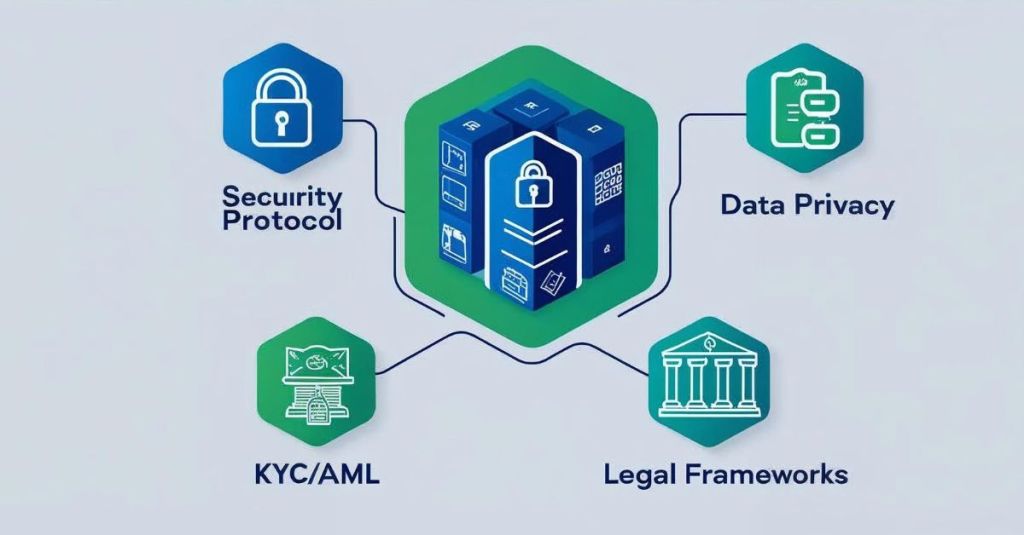
    Fintech is transforming the financial sector. As new technologies emerge, so do new risks. Regulatory compliance has become one of the top priorities for fintech app developers. It ensures that apps not only meet legal requirements but also safeguard user data, protect financial transactions, and reduce the risk of fraud.

    From financial stability to cybersecurity, the need for compliance is growing. For fintech companies, navigating the world of regulatory requirements is a must to avoid fines, reputational damage, or loss of business.

    What is Regulatory Compliance in Fintech?

    Regulatory compliance refers to the adherence to laws, regulations, and standards that govern the financial industry. For fintech apps, this means abiding by rules that control data protection, financial transactions, and user identification.

    In simpler terms, compliance ensures that a fintech app operates legally and securely, protecting both users and businesses. This includes following regulations related to data privacy, anti-money laundering, fraud prevention, and much more. Without meeting these standards, a fintech app could face legal actions, data breaches, or even shut down.

    Why is Regulatory Compliance Crucial in Fintech App Development?

    In the fintech industry, the stakes are high. Regulatory compliance is not just about avoiding penalties; it also plays a crucial role in:

    • Avoiding Legal Penalties: Non-compliance can lead to expensive fines and legal issues.
    • Gaining User Trust and Market Credibility: Financial apps handle sensitive personal and financial data. When users know the app is compliant, they feel more secure and are more likely to trust it.
    • Handling Sensitive Financial Data Securely: Compliance standards like PCI-DSS ensure that payment data is encrypted and transactions are secure, preventing data breaches and fraud.

    In essence, regulatory compliance helps fintech apps establish themselves as trustworthy and reliable in an increasingly competitive market.

    Key Regulations That Impact Fintech Apps

    There are several key regulations that fintech apps must comply with, including:

    • GDPR (General Data Protection Regulation): This regulation protects personal data of EU citizens. It requires fintech apps to securely store and process customer data and gives users the right to request their data be deleted.
    • PCI-DSS (Payment Card Industry Data Security Standard): Apps that handle payment card information must comply with PCI-DSS to ensure payment data is encrypted and secure.
    • PSD2 (Payment Services Directive 2): This EU regulation requires strong customer authentication for financial transactions and encourages open banking, enabling third-party providers to access payment account data with user consent.
    • AML (Anti-Money Laundering): AML regulations prevent money laundering and require fintech apps to monitor and report suspicious financial activities.
    • KYC (Know Your Customer): KYC regulations ensure that financial institutions verify the identity of their clients to prevent fraud and terrorism financing.

    Each of these regulations plays a critical role in ensuring fintech apps operate ethically, transparently, and securely.

    Compliance Challenges Fintech Startups Face

    For fintech startups, regulatory compliance can be especially challenging. Some of the major hurdles include:

    • Constantly Changing Laws: Regulations often change, and staying up-to-date can be overwhelming for small teams without dedicated legal resources.
    • Cross-Border Regulation Hurdles: Fintech apps that operate internationally face the added challenge of complying with multiple regulatory frameworks, each with its own rules.
    • Data Privacy Complexities: Different regions, like the EU and the U.S., have varying standards for data protection, making it tricky for apps that serve a global market to stay compliant.

    These challenges can delay product development, increase costs, and expose the business to legal and financial risks. However, addressing them early on is crucial for long-term success.

    How to Ensure Compliance While Building a Fintech App

    Ensuring compliance starts with integrating it into your app development process from the very beginning. Here’s how to ensure your fintech app stays compliant:

    • Integrate Compliance from Day One: Compliance isn’t a last-minute check. It should be part of your app’s design and development process.
    • Work with Legal and Compliance Teams: Involve experts who understand the laws in the regions you’re targeting. This will help you avoid costly mistakes.
    • Automate Compliance Checks: Use tools like RegTech (regulatory technology) to automate tasks such as KYC verification, transaction monitoring, and audit trails. This reduces the risk of human error and ensures compliance in real-time.

    By embedding compliance into your development workflow, you avoid future headaches and ensure your app meets all legal standards.

    Role of Technology in Regulatory Compliance

    Technology is a key enabler of regulatory compliance in fintech app development. The right tools can simplify the process and make it more efficient:

    • AI and Machine Learning: These technologies help detect fraud patterns and flag risky transactions in real-time, reducing the manual workload and improving security.
    • Blockchain: Blockchain technology offers transparent, immutable records, which can help with compliance in areas like data privacy and fraud prevention.
    • RegTech Integration: RegTech solutions provide software that automates compliance tasks like KYC checks, real-time monitoring, and reporting, ensuring that fintech apps remain compliant with minimal effort.

    These technological advancements make it easier for fintech companies to meet complex regulatory requirements and reduce the risks associated with non-compliance.

    The Growing Fintech Market and Compliance Demand

    The global fintech market is experiencing rapid growth. According to Fortune Business Insights, the market was valued at USD 340.10 billion in 2024 and is projected to reach USD 1,126.64 billion by 2032, exhibiting a CAGR of 16.2% during the forecast period (Fortune Business Insights).

    This significant expansion brings about several challenges, particularly in the realm of regulatory compliance. As fintech companies scale and enter new markets, they encounter a complex web of regulations that vary across regions. Ensuring compliance with these diverse legal frameworks becomes increasingly difficult but is essential to maintain operational legitimacy and user trust.

    The rising demand for compliance can be attributed to several factors:

    • Increased Regulatory Scrutiny: As the fintech sector grows, regulatory bodies are implementing stricter measures to ensure financial stability and protect consumers.
    • Cross-Border Operations: Expanding into international markets exposes fintech companies to a multitude of regulatory environments, necessitating robust compliance strategies.
    • Data Protection Concerns: With the handling of sensitive financial data, adhering to data protection regulations like GDPR becomes paramount to prevent breaches and maintain user confidence.

    In summary, the rapid growth of the fintech market amplifies the need for stringent regulatory compliance. Companies must proactively address these challenges to ensure sustainable growth and maintain the trust of their users.

    Benefits of a Compliance-First Fintech App

    A compliance-first approach offers multiple advantages:

    • Enhanced Trust and Reputation: Users are more likely to trust an app that is transparent about its compliance efforts, especially when handling their financial data.
    • Faster Approvals and Partnerships: Compliance ensures that your app can secure partnerships with financial institutions, investors, and regulatory bodies, speeding up approval processes.
    • Long-Term Scalability: When you build with compliance in mind, your app is better equipped to scale into new markets without facing legal setbacks.

    Being proactive about compliance doesn’t just protect your business; it positions you as a reliable, trustworthy brand in the competitive fintech space.

    Conclusion

    In the fast-paced world of fintech, regulatory compliance is essential. It ensures that your app operates legally, protects user data, and builds trust with customers. As the fintech market continues to grow, compliance will play a critical role in the success of your app.

    If you’re looking to partner with experts who can guide you through the complexities of fintech app development and regulatory compliance, check out a list of top fintech app development companies. and hire the best company as per your requirements

Design a site like this with WordPress.com
Get started