Software development is at the core of nearly every modern business. From startups releasing their first mobile app to multinational enterprises upgrading their enterprise systems, software is the engine that drives innovation, customer engagement, and operational efficiency. However, behind every release and feature update, there is an often invisible challenge that businesses face—technical debt.
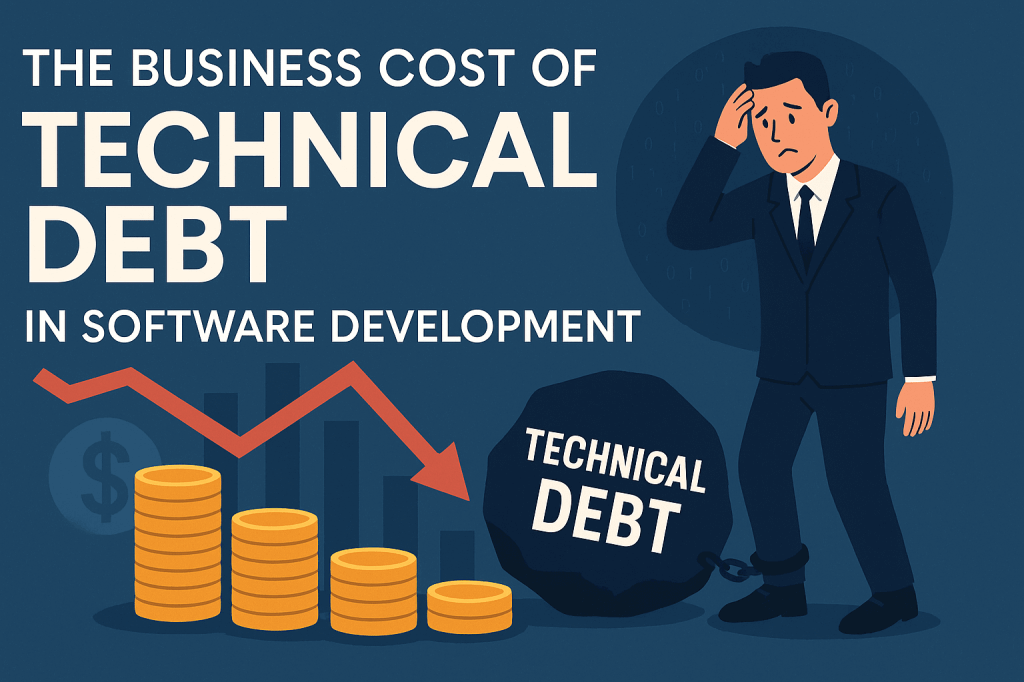
Technical debt can be thought of as the price organizations pay when they prioritize speed over sustainability in software development. It is the accumulation of shortcuts, compromises, and incomplete work that allows a product to move forward quickly but leaves hidden costs to be paid later. Just like financial debt, the longer it is left unpaid, the more “interest” it accrues in the form of delays, bugs, and increased maintenance costs.
The issue of technical debt is not just a concern for developers. It is a business challenge that affects time-to-market, customer satisfaction, and overall profitability. For companies aiming to scale or maintain a competitive edge, ignoring technical debt can have serious long-term consequences.
To understand why technical debt emerges in the first place, it is worth looking at the steps to develop software. Each stage of the software development life cycle—whether it is requirement gathering, planning, testing, or deployment—has the potential to either minimize or increase technical debt. When organizations neglect best practices at any of these steps, they set the stage for future challenges that may cost far more than the time saved during development.
In this article, we will explore the true business cost of technical debt, how it impacts key areas of software projects, and what companies can do to minimize its impact. By the end, you will see why technical debt is not just a technical issue but a strategic business decision that requires careful management.
Understanding Technical Debt
Before analyzing the financial and operational impact of technical debt, it is essential to clearly understand what it means. Technical debt is a metaphor used to describe the additional work that arises when a development team chooses an easier or faster solution instead of a more sustainable, long-term approach. These shortcuts are not inherently bad—sometimes they are even necessary—but they always come with a cost that must eventually be paid.
The term was first coined by Ward Cunningham, one of the pioneers of agile software development. He compared poorly structured or hastily written code to financial debt. Just as borrowing money allows you to make progress faster but requires repayment with interest, taking shortcuts in code accelerates delivery but adds complexity and maintenance overhead that must be resolved later. If the debt is not addressed, it accumulates and makes the system increasingly expensive and difficult to maintain.
Types of Technical Debt
Not all technical debt is the same. It can be classified into different types depending on how it occurs and whether it is intentional or accidental. Understanding these distinctions helps businesses decide how to manage and prioritize repayment.
- Deliberate Technical Debt – This occurs when teams knowingly take shortcuts to meet a deadline or release a feature quickly. For example, they might skip writing unit tests, defer code refactoring, or use a quick hack to solve an immediate problem. This type of debt is manageable if tracked carefully, as long as the organization commits to addressing it soon after the release.
- Inadvertent Technical Debt – Sometimes, debt arises without intention. Developers may lack complete knowledge of a system, requirements may be unclear, or the team may make decisions based on outdated assumptions. Over time, as the system grows and new requirements emerge, these early choices reveal themselves as inefficient or costly to maintain.
- Environmental or Outdated Technology Debt – Software that depends on outdated frameworks, libraries, or infrastructure carries hidden debt. When technologies evolve, older systems require significant effort to upgrade or integrate with modern solutions.
- Process Debt – Beyond code, poor development practices such as weak documentation, insufficient testing, or a lack of communication between teams also contribute to technical debt. These process-related issues create inefficiencies that slow down development and increase long-term costs.
Why Technical Debt is Different from Bugs
It is important to differentiate between technical debt and bugs. A bug is a defect in software that causes incorrect or unexpected results. Technical debt, on the other hand, refers to the structural inefficiencies that slow down future development. While bugs are usually fixed quickly, debt often lingers in the background, accumulating silently until it reaches a critical level.
Think of technical debt as the weight that slows down the development team over time. Every new feature takes longer to implement because developers must work around poorly structured code, outdated frameworks, or missing documentation. This is why managing debt is as important as fixing bugs—it directly influences the agility and long-term success of a business.
The Business Cost of Technical Debt
Technical debt may start as a technical issue, but its consequences extend far beyond the development team. For businesses, unchecked technical debt translates into financial loss, slower innovation, and decreased competitiveness. Understanding the full scope of these costs is essential for making informed decisions about project management, resource allocation, and long-term strategy.
Short-term vs. Long-term Costs
In the short term, technical debt can appear beneficial. By taking shortcuts, a development team can meet tight deadlines, launch products faster, and respond quickly to market opportunities. This approach can help a company gain early market share or satisfy stakeholder demands.
However, the long-term costs often outweigh these initial gains. Over time, systems become harder to maintain, simple changes take longer to implement, and the need for extensive refactoring arises. These delayed consequences are the “interest payments” of technical debt. Ignoring them can lead to projects going over budget, missing deadlines, and consuming resources that could have been used for innovation and growth.
Impact on Development Models
Different software development models handle technical debt in varying ways. Agile methodologies, for example, encourage iterative development and frequent refactoring, allowing teams to manage debt incrementally. In contrast, traditional Waterfall models often push all development to the end of the project, which can result in a large accumulation of technical debt before it is even discovered. DevOps practices, with their emphasis on automation and continuous integration, can mitigate debt but require discipline and careful monitoring.
Regardless of the development model, failure to acknowledge and manage debt reduces the efficiency and productivity of the team. Even the most sophisticated development frameworks cannot fully compensate for poorly written or outdated code.
Increased Costs and Delays
Unaddressed technical debt directly increases operational costs. When a system is built with inefficient code, missing documentation, or outdated technology, simple updates or new feature implementations become time-consuming and expensive. What should take a few days can take weeks as developers navigate through convoluted logic, debug hidden errors, and rebuild unstable modules.
Additionally, technical debt can cause project delays that ripple across the organization. Delays affect not just development teams but also marketing, sales, and customer support, creating a broader impact on the business.
Loss of Competitiveness
Technical debt also affects a company’s ability to compete. Organizations that carry high debt are slower to respond to market changes, slower to launch innovative features, and often face higher operational costs. Meanwhile, competitors with cleaner, more maintainable codebases can innovate faster, delight customers with frequent updates, and capture market share more efficiently.
In this sense, technical debt is not just a technical issue—it is a strategic business risk. Companies that fail to recognize its impact may see reduced revenue, declining customer satisfaction, and lost opportunities over time.
Key Areas Affected by Technical Debt
Technical debt is not confined to code alone—it can affect nearly every aspect of a software project. From planning to execution, shortcuts and poor practices can create challenges that slow development, increase costs, and reduce overall efficiency. Understanding the key areas where debt accumulates helps organizations take proactive steps to manage it effectively.
- Software Development Plan – A well-defined software development plan is the foundation of a successful project. When planning is weak, teams often overlook potential technical debt. Ambiguous goals, unclear priorities, or unrealistic timelines force developers to take shortcuts, which accumulate debt that may not be visible until later stages. A strong plan includes clear standards, proper time allocation for quality assurance, and provisions for refactoring and maintenance.
- Technical Documentation – Documentation is often undervalued, yet it is critical for managing technical debt. Poor or missing technical documentation makes it difficult for developers to understand system architecture, dependencies, and previous decisions. This lack of clarity increases the risk of repeated mistakes, inefficient coding practices, and prolonged debugging, all of which add to the cost of debt.
- Risk Management – Effective risk management involves anticipating potential challenges and creating strategies to mitigate them. Ignoring technical debt in this context leaves the project vulnerable to unexpected failures, security issues, and regulatory non-compliance. Addressing debt proactively reduces operational risk and ensures smoother project execution.
- Proof of Concept (PoC) – The PoC stage is critical for testing ideas before full-scale development. A poorly executed proof of concept often contains quick solutions that are not designed for long-term use. If these shortcuts are carried into the final product, they create structural inefficiencies that become difficult and expensive to correct later.
- Scope of Work – Accurately defining the scope of work prevents teams from rushing and taking unnecessary shortcuts. When project scope is ambiguous or unrealistic, developers often prioritize speed over quality. This results in technical debt that compromises future development and increases maintenance costs.
- Requirement Analysis – A thorough requirement analysis ensures that developers build exactly what is needed, avoiding unnecessary features or rework. Inadequate requirement analysis often forces teams to implement temporary fixes or quick changes, which add layers of technical debt and make the system harder to maintain.
- Feasibility Study – Skipping or rushing the feasibility study can result in unrealistic technology choices or architectures that cannot scale. Technical debt in this stage is particularly costly because it may require significant redesigns or re-implementation as the system grows, consuming both time and budget.
By understanding these areas, organizations can take proactive measures such as regular reviews, proper planning, and early intervention to prevent technical debt from becoming a strategic liability.
How Companies Can Minimize Technical Debt
While technical debt is an inevitable part of software development, businesses can take proactive steps to minimize its impact. Treating debt as a predictable and manageable aspect of the development process allows teams to maintain agility, reduce costs, and improve product quality. Here are some of the most effective strategies:
- Emphasize Strong Documentation – Comprehensive and up-to-date documentation is critical for reducing technical debt. Proper documentation allows developers to understand the system’s architecture, dependencies, and previous decisions. Teams can identify areas of potential risk quickly and make informed changes without introducing new inefficiencies. A culture of documentation reduces repeated mistakes and ensures knowledge continuity even when team members leave or transition to other projects.
- Refactoring as a Habit – Regular refactoring is one of the most effective ways to manage technical debt. Refactoring involves restructuring existing code without changing its functionality to make it cleaner, more efficient, and easier to maintain. By integrating refactoring into regular development cycles rather than postponing it until problems arise, teams prevent debt from accumulating to unmanageable levels.
- Balance Speed with Sustainability – Fast delivery is important in today’s competitive market, but prioritizing speed over quality can create long-term costs. Companies must carefully evaluate the trade-offs between immediate release and sustainable code quality. This includes setting realistic deadlines, allocating time for testing and review, and avoiding shortcuts that compromise maintainability.
- Integrate Debt Management into Planning – Managing technical debt should be a regular part of project planning. Teams can track debt through tools, code reviews, and sprint retrospectives. By making debt visibility part of the workflow, organizations ensure that it is addressed systematically rather than ignored. Setting aside specific time in each sprint to resolve high-priority debt helps maintain the health of the codebase.
- Leadership and Communication – Technical debt is not only a developer’s concern; it is a business issue. Management must understand its long-term impact and communicate its importance across teams. When leadership prioritizes code quality, allocates resources for refactoring, and encourages open discussions about debt, the entire organization becomes aligned in managing it effectively.
Other practical approaches include implementing automated testing, code reviews, and monitoring tools to detect code inefficiencies early. Additionally, fostering a culture of continuous learning and knowledge sharing helps prevent accidental debt from accumulating due to lack of experience or understanding.
By proactively managing technical debt, companies can reduce unexpected costs, speed up future development, and maintain a sustainable software ecosystem that supports business growth.
Real-World Examples of Technical Debt Costs
Understanding technical debt in theory is important, but seeing its real-world impact brings clarity to why it matters for businesses. Organizations of all sizes have faced serious consequences when shortcuts and poor planning accumulate over time.
Startup Example
Consider a startup developing its first mobile app. The team is small and under pressure to launch quickly to capture early market share. To meet tight deadlines, the developers skip writing unit tests, postpone code refactoring, and use quick fixes for feature implementation. Initially, the app gains traction and receives positive feedback.
However, within months, the company begins to face problems. Frequent crashes, slow feature updates, and difficulty fixing bugs frustrate users. Each new update takes longer than expected because the development team must navigate poorly structured code and unclear documentation. The technical debt accrued during the initial rush slows down innovation and increases operational costs, ultimately affecting user retention and the startup’s growth trajectory.
Enterprise Example
Large organizations are not immune to technical debt. For instance, a multinational company adopted a monolithic software architecture without conducting a proper feasibility study. As the company expanded, integrating new features and scaling the system became increasingly difficult. The outdated architecture, coupled with missing documentation and complex dependencies, meant that even minor updates required extensive time and effort.
Ultimately, the technical debt forced the company to invest millions in redevelopment, including refactoring core modules, updating frameworks, and retraining teams. The delays not only increased costs but also allowed competitors to introduce innovative products faster, impacting market share and brand reputation.
Lessons Learned
- Early investment pays off – Addressing technical debt during initial development prevents exponential accumulation and reduces long-term costs.
- Documentation is critical – Teams that maintain clear documentation can minimize the risk of repeating mistakes and accelerate future development.
- Proactive debt management is strategic – Technical debt is not just a technical problem; it is a business risk that affects competitiveness, profitability, and innovation.
- Feasibility and planning matter – Conducting thorough feasibility studies and requirement analyses prevents costly architectural mistakes and reduces debt accumulation.
These examples illustrate that technical debt, if ignored, can evolve from a minor inconvenience into a strategic liability. Organizations that understand its impact and take proactive measures are better positioned to maintain agility, control costs, and sustain long-term growth.
Conclusion
Technical debt is an unavoidable reality in software development, but its impact on businesses depends on how it is managed. When teams prioritize speed over quality without considering long-term consequences, debt accumulates and can slow development, increase costs, and reduce competitiveness. However, when acknowledged and managed strategically, technical debt becomes a manageable part of the development process rather than a hidden liability.
Companies that integrate technical debt management into their software development lifecycle, maintain proper documentation, perform regular refactoring, and conduct thorough feasibility studies can maintain agility while delivering high-quality products. Balancing immediate delivery needs with sustainable practices is key to preventing debt from spiraling out of control.
For organizations aiming to grow sustainably, partnering with experienced software development companies can make a significant difference. These companies bring the expertise, processes, and frameworks necessary to manage debt proactively, design maintainable architectures, and implement long-term solutions that support business growth.
In the end, technical debt is not inherently negative. Like financial debt, it can be a useful tool for achieving short-term goals when handled responsibly. The true cost lies in neglect and poor management. Organizations that understand, monitor, and actively address technical debt will enjoy faster innovation, lower costs, and a stronger position in the competitive market.
By treating technical debt as both a technical and business concern, companies can turn potential challenges into strategic advantages, ensuring their software remains a valuable asset rather than a liability.
 Business Club